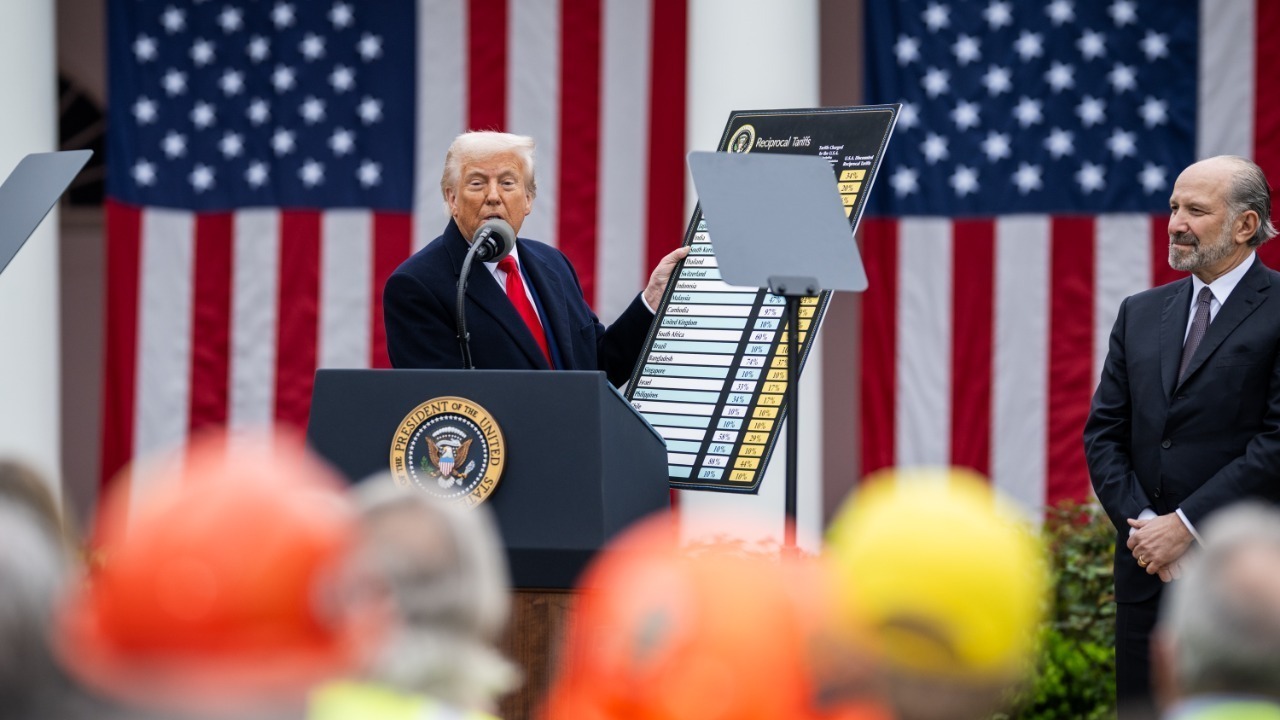
The U.S. Supreme Court ruled on February 20, 2026, that President Donald Trump lacked the authority to impose tariffs under the International Emergency Economic Powers Act, a decision that could save the lowest-income American households roughly $900 each in higher prices. But the promise of relief is colliding with a bitter reality. the Trump administration warns that refunds on more than $130 billion in collected tariffs could take years to process, and a fresh 10% global tariff announced the same day threatens to wipe out any savings before they reach family budgets.
What the Supreme Court Actually Decided
In the Learning Resources case, No. 24-1287, the Court held that IEEPA does not grant the president broad power to set import duties. The case was argued on November 5, 2025, and decided today. The ruling strips the legal foundation from tariffs that generated roughly $133.5 billion in revenue, money that importers paid to U.S. Customs and Border Protection and that now sits in a kind of fiscal limbo.
The decision also threw into doubt a series of trade deals the Trump administration had struck with countries around the world in recent months, according to New York Times live reporting. Those agreements were built on the threat of IEEPA-based duties. With that legal lever now removed, the administration’s entire trade architecture faces a forced redesign, and Congress may need to step in to authorize any replacement tariff regime. For now, the ruling is less a clean policy reset than a command to rebuild the machinery of U.S. trade law under tighter statutory limits.
The $900 Household Savings That May Never Arrive
The Budget Lab at Yale published modeling in November 2025 estimating that IEEPA tariffs imposed an average short-run loss of approximately $1,700 per household. For families in the bottom income quintile, the estimated hit was roughly $900. Those figures represent the price increases embedded in consumer goods, from electronics to clothing to groceries, that flowed directly from higher import duties. In theory, striking down those tariffs should reverse those costs over time as importers stop paying the duties and competition drives retail prices back down.
In practice, the path from a court opinion to lower grocery bills is far from direct. Importers, not consumers, paid the tariffs. Any refund process runs through corporate supply chains before it could reach household budgets. And President Trump responded to the ruling by imposing a new 10% global tariff under separate authority, a move that could offset much of the relief the Court’s decision was expected to deliver. For the lowest-income families who stood to benefit most, the savings remain theoretical until prices actually fall at the register, and the new levy suggests that even those gains may be short-lived.
$133 Billion in Refunds Stuck in Bureaucratic Gridlock
California Governor Gavin Newsom, a Democrat, was among the first political figures to respond, calling for immediate refund checks with interest. Newsom cited more than $130 billion in total tariff collections and pointed to Yale Budget Lab data on household losses. His demand frames the refund question as a consumer rights issue, arguing that families effectively fronted the money through higher prices and should share in any repayments. But the mechanics of returning that money are far more complicated than writing checks, because refund rights are tied to import entries and customs law, not to household receipts.
The Trump administration has stated that it could take years and additional litigation for importers to recover their payments, calling the refund situation “a mess”, according to New York Times reporting. While Customs and Border Protection has existing tools to process tariff adjustments, the sheer volume of claims (spanning thousands of importers and hundreds of product categories) creates a bottleneck that no agency is equipped to clear quickly. Corporate America is already pressing for fast payouts, and law firms are preparing for protracted legal battles over who gets paid, how much, and when. The Wall Street Journal has described the accumulated duties as being in a state of limbo, underscoring that the money is real, sizable, and politically contested, but not yet on any clear path back into the broader economy.
Stimulus Check Proposals and Inflation Risks
Separate from the corporate refund fight, a proposal has emerged to send $2,000 stimulus checks to low- and middle-income Americans as a form of tariff relief. Economists at Northeastern University have described the idea as politically shrewd but warned it could fuel inflation and complicate Federal Reserve policy. Direct cash payments would increase consumer spending at a time when the Fed is still managing price stability, creating a tension between short-term political appeal and longer-term economic discipline. The checks would also be only loosely connected to who actually bore the tariff burden, turning a targeted legal remedy into a broad fiscal program.
This is where the dominant assumption in current coverage deserves scrutiny. Much of the reaction treats the Supreme Court ruling as a clean win for consumers, a simple equation where striking down tariffs equals lower prices and potential refund checks. That framing ignores three compounding realities. First, the new 10% global tariff partially replaces the cost burden the Court just removed, keeping pressure on import prices. Second, corporate refunds flow to importers, not directly to households, and companies have no legal obligation to pass those gains along. Third, using stimulus checks to bridge that gap risks stoking demand-side inflation just as policymakers are trying to cool it, potentially eroding any real purchasing-power gains for the very families the checks are meant to help.
Why State-Level Action Is on the Table
Newsom’s push for rapid refunds also reflects how states see themselves as economic first responders when federal trade policy whiplashes local businesses and workers. California’s government, organized through the statewide portal at the CA.gov website, has been building tools to buffer residents from federal shocks, from tax changes to disaster aid. In the tariff context, that could mean using state tax codes, credits, or grant programs to channel some of the eventual corporate refunds (or the state’s own revenue windfalls from higher prices) back to households and small firms. But doing so would require new legislation and careful coordination with federal agencies to avoid double-counting or conflicts with federal refund rules.
State tax administrators already manage complex flows of payments and refunds, including sales and use taxes that interact with import costs. California’s Department of Tax and Fee Administration, which runs online registration and renewal services for businesses, could become a conduit for any state-designed tariff relief that piggybacks on existing tax filings. That might involve temporary credits for sectors most exposed to import costs or targeted rebates for low-income households whose consumption baskets are especially sensitive to trade shocks. Yet such programs would still be operating at the margins of a federal problem: only Washington can decide how, when, and to whom the $133 billion in unlawful tariffs are ultimately returned.
The Uneven Politics of Trade and Relief
The scramble over refunds and stimulus also exposes the uneven politics of trade. Importers and large retailers have the legal standing and resources to pursue claims, while consumers lack direct channels to seek redress for higher prices they quietly absorbed. In that sense, the Court’s ruling is a rare instance in which the law has clearly sided with limits on executive trade power, but the distributional consequences remain tilted toward corporate balance sheets. Unless Congress explicitly ties any new tariff authority to consumer relief mechanisms, the pattern is likely to repeat: firms pay at the border, households pay at the store, and only the former are guaranteed a seat at the refund table.
The labor market dimension is just as complex. Industries that benefited from tariff protection (steel, aluminum, and certain manufactured goods) now face renewed import competition, even as the new 10% global tariff reshuffles winners and losers again. That churn will affect hiring and investment decisions, and it is one reason state governments advertise public-sector roles as a stabilizing option during periods of policy volatility. California’s own job portal at CalCareers highlights positions in economic development, tax administration, and workforce support that are likely to grow more important as trade rules shift. For workers caught between higher import prices and uncertain industrial policy, those roles can offer a measure of security that the private sector currently struggles to match.
For now, the Supreme Court has redrawn the legal map of presidential trade authority, but it has not resolved the economic and political struggle over who ultimately pays for, and who benefits from, tariffs gone wrong. The headline numbers are striking: $133 billion in unlawful duties, a modeled $900 hit for low-income households, and a proposed $2,000 check that could reignite inflation. Whether this moment becomes a turning point toward more accountable trade policy or just another episode of policy whiplash will depend less on the Court than on how quickly Congress, the administration, and the states can turn a legal victory into tangible, durable relief.
More From The Daily Overview
*This article was researched with the help of AI, with human editors creating the final content.

Grant Mercer covers market dynamics, business trends, and the economic forces driving growth across industries. His analysis connects macro movements with real-world implications for investors, entrepreneurs, and professionals. Through his work at The Daily Overview, Grant helps readers understand how markets function and where opportunities may emerge.

