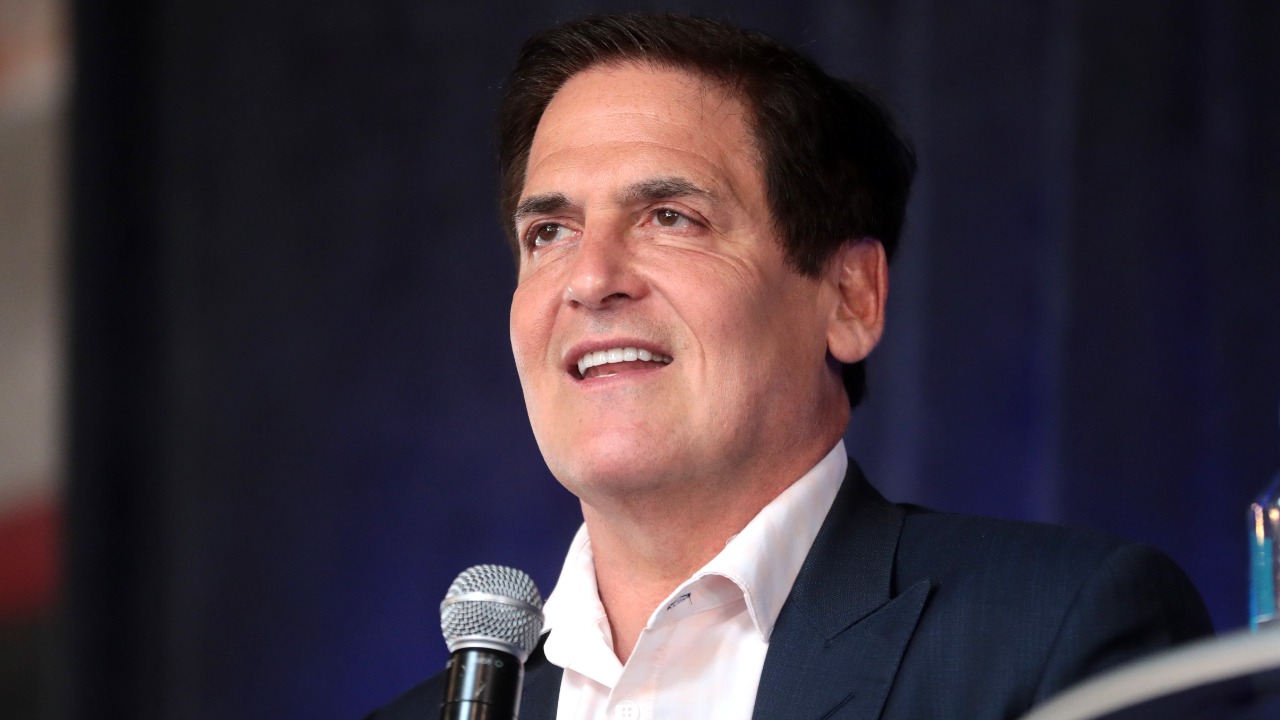
Mark Cuban is turning his fire on the core mechanics of American healthcare, arguing that the system has effectively converted hospitals and physicians into high-risk creditors and patients into reluctant borrowers. By likening providers to “subprime lenders,” he is not just criticizing high bills, he is accusing the industry of running on opaque pricing, forced cross-subsidies, and a business model that leaves families exposed to financial ruin.
His critique goes beyond sticker shock. Cuban is tying “horrific” prices to structural incentives that reward complexity and cost shifting, then using his own ventures and public advocacy to argue that healthcare can be priced more like any other consumer service, with clear numbers up front and fewer middlemen taking a cut.
Why Cuban says healthcare pricing is ‘horrific’
I see Cuban’s language about “horrific” pricing as a deliberate attempt to reframe healthcare costs as a systemic failure, not a series of unfortunate one-off bills. He has repeatedly argued that Healthcare Is Too Expensive and that the current structure leaves ordinary people one emergency away from debt that can lead to bankruptcy. When he talks about families facing thousands of dollars in surprise charges after a hospital stay, he is pointing to a system where the price of care is often invisible until it is too late to say no.
In that context, his description of Mark Cuban Calls Healthcare Pricing Horrific is less about rhetorical flourish and more about the lived reality of patients who cannot get a straight answer on what a procedure will cost. He has emphasized that people often discover the true price only when a bill arrives weeks later, long after they have signed consent forms and undergone treatment. That lag, in his view, is not an accident but a feature of a marketplace that hides the real numbers behind layers of contracts and codes.
‘Subprime lenders’ and the hospital business model
When Cuban says hospitals and doctors are “subprime lenders,” he is arguing that providers are being pushed into the role of unsecured creditors, extending care first and chasing payment later. In his telling, Mark Cuban sees hospitals and physicians forced to raise prices to cover losses from unpaid bills and under-reimbursed care, much like lenders who charge higher interest to offset the risk of default. That comparison is meant to highlight how much of the system’s revenue depends on patients who may never be able to pay in full.
His critique lines up with a widely shared quote that “We’ve turned hospitals and doctors into subprime lenders without assets,” a line that captures how providers deliver services worth thousands of dollars, then wait to see what insurers, government programs, and patients will actually pay. Cuban’s argument is that this dynamic encourages inflated list prices and aggressive collections, because the only way to survive in that environment is to charge more than you expect to receive and hope the mix of payers covers the gap.
From criticism to construction: Cost Plus Drugs and direct contracting
Cuban is not just attacking the status quo, he is trying to build alternatives that test his theory that transparent pricing can work at scale. He co-founded Cost Plus Drugs to sell generic medications at lower costs, stripping out the hidden spreads that he says are “hidden behind layers of complexity.” The model is simple on paper: publish the acquisition cost, add a fixed markup and a transparent fee, and let patients see exactly what they are paying for.
He has also teased a new direct-contracting provider network that would lean on cash prices and upfront transparency. In that vision, Mark Cuban wants employers and individuals to contract directly with clinicians, bypassing some of the intermediaries that currently shape reimbursement. By pairing that network with his Cost Plus Drugs online pharmacy venture, he is effectively trying to prove that a simpler, more predictable pricing structure can coexist with high-quality care.
Transparency as the central fix
At the core of Cuban’s healthcare agenda is a belief that price transparency is the most powerful lever for change. He has argued in Senate testimony that Price transparency is not a silver bullet but is essential to a better system for everybody, because it lets patients, employers, and policymakers see where money is actually going. Without clear prices, he contends, it is impossible to compare options, reward efficient providers, or hold anyone accountable for runaway costs.
He has carried that message into public forums as well, urging hospitals to open their books to patients and communities. In New York City, Businessman Mark Cuban pressed for more transparency in hospital costs and argued that the industry needs to rein in prices if it wants to maintain public trust. When he talks about the number 45 in that context, he is underscoring how many different line items and opaque charges can appear on a single bill, each one a reminder of how far healthcare has drifted from straightforward consumer pricing.
Taking on PBMs, TrumpRx, and the middle of the supply chain
Cuban’s critique extends deep into the drug supply chain, where he sees pharmacy benefit managers as gatekeepers with too much leverage. He has said that Mark Cuban says PBMs are too powerful, arguing that their ability to dictate formularies and rebates distorts prices and keeps patients from seeing the true cost of their medications. In the same breath, he has given President Trump credit for tackling drug prices with TrumpRx, signaling that he is willing to applaud specific efforts to curb costs even when they come from political figures he might disagree with on other issues.
His own company, Mark Cuban Cost Plus Drugs Co, is designed to bypass some of those middlemen by contracting directly with manufacturers and pharmacies. By publishing its formula and refusing traditional rebates, the company is effectively a live experiment in what happens when you strip PBMs out of at least part of the equation. Cuban’s bet is that if patients can see the spread between what a drug costs to buy and what they are being charged, pressure will build on the rest of the market to follow suit.
Policy, MFNs, and the push for structural change
Cuban’s advocacy is not limited to private ventures; he has also engaged with policy debates around how the federal government should pay for drugs. In his remarks on healthcare modernization, he has said that Plus he likes what policymakers are doing with MFNs, or most favored nation rules, because they aim to ensure that the United States does not pay more for brand drugs than other countries. That support reflects his broader view that government purchasing power can be used to discipline prices, as long as the rules are clear and the data are public.
He has also highlighted how new tools and platforms can help patients navigate this landscape. When discussing TrumpRx and other innovations, Now Cuban has described these efforts as still in their infancy but pointed to them as examples of the direction he wants to push the system toward. The work of updating provider directories, integrating cash prices, and making digital tools usable is slow, but he frames it as necessary infrastructure if patients are ever going to comparison shop for care the way they do for flights or hotel rooms.
What Cuban’s crusade reveals about the system
When I step back from the sound bites, what stands out is how consistent Cuban’s critique has become across interviews, testimony, and business moves. He keeps returning to the idea that Mark Cuban Calls Healthcare Pricing Horrific because the system relies on people agreeing to care without knowing the cost, then being billed like delinquent borrowers if they cannot pay. His “subprime lenders” line is not just a jab at hospitals and doctors; it is an indictment of a financing structure that asks providers to front the service and patients to shoulder the risk.
That is why he keeps pressing for practical steps, from Things That Can Be Done To Lower Costs to new contracting models and digital tools. Whether his ventures ultimately scale or not, they expose how far current practice is from the kind of clear, upfront pricing that consumers expect in almost every other part of the economy. In Cuban’s view, until healthcare stops behaving like a subprime lending market and starts behaving like a transparent service business, the word “horrific” will keep feeling uncomfortably accurate.
More From TheDailyOverview

Cole Whitaker focuses on the fundamentals of money management, helping readers make smarter decisions around income, spending, saving, and long-term financial stability. His writing emphasizes clarity, discipline, and practical systems that work in real life. At The Daily Overview, Cole breaks down personal finance topics into straightforward guidance readers can apply immediately.

