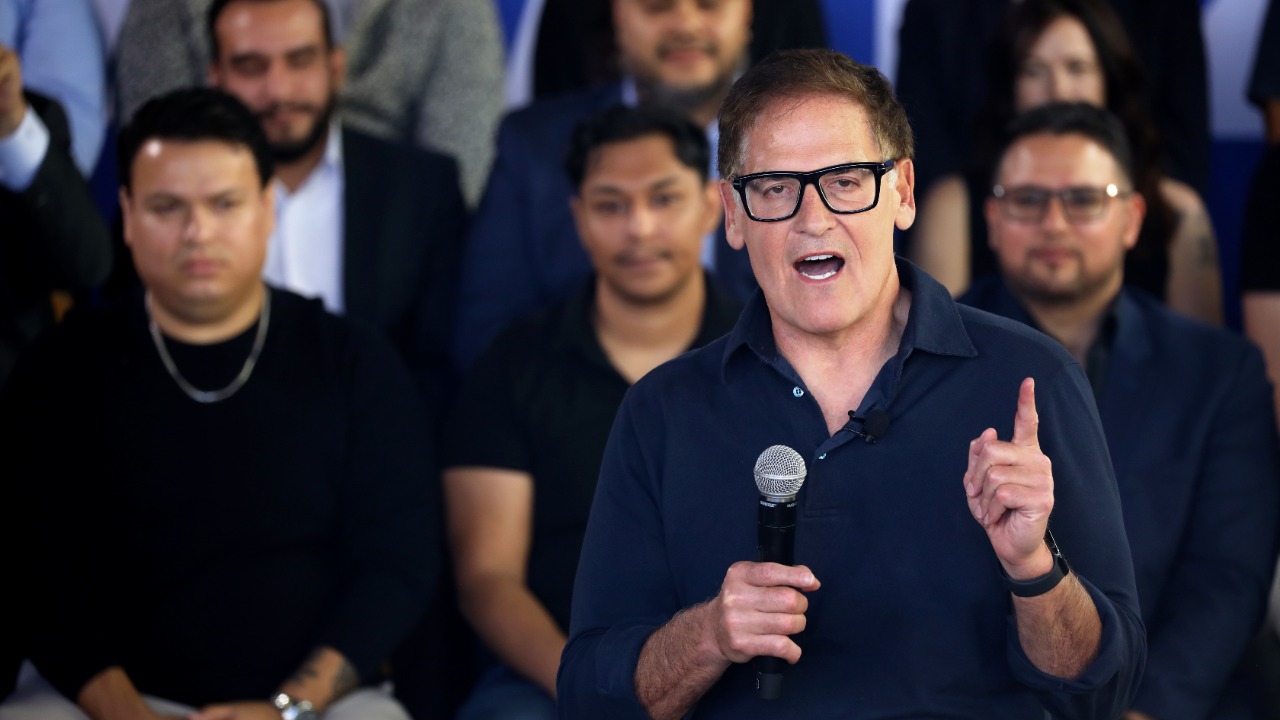
Billionaire entrepreneur Mark Cuban has voiced strong opposition to Senator Bernie Sanders’ Medicare for All plan, criticizing its feasibility and economic implications. On November 10, 2025, Cuban described the proposal as making “no sense,” highlighting his concerns about its structure and the potential burden on taxpayers. This critique follows Cuban’s earlier remarks on October 21, 2025, where he contrasted taxpayer support for business failures with the lack of substantial aid for medical expenses.
Cuban’s Core Criticism of the Plan
Mark Cuban’s critique of Bernie Sanders’ Medicare for All plan centers on its perceived failure to address practical issues in healthcare delivery. Cuban, known for his straightforward approach, directly slammed the plan, stating it “[makes] no sense” in terms of its implementation and funding mechanisms. His concerns reflect a broader skepticism about the feasibility of government-led universal healthcare models, which he believes do not adequately consider the complexities of healthcare economics. Cuban’s entrepreneurial background, which emphasizes efficiency and innovation, informs his doubts about the plan’s ability to deliver effective healthcare without imposing significant burdens on taxpayers.
In his critique, Cuban raised specific red flags about the plan’s structure, questioning how it would be implemented without clear details on taxpayer funding. He argued that the plan overlooks essential elements of healthcare delivery, such as the role of private sector innovation and competition. Cuban’s skepticism is rooted in his belief that a one-size-fits-all approach to healthcare is unlikely to succeed in addressing the diverse needs of the American population. His comments suggest that without a detailed plan for funding and implementation, Medicare for All could lead to inefficiencies and increased costs.
Red Flags on Feasibility and Structure
Cuban’s arguments against the logistical elements of Bernie Sanders’ Medicare for All plan focus on its potential economic pitfalls. He believes the plan fails to account for the real-world economics of healthcare, particularly the challenges of scaling a single-payer system without private sector involvement. Cuban’s critique, delivered on November 10, 2025, highlights ongoing debates about the viability of single-payer systems in the United States. He argues that the plan’s structure could lead to inefficiencies and increased costs, ultimately burdening taxpayers without delivering the promised benefits.
The timing of Cuban’s critique is significant, as it coincides with broader discussions about healthcare reform in the U.S. His comments underscore the tensions between business leaders and political proposals, particularly those advocating for government-led solutions. Cuban’s perspective suggests that without a clear plan for integrating private sector efficiencies, Medicare for All could struggle to achieve its goals. His critique raises important questions about the feasibility of implementing such a comprehensive healthcare reform without addressing the underlying economic challenges.
Taxpayer Funding Disparities in Cuban’s View
Mark Cuban’s earlier statement on October 21, 2025, highlighted a disparity in taxpayer funding priorities, contrasting support for failed businesses with minimal aid for medical expenses. He noted that taxpayers “happily loan to failed businesses” and support “dropouts,” yet offer only “thoughts and prayers” for those facing medical expenses. This perspective critiques the funding mechanisms proposed in Bernie Sanders’ Medicare for All plan, which relies heavily on taxes. Cuban’s comments suggest that the plan’s reliance on taxpayer funding could exacerbate existing disparities in public policy, favoring corporate bailouts over equitable healthcare support.
Cuban’s remarks call for a reevaluation of funding priorities, advocating for more equitable support in healthcare compared to corporate failures. His critique of the Medicare for All plan highlights the need for a balanced approach to funding, one that considers the broader implications for taxpayers and the economy. By drawing attention to these disparities, Cuban challenges policymakers to rethink the allocation of public resources, emphasizing the importance of supporting healthcare initiatives that benefit all Americans.
Implications for Political and Economic Debate
Mark Cuban’s critique of Bernie Sanders’ Medicare for All plan positions him as a vocal opponent of progressive healthcare policies. His comments influence discussions on U.S. healthcare reform, highlighting the challenges of implementing a single-payer system in a complex economic landscape. Cuban’s high-profile status amplifies his critique, shaping voter perceptions of Medicare for All and similar proposals. His accessible critiques resonate with those concerned about the economic implications of government-led healthcare solutions.
The broader context of Cuban’s critique, delivered on November 10, 2025, underscores ongoing tensions between business leaders and political proposals. His comments reflect a growing divide between those advocating for comprehensive healthcare reform and those who prioritize economic efficiency and innovation. Cuban’s perspective suggests that without addressing the underlying economic challenges, Medicare for All could struggle to achieve its goals. His critique highlights the need for a balanced approach to healthcare reform, one that considers the diverse needs of the American population and the complexities of the healthcare system.
More From TheDailyOverview
- Dave Ramsey says these two simple questions show whether you’re rich or poor
- Retired But Want To Work? Try These 18 Jobs for Seniors That Pay Weekly
- IRS raises capital gains thresholds for 2026 and what’s new
- 12 ways to make $5,000 fast that actually work

Nathaniel Cross focuses on retirement planning, employer benefits, and long-term income security. His writing covers pensions, social programs, investment vehicles, and strategies designed to protect financial independence later in life. At The Daily Overview, Nathaniel provides practical insight to help readers plan with confidence and foresight.

