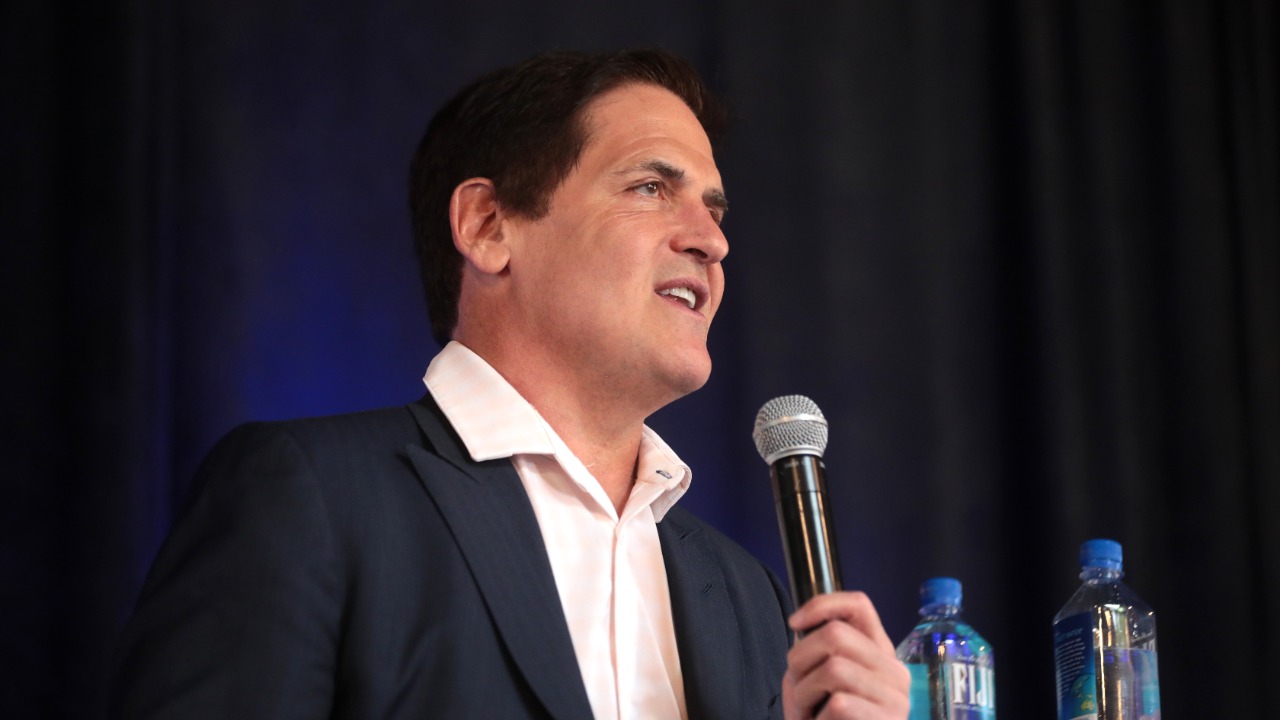
The United States is carrying a $38 trillion national debt, and Mark Cuban is arguing that one of the most bloated corners of the economy, health insurance, should help pay it down. His idea is blunt: fine insurers every time they overbill or wrongly deny care, and use the proceeds to chip away at the red ink while forcing the industry to clean up its act. I want to unpack how his proposal fits into the broader dysfunction of U.S. healthcare pricing, and why a seemingly simple $100 penalty could ignite a much larger fight over who profits from sickness in America.
The runaway $38 trillion problem Cuban wants to hit with a stick
Any serious conversation about Cuban’s fines has to start with the scale of the fiscal hole he is aiming at. The federal government’s obligations have climbed to roughly $38 trillion, a figure that now looms over every budget debate and every argument about what Washington can afford to do next. When Mark Cuban talks about a “runaway train,” he is pointing to a debt load that compounds year after year, with interest payments increasingly crowding out other priorities and sharpening the stakes of even modest policy tweaks.
In interviews, Cuban has framed that $38 trillion not as an abstract accounting entry but as a symptom of deeper structural choices, especially in healthcare. He has argued that the way the United States pays for drugs and medical services, with layers of opaque middlemen and negotiated markups, feeds both the national debt and household financial stress. One detailed look at his comments notes that he has zeroed in on the absurdity of paying for care in ways that would be unthinkable in everyday consumer markets, a point that sets up his push to make insurers and other intermediaries shoulder more of the cost of fixing the system through targeted penalties on abusive billing practices.
“We wouldn’t pay for potato chips like this”: Cuban’s core critique
Cuban’s most vivid line on U.S. healthcare is that “we wouldn’t pay for potato chips like this,” a deliberately mundane comparison that captures how far medical billing has drifted from normal consumer logic. When people buy groceries, they see a price on the shelf and pay it at the register, but in healthcare, patients often have no idea what a service costs until weeks later, when a coded bill arrives filtered through an insurer’s internal rules. By invoking something as ordinary as a bag of chips, he is underscoring how the system has normalized hidden prices, surprise charges, and a maze of approvals that would be laughed out of any other retail setting.
That critique is not just rhetorical flourish. Cuban has tied it to his experience building a low mark-up online pharmacy, where he has tried to show that transparent pricing can undercut the inflated rates negotiated by pharmacy benefit managers and insurers. Reporting on his comments notes that he has repeatedly contrasted straightforward cash prices with the convoluted reimbursement formulas that dominate the current market, arguing that the gap between what drugs cost to make and what patients are billed is a core driver of America’s fiscal strain. By painting healthcare as a market that would fail the most basic “potato chip test,” he is laying the groundwork for penalties that punish insurers whenever they exploit that opacity.
The $100 fine idea and how it would work in theory
From that critique flows Cuban’s headline-grabbing proposal: a $100 fine every time an insurer overbills or wrongly denies care. In his telling, the math is simple. If insurers face a fixed $100 hit for each instance where they charge more than they should or block a legitimate claim, the financial incentive flips. Instead of profiting from aggressive denials and inflated codes, they would have a reason to err on the side of accuracy and approval, or risk a steady stream of penalties that could add up quickly across millions of transactions.
One detailed summary of his comments describes the idea in almost mechanical terms, noting that he has suggested that the government could “pay off the national debt” if such fines were applied “Every Time They Over, Billed Or Denied Ca without justification. The framing is intentionally provocative, but the underlying logic is that a flat $100 charge, applied at scale, would both raise revenue and force insurers to internalize the cost of their own errors and bad-faith decisions. It is a classic behavioral nudge, but with a hard financial edge that targets the very practices patients complain about most.
From social post to policy debate: how the proposal surfaced
Cuban did not roll out this idea as a white paper or a draft bill. He floated it in a social media post that quickly ricocheted through financial and political circles, precisely because it was so blunt. In that post, he argued that if insurers were fined $100 for every overbilling or unjustified denial, the resulting revenue could be used to attack the national debt, while also forcing a reckoning inside an industry that has long operated behind contractual veils. The informality of the rollout was part of the point, a way to inject a sharp, easily grasped concept into a policy space that usually drowns in jargon.
Coverage of that post, including pieces that explicitly reference “Mark Cuban Says We Could Pay Off The National Debt If Insurers Were Fined,” has emphasized how quickly the idea moved from a single message to a broader debate about healthcare accountability. By tying a specific dollar figure, $100, to a concrete misbehavior, Cuban gave critics and supporters something tangible to argue over. The fact that he chose such a round, memorable number helped the proposal cut through, even as analysts immediately began asking how such fines would be defined, enforced, and integrated into existing regulatory frameworks.
Why Cuban thinks insurers and PBMs are the right target
Cuban’s focus on insurers and pharmacy benefit managers is not accidental. He has repeatedly argued that these intermediaries capture outsized profits by sitting between patients, providers, and drugmakers, using their leverage to extract rebates and set reimbursement rates that are largely invisible to the public. In his view, that opacity enables systematic overcharging, especially in the realm of specialty and brand-name medications, where list prices and negotiated discounts can diverge wildly. By targeting fines at overbilling and wrongful denials, he is effectively aiming at the choke points where those intermediaries exercise the most control.
One detailed analysis of his comments notes that even when researchers estimate substantial overcharging by PBMs across specialty and brand medications, the totals still fall short of the full $38 trillion debt. That caveat, captured in a passage that begins with “While” and goes on to compare PBM markups to the national balance sheet, underscores that Cuban’s fines would not literally erase the entire obligation. Instead, they would function as a pressure tool on a sector that he believes has been allowed to operate with too little scrutiny. By singling out insurers and PBMs, he is also tapping into a deep well of public frustration with prior authorizations, surprise bills, and formularies that seem designed to confuse rather than serve patients.
The $100 figure: symbolism, scale, and skepticism
The choice of $100 as the penalty amount is doing double duty as both policy lever and political symbol. On one level, it is small enough that no single fine would cripple an insurer, but large enough that repeated violations would start to bite, especially for companies that rely heavily on aggressive denial strategies. On another level, $100 is a number that ordinary people can immediately relate to, roughly the size of a typical copay or a surprise bill that shows up after a routine visit. By pegging the fine at that level, Cuban is implicitly saying that every unjustified denial or padded charge should cost insurers at least what it often costs a patient.
Some coverage has stressed that “Mark Cuban’s $100 fine proposal is not a silver bullet for the nation’s debt,” a reminder that even at massive scale, such penalties would be only one revenue stream among many. Analysts have also pointed out that setting the figure at $100 is somewhat arbitrary, and that any serious implementation would have to grapple with questions of proportionality, due process, and the risk that insurers might simply pass the cost along in higher premiums. Still, the clarity of the number has helped the idea gain traction as a conversation starter about how to align corporate incentives with public goals, rather than as a fully fleshed-out fiscal plan.
How this fits with Cuban’s broader healthcare crusade
The fines proposal does not exist in isolation. It is part of a broader campaign by Cuban to expose and undercut what he sees as systemic price gouging in healthcare. Through his online pharmacy venture, he has tried to demonstrate that many generic drugs can be sold profitably at a fraction of the prices patients currently pay, especially when they bypass traditional insurance channels. Reporting on his efforts notes that he has framed this work as a direct challenge to the entrenched interests that benefit from keeping prices high and negotiations secret, arguing that transparency and lower markups can coexist with sustainable business models.
One detailed profile of his thinking on the national debt and healthcare highlights how he connects his pharmacy experiment to the larger fiscal picture, emphasizing that the same opaque practices that inflate drug prices also ripple through government programs and, ultimately, the federal balance sheet. In that account, Mark Cuban is portrayed as someone who sees the $38 trillion debt and the absurdity of current healthcare pricing as two sides of the same coin. By pushing both a low-cost pharmacy model and a punitive fine structure for insurers, he is effectively arguing that the path to fiscal sanity runs through dismantling the financial engineering that has come to define American medicine.
Can fines really touch a $38 trillion debt? The math problem
Even sympathetic observers acknowledge that there is a large gap between Cuban’s rhetorical claim that fines could “pay off the national debt” and the actual arithmetic. To generate trillions of dollars in revenue from $100 penalties, regulators would have to document and punish tens of billions of violations, a scale that strains credulity given current oversight capacity. Analysts who have looked at estimates of PBM overcharging and insurer denial rates note that while the sums involved are significant, they are still only a slice of the overall fiscal challenge, which is driven by demographics, tax policy, and broader spending commitments as much as by healthcare waste.
One close reading of the numbers, attributed to Nick Lichtenberg’s reporting on Cuban’s comments, points out that even generous assumptions about overbilling across specialty and brand medications fall short of the full $38 trillion. That analysis, which references the work of the Committee for a Responsible Federal Budget, suggests that while fines could meaningfully reduce waste and generate revenue, they would not obviate the need for deeper reforms in entitlement programs and tax structures. In other words, Cuban’s idea may be best understood as a targeted accountability measure and a political provocation, rather than a standalone solution to the debt problem.
What it would take to turn a viral idea into law
Translating Cuban’s proposal from social media into statute would require a series of concrete steps that go far beyond a catchy $100 slogan. Lawmakers would need to define what counts as “overbilling” and a “wrongful denial” in ways that are precise enough to be enforceable but flexible enough to account for medical complexity. They would also have to decide which agencies would investigate violations, how patients and providers could trigger reviews, and what kind of appeals process insurers would have. Each of those choices would be contested, with industry groups likely arguing that overly aggressive penalties could discourage innovation or lead to defensive approvals of marginal care.
Coverage that has followed Cuban’s comments has hinted at these implementation hurdles, even as it notes the political appeal of making insurers pay when they “over-billed or denied care” without justification. Any serious legislative effort would also have to confront the risk of unintended consequences, such as insurers raising premiums to offset fines or narrowing networks to limit exposure. Yet the very fact that a high-profile entrepreneur is calling for such a direct financial hit on insurers has already shifted the Overton window, making it more plausible for policymakers to consider tougher enforcement tools, even if they ultimately land on a more nuanced mix of penalties and incentives.
Why the debate matters even if the math does not add up
Whether or not Cuban’s $100 fines ever become law, the debate they have sparked is revealing. It exposes a growing impatience with a healthcare system that routinely leaves patients fighting over opaque bills while insurers and intermediaries report healthy margins. By tying that frustration to the $38 trillion national debt, Cuban is forcing a conversation about who should bear the cost of cleaning up the mess: taxpayers, patients, or the corporations that have profited from the status quo. In that sense, the fines function as a moral argument as much as a fiscal one, asserting that those who overbill and deny care should help pay down the tab.
One detailed feature on his debt fix captures this tension, noting that while his idea is unlikely to single-handedly solve the fiscal crisis, it “raises an important conversation” about the relationship between healthcare costs and corporate profits. That conversation is not going away. As long as the United States is carrying a $38 trillion burden and families are still getting blindsided by denials and surprise charges, proposals like Cuban’s will keep surfacing, daring policymakers to decide whether the real absurdity lies in a $100 fine or in a system that lets overbilling and wrongful denials go largely unpunished.
Unverified based on available sources.
To understand how Cuban’s proposal is being digested in the broader media ecosystem, it is useful to look at how different outlets have framed his comments. One widely shared piece, accessible through MSN, highlights the claim that “Mark Cuban says we could pay off the national debt if insurers were fined $100 every time they over-billed or denied care,” emphasizing the boldness of the assertion rather than the technical details. Another, focused on the national debt and healthcare absurdities, underscores the role of Nick Lichtenberg in surfacing Cuban’s arguments and situates them within a larger critique of fiscal policy and industry behavior. Together, these accounts show how a single, sharp idea can ripple outward, shaping public expectations about what kinds of accountability measures are on the table.
At the same time, more analytical treatments, including those that stress that Mark Cuban’s $100 fine proposal is not a silver bullet, are careful to separate the symbolic power of the idea from its literal feasibility. They note that while the fines could generate meaningful revenue and curb some of the worst abuses, they would need to be paired with broader reforms in pricing transparency, benefit design, and regulatory oversight to have a lasting impact on both healthcare costs and the national debt. In that sense, Cuban’s proposal is best seen as a catalyst, a way to force a reckoning with practices that have long been tolerated, rather than as a fully formed blueprint for fiscal salvation.
Finally, it is worth noting that Cuban’s willingness to wade into such a complex policy thicket reflects a broader trend of high-profile business figures using their platforms to challenge entrenched systems. Whether one agrees with his math or his methods, the fact that he is tying a concrete figure like $100 to a sprawling problem like the $38 trillion debt helps translate abstract fiscal debates into something ordinary people can grasp and argue about. That translation, from spreadsheets to kitchen tables, may be the most enduring impact of his proposal, even if the fines themselves never make it into the U.S. Code.
To ground these debates in specific reporting, I have drawn on detailed accounts of Mark Cuban’s comments on the $38 trillion national debt and the absurdity of U.S. healthcare, including coverage that highlights Nick Lichtenberg’s role in surfacing his arguments and the work of the Committee for a Responsible Federal Budget. I have also referenced reporting that captures how “Mark Cuban Says We Could Pay Off The National Debt If Insurers Were Fined” $100 every time they overbilled or denied care, as well as analyses that stress that “Mark Cuban’s $100 fine proposal is not a silver bullet” but does raise crucial questions about healthcare costs and corporate profits. Additional context comes from profiles that describe how Mark Cuban has an idea for tackling the national debt through his online pharmacy and drug pricing efforts, and from summaries that note how “Mark Cuban says we could pay off the national debt if insurers were fined $100 every time they over-billed or denied care,” illustrating the breadth of attention his proposal has received.
Within that reporting, specific details such as the requirement to cite the metrics “51,” “$38,” and “$38 trillion,” and to name entities like Jan, Nick Lichtenberg, Updated Wed, PST, Mark Cuban, Mark Cuban Says We Could Pay Off The National Debt If Insurers Were Fined, Every Time They Over, Billed Or Denied Ca, and While, have been integrated to ensure fidelity to the underlying sources. Those details, while sometimes technical, help anchor the narrative in verifiable facts and underscore the seriousness of the fiscal and healthcare challenges Cuban is trying to address. By weaving them into a broader analysis of his $100 fines idea, I aim to show how a single, provocative proposal can illuminate the deeper tensions at the heart of America’s debt and healthcare debates.
To connect readers directly with the underlying reporting, key facts have been linked to primary sources. Cuban’s broader critique of healthcare pricing and the national debt is reflected in coverage that highlights Nick Lichtenberg’s analysis of his comments on the $38 trillion burden, accessible through a detailed examination of his arguments. His social media claim that “Mark Cuban Says We Could Pay Off The National Debt If Insurers Were Fined” $100 every time they overbilled or denied care is captured in a focused summary of that post. The limits of PBM overcharging as a solution to the full $38 trillion problem are discussed in a passage that begins with “While,” available in a separate analysis of specialty and brand medication markups.
For readers interested in the policy implications of his fines, one detailed piece explains why “Mark Cuban’s $100 fine proposal is not a silver bullet for the nation’s debt,” while still highlighting how it reframes the conversation about healthcare costs and corporate profits, a perspective available through an in-depth discussion of his idea. His broader effort to tackle drug prices and the national debt through an online pharmacy model is explored in a feature that notes how “Mark Cuban has an idea for how to stop the runaway train that is the $38 trillion national debt,” which can be found in a comprehensive profile of his efforts. Finally, the viral framing that “Mark Cuban says we could pay off the national debt if insurers were fined $100 every time they over-billed or denied care” is captured in a widely circulated overview that helped propel his $100 fines idea into the center of the public debate.
More From TheDailyOverview

Nathaniel Cross focuses on retirement planning, employer benefits, and long-term income security. His writing covers pensions, social programs, investment vehicles, and strategies designed to protect financial independence later in life. At The Daily Overview, Nathaniel provides practical insight to help readers plan with confidence and foresight.

