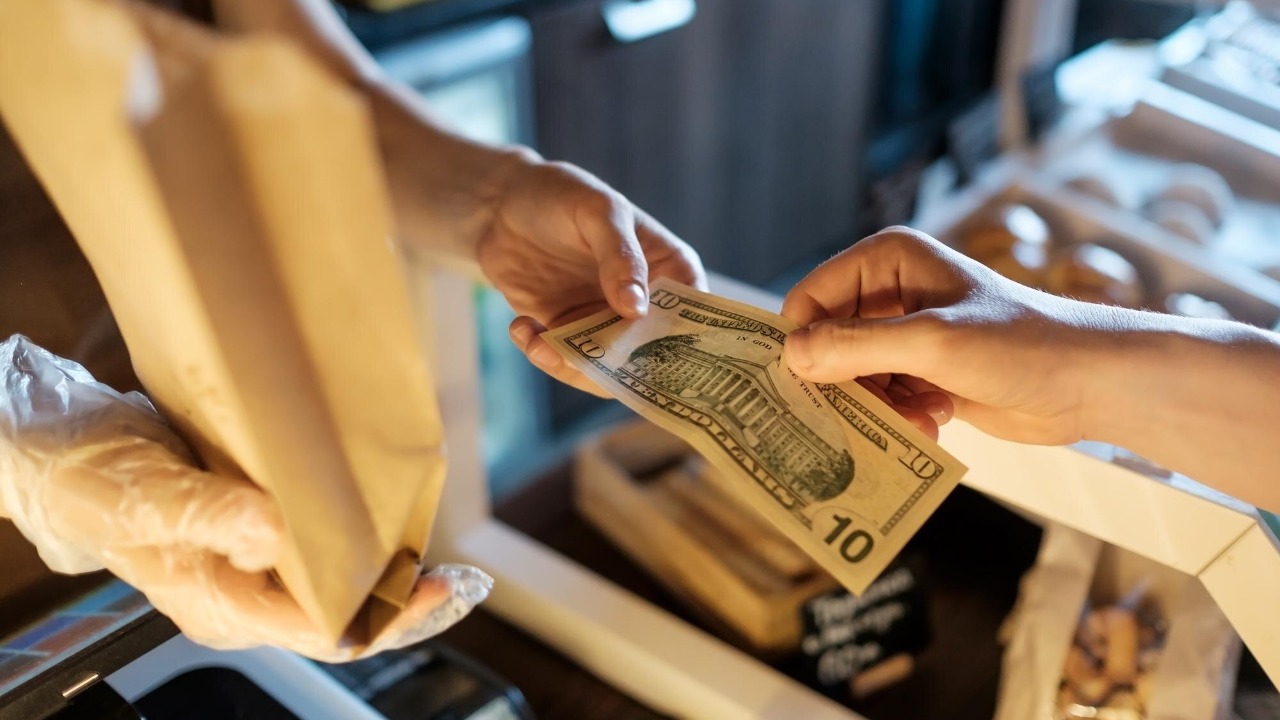
The penny shortage has moved from abstract policy debate to the fast-food counter, where McDonald’s is quietly rewriting how cash is handled. Instead of digging for one-cent coins that are no longer being made, the chain is shifting to rounded totals that bring every bill to the nearest nickel. The change keeps prices the same on the menu but subtly reshapes the experience of paying in cash in a country that is still adjusting to life after the penny.
Why McDonald’s is rethinking cash in the age of the penny shortage
The immediate trigger for McDonald’s new approach is simple: there are not enough pennies to go around. The U.S. Mint officially stopped producing the one-cent coin in November 2025, after years of debate over whether it made sense to keep spending about 3.7 cents to manufacture each penny and as everyday use of cash declined. That decision did not instantly erase the billions of coins already in circulation, but it did mean that once a store’s penny drawer runs dry, there is no easy way to refill it. For a high-volume chain that processes thousands of small transactions a day, the friction of constantly scrounging for copper coins quickly becomes a front-line operational problem.
McDonald’s has already been pushing customers toward digital ordering, app-based deals, and card payments, all of which can still be charged to the exact cent without any rounding. On its U.S. site, the company highlights mobile ordering, self-service kiosks, and rewards programs as core parts of the modern McDonald’s experience, and those channels are unaffected by the coin shortage. The pressure point is the traditional cash lane, where the disappearance of pennies collides with long-standing habits and expectations about exact change. That is where the company has decided to introduce a new structure for payments, one that keeps menu prices intact but changes how the final total is settled when coins are scarce.
How the new rounding policy works at the register
At participating locations, McDonald’s has adopted a straightforward rounding system for cash purchases that eliminates the need for pennies without rewriting the entire price list. Under the policy, cash totals ending in 1¢ or 2¢ are rounded down, while those ending in 3¢ or 4¢ are rounded up to the nearest nickel. Totals that already land on 0¢ or 5¢ are left alone, and card or mobile payments continue to be charged the exact amount shown on the receipt. The key is that the rounding applies only to the final bill for cash, not to individual menu items, which means the posted price of a Big Mac or a small fries does not change even as the way customers settle up in coins does, a structure that has been described in detail in Under the policy coverage.
In practice, that means a cash bill of $7.21 becomes $7.20, while $7.23 becomes $7.25, and a $7.25 total stays exactly where it is. The company has framed this as a neutral adjustment that balances out over time, since some customers will pay a cent or two less and others a cent or two more depending on where their total lands. The structure mirrors the “symmetric rounding” approach that federal guidance has suggested for retailers adapting to the end of penny production, which encourages rounding to the nearest five cents rather than always up or always down. For McDonald’s, the policy is a way to keep lines moving and avoid awkward conversations about missing coins, while still preserving the integrity of its listed prices and the option for customers to bypass rounding entirely by using cards or the app.
The end of penny production and what it really means
Behind the scenes, the McDonald’s shift is part of a much larger monetary transition. When the Mint halted penny production, it did not revoke the coin’s legal status, and federal officials have been explicit that the penny remains legal tender even as it phases out. The Treasury has explained that the coin will retain its status and that businesses are free to keep accepting it, but that as pennies gradually disappear from circulation, retailers and Point of Sale providers are encouraged to collaborate on systems that can round cash totals to the nearest five cents. That guidance, which specifically calls out Point of Sale and POS system providers, effectively opened the door for chains like McDonald’s to formalize rounding rules.
Financial institutions have been quick to stress that the end of production does not mean pennies vanish overnight. Banks note that there are still billions of coins in circulation and that they will continue to move through tills, coin machines, and jars at home for years. One detailed explainer on the change, titled “Pennies Are No Longer Being Produced and What It Means for You,” underscores that the real shift is what happens when a store runs out of pennies and cannot easily restock. In that moment, businesses must either improvise, perhaps by rounding informally or offering small discounts, or adopt a clear rounding policy that customers can understand. McDonald’s has chosen the latter path, turning a looming coin shortage into a defined rule rather than a case-by-case scramble.
Inside McDonald’s decision to round to the nearest nickel
McDonald’s did not arrive at its new policy in a vacuum. The company has acknowledged that some of its locations were already feeling the strain of the penny shortage, particularly in regions where banks had tightened coin distribution. In response, it confirmed that in some restaurants, cash totals are now being rounded to the nearest 5 cents for cash transactions, a structure it described when asked what it would do without pennies. That explanation, shared when the company was pressed on its strategy, made clear that the rounding applies only to cash and that digital payments are still charged to the exact cent, a distinction that was highlighted when McDonald’s told Here CBS News how it was adapting.
The chain has also framed the move as a way to keep its operations consistent across markets that are all dealing with the same structural problem. Earlier coverage of the shift noted that McDonald’s is rounding cash transactions to the nearest nickel as the United States faces a broader penny shortage, and that other large retailers, including Kroger, Love, and Home Depot, are also dealing with copper coin shortages. By aligning with a simple, symmetric rule that customers can quickly grasp, McDonald’s is betting that a small tweak at the register is preferable to a patchwork of ad hoc solutions that vary from store to store.
What the change means for customers paying in cash
For customers, the most immediate impact is psychological rather than financial. The rounding policy does not alter the listed price of a McChicken or a breakfast combo, and over time, the mix of totals that are rounded up and down should roughly balance out. Still, the idea that a bill might be nudged by a cent or two can feel sensitive in a period of high price awareness, especially for people who rely on cash to manage tight budgets. Some diners will notice that a $12.03 total becomes $12.05, while a $12.02 bill drops to $12.00, and they may wonder whether the system is fair. The company’s answer is that the rule is symmetric and that anyone who wants to avoid rounding altogether can use a card, mobile wallet, or the McDonald’s app, which continue to process exact amounts.
There is also a practical upside for those who still carry coins. Instead of fumbling for three or four pennies at the bottom of a bag, customers can pay with quarters, dimes, and nickels, knowing that the final total will land on a clean five-cent increment. That can speed up lines and reduce the awkwardness of a cashier apologizing for being out of change. At the same time, banks and consumer advocates have encouraged people to bring in jars of coins from home to improve circulation, a point made explicitly in guidance that says returning loose change from home helps improve circulation and that, when pennies are no longer being produced, using existing coins becomes more important, as explained in a follow up to “Pennies Are No Longer Being Produced and What It Means for You.” In that sense, McDonald’s policy sits alongside a broader push to make the most of the coins that are already out there, even as the smallest denomination fades from view.
How McDonald’s is explaining the policy in stores
Any change to how people pay requires clear communication, especially in a setting where transactions are fast and staff are juggling multiple tasks. McDonald’s has been rolling out signage and point-of-sale prompts that explain the rounding rule in plain language, emphasizing that it applies only to cash and only to the final total. In some restaurants, notices near the register spell out that totals ending in 1¢ or 2¢ are rounded down and those ending in 3¢ or 4¢ are rounded up, while digital menu boards and kiosks continue to show standard prices. The company has also used internal training to prepare crew members to answer questions, so that when a customer asks why their $5.97 bill became $6.00, the cashier can point to the policy rather than improvising an explanation.
National coverage of the rollout has described how the chain is “Institutes New Cash Payment Policy Now That Pennies Are No Longer Being Produced,” underscoring that the change is a response to a structural shift in the currency system rather than a quiet price hike. That framing, captured in reports on how McDonald’s Institutes New Cash Payment Policy Now That Pennies Are No Longer Being Produced, is crucial to maintaining trust with customers who are already sensitive to rising costs. By presenting the policy as a transparent adaptation to the end of penny production, rather than as a backdoor way to collect a few extra cents, McDonald’s is trying to keep the focus on convenience and clarity. The company’s broader branding, which leans heavily on value menus and digital deals, gives it an incentive to show that the rounding rule is about logistics, not squeezing more out of each order.
The broader retail ripple effect of the penny’s disappearance
McDonald’s is not alone in facing the practical fallout of the penny’s demise. Large retailers that handle huge volumes of small-ticket purchases, from gas stations to grocery chains, are all confronting the same question of how to handle cash totals that no longer match the coins in the drawer. Earlier reporting on the penny shortage has noted that McDonald’s is one of several businesses running short of pennies now that the coins are no longer being produced by the U.S. Mint, and that the company has responded by rounding cash transactions to the nearest nickel. That coverage, which described how the chain was hit by the penny shortage and began rounding cash transactions, framed the move as part of a broader shift in how retailers handle low-denomination coins, a trend captured in reports that Add McDonald’s to the list of affected businesses.
Federal guidance has effectively signaled that such adaptations are expected. The Treasury’s penny production cessation FAQs explicitly encourage businesses and POS providers to consider rounding cash totals to the nearest five cents as pennies phase out, and the Mint’s own explanation of why it stopped production points to the mismatch between the cost of making the coin and its practical use. In that environment, McDonald’s policy looks less like an outlier and more like an early example of what many retailers may eventually adopt. Chains that already rely heavily on digital payments may move more quickly, while smaller businesses could take longer to formalize their own rules, but the underlying pressure is the same: a currency system designed around a coin that is no longer being made cannot function indefinitely without some form of rounding or restructuring.
Why symmetric rounding matters for fairness and trust
One of the most important design choices in McDonald’s policy is that it uses symmetric rounding rather than always rounding up. By rounding 1¢ and 2¢ down and 3¢ and 4¢ up, the company aligns with the principle that, over a large number of transactions, customers should not systematically lose money. That approach mirrors the “symmetric rounding” language used in official explanations of how retailers can adapt to the end of penny production, which emphasize that rounding should be neutral and applied only to the final total. For a chain that trades heavily on the perception of value, adopting a rule that can be defended as mathematically fair is essential to maintaining trust, especially among customers who are already wary of hidden fees or creeping prices.
There is also a behavioral dimension to symmetric rounding. When customers see that some of their bills are rounded down, they are more likely to accept the occasional rounding up as part of a balanced system rather than as a one-way ratchet. Over time, that can reduce friction at the counter and limit the risk of viral complaints about being “overcharged” by a cent or two. The fact that federal FAQs explicitly state that the penny will retain legal tender status while encouraging rounding to the nearest five cents gives companies like McDonald’s cover to say they are following best practices rather than inventing their own rules. In that sense, the structure of the policy is as important as the decision to round at all, because it signals that the company has thought through not just the logistics of losing pennies but the optics of how customers experience the change.
What this signals about the future of cash at McDonald’s
McDonald’s rounding policy is narrowly targeted at the penny problem, but it also hints at a longer-term shift in how the chain thinks about cash. As more customers migrate to mobile ordering, contactless cards, and loyalty apps, the share of transactions that depend on physical coins is likely to keep shrinking. The company’s U.S. site already foregrounds digital tools, from app-exclusive deals to order-ahead features, and the new rounding rule effectively nudges anyone who is uncomfortable with adjusted cash totals toward those channels. While McDonald’s has not announced any plan to stop accepting cash, the structural incentives are clear: digital payments are easier to reconcile, less vulnerable to coin shortages, and more tightly integrated with marketing and rewards.
At the same time, the chain cannot ignore the millions of customers who still rely on cash, including younger diners without cards and older patrons who prefer bills and coins. For them, the rounding policy is a compromise that keeps cash viable in a world without newly minted pennies. Banks and regulators have stressed that the penny remains legal tender and that consumers can still use existing coins, but they have also acknowledged that as pennies gradually phase out of circulation, retailers will need to adapt. McDonald’s decision to formalize a clear, symmetric rounding rule suggests that the company expects cash to remain part of its ecosystem for the foreseeable future, even as it quietly redesigns that ecosystem around a digital core.
More From TheDailyOverview

Silas Redman writes about the structure of modern banking, financial regulations, and the rules that govern money movement. His work examines how institutions, policies, and compliance frameworks affect individuals and businesses alike. At The Daily Overview, Silas aims to help readers better understand the systems operating behind everyday financial decisions.

