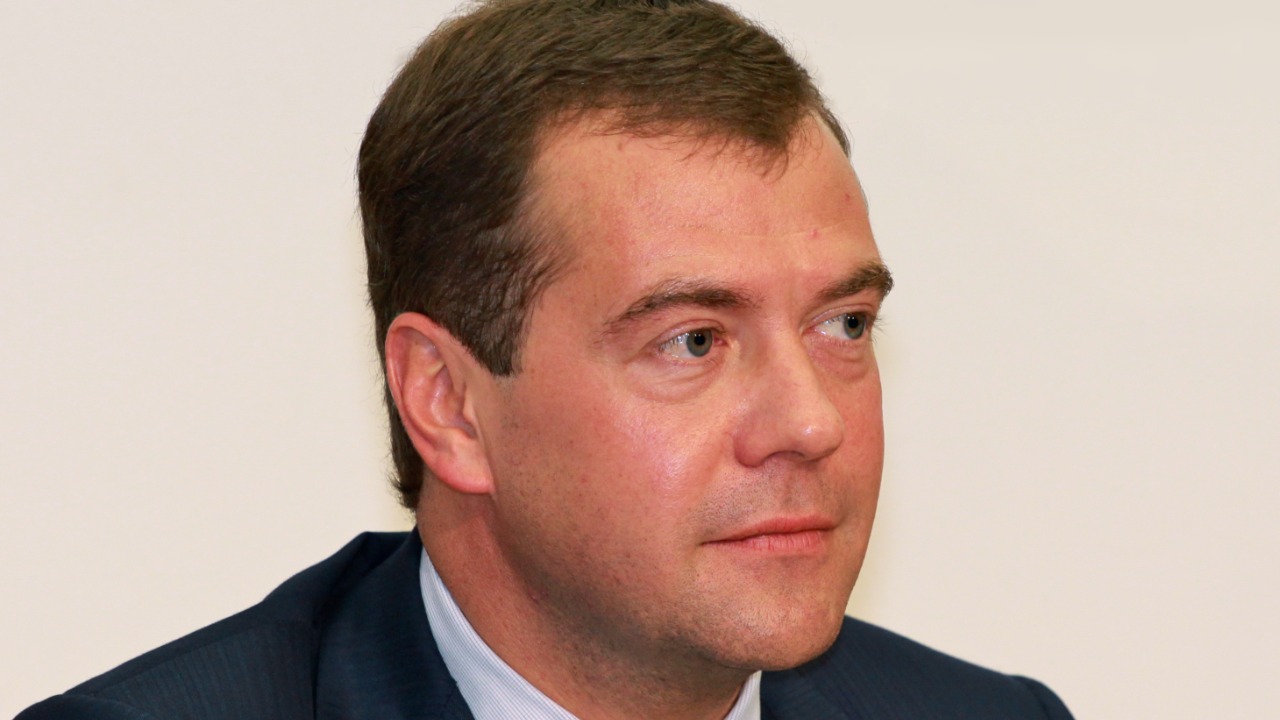
Russia’s former president Dmitry Medvedev has escalated his rhetoric over Europe’s plan to tap frozen Russian assets, warning that using roughly $105 billion parked in Western financial systems would amount to an act of war. His threat turns a technical debate over sanctions and reconstruction funding into a direct confrontation over what counts as “casus belli” in the middle of the conflict in Ukraine.
By framing the European Union’s move as a potential justification for armed conflict, Medvedev is trying to redraw the red lines around economic pressure and military escalation. I see his latest comments as part of a broader Russian strategy to deter deeper Western involvement in financing Ukraine’s defense and recovery, while testing how far European governments are willing to go in weaponizing financial leverage.
Medvedev’s warning: frozen assets as ‘justification for war’
Medvedev’s central claim is stark: if the European Union proceeds with plans to seize or redirect Russian state assets frozen in its jurisdiction, Moscow could treat that as grounds for war. As Deputy Chairman of Russia’s Security Council, he has argued that the seizure of these holdings, valued at about $105 Billion, would not just be an unfriendly act but a direct assault on Russian sovereignty that could be interpreted as a “Justification for War.” His language is designed to leave little ambiguity about how seriously the Kremlin wants Europe to take this financial step, and it fits a pattern of using maximalist threats to shape Western decision making.
Reporting on his latest comments notes that Medvedev framed the European debate over using frozen funds as a threshold moment, warning that if the EU moves from freezing to confiscating, Russia would consider that a qualitatively different escalation. In his view, the transition from sanctions to outright appropriation of state property crosses a legal and political line that could legitimize a military response, a position reflected in coverage that highlights how Medvedev Says EU Seizure of Frozen Assets Could Be Tantamount to a formal casus belli.
How Europe plans to use $105 Billion in Russian funds
On the other side of this confrontation is a European project that has been building for months: turning immobilized Russian assets into a funding stream for Ukraine. The European Commission, the executive arm of the EU, has been examining how to use frozen Russian holdings kept in Euro-denominated accounts to support Kyiv, including both direct budget aid and long term reconstruction. The figure that has crystallized in public debate is $105 Billion, a sum that would significantly bolster Ukraine’s finances if it can be legally redirected without triggering a financial or geopolitical backlash.
European officials have floated several mechanisms, from skimming off windfall profits generated by the frozen reserves to more ambitious proposals that would effectively securitize the assets and use them as collateral for loans. One prominent idea is a large scale package that would provide Ukraine with €90 billion in support, backed by the income or principal from these Russian funds, a concept that has been described as part of The EU effort led by European Commission President Ursula von der Leyen to guarantee long term assistance to Ukraine. The European Commission’s internal work on how to tap Russian assets held in Euro accounts underscores how central this financial lever has become to the bloc’s Ukraine strategy, as reflected in analysis that the institution is actively considering ways to deploy The European Commission controlled Russian reserves.
From sanctions to seizure: why this step is different
Sanctions have been a core Western tool since the start of Russia’s full scale invasion of Ukraine, but until now the focus has been on freezing assets, not permanently taking them. Freezing is meant to immobilize wealth while preserving the legal fiction that ownership remains unchanged, a distinction that allows governments to argue they are applying pressure without violating fundamental property protections. Moving from a freeze to outright seizure or redirection, especially of state assets, is a much more radical step that raises questions about sovereign immunity, treaty obligations, and the precedent it sets for future conflicts.
Medvedev’s argument hinges on this shift. He portrays the EU’s emerging plan as a transformation of sanctions into confiscation, insisting that such a move would be treated as theft of Russian state property. Russian officials have signaled that they would respond in “all possible ways” if European governments cross that line, including pursuing European states in “all possible international and national courts” and targeting Western assets in Russia, a threat captured in warnings that Russia would retaliate if frozen holdings are seized to fund what some in Europe call a “Reparations Loan” for Ukraine.
Medvedev’s legal framing: ‘special casus belli’
To give his warning more weight, Medvedev has tried to wrap it in the language of international law. He has claimed that diverting Russian assets to Ukraine could be treated as a “special casus belli,” suggesting that under certain interpretations of legal norms, such an act would justify a military response. By invoking this concept, he is not just threatening retaliation in general terms, he is arguing that the EU would be the party responsible for escalating the conflict into a broader confrontation.
In his public comments, Medvedev has leaned on the idea that international law protects state property from seizure, especially in the absence of a formal peace settlement or reparations agreement. He has asserted that using Russian funds to back a loan for Ukraine would amount to real reparations paid “in kind,” and that Moscow could respond accordingly. Coverage of his remarks notes that Details of his argument center on the claim that such actions could be treated as a special casus belli, with all the consequences that implies once the EU moves to release the loan to Ukraine.
Ukraine’s stake: financing war and reconstruction
For Ukraine, the debate over frozen Russian assets is not an abstract legal exercise but a question of survival and recovery. Kyiv faces the dual burden of financing its ongoing defense and planning for the reconstruction of cities, infrastructure, and industry devastated by the war. European leaders have increasingly argued that Russia should bear the financial cost of the damage it has caused, and that using immobilized Russian funds is both morally justified and politically necessary to sustain support among European taxpayers.
The EU’s emerging plan envisions a large scale package that would provide Ukraine with €90 billion in support, funded or guaranteed by income from Russian assets. European Commission President Ursula von der Leyen has presented this as a way to lock in long term aid and signal to Moscow that aggression carries a concrete price. The idea of channeling frozen Russian wealth into a dedicated Ukraine facility has been described as part of European Commission President Ursula von der Leyen’s broader strategy to ensure Ukraine has predictable financing for both its war effort and reconstruction. In parallel, detailed reporting on the financial architecture highlights how the European Commission is weighing options to use frozen Russian assets held in Euro accounts to back this support, reinforcing the sense that Russian reserves have become central to Europe’s Ukraine policy.
Russia’s broader retaliation threats against Europe
Medvedev’s warning about war over frozen assets fits into a wider pattern of Russian threats aimed at deterring Western support for Kyiv. Russian officials have repeatedly signaled that if Europe proceeds with seizing or redirecting Russian property, Moscow will respond across multiple fronts. That includes legal action in international and domestic courts, countersanctions, and potential moves against Western companies and citizens still operating in Russia. The message is that Europe’s financial pressure will not go unanswered, and that the costs could be felt well beyond the immediate conflict zone.
Earlier statements from Moscow have already laid the groundwork for this posture. Russian authorities have warned that they will pursue European states “in all possible ways” if frozen assets are confiscated, and that they view the proposed “Reparations Loan” for Ukraine as a hostile act. Coverage of these warnings underscores how European governments are being told to expect retaliation if they move from freezing to seizing. More recently, detailed analysis of the Kremlin’s response notes that Russia Warns of Retaliation as the EU Considers Using $105 Billion in Frozen Assets for Ukraine, with the Russian Reaction framed as a mix of legal, economic, and potentially military countermeasures.
Medvedev’s history of escalatory rhetoric
To understand how seriously to take Medvedev’s latest threat, it helps to look at his track record since the start of the full scale invasion. Once seen as a relatively moderate figure during his presidency, he has reinvented himself as one of the most hawkish voices in Moscow, frequently using vivid and aggressive language to warn the West. His comments often go beyond the more measured statements of other Russian officials, suggesting that part of his role is to test rhetorical boundaries and signal worst case scenarios without formally committing the Kremlin to specific actions.
Early in the war, Medvedev spoke of “binoculars and gunsights” when describing how Russia might view Western countries that continued to arm Ukraine, and he raised the prospect of cutting diplomatic ties with Western states that he accused of hostile behavior. At the time, he suggested that Russia could downgrade or sever relations with countries that joined sanctions or supported Kyiv, a stance captured in reporting that Medvedev also raised the prospect of breaking off diplomatic contacts with Western governments. His evolution from a technocratic president to a hard line Deputy Chairman of Russia’s Security Council helps explain why his warnings about war over frozen assets are both alarming and, in some quarters, seen as part of a familiar pattern of escalatory rhetoric.
Europe’s political calculus and legal tightrope
European leaders now find themselves walking a tightrope between legal caution, political pressure, and strategic necessity. On one hand, there is a strong desire in many capitals to make Russia pay for the destruction in Ukraine, both as a matter of justice and to ease the burden on European taxpayers. On the other, there are serious concerns about the legal basis for seizing state assets, the precedent it would set for future conflicts, and the risk of triggering exactly the kind of escalation Medvedev is warning about. The debate is not just about whether to use the money, but how to do so in a way that can withstand court challenges and maintain the integrity of the international financial system.
Some European policymakers argue that the extraordinary nature of Russia’s aggression justifies extraordinary measures, including the redirection of frozen assets to Ukraine. Others worry that if the EU is seen as disregarding property rights and sovereign immunity, it could undermine confidence in Eurozone financial markets and give other countries a pretext to target European assets in their own jurisdictions. The intensity of Russia’s reaction, including explicit warnings that Russia warns EU seizure of its assets may become reason for war, only sharpens this dilemma. As the European Commission refines its proposals and member states weigh their options, the political calculus will hinge on whether they believe Moscow’s threats are credible or primarily aimed at intimidation.
What Medvedev’s threat signals about the next phase of the conflict
Medvedev’s declaration that using frozen Russian assets could be treated as an act of war is more than a one off outburst, it is a signal about how Moscow views the next phase of the conflict. As the battlefield front lines harden and Ukraine’s immediate military needs remain high, the financial dimension of the war is becoming increasingly central. Control over resources, access to capital, and the ability to sustain long term support are now as strategically important as tanks or missiles. By drawing a red line around the $105 Billion in frozen assets, Russia is trying to limit Europe’s ability to turn its financial power into a decisive advantage for Kyiv.
From my perspective, the confrontation over frozen assets encapsulates the broader struggle between Russia and the West over the rules of the international order. If the EU proceeds and finds a legally defensible way to use Russian funds for Ukraine, it will set a powerful precedent that aggression can carry direct financial penalties beyond traditional sanctions. If Europe backs down in the face of Medvedev’s threats, it may preserve short term stability but at the cost of signaling that economic leverage has hard limits when confronted with nuclear armed resistance. The fact that Medvedev has explicitly threatened Europe with war over frozen Russian assets used for a Ukraine loan, while serving as Deputy Chairman of Russia’s Security Council, underscores how tightly the financial and military dimensions of this conflict are now intertwined.
More From TheDailyOverview
- Tennessee loses $2.6B megafactory and faces major layoffs
- Retired But Want To Work? Try These 18 Jobs for Seniors That Pay Weekly
- What to do with your pennies after the U.S. stops minting them
- Home Depot CEO warns of a troubling customer trend in stores

Grant Mercer covers market dynamics, business trends, and the economic forces driving growth across industries. His analysis connects macro movements with real-world implications for investors, entrepreneurs, and professionals. Through his work at The Daily Overview, Grant helps readers understand how markets function and where opportunities may emerge.

