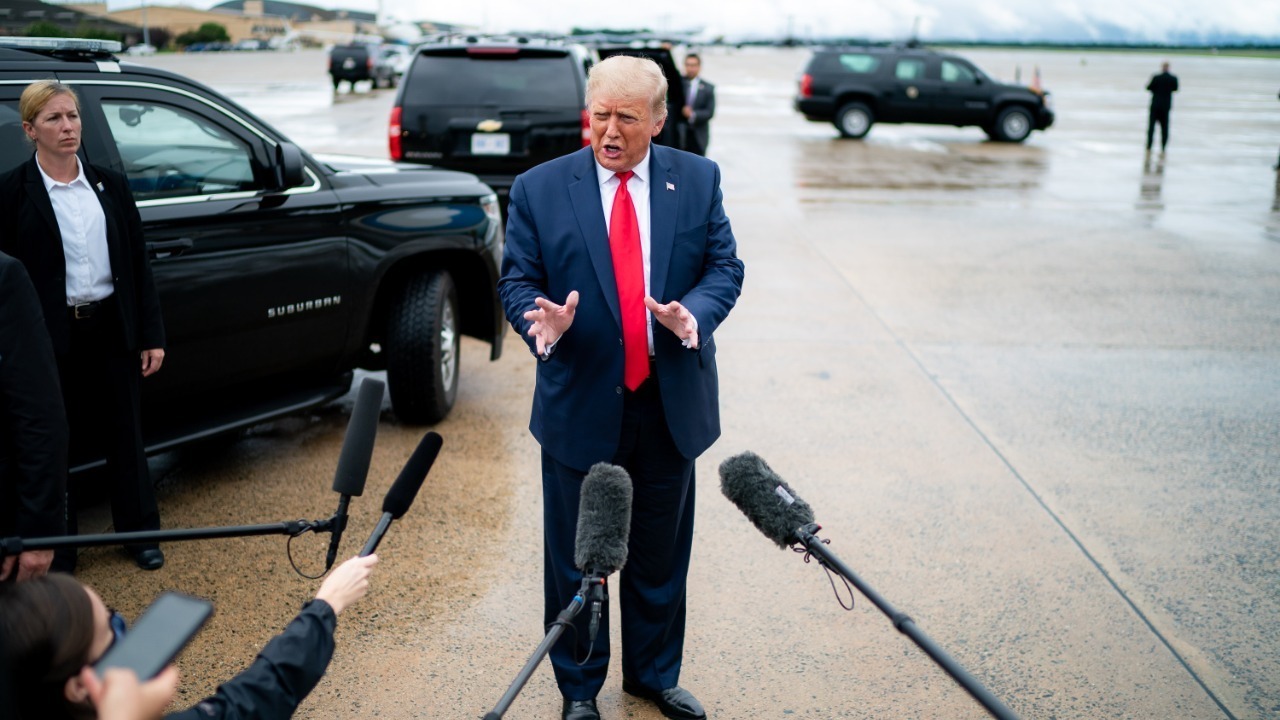
Voters are not just unhappy about high prices, they are increasingly pointing the finger at the man in the Oval Office. A cluster of new polling shows that even people who backed Donald Trump now say the cost of living is the worst they can remember and that the president bears direct responsibility for it.
Instead of rewarding Trump for a strong job market headline or stock market gains, these voters are zeroing in on grocery bills, rent hikes, and car payments that feel out of reach. The result is a brutal verdict on his stewardship of the economy, one that cuts into his base and helps explain why his approval ratings are sliding.
The cost-of-living shock that will not fade
Across the political spectrum, Americans are describing the cost of daily life in extreme terms, not as a temporary squeeze but as a historic shock. In a Damning New Poll, respondents say the cost of living is the “Worst They Can Ever Remember,” language that captures how far frustration has moved beyond normal grumbling about prices. When people compare their current situation to every other period in their lifetimes and still say it has never felt this bad, that is a political alarm bell.
What stands out in that research is not just the intensity of the anger but its breadth. The poll shows that a rising number of people who supported President Donald Tr in the last election now share the same bleak assessment as his critics, describing the cost of basics like housing, food, and utilities as unsustainable. When a Damning New Poll finds that Americans Say Cost Of Living Is the Worst They Can Ever Remember, it signals that the economic story Trump wants to tell, one of a country roaring back, is colliding with the lived reality of families who feel poorer each month.
Trump’s base starts to turn on affordability
The most politically dangerous shift for Trump is not that his opponents think he is mishandling the economy, it is that parts of his own coalition are starting to say so. A new poll of his supporters shows that people inside MAGA circles are now blaming Trump for the cost-of-living crisis, a striking break from the reflexive loyalty that has defined the movement. The research, conducted as a standard poll of registered voters, finds that the same voters who once cheered his attacks on “fake news” and the “deep state” are now more likely to complain about rent, gas, and grocery prices than about culture-war grievances.
In that survey, a significant share of self-identified MAGA voters say the affordability crunch has reached a “worst ever” point and explicitly connect that pain to Trump’s policies and priorities. The finding that MAGA is turning on Trump as the cost-of-living crisis hits “worst ever” levels, documented in a new poll, undercuts the idea that his base will tolerate any economic conditions as long as he keeps fighting their cultural battles. Instead, it suggests that even the most fervent supporters have a breaking point when their paychecks no longer cover the basics.
Polls show Trump voters blaming him directly
Beyond general dissatisfaction, new data shows that Trump voters are not just upset about prices, they are assigning responsibility to the president himself. In a Politico survey conducted by Public First, 37% of people who backed Trump in 2024 reported that the cost of living has become harder to manage, a precise figure that captures how deeply the strain has penetrated his own ranks. When more than a third of a president’s recent supporters say their household budgets have deteriorated on his watch, it becomes difficult to argue that discontent is confined to partisan opponents.
The same survey highlights a broader perception that Trump is neglecting the economy and inflation, with respondents describing a White House more focused on messaging than on relief. While some Harris voters also report financial stress, the fact that 37% of Trump backers say their cost of living has worsened, as recorded in the Politico survey by Public First, shows that the economic narrative is slipping out of the president’s control. Instead of crediting him for cleaning up Joe Biden’s economic legacy, many of his own voters now see him as presiding over an era of higher bills and an unsteady job market.
Affordability pessimism spreads across the United States
Economic gloom is not limited to a few hard-hit regions, it is spreading across the United States in ways that cut across geography and ideology. In one detailed poll, Forty-three percent of respondents, including 31% of Trump’s base, argued there is less economic opportunity in the United States compared with the recent past. That figure captures a sense that the country is moving backward, not just in terms of prices but in the broader promise that hard work will lead to a better life.
Those numbers are especially striking because they come at a time when official statistics still show low unemployment and solid corporate profits. The gap between macroeconomic indicators and personal experience is widening, and voters are responding by downgrading their expectations for the future. The finding that Forty-three percent, including 31% of his base, see less opportunity in the United States, as reported in a new poll, shows that Trump’s repeated insistence that affordability concerns are a “con job” is not persuading people who are living with higher rent, steeper car insurance premiums, and rising childcare costs.
Approval Rating Slips as Economic Concerns Grow
The political cost of this economic frustration is already visible in Trump’s standing with the public. His Approval Rating Slips at the same time Americans’ Economic Concerns Grow, a pattern that reflects how central kitchen-table issues remain in national politics. When voters tell pollsters that they are feeling the squeeze from high prices, they are also more likely to say they disapprove of the president’s performance, even if they once supported him enthusiastically.
One Gallup poll shows that Trump’s approval has fallen to a new low as people report that their paychecks are not keeping up with inflation and that they see little sign of relief on the horizon. The survey notes that Americans are feeling the squeeze from the high cost of living and that this pressure is eroding confidence in Trump’s leadership. The finding that Trump’s Approval Rating Slips as Americans’ Economic Concerns Grow, documented in a Gallup poll, underscores how tightly his political fate is now tied to whether voters feel any improvement in their day-to-day finances.
A presidency defined by economic anxiety
Trump built his political brand on the promise of economic strength, but the latest numbers suggest his presidency is being defined instead by anxiety about household budgets. In another national survey, respondents describe a climate in which wages feel stagnant while bills keep climbing, and they increasingly blame the president for failing to deliver the prosperity he promised. The phrase Approval Rating Slips appears again in this context, paired with the observation that Americans’ Economic Concerns Grow, reinforcing the sense that the economic mood is souring in ways that are directly connected to Trump’s tenure.
That same research notes that Forty-five percent of respondents now say they are worse off financially than they were before, while the share who report increased household incomes has shrunk dramatically. Those are devastating numbers for any incumbent, but they are especially damaging for a leader who has framed himself as a business-savvy dealmaker. The analysis that Trump’s Approval Rating Slips as Americans’ Economic Concerns Grow, and that Could the dissatisfaction provide an opening for his rivals, is laid out in detail in a recent report that tracks how perceptions of personal finances are dragging down his support.
Why Trump’s messaging is not breaking through
Trump has tried to counter these perceptions by insisting that the economy is strong and that complaints about affordability are exaggerated or politically motivated. He frequently points to stock market highs and corporate investment announcements as proof that his policies are working. Yet the polling suggests that this message is not breaking through to voters who are more focused on the cost of a week’s groceries at Walmart or the monthly payment on a 2022 Honda CR-V than on the Dow Jones Industrial Average.
Part of the problem is that Trump’s rhetoric often clashes directly with people’s lived experience. When he dismisses concerns about rent spikes or medical bills, it can sound to struggling families like he is telling them not to believe their own bank statements. The Damning New Poll that finds Americans Say Cost Of Living Is the Worst They Can Ever Remember, detailed in a separate poll report, shows that this disconnect is not limited to his critics. It extends to President Donald Tr voters who once embraced his economic bravado but now say their own budgets tell a different story.
How everyday prices are reshaping political loyalties
When I look at these numbers, what stands out is how specific, everyday expenses are reshaping political loyalties that once seemed immovable. A Trump voter who shrugged off controversies about his rhetoric or legal troubles might still reconsider their support when the rent on a two-bedroom apartment jumps by hundreds of dollars or when the cost of feeding a family of four at Costco climbs month after month. Poll respondents talk about cutting back on streaming services like Netflix, delaying repairs on a 2015 Ford F-150, or skipping vacations, and then tie those sacrifices directly to what they see as Trump’s failure to get prices under control.
This is why the figure that 37% of Trump voters in the Politico survey conducted by Public First say their cost of living has worsened is so politically potent. It reflects not just abstract disapproval but a sense of personal betrayal, a feeling that the president who promised to “make America rich again” has left them poorer instead. Combined with the finding that Forty-three percent, including 31% of his base, see less opportunity in the United States, the data suggests that high prices are doing what few scandals ever could, prying open cracks in the foundation of Trump’s support.
What the numbers mean for Trump’s political future
All of this raises a blunt question about Trump’s political future, even if the polls themselves do not answer it directly. A president can survive low approval ratings for a time, especially in a polarized era, but it is much harder to win back voters who feel economically abandoned. When Trump’s Approval Rating Slips as Americans’ Economic Concerns Grow, and when MAGA voters themselves start to say the cost of living is the worst they can remember, it suggests that the old formula of grievance politics plus economic boasting may no longer be enough.
For now, the data paints a picture of a country where high prices have become the central lens through which people judge their leaders. Trump still has a passionate core of supporters, but the brutal reality of rent checks, grocery receipts, and utility bills is cutting into that loyalty in ways that could reshape the next campaign. If the Damning New Polls and the Politico survey conducted by Public First are any guide, the president’s biggest political opponent is not a rival candidate, it is the monthly budget spreadsheet that even his own voters now blame him for breaking.
More From TheDailyOverview
- Tennessee loses $2.6B megafactory and faces major layoffs
- Retired But Want To Work? Try These 18 Jobs for Seniors That Pay Weekly
- What to do with your pennies after the U.S. stops minting them
- Home Depot CEO warns of a troubling customer trend in stores

Grant Mercer covers market dynamics, business trends, and the economic forces driving growth across industries. His analysis connects macro movements with real-world implications for investors, entrepreneurs, and professionals. Through his work at The Daily Overview, Grant helps readers understand how markets function and where opportunities may emerge.