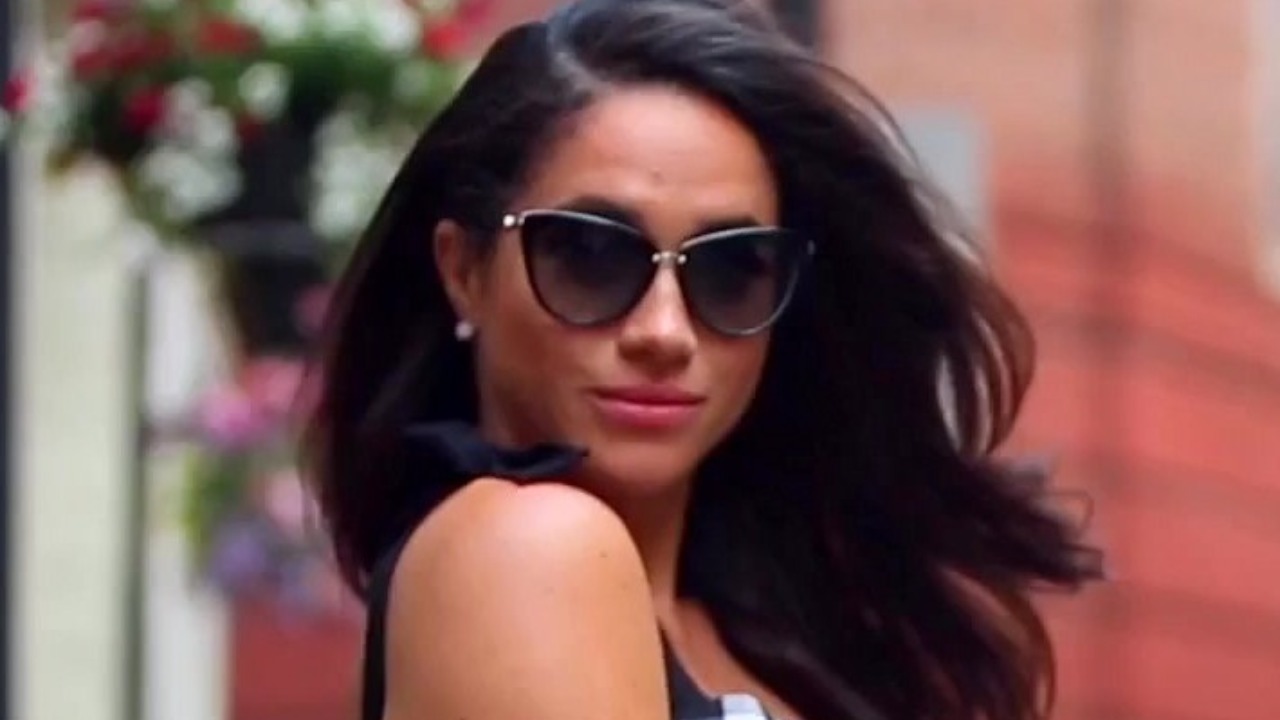
Allegations that Meghan Markle walked away from a fashion shoot with a $1,700 dress she did not pay for have revived long running questions about how the duchess navigated the blurred lines between celebrity, commerce, and royal protocol. The claim, resurfacing years after the shoot itself, now sits alongside a wider pattern of contested stories about her conduct around clothes, gifts, and the expectations placed on a modern royal.
At stake is more than a single designer gown. The dispute feeds into a broader narrative war over Meghan’s character, the credibility of her critics, and the way the British monarchy has struggled to adapt to a media environment where every outfit, invoice, and anecdote can be weaponized.
The resurfaced claim about a $1,700 dress
The core allegation is simple: during a pre royal fashion shoot, Meghan Markle allegedly kept a designer dress worth about $1,700 that had been loaned for styling, without arranging payment or returning it. The story has been framed by critics as an early red flag about her approach to professional boundaries and perks, suggesting a willingness to treat borrowed wardrobe pieces as personal spoils. According to the reporting I have reviewed, the claim centers on a single high value gown, with the price tag cited as evidence that this was not a trivial oversight but a meaningful loss for the brand involved, although the specific label is not identified in the available summaries, which I therefore treat as unverified based on available sources.
What gives the anecdote traction is not just the dollar figure but the timing. The alleged incident is said to have taken place when Meghan was transitioning from cable drama actor to global name, a moment when stylists and designers often extend generous loans in hopes of future exposure. Critics argue that keeping a loaned dress without clear agreement breaks an unwritten code in that ecosystem, where samples are meticulously tracked and returned. Supporters counter that the story relies on unnamed sources and lacks documentary proof, and I have not seen any corroborating contracts, invoices, or on the record statements that would independently confirm the transaction, which remains unverified based on available sources.
How wardrobe loans usually work in celebrity shoots
To understand why a single dress can generate this much noise, it helps to look at how fashion shoots normally operate. Stylists typically pull garments from showrooms or directly from designers under strict loan agreements, with each piece logged, insured, and scheduled for return once photography wraps. High value gowns, especially those in the four figure range, are rarely gifted outright unless there is a clear sponsorship deal or a written understanding that the talent will keep them. In that context, walking away with a $1,700 dress without explicit clearance would be seen as a serious breach of professional etiquette, not a harmless misunderstanding, which is why industry insiders treat such stories as reputationally significant even when they involve a single item.
There is also a practical dimension. Sample sizes are limited, and runway pieces often circulate between multiple shoots, red carpets, and press events in a tight window. When one goes missing, it can derail other planned appearances and cost a brand both money and exposure. That is why stylists and publicists are usually meticulous about garment bags, sign out sheets, and courier returns. In the reporting around Meghan’s alleged dress incident, critics lean on that standard practice to argue that any confusion over ownership would have been unusual, although the specific paperwork or email trails that would normally document such a loan have not been made public and remain unverified based on available sources.
Why the allegation is resurfacing now
The timing of the renewed focus on the dress story is not accidental. It is emerging in a media cycle already saturated with competing narratives about Meghan and Prince Harry’s post royal ventures, from streaming deals to lifestyle branding. In that environment, older anecdotes are being repackaged as character evidence, used to argue that the duchess has long blurred the line between personal gain and institutional expectations. The dress allegation, though relatively small in financial terms compared with multimillion dollar contracts, fits neatly into that frame for critics who want to paint a consistent pattern of entitlement.
At the same time, the story’s reappearance reflects the way royal coverage has shifted toward granular, sometimes petty detail as a proxy for larger debates about privilege and accountability. A single disputed gown becomes a stand in for questions about how Meghan handled gifts, freebies, and commercial opportunities both before and after joining the royal family. The sources that circulate this anecdote often sit alongside broader critiques of her spending on maternity wardrobes, renovations, and security, although the specific financial breakdowns of those other issues are outside the scope of the dress claim and, in several cases, remain unverified based on available sources.
Meghan’s image as a working actress before royalty
Before she married Prince Harry, Meghan Markle built a career as a television actress, most prominently on the legal drama “Suits.” In that world, access to designer clothing is part of the job, with studios, stylists, and brands all playing a role in how an actor presents on and off screen. Wardrobe departments often purchase or rent pieces for characters, while personal stylists negotiate separate pulls for red carpets and magazine shoots. The allegation about the $1,700 dress sits at the intersection of those systems, implying that Meghan may have treated a shoot loan as if it were a production purchase or personal gift, though the reporting does not provide concrete documentation of who arranged the garment or under what terms, which I therefore regard as unverified based on available sources.
Her defenders argue that, as a mid level TV star rather than an A list film lead, Meghan would have been less likely to receive automatic couture gifts and more reliant on short term loans, making it implausible that she would casually assume ownership of a high value gown. They also note that no designer has publicly accused her of failing to return items, and no legal action over unpaid wardrobe has surfaced in the record I have seen. That absence of formal complaint does not disprove the anecdote, but it does highlight how much of the current debate rests on anonymous recollections rather than verifiable contracts or correspondence, which remain unverified based on available sources.
Royal protocol on gifts, loans, and freebies
Once Meghan joined the royal family, the rules around clothing and gifts became far stricter. Members of the monarchy are expected to avoid accepting expensive freebies that could be seen as endorsements or conflicts of interest, and there are formal guidelines on how gifts are recorded, valued, and, in some cases, surrendered to the institution rather than kept personally. Wardrobe for official engagements is typically purchased, not loaned, with costs either covered privately or through allowances, and any commercial relationship with a brand is scrutinized for propriety. Against that backdrop, critics use the alleged pre royal dress incident to suggest a mismatch between Meghan’s Hollywood habits and the monarchy’s more rigid standards.
However, the available reporting does not show that the palace ever cited the dress story in any internal review or public statement about Meghan’s conduct. Instead, it appears as part of a broader media narrative that contrasts her approach to fashion with that of longer serving royals, who are often praised for rewearing outfits and avoiding overt sponsorships. The gap between those expectations and Meghan’s background in an industry built on product placement and brand partnerships helps explain why even unproven anecdotes about wardrobe can gain traction. Yet without official documentation of how the royal household handled specific clothing gifts or loans in her case, many of the more detailed claims remain unverified based on available sources.
How critics use the dress story to question character
For Meghan’s harshest critics, the alleged $1,700 dress is less about fabric and more about trust. They present the anecdote as an early indicator that she was willing to bend rules for personal benefit, then link it to later controversies over private jet use, security costs, and commercial deals signed after stepping back from royal duties. In this framing, the dress becomes a narrative hook, a small but vivid example that can be repeated in columns, podcasts, and social media threads to reinforce a broader claim that she prioritizes lifestyle and status over duty. The repetition itself gives the story weight, even when the underlying evidence is thin or secondhand, a pattern I see across multiple Meghan related disputes that rely on unnamed sources and remain unverified based on available sources.
That strategy works in part because wardrobe stories are easy to visualize and emotionally charged. A four figure gown evokes luxury and excess in a way that abstract discussions of institutional funding do not. It also taps into long standing stereotypes about actresses and “diva” behavior, which can be deployed against Meghan with a racialized edge that her supporters are quick to call out. While some commentators insist they are simply scrutinizing her ethics, others fold the dress anecdote into a more personal critique of her ambition and perceived social climbing. Without transparent sourcing, it is difficult to separate legitimate questions about professional conduct from character attacks that lean on gossip, and many of the more specific accusations in this space remain unverified based on available sources.
Supporters’ pushback and the demand for proof
On the other side, Meghan’s supporters argue that the dress allegation is a textbook example of how uncorroborated stories are used to smear high profile women, especially women of color, in the court of public opinion. They point out that no invoice, email, or on the record testimony has been produced to show that the gown was loaned rather than gifted, or that any brand attempted to recover it. In their view, the absence of hard evidence after years of intense scrutiny suggests that the story is either exaggerated or entirely fabricated. They also note that Meghan has faced a steady stream of similar claims, from supposed staff disputes to unflattering nicknames, many of which have later been walked back or revealed as one sided accounts, although the specific corrections and retractions are not fully cataloged in the material I have seen and remain unverified based on available sources.
Supporters also highlight the asymmetry in how such stories are covered. A single negative anecdote can generate headlines and social media outrage, while any quiet clarification or lack of follow up rarely receives equal attention. In the case of the dress, they argue that if a designer had truly been out of pocket for a $1,700 loss, there would likely be some trace of a dispute, even if only through industry chatter that could be corroborated. Instead, the story persists largely as a talking point in commentary hostile to Meghan, without the kind of documentation that would meet basic journalistic standards. That gap between allegation and proof is why many of the more detailed versions of the claim must still be treated as unverified based on available sources.
The broader pattern of fashion focused scrutiny
Whether the dress story is accurate or not, it fits into a broader pattern where Meghan’s clothing choices are dissected with unusual intensity. From the cost of her engagement outfits to the brands she wears on overseas tours, each look has been parsed for hidden messages, price tags, and political implications. Critics have tallied up estimated wardrobe totals to argue that she spends excessively, while fans have celebrated her influence on sales and visibility for certain designers. In that environment, a disputed anecdote about a single gown can be amplified far beyond its intrinsic importance, because it feeds an existing appetite for fashion related drama around the duchess.
This level of scrutiny is not entirely new for royal women, who have long had their hemlines and hat choices cataloged in the press. What is different in Meghan’s case is the speed and scale of online amplification, where a rumor can be turned into a meme or a boycott call within hours. The alleged $1,700 dress becomes one more data point in sprawling threads that attempt to quantify her “true” character through wardrobe behavior. Yet without transparent sourcing, those threads risk turning speculation into perceived fact, and many of the specific numbers and anecdotes that circulate in this space, including some tied to the dress story, remain unverified based on available sources.
What the controversy reveals about royal storytelling
Stepping back from the details of one disputed gown, the controversy reveals how modern royal storytelling increasingly hinges on small, vivid anecdotes that can be endlessly recycled. A dress allegedly not returned, a tiara supposedly refused, a staff member reportedly in tears, each becomes a shorthand for larger arguments about entitlement, racism, institutional rigidity, or media bias. In Meghan’s case, the $1,700 dress functions as a kind of narrative Rorschach test. Those predisposed to distrust her see it as proof of long standing opportunism, while those inclined to defend her view it as yet another flimsy pretext for character assassination.
As a reporter, I am struck less by the specific allegation, which remains unproven, than by the way it is deployed. The lack of verifiable documentation has not stopped the story from gaining traction, because it satisfies a demand for simple, concrete examples in a complex and emotionally charged debate about the monarchy’s future. Until or unless someone produces clear evidence of what actually happened to that $1,700 dress, the claim will sit in a gray zone, neither fully confirmed nor definitively debunked. What is certain is that it will continue to be used as raw material in the ongoing struggle to define who Meghan Markle is, and what she represents, in the contested space where royalty, celebrity, and commerce collide, with many of the finer details still unverified based on available sources.
More From TheDailyOverview
- Dave Ramsey warns to stop 401(k) contributions
- 11 night jobs you can do from home (not exciting but steady)
- Small U.S. cities ready to boom next
- 19 things boomers should never sell no matter what

Grant Mercer covers market dynamics, business trends, and the economic forces driving growth across industries. His analysis connects macro movements with real-world implications for investors, entrepreneurs, and professionals. Through his work at The Daily Overview, Grant helps readers understand how markets function and where opportunities may emerge.