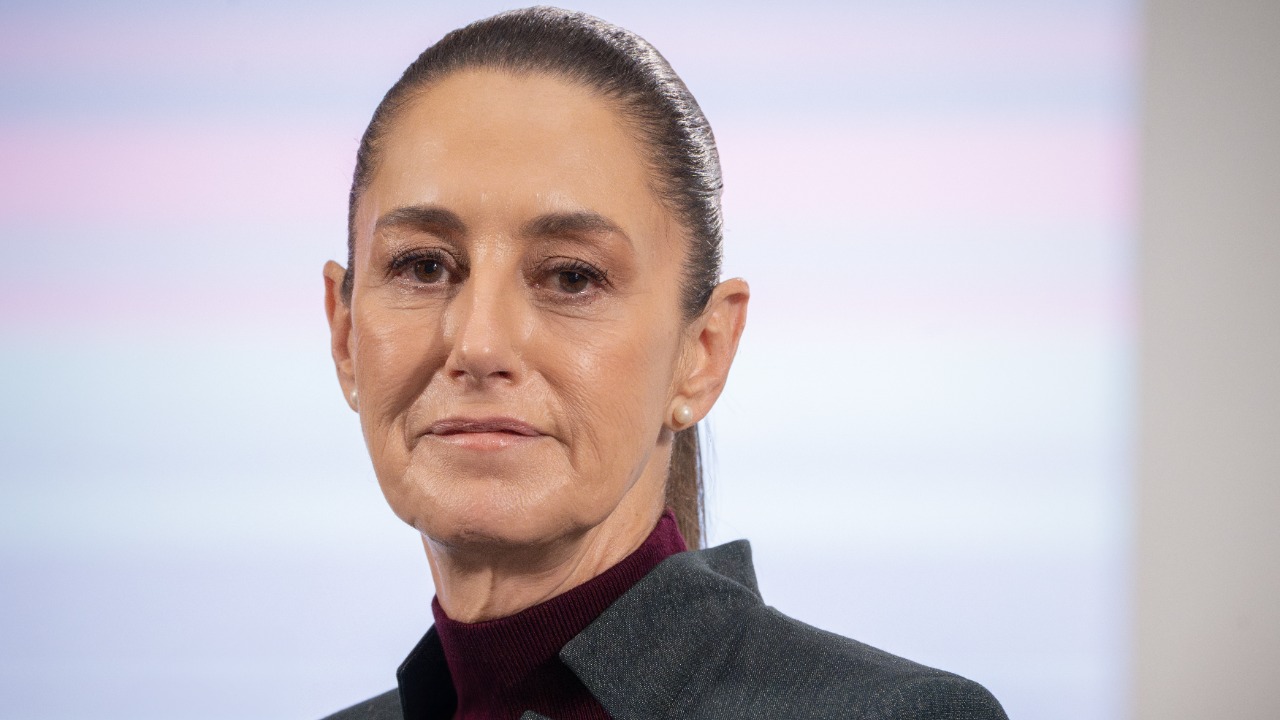
Mexico’s abrupt decision to pause state oil shipments to Cuba has jolted regional diplomacy, energy markets and the island’s already fragile economy. The move, confirmed by President Claudia Sheinbaum after days of speculation, interrupts a lifeline that has helped Havana keep the lights on and public transport running through years of fuel scarcity. It also lands at a moment when Washington is tightening its stance on the Cuban government, raising questions about whether Mexico is recalibrating its foreign policy or simply asserting its independence.
For Cuba, which has long relied on friendly governments to offset United States pressure, the halt is more than a technical trade adjustment. It exposes how vulnerable the island remains to shifts in political winds across the hemisphere and tests Sheinbaum’s promise to blend continuity with a more pragmatic, domestically focused presidency.
The decision Sheinbaum could no longer sidestep
When reports first surfaced that Mexico had stopped sending oil to Cuba, Mexican President Claudia Sheinbaum initially chose her words carefully. Pressed in MEXICO CITY on a Tuesday in Jan, she did not deny that shipments had been halted, instead acknowledging scrutiny of the policy while avoiding a detailed explanation of timing or volumes, according to Reuters. That cautious posture reflected the sensitivity of a decision that touches on ideology, energy security and Mexico’s long-standing claim to an independent foreign policy.
Within hours, the ambiguity gave way to a clearer admission. Mexican President Claudia Sheinbaum later said Tuesday that her government had at least temporarily stopped oil shipments to Cuba, describing the move as a pause rather than a rupture and insisting it was not made under pressure from the United States, as detailed in a video statement linked to Mexican President Claudia. By framing the halt as temporary and sovereign, she tried to reassure both domestic audiences wary of subsidizing foreign governments and international partners watching for signs of alignment with Washington.
Why Cuba is so exposed to a Mexican pause
Cuba’s dependence on imported fuel is not new, but the loss of Mexican barrels hits at a particularly vulnerable moment. The island’s economy has been battered by years of weak growth, pandemic shocks and tightening United States sanctions, leaving Havana scrambling for crude and refined products to keep power plants and public services functioning. Any disruption in external supply, especially from a politically friendly country, deepens the risk of blackouts and transport shortages for ordinary Cubans, a reality underscored by the country profile accessible through a general search on Cuba.
Mexico had emerged as one of the few governments willing to ship oil to Cuba despite the diplomatic costs, a role that carried symbolic weight as well as practical impact. By pausing those flows, Sheinbaum has forced Havana to look again to other partners and to ration already scarce fuel, even as she stresses that the decision is a matter of Mexican priorities rather than a judgment on the Cuban system. For Cuba’s leadership, the episode is a reminder that solidarity from abroad can be contingent and that even ideological allies must answer to their own domestic pressures.
Domestic politics and the Presidency of Claudia Sheinbaum
To understand why Sheinbaum moved now, it helps to look at how she has defined her presidency. The Presidency of Claudia began in October 2024 and has been framed as a continuation of the Morena project, with President Claudia Sheinbaum relying on a Cabinet and Party structure that seeks to consolidate social programs while pursuing constitutional reforms. Within that agenda, foreign policy has often been presented as an extension of domestic priorities, particularly energy sovereignty and the protection of state oil company revenues.
Her political identity is also shaped by the historic nature of her election. World Updated coverage from Oct noted that she was sworn in as Mexico’s first female president in MEXICO CITY, with the report specifying the time as 1:44 PM EST and 11:19 AM EST Published, details that underscore how closely her rise has been watched inside and outside the country, as reflected in the profile of her inauguration on World Updated. Those expectations mean that every major foreign policy move, including the Cuba oil pause, is read not only as a technical adjustment but as a signal of how she balances ideology, pragmatism and Mexico’s place in the world.
Energy calculus: Pemex, budgets and a finite barrel
Behind the diplomatic language lies a hard energy arithmetic. Mexico’s state oil company has struggled with production declines, heavy debt and the cost of domestic fuel subsidies, leaving limited room for politically motivated exports. By suspending shipments to Cuba, Sheinbaum can redirect some supply to the home market or reduce the fiscal burden of selling oil on concessional terms, a tradeoff that aligns with her emphasis on strengthening state-led energy policy as described in the broader outline of the Presidency of Claudia.
Sheinbaum has also spent weeks signaling that she would review external commitments that do not clearly serve Mexican interests. In an interview highlighted by KPBS Public Media, she indicated that as a Mexican leader she must prioritize her own citizens, a stance echoed when the Mexican president said her country has paused oil shipments to Cuba, as reported by Mexican. That framing allows her to present the Cuba decision as a rational allocation of scarce resources rather than a geopolitical pivot, even if the regional implications are unavoidable.
Trump, regime change talk and U.S. pressure
The timing of Mexico’s move has inevitably drawn attention in Washington, where President Donald Trump has been sharpening his rhetoric on Havana. According to one account, Mexico has temporarily ended oil shipments to Cuba at the same moment Trump is said to be eyeing regime change and pushing for a change in the Cuban government, a linkage described in coverage of how Mexico, Cuba and Trump are interacting in the current climate, as seen in the analysis hosted by Mexico. That narrative suggests the pause could be read in Havana as part of a broader campaign of pressure, even as Sheinbaum publicly rejects the idea that she is coordinating with the United States.
Another version of the story, circulating in a short video clip, even misidentifies the Mexican leader as President Claudia Shinebomb while asserting that her country is temporarily suspending oil shipments to support a tougher line on the Cuban government, as seen in the footage shared on Cuban. The contrast between that framing and Sheinbaum’s insistence that the decision was not made under United States pressure, as reiterated in her own remarks, highlights how contested the interpretation has become. Source material that attributes the move to Trump’s regime change ambitions sits uneasily alongside Sheinbaum’s portrayal of a sovereign, economically driven choice, leaving observers to weigh which explanation carries more weight.
Sheinbaum’s own explanation: sovereignty and limits
In her public comments, Sheinbaum has tried to reclaim the narrative from both critics and would-be allies. Speaking as Mexican President Claudia Sheinbaum, she emphasized that the pause in oil shipments to Cuba is at least temporary and that Mexico retains the right to reassess its commitments as conditions change, a position she laid out in remarks captured in a video statement linked through Tuesday. She framed the decision as consistent with Mexico’s tradition of non-intervention, arguing that choosing where to send oil does not equate to endorsing or condemning another country’s political system.
At the same time, she has acknowledged that Mexico cannot be all things to all partners. In comments summarized by KPBS Public Media, Sheinbaum has spent weeks saying she would review external commitments and that her government must be realistic about what it can afford, a stance reflected in the report that the Mexican president says her country has paused oil shipments to Cuba, as noted by KPBS. That message is aimed as much at Mexican voters, who may question subsidized exports amid domestic needs, as at foreign observers looking for signs of a shift in Mexico’s ideological compass.
Regional ripple effects and what comes next
Mexico’s pause reverberates beyond Havana and Mexico City, reshaping perceptions of Latin American solidarity at a time of renewed geopolitical competition. For governments that have long counted on Mexico to hedge against United States pressure, the decision raises doubts about how far Sheinbaum will go to support left-leaning allies when it conflicts with her energy and fiscal priorities. It also complicates the calculus for other countries that have provided fuel or credit to Cuba, who must now decide whether to step in or quietly follow Mexico’s lead, a debate that is already surfacing in commentary that links Mexico halts oil shipments to Cuba as Trump eyes regime change, as seen in the analysis hosted by Cuba.
For Sheinbaum personally, the episode is an early test of how she manages competing pressures from Washington, regional partners and her own base. Her inauguration coverage, which noted at 1:44 PM EST that she was taking office as Mexico’s first female president and at 11:19 AM EST Published that she planned to visit key partners soon after, underscored the high expectations surrounding her diplomacy, as captured in the profile on EST. How she navigates the fallout from the Cuba oil pause, and whether she eventually restores or permanently ends those shipments, will help define not only her foreign policy legacy but also Mexico’s evolving role in a hemisphere once neatly divided between ideological camps.
More From TheDailyOverview
*This article was researched with the help of AI, with human editors creating the final content.

Grant Mercer covers market dynamics, business trends, and the economic forces driving growth across industries. His analysis connects macro movements with real-world implications for investors, entrepreneurs, and professionals. Through his work at The Daily Overview, Grant helps readers understand how markets function and where opportunities may emerge.

