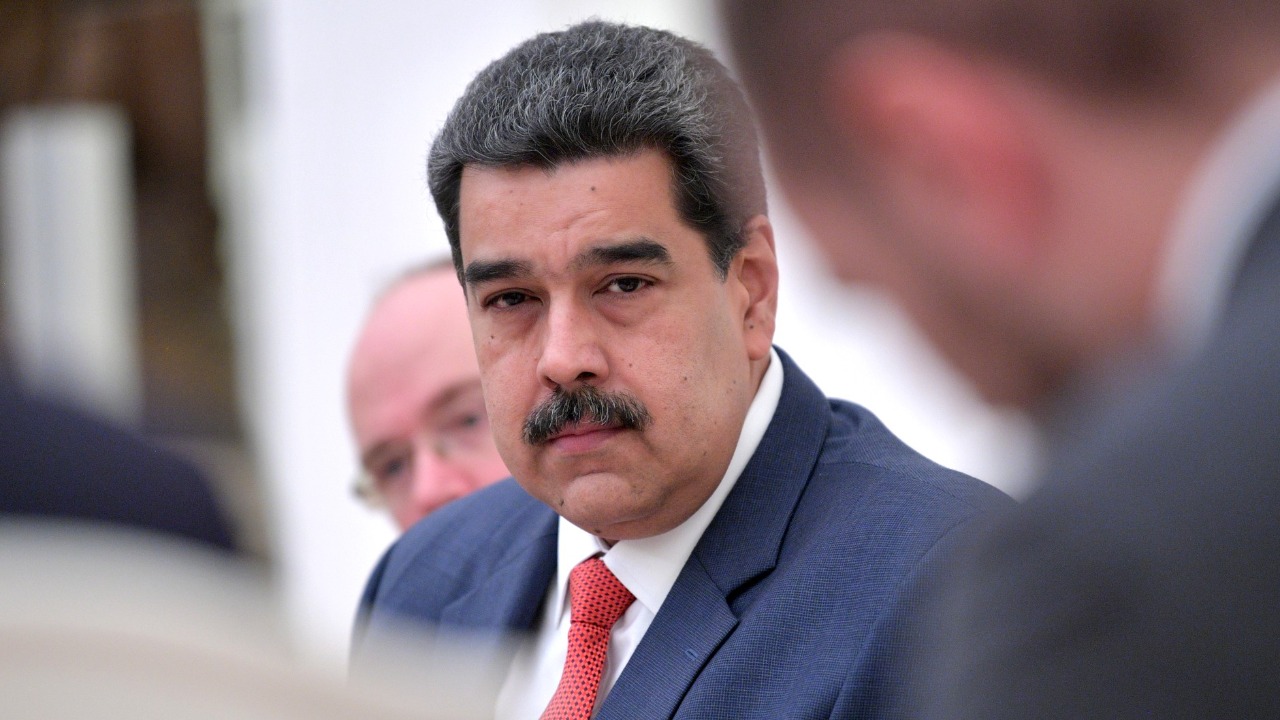
The overnight capture of Nicolás Maduro has turned Venezuela from a pariah into the newest fulcrum of global energy politics, and Michael Burry is among the first to spell out what that means for Moscow. By his reading, putting Caracas back inside a U.S. security and investment umbrella instantly chips away at Russia’s leverage in oil markets and, by extension, its geopolitical reach. I see his argument as a simple equation: the more barrels that can flow from Venezuela under American control, the less indispensable Russia looks in the intermediate and long term.
From “Big Short” to big geopolitics
Michael Burry built his reputation by spotting structural imbalances before they cracked, most famously when he anticipated the subprime mortgage collapse portrayed in The Big Short. His latest warning is not about housing or banks, but about how the sudden regime change in Venezuela could reorder energy power, particularly for Russia. In his view, the ousting of Maduro is not just a Latin American story, it is a direct hit to one of America’s biggest rivals in oil and gas.
Burry has argued that with Maduro gone and Venezuela’s vast reserves opened to Western capital, “Russia oil just became less important in the intermediate and long term,” a line that captures his thesis that Moscow’s global standing is tied to its role as a swing supplier. He points to the fact that Venezuela contains about 19% of the world’s proven oil reserves, a stockpile that has been underused for years but can now be mobilized in ways that compete with Russian exports, a dynamic he laid out in detail when he said the toppling of Maduro would weaken Russia’s global standing.
The overnight raid that changed Caracas
The speed and scale of the U.S. operation in Venezuela are central to why Burry sees a step change rather than a gradual shift. U.S. forces captured Maduro and his wife, Cilia Flores, in a large-scale attack on the South American nation that unfolded overnight, removing the leadership in a single coordinated strike. That kind of decisive intervention, backed directly by Washington, signals that Venezuela is now firmly inside an American security perimeter rather than drifting between rival patrons.
Maduro is now in a New York jail, a detail that underscores how completely the old regime has been dismantled and how little room there is for a negotiated return to the status quo ante. President Donald Trump has framed the outcome bluntly, saying the United States will effectively “run” Venezuela after the bombing campaign and military seizure of power, a message reinforced by reports that the U.S. military seized Maduro in a series of strikes that left him facing American justice in New York, as described in coverage of how Maduro now sits in jail.
Trump’s promise: billions into Venezuelan oil
For Burry’s thesis to matter, regime change has to translate into real barrels, and that is exactly where the White House is steering policy. President Trump has said that U.S. oil companies will invest billions of dollars in Venezuela after Maduro’s overthrow, effectively promising a flood of American capital into fields that have been starved of maintenance and technology. The message to markets is that Washington intends to move quickly from military action to commercial exploitation.
The same remarks made clear that U.S. forces captured Maduro and Cilia Flores in that overnight operation, tying the political clean break directly to the investment push that will follow. By linking the removal of the old leadership to a new era of U.S. corporate involvement, Trump is signaling that Venezuela’s oil sector will be rebuilt around American firms, a shift that could reshape supply patterns once those billions begin to flow into drilling, pipelines, and export terminals, as outlined in his comments that U.S. oil companies will invest billions.
Why Burry thinks Russia’s oil clout shrinks
Burry’s core argument is that once Venezuelan production ramps up under U.S. guidance, Russia loses a key source of leverage over global prices and Western energy security. He has written that “Russia oil just became less important in the intermediate and long term,” tying that claim directly to the prospect of increased Venezuelan output competing with Russian barrels in key markets. In his framing, every additional million barrels per day that can come from Caracas undercuts Moscow’s ability to use supply as a political tool.
Venezuela’s roughly 19% share of global proven reserves is central to this logic, because it means the country has the geological capacity to matter as much as, or more than, Russia if infrastructure and governance constraints are removed. Burry has stressed that the toppling of Maduro will weaken Russia’s global standing precisely because it shifts the long term map of who controls the world’s cheapest and most abundant oil, a point he made when he argued that opening Venezuela would make Russia’s oil less important.
Energy revenues and the Kremlin’s balance sheet
Beyond abstract influence, Burry is focused on Russia’s cash flow. He has warned that a structural shift in Venezuelan supply could pressure Russia’s energy revenues, which remain a cornerstone of the Kremlin’s budget and its ability to fund foreign policy adventures. If Venezuelan crude, backed by U.S. security guarantees, starts to win market share in regions where Russian exporters have been dominant, Moscow’s fiscal position could erode over time.
Investor Michael Burry, who is often cited with the tag Trades, Portfolio in financial circles, has framed this as a long term squeeze rather than an immediate collapse, arguing that the combination of new Venezuelan output and changing demand patterns will weigh on Russian revenues and longer term influence. His comments on how a Venezuelan oil shift could pressure Russia’s energy revenues fit into a broader view that the Kremlin’s geopolitical reach is inseparable from the hard currency it earns from oil and gas.
Washington’s strategy: tap the world’s biggest reserves
From Washington’s perspective, the logic of moving on Maduro is not only ideological, it is also geological. U.S. officials have been explicit that they want to tap Venezuelan oil reserves, which are among the largest on the planet, as part of a strategy to stabilize prices and reduce dependence on adversarial suppliers. The United States is betting that by bringing Venezuela into its orbit, it can both secure supply and blunt the economic power of rivals like Russia.
President Trump has linked this strategy to broader regional and humanitarian goals, arguing that the previous Venezuelan regime helped trigger one of the world’s biggest exoduses as millions fled economic collapse. U.S. Secretary of State Marco Rubio has echoed that line on television, while also stressing that the United States will look to tap Venezuelan oil reserves as part of a new partnership, a stance captured in reporting on how the U.S. will look to tap Venezuelan oil reserves.
A “paradigm shift” and the bet on U.S. oil stocks
Burry is not only talking geopolitics, he is also talking markets. He has described the Venezuela raid as a “paradigm shift” that could leave U.S. oil stocks poised to soar, on the logic that American companies will gain privileged access to some of the cheapest reserves on earth under a friendly security umbrella. In his view, the combination of political control and resource depth creates a structural advantage for U.S. producers that equity markets have yet to fully price in.
That same analysis extends beyond the United States, with Burry and other analysts noting that the reordering of supply could have consequences for Canada’s oil sector as well, since heavy Venezuelan crude competes directly with Canadian grades in some refineries. The framing of the Venezuela raid as a paradigm shift, with U.S. oil stocks poised to soar and knock on effects for Canada, has been laid out in detail in coverage of how Burry says the raid marks a paradigm shift.
How much weaker does Russia really get?
Even Burry’s sharpest comments leave room for debate about scale and timing. Russia still controls vast reserves, extensive pipeline networks, and entrenched relationships with buyers in Europe and Asia, and those assets do not vanish because Venezuela changes hands. The key question is how quickly Venezuelan production can be restored after years of underinvestment and whether U.S. firms can overcome logistical and political hurdles fast enough to dent Russian market share in the medium term.
At the same time, Burry and others argue that perception matters almost as much as barrels. If traders and policymakers come to believe that Venezuelan supply will steadily grow under U.S. stewardship, they may discount Russia’s ability to weaponize energy in future crises, which in itself weakens Moscow’s bargaining power. One analysis of his comments notes that, at the same time as Venezuelan output is expected to rise, Russian energy revenues and influence could face sustained pressure, a point captured in reporting that Burry says a Venezuela oil shift could pressure Russia.
The new map of oil power
What emerges from Burry’s analysis is a new map of oil power in which Caracas, Washington, and Moscow are locked in a three way contest over price, volume, and political leverage. With Maduro removed and Venezuela’s reserves opened to U.S. capital, the Western hemisphere’s share of global oil capacity looks set to rise, while Russia’s relative weight declines. That does not erase Russia’s role, but it does mean that any future attempt by the Kremlin to squeeze supply will face a more credible alternative source backed by American military and financial muscle.
Burry has framed this as part of a broader rebalancing in which Russian oil becomes less central to global energy geopolitics just as Venezuelan barrels, under U.S. oversight, become more central, a view echoed in commentary that at the same time Russian energy revenues and longer term influence could be squeezed as new supply comes online. One detailed account of his position notes that, at the same time, Russian producers may find themselves competing with a revitalized Venezuela for market share, reinforcing his claim that the raid marks a turning point in how energy power is distributed, as described in coverage that highlights how, at the same time, Russian influence could be pressured.
More From TheDailyOverview

Grant Mercer covers market dynamics, business trends, and the economic forces driving growth across industries. His analysis connects macro movements with real-world implications for investors, entrepreneurs, and professionals. Through his work at The Daily Overview, Grant helps readers understand how markets function and where opportunities may emerge.

