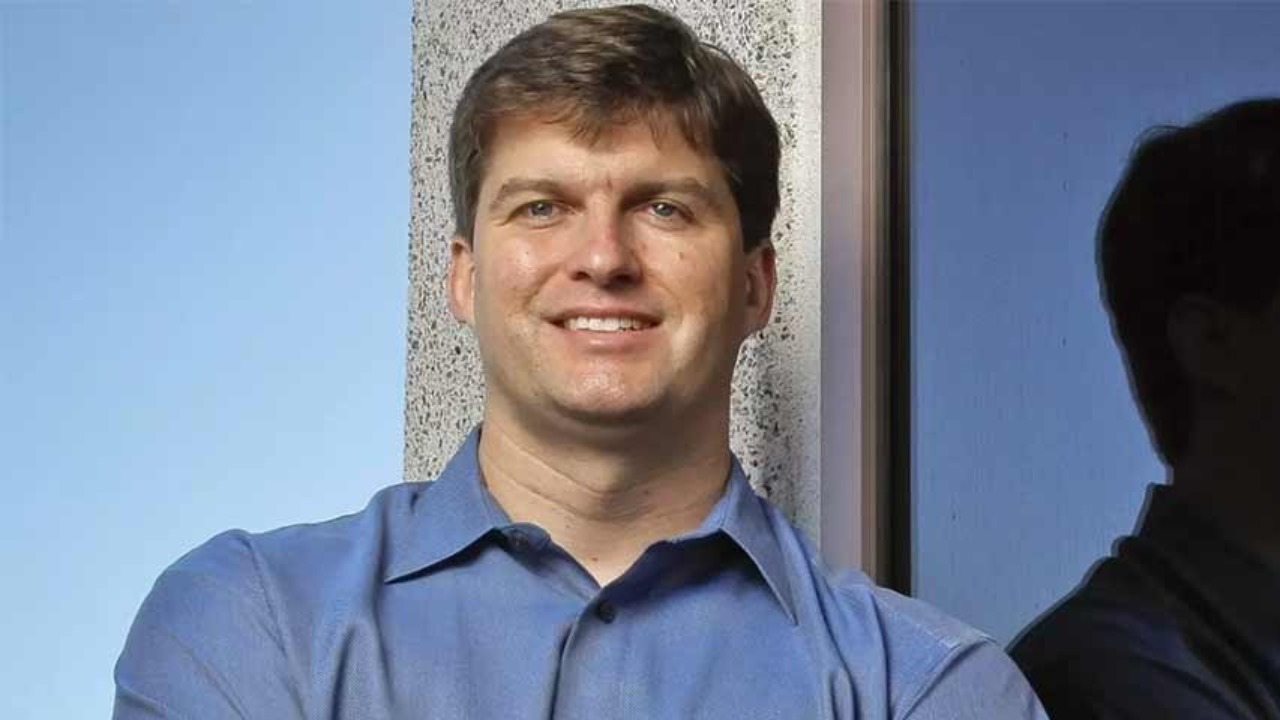
Michael Burry is once again sounding alarms, arguing that U.S. equities are heading into a stretch of “bad years” that could leave today’s investors with far less than they expect. Instead of a quick correction, he is warning of a drawn-out comedown from an era of easy money, aggressive speculation, and faith in technology narratives.
His latest moves, from shuttering his hedge fund to targeting high‑profile stocks and dissecting artificial intelligence euphoria, amount to a single thesis: the market’s foundations have been distorted, and the unwind will be painful. I see his warnings as less about a single crash and more about a regime change that could redefine what “normal” returns look like for years.
Why Burry thinks “a number of bad years” are coming
At the core of Michael Burry’s current outlook is a simple, unsettling claim: the U.S. stock market is not just stretched, it is set up for a prolonged period of disappointment. He has said he expects a “Number Of Bad Years” for the U.S. stock market and has added that he thinks “The Whole Thing” is “Just Going To Come Down,” language that points to a structural reset rather than a routine pullback. In his view, the combination of elevated valuations, speculative behavior and complacent investors leaves little margin for error once growth slows or profits fail to live up to the stories that have driven prices higher, a concern he has tied directly to the current U.S. stock market in recent comments about a coming comedown in risk assets, as reflected in his warning that there could be a Number Of Bad Years ahead.
When I look at his language, what stands out is not just the bearish tone but the time horizon. Burry is not trading around a quarter or a year, he is bracing for a multi‑year stretch in which index investors may see flat or negative real returns even if headline indices grind sideways or make only modest new highs. That framing matters because it challenges the default assumption that any dip is a buying opportunity and that the Federal Reserve or fiscal policy will always backstop asset prices. By arguing that the “Think The Whole Thing” is “Just Going To Come Down,” he is effectively telling investors to rethink the last decade’s playbook rather than wait for the next V‑shaped rebound.
Why he walked away from managing outside money
Burry’s decision to stop managing his hedge fund is not a side note, it is part of his thesis about what comes next. He has explained that he stepped back from running outside capital because he believes the stock market “could be in for a number of bad years,” a view that made it harder to justify keeping clients exposed to the same risks he sees building. In his telling, the responsible move was to “get out” rather than stay in a game he thinks is increasingly stacked against fundamental investors, a rationale he laid out when Michael Burry described why he no longer wanted to run a hedge fund in this environment.
I read that choice as a signal about how deeply he believes his own forecast. It is one thing for a famous bear to warn about trouble while continuing to collect fees on assets that benefit from the status quo. It is another to close the door on that business model because you think the next phase of the market will punish both clients and managers who stay fully invested. By stepping aside, Burry is aligning his incentives with his rhetoric, effectively betting his career reputation that his call for “bad years” will age better than the consensus optimism embedded in broad equity indices.
Scion’s closure and the rise of passive investing
The shutdown of Scion, the firm that made Burry a legend during the housing crash, is also rooted in his diagnosis of how markets have changed. He has pointed to the rise of passive investing, especially index funds, as one of the keys to Scion’s closure, arguing that this shift has altered the market’s risk profile in ways that make it harder for fundamental analysis to matter. When more than half of equity flows are price‑insensitive and tied to benchmarks, mispricings can persist longer, and crowded trades can inflate bubbles that look rational only because they are constantly being fed by automatic buying, a dynamic he highlighted when explaining why Burry decided to close Scion.
From my perspective, his critique of passive investing is less about demonizing index funds and more about warning that their dominance can mask underlying fragility. If over 50 percent of assets are effectively on autopilot, then price discovery is being done at the margin by a shrinking pool of active managers, many of whom are themselves benchmark‑constrained. In that world, when the tide turns, the same flows that pushed valuations up can accelerate the downside as investors rotate out of broad funds or as forced sellers hit illiquid corners of the market. Scion’s closure, in that sense, is Burry’s way of saying the game board has been redrawn, and the old tools that helped him profit from the 2008 short may not work the same way in a market dominated by passive vehicles.
From “The Big Short” to “Cassandra Unchained”
Burry’s public persona has always been tied to his role in “The Big Short,” where Michael Lewis chronicled how he spotted the housing bubble and turned it into a fortune. That history matters because it colors how investors hear his current warnings: he is not just another commentator, he is the contrarian who was right when almost everyone else was wrong. Recently, he has leaned into that identity with a new Substack venture called “Cassandra Unchained,” a reference to the mythological prophet who could foresee disaster but was cursed never to be believed, a platform he is using to lay out his case against today’s market darlings and to draw parallels between current enthusiasm and past manias, including his comparison of a modern tech giant to Cisco in 1999.
I see “Cassandra Unchained” as more than a branding exercise. It is Burry’s attempt to bypass traditional media filters and speak directly to investors about what he sees as systemic excess, particularly around artificial intelligence and the companies selling the “picks and shovels” of this boom. By invoking Cisco, he is reminding readers that even high‑quality businesses can become disastrous investments when bought at euphoric valuations. The Substack format lets him unpack accounting details, capital expenditure trends and historical analogies in a way that short interviews cannot, reinforcing his message that the next phase of the market may rhyme less with the post‑2009 bull run and more with the grinding aftermath of the dot‑com bust.
His critique of AI accounting and “Extending Life Beyond Usefulness”
One of Burry’s most pointed lines of attack focuses on how big technology companies are accounting for the artificial intelligence build‑out. He has zeroed in on what he calls “Extending Life Beyond Usefulness,” arguing that some firms are stretching the depreciation schedules of their AI‑related hardware to flatter current earnings. Depreciation is the process of spreading the cost of a physical asset over its useful life, and if that life is assumed to be longer than reality, reported profits can look healthier even as cash is being burned at a rapid clip, a concern he has raised while dissecting how AI investments are being treated in financial statements under the banner of Extending Life Beyond Usefulness and Depreciation.
From my vantage point, this is classic Burry: drilling into the footnotes rather than the headlines. If AI servers and networking gear are being depreciated over, say, ten years when their competitive usefulness might be five, then the gap between economic reality and accounting presentation widens with each quarter. That kind of mismatch can sustain a hype cycle until growth slows or capital markets tighten, at which point investors suddenly realize that the earnings they were paying a premium for were, in part, an artifact of aggressive assumptions. Burry’s warning is that by the time the current AI hype cycle peaks, the true return on these massive capital expenditures may look far less impressive than today’s narratives suggest.
Warning that AI capex may never earn its keep
Beyond accounting, Burry is questioning whether the enormous capital expenditures behind the AI boom will ever justify themselves. He has suggested that big technology companies are pouring money into data centers, chips and infrastructure with an implicit belief that demand and pricing power will stay strong enough to cover those outlays, yet he is “subtly implying” that these capex bets may not pay off in the long run. If that happens, the market could be left with a glut of underutilized assets and shareholders holding the bill for projects that looked visionary on PowerPoint but delivered mediocre returns on capital, a risk he has flagged in a recent warning to Burry followers about AI‑driven spending.
I interpret this as a challenge to the idea that every dollar spent on AI is inherently “strategic” and therefore beyond scrutiny. History is full of technologies that were transformative in the long run but brutal for early investors who overpaid for capacity that took years to fill. If AI follows a similar pattern, then the companies racing to outspend each other on GPUs and data centers could see their margins squeezed just as competition intensifies and pricing for AI services normalizes. In that scenario, the market’s current willingness to assign premium multiples to AI leaders could reverse, contributing to the kind of drawn‑out equity slump Burry envisions.
Exiting amid AI valuation concerns: the “Burry Top” idea
Burry’s skepticism about AI is not just theoretical, it has shaped his portfolio decisions. He has exited positions and scaled back exposure at a time when AI‑linked stocks dominate major indices, a move that some observers have dubbed the “Burry Top,” a nod to the idea that his departure could mark a sentiment peak. As the famous contrarian investor featured in Michael Lewis’s “The Big Short,” he has been explicit that AI valuations worry him, particularly where expectations for growth and profitability seem disconnected from the realities of competition, capital intensity and regulatory risk, concerns that surfaced as Michael Burry exited amid AI valuation concerns.
To me, the “Burry Top” framing is less about predicting a precise turning point and more about highlighting how extreme the current enthusiasm has become. When an investor whose career was made by shorting consensus euphoria decides that the risk‑reward in AI is no longer attractive, it is at least a cue to revisit assumptions. His exit underscores his broader message: the market has priced in a near‑frictionless AI future, and any disappointment, whether from slower adoption, higher costs or policy pushback, could have an outsized impact on indices that are heavily concentrated in a handful of mega‑cap names.
Targeting Tesla as “ridiculously overvalued”
Nowhere is Burry’s skepticism more visible than in his renewed focus on Tesla. He has identified the electric vehicle maker as a “ridiculously overvalued” stock and a new short target, arguing that its valuation is propped up by hype over artificial intelligence, autonomous driving and energy storage that may not translate into the profits implied by its market capitalization. In his view, Tesla faces intensifying competition, execution risks and what he sees as questionable leadership decisions, yet the stock still trades as if it will dominate every market it enters, a disconnect he has highlighted while turning his attention to Michael Burry’s new short target.
His critique extends beyond numbers to narrative. Burry has noted that what he calls the “Elon cult” was “all‑in” on electric cars until competition arrived, then “all‑in” on autonomous driving, and now “all‑in” on AI, a progression he sees as a series of shifting storylines used to justify a lofty valuation. He has been consistent in his view that Tesla was overvalued as far back as 2023, and his current stance suggests he believes little has changed to close the gap between price and fundamentals, a point underscored when he described how the Elon narrative has evolved as new competition has emerged.
What his fund shutdown letter reveals about this market cycle
The letter Burry sent to investors as he shut his fund offers one of the clearest windows into how he sees the current cycle. In it, he acknowledged that his valuation views have been out of sync with markets for some time, implying that the rally in risk assets has persisted even as his models and instincts flagged growing danger. He contrasted this period with the run‑up to the housing crash, when his thesis eventually converged with reality and his housing bet paid off, suggesting that the current disconnect between fundamentals and prices may be even more stubborn than the pre‑2008 bubble, a tension he laid out when Burry explained why he was shutting his fund just as some think he is about to be vindicated again.
I read that admission as both humility and conviction. On one hand, he is acknowledging that being early, or simply wrong, is always a possibility, and that markets can stay exuberant longer than a contrarian can stay employed. On the other, he is doubling down on his belief that the forces driving today’s valuations, from passive flows to AI euphoria, will eventually collide with economic gravity. For investors, the letter is a reminder that even the most celebrated bears must navigate the psychological and financial strain of standing apart from the crowd, and that if Burry is right, the “bad years” he foresees will be as much about resetting expectations as repricing assets.
More From TheDailyOverview
- Tennessee loses $2.6B megafactory and faces major layoffs
- Retired But Want To Work? Try These 18 Jobs for Seniors That Pay Weekly
- What to do with your pennies after the U.S. stops minting them
- Home Depot CEO warns of a troubling customer trend in stores

Grant Mercer covers market dynamics, business trends, and the economic forces driving growth across industries. His analysis connects macro movements with real-world implications for investors, entrepreneurs, and professionals. Through his work at The Daily Overview, Grant helps readers understand how markets function and where opportunities may emerge.

