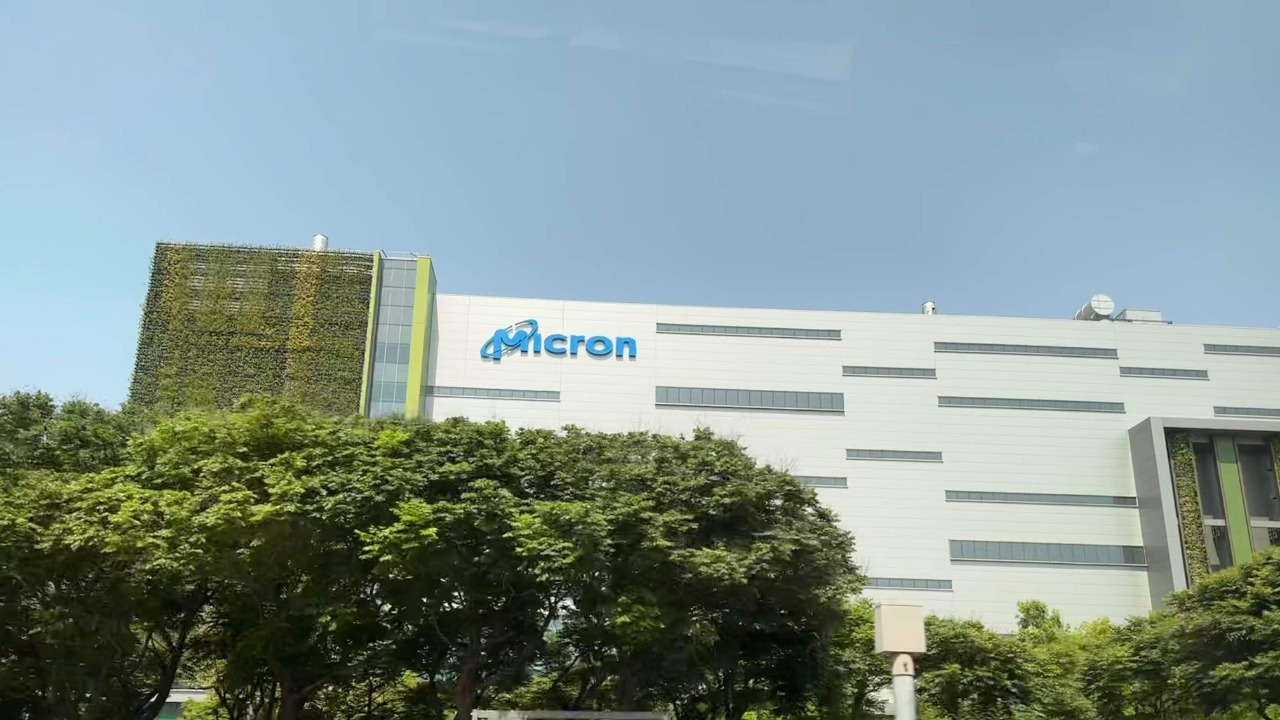
Micron Technology is making a fresh long term bet on Singapore, expanding its manufacturing and packaging footprint in the city state to meet surging demand for advanced memory used in artificial intelligence systems. The company is positioning its Singapore operations as a central pillar of its global supply chain for high bandwidth memory and cutting edge wafer fabrication, even as the broader chip industry grapples with volatile cycles and geopolitical risk.
The new projects are framed as part of a broader strategy to scale output for AI data centers and other high performance computing markets, rather than a one off capacity bump. By deepening its presence in Singapore, Micron is tying its growth prospects to a country that has become a critical hub for semiconductor manufacturing, logistics and talent in Asia.
Singapore’s rise as Micron’s Asian anchor
Singapore has spent decades building itself into a predictable, infrastructure rich base for advanced manufacturing, and Micron is leaning into that stability as it reshapes its global network. The city state already hosts a dense cluster of semiconductor plants, clean room suppliers and precision engineering firms, giving memory makers access to both skilled labor and a mature ecosystem. That concentration of capabilities is one reason multinational chip companies have treated Singapore as a strategic hedge against supply disruptions elsewhere in Asia.
For Micron, expanding in Singapore is not only about physical capacity, it is also about proximity to customers and partners across the broader region. The city state’s role as a logistics hub shortens lead times to major electronics manufacturers in markets such as China, South Korea and Southeast Asia, while its regulatory environment offers relative insulation from export control whiplash. That combination helps explain why the company is layering new facilities on top of its existing base instead of diverting future investment to greenfield sites in less proven locations.
New HBM packaging plant targets the AI boom
The most visible piece of Micron’s latest push is a new advanced packaging facility dedicated to high bandwidth memory, or HBM, which has become a critical component in AI accelerators and top tier graphics processors. The company has broken ground on what it describes as the first HBM focused advanced packaging plant of its kind in Singapore, with operations for the new facility expected to support the rapid growth of AI workloads and other data intensive applications. By concentrating HBM packaging in one purpose built site, Micron is aiming to streamline production flows and reduce bottlenecks that can slow deliveries to hyperscale cloud providers.
HBM is particularly sensitive to manufacturing precision because it stacks multiple memory dies vertically and connects them with dense interconnects, a process that demands sophisticated packaging technology. Locating this work in Singapore allows Micron to tap into the country’s established base of semiconductor engineers while also integrating the plant into its broader regional supply chain. The company has emphasized that the new HBM facility is designed specifically to keep pace with AI driven demand, a signal that it expects the current wave of investment in generative models and large scale training clusters to persist.
Advanced wafer fabrication deepens local roots
Alongside the HBM packaging project, Micron is also expanding its front end manufacturing in Singapore with a new advanced wafer fabrication facility. The company has described this investment as a reinforcement of its long term commitment to Singapore as an important hub in its global manufacturing network, highlighting the role the country plays in both production and innovation. By adding cutting edge wafer capacity, Micron is effectively anchoring more of its high value process technology in the city state, rather than treating it solely as a back end or assembly location.
The wafer project is framed as part of a broader effort to build a vibrant local ecosystem around memory research, engineering and supplier development. Micron has said the new wafer fabrication facility underscores its intention to keep investing in Singapore’s talent pipeline and to foster an innovation ecosystem around advanced memory. That approach aligns with the government’s own push to move up the value chain in semiconductors, from pure manufacturing toward higher margin design and process development work.
Leadership bets on AI memory as a growth engine
Micron’s expansion in Singapore is tightly linked to its broader strategy in AI memory, a segment the company sees as one of the highest value opportunities in the semiconductor market. By focusing on next generation technologies, Micron has carved out a leadership position in the most critical and highest value segment of the AI memory market, where performance and power efficiency are at a premium. That focus is evident in its push into HBM and other specialized products that feed directly into AI accelerators and data center platforms, rather than relying solely on more commoditized DRAM and NAND.
The strategic direction is being driven from the top by Sanjay Mehrotra, who serves as Chairman, President and CEO of Micron. Under his leadership, the company has framed its mission as using memory and storage innovation to enrich life for all, a vision that dovetails with its aggressive build out of AI focused capacity. Mehrotra’s role as Chairman, President and gives him broad latitude to align capital spending, technology roadmaps and geographic footprint around that AI centric thesis, and the Singapore investments fit squarely within that framework.
Market momentum and the race to smarter memory
Investors have taken notice of Micron’s positioning, particularly as AI infrastructure spending accelerates. Micron Technology, Inc has been highlighted as a beneficiary of the AI supercycle and the expansion of digital infrastructure in the United States, with some market analysis assigning the stock a Buy rating based on those trends. That bullishness rests in part on the expectation that Micron’s Singapore projects and other capacity additions will translate into stronger supply capabilities for AI customers, reinforcing its competitive stance in high performance memory. The company’s profile on Micron Technology, Inc underscores how closely its fortunes are now tied to AI demand rather than traditional PC or smartphone cycles.
On the product side, Micron has already begun to reap the benefits of its AI focus. The company has successfully ramped up production of HBM chips and is pushing ahead with development of its next generation of these high bandwidth products, which are essential for feeding data into AI accelerators at sufficient speed. Reporting on Micron has emphasized that its AI memory chip business is booming, a backdrop that helps explain why the company is comfortable committing more resources to advanced facilities in Singapore and other hubs.
More From TheDailyOverview
*This article was researched with the help of AI, with human editors creating the final content.

Grant Mercer covers market dynamics, business trends, and the economic forces driving growth across industries. His analysis connects macro movements with real-world implications for investors, entrepreneurs, and professionals. Through his work at The Daily Overview, Grant helps readers understand how markets function and where opportunities may emerge.

