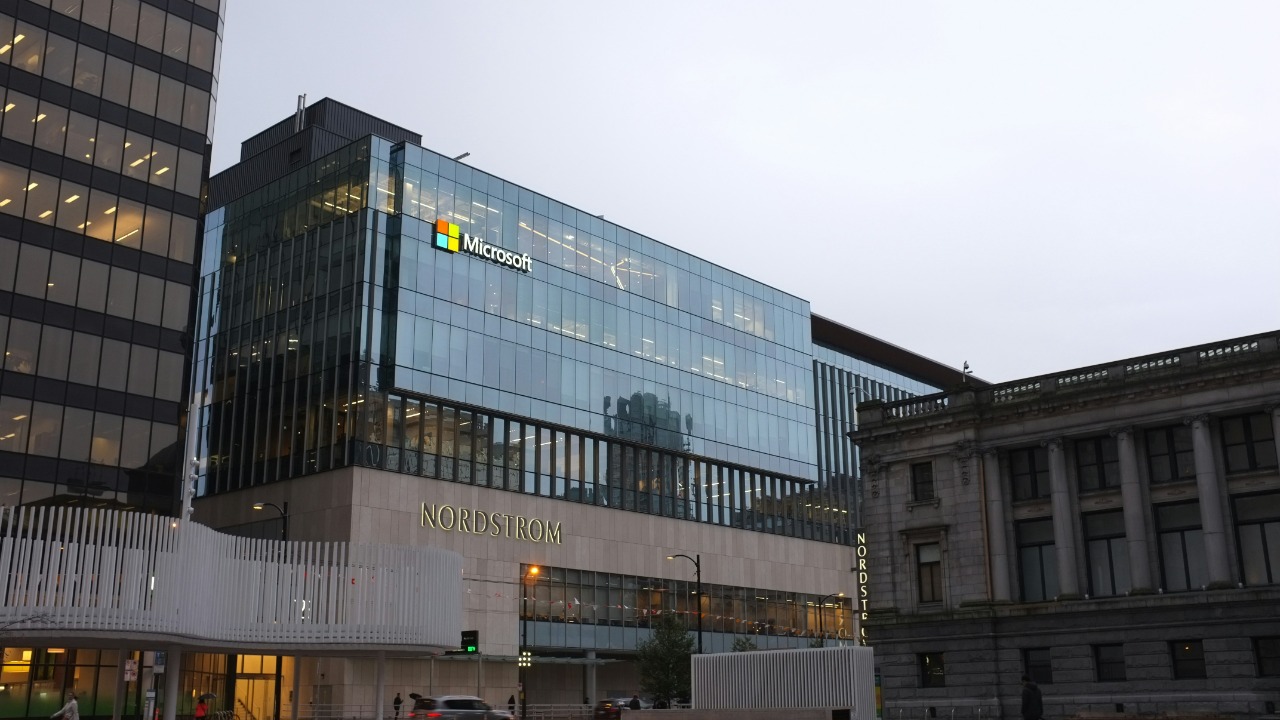
Microsoft announced on February 18, 2026, that it is on pace to invest $50 billion in AI infrastructure across the Global South, a commitment that is accelerating the company’s already aggressive push to lock down clean energy for its expanding network of data centers. That spending target, aimed at the world’s fastest-growing digital markets, sits atop a domestic strategy built on nuclear restarts, billion-dollar renewable agreements, and long-term power purchase contracts. Together, these moves reveal how the race to dominate artificial intelligence is now inseparable from the race to secure electricity.
$50 Billion AI Push Raises the Energy Stakes
The scale of Microsoft’s global AI ambitions has no recent precedent in the technology sector. The company said it is on pace to deploy $50 billion in AI capacity across developing economies, a figure that dwarfs the capital budgets of most national utilities. Every dollar of that investment implies new server clusters, cooling systems, and networking hardware, all of which consume electricity around the clock. For a company that has publicly committed to carbon-negative operations, the tension between growth and emissions is direct and unavoidable.
Microsoft’s most recent 10-K filing with the Securities and Exchange Commission already reflected this reality, describing the company’s business focus on AI alongside material risks tied to energy supply and infrastructure constraints. Capital expenditures have ballooned to support training clusters and inference workloads, and the annual report makes clear that sourcing reliable power is a core operational challenge. The Global South push intensifies that challenge because many target markets lack the grid capacity or renewable generation that U.S. and European sites can draw on, which raises the question of whether Microsoft will need to build or finance its own clean power in those regions as well.
Nuclear Restart at Three Mile Island Anchors Domestic Supply
While the overseas investment grabs headlines, the clearest example of Microsoft’s energy strategy in action sits in Pennsylvania. The U.S. Department of Energy closed a $1 billion federal loan to Constellation Energy Generation, LLC in November 2025 to help finance the restart of the Crane Clean Energy Center, a nuclear facility with a capacity of 835 MW. The project is explicitly linked to powering data centers and remains subject to Nuclear Regulatory Commission approvals. Microsoft holds a 20-year power purchase agreement tied to the plant’s output, giving the company a dedicated, carbon-free baseload source that few competitors can match.
The loan itself came through the Department of Energy’s suite of clean energy financing tools, which channel federal capital toward large-scale projects under recent climate legislation. An 835 MW nuclear unit running at typical capacity factors could generate enough electricity to power hundreds of thousands of homes, or, in this case, a significant share of Microsoft’s East Coast data center fleet. The reporting from AP on the financing action confirmed the connection to Microsoft’s long-term agreement, noting the policy rationale behind restarting a reactor at a site that carries deep public associations with the 1979 partial meltdown. That history makes the project politically sensitive, but the economics of AI-driven electricity demand appear to have tipped the calculation in favor of bringing the unit back online.
Brookfield Deal and the Renewables Buildout
Nuclear power alone will not cover the electricity appetite of a company spending tens of billions on AI hardware each year. Microsoft has also entered a roughly $10 billion arrangement with Brookfield to develop renewable energy capacity dedicated to powering data centers. That deal, one of the largest corporate renewable procurement contracts ever structured, signals that Microsoft views its energy problem as requiring a portfolio approach: nuclear for always-on baseload, wind and solar for scalable additions, and long-term contracts to hedge against volatile wholesale power markets.
The Brookfield partnership also reflects a broader shift in how large technology companies think about grid access. Rather than simply buying renewable energy credits or signing short-term contracts with existing generators, Microsoft is financing the construction of new generation assets. This approach locks in supply years before the electrons flow, which is critical when lead times for permitting and building transmission lines can stretch beyond five years. For Brookfield, the arrangement provides revenue certainty that makes project financing far easier to secure, effectively turning Microsoft’s AI growth into a subsidy for new clean power plants.
Shadow Grids and the Emissions Tradeoff
Microsoft’s strategy does not exist in a vacuum. Across the United States, data center operators are reshaping electricity sourcing through off-grid and behind-the-meter configurations that bypass traditional utility systems. These so-called shadow grids allow tech companies to secure power without waiting for grid upgrades, but they also raise questions about emissions accounting and grid reliability. When a large industrial consumer pulls generation capacity off the public grid, remaining customers may end up relying more heavily on fossil-fueled peaking plants, potentially increasing net emissions even as the data center itself runs on clean power.
This is where the standard narrative around corporate clean energy deals deserves scrutiny. Microsoft can legitimately claim that its nuclear and renewable contracts add zero-carbon generation to the overall supply mix. But the sheer volume of new demand from AI workloads complicates that picture, particularly in regions where grids are already strained. If clean power that might otherwise decarbonize the broader system is instead reserved for private data centers, policymakers will face pressure to accelerate investment in transmission, storage, and flexible generation. The federal government has begun to respond with tools like the DOE infrastructure exchange, which helps direct public funds into grid upgrades and new capacity, but the pace of AI expansion risks outstripping even these enhanced capabilities.
Research, Policy, and the Next Phase of AI Power
Behind the headline deals, a quieter layer of research and policy experimentation is shaping how Microsoft and its peers might power AI in the next decade. Public databases such as the Office of Scientific and Technical Information catalog a growing body of work on advanced reactors, long-duration storage, and grid-interactive data centers, all of which could alter the energy profile of future AI facilities. At the same time, programs like ARPA‑E’s initiatives are funding early-stage technologies, from more efficient power electronics to novel cooling systems, that could reduce the per-unit energy cost of computing, even as aggregate demand keeps rising.
For Microsoft, tapping into this ecosystem is less about corporate philanthropy and more about securing its own long-term operating environment. The company’s reliance on federal financing mechanisms, nuclear restarts, and bespoke renewable portfolios underscores how deeply entangled AI has become with national energy policy. As regulators weigh how to allocate limited transmission capacity and prioritize new generation, they will be forced to decide whether AI data centers should be treated like any other industrial load or as strategically important infrastructure. Those decisions, informed by emerging research and evolving policy tools, will determine whether Microsoft’s $50 billion bet on the Global South and its domestic energy playbook can coexist with broader decarbonization goals, or whether the power demands of artificial intelligence will crowd out the clean energy transition they are ostensibly meant to support.
More From The Daily Overview
*This article was researched with the help of AI, with human editors creating the final content.

Grant Mercer covers market dynamics, business trends, and the economic forces driving growth across industries. His analysis connects macro movements with real-world implications for investors, entrepreneurs, and professionals. Through his work at The Daily Overview, Grant helps readers understand how markets function and where opportunities may emerge.

