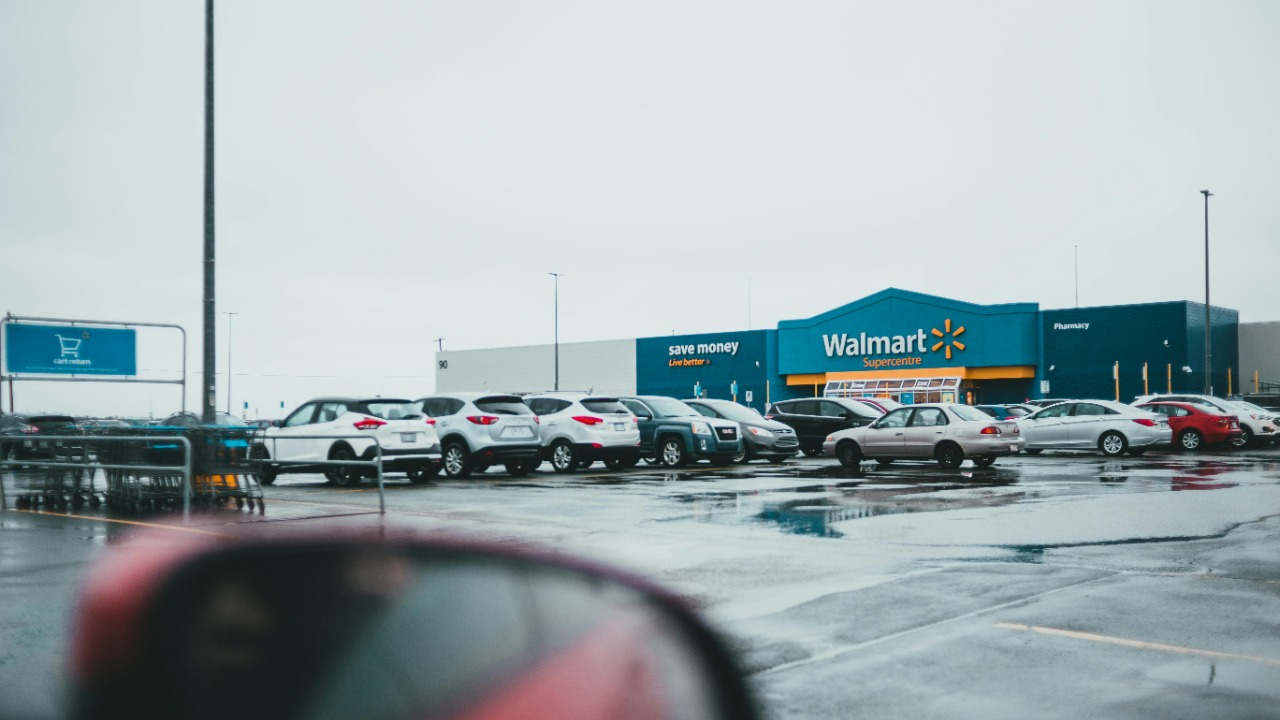
Amazon has officially surpassed Walmart as the world’s largest company by revenue, ending a 13-year streak in which the Arkansas-based retailer held the global sales crown. The shift, confirmed by financial data published on February 19, 2026, reflects not just the growth of online shopping but the rising weight of cloud computing and digital services in how the biggest corporations earn their money. It also underscores how the line between “tech company” and “retailer” has blurred, as both firms mix logistics, software, media, and financial services into sprawling ecosystems that extend far beyond traditional store shelves.
To consumers, the idea of Amazon eclipsing Walmart may feel like a symbolic passing of the torch from brick-and-mortar supremacy to digital dominance. But the underlying numbers show a more nuanced story in which both companies are still growing, just in different directions. Amazon’s ascent is powered by high-margin services layered on top of its retail engine, while Walmart’s evolution leans on its massive store base, grocery strength, and a push into omnichannel shopping. The new ranking is less a verdict on who “won” retail than a snapshot of how global commerce is being rewired.
A $3.7 Billion Gap Separates the Two Giants
The numbers tell a tight but decisive story. Amazon posted $716.9 billion in net sales for the 12 months ending December 31, 2025, according to its latest earnings report. Walmart, by contrast, recorded $713.2 billion in trailing-12-month revenue for the period ending in January, as tracked by Financial Times data. The gap of roughly $3.7 billion is narrow in percentage terms, about half of one percent of their combined sales, but it is enough to flip a ranking that had been static since 2012, when Walmart first cemented its status as the world’s biggest company by revenue.
One wrinkle in the comparison is that the two companies report on different fiscal calendars. Amazon’s figures cover the calendar year ending December 31, while Walmart’s fiscal year closes on January 31. That one-month offset means the revenue totals are not perfectly synchronized, and quarterly swings in holiday sales or inflation could look slightly different depending on the cutoff date. Even so, analysts generally treat the trailing-12-month comparison as the standard for ranking global companies by sales, and the verdict from that metric is clear: Amazon now sits at the top of the global revenue league tables, displacing a position long associated with Walmart and its chief executive, Doug McMillon.
Cloud Computing Tilts the Revenue Race
What makes this changing of the guard unusual is that Amazon did not win it purely through retail. Amazon Web Services, the company’s cloud computing arm, generated $128.7 billion in revenue during 2025, according to a Financial Times breakdown of the earnings data. Strip AWS out of the equation, and Amazon’s core retail and consumer-facing operations would not have overtaken Walmart’s store- and grocery-led model. That distinction complicates the familiar narrative of a head-to-head retail rivalry: Amazon’s top line includes everything from Prime subscriptions and digital advertising to computing capacity rented by banks, media companies, and other Fortune 500 clients, while Walmart’s revenue is still overwhelmingly generated by selling physical goods in stores and online.
Some industry watchers argue that this makes Amazon’s new status as the top seller feel less like a clean win in the grocery aisle and more like a reflection of how diversified tech platforms now dominate corporate rankings. Retail specialists quoted in coverage from Los Angeles described the milestone as a “hollow victory” if the contest is framed strictly in terms of consumer goods. On that narrower playing field, Walmart still moves more groceries, household essentials, and everyday items than any rival. Yet for investors and policymakers, total corporate revenue (including cloud, ads, and subscription services) is the metric that matters, and by that measure Amazon’s multi-pronged business model has now edged ahead.
Walmart Is Not Shrinking, It Is Growing Differently
Losing the top revenue spot does not mean Walmart is in retreat. The retailer has been posting solid growth, with grocery sales anchoring its business and online demand climbing. Recent results highlighted by Wall Street reporting show that food and consumables remain a powerful traffic driver, helping the company weather inflation and shifts in discretionary spending. Walmart still operates more than 10,000 stores worldwide and remains the largest private employer in the United States, a physical footprint that gives it a distribution and pickup advantage Amazon has spent years and billions of dollars trying to approximate through a vast network of fulfillment centers and last-mile hubs.
The real strategic question for Walmart is whether it can fully harness that store network as a digital asset rather than a legacy cost. The company has invested heavily in international e-commerce, particularly in markets such as India and Mexico, and is leaning into a hybrid model that uses stores as mini-warehouses for same-day pickup and delivery. That approach could prove structurally efficient in dense urban and suburban areas, where shipping from distant warehouses is slower and more expensive. If Walmart can keep improving its app experience, loyalty programs, and data-driven inventory systems while turning its global store base into a seamless, tech-enabled supply chain, the revenue crown could change hands again. But that transformation is complex, and Amazon is simultaneously deepening its own logistics capabilities, including high-tech operations like its Robbinsville facility in New Jersey.
What the Shift Means for Consumers and Markets
For everyday shoppers, the ranking change is largely symbolic. Walmart’s shelf prices, store locations, and assortment are not set by whether it sits first or second on a global revenue list, and Amazon’s Prime benefits do not change because it nudged ahead in annual sales. Still, the shift reflects a broader reallocation of household spending toward digital channels and bundled services. More of what consumers pay for now lives in the cloud: streaming video, photo storage, voice assistants, same-day grocery delivery, and subscription-based conveniences that ride on top of logistics and data infrastructure. Amazon has captured a growing share of that wallet by packaging retail, entertainment, and technology under one login, making it harder for single-category rivals to match its overall revenue scale.
For markets, however, the milestone carries more weight. Reporting from Bloomberg analysts frames Amazon’s rise as part of a broader reshuffling in which diversified tech conglomerates displace oil majors and traditional retailers at the top of global rankings. Under CEO Andy Jassy, Amazon has pushed deeper into digital advertising, healthcare services, and satellite-based connectivity, each of which could add new multi-billion-dollar revenue streams and widen the gap with legacy retailers. Walmart’s Doug McMillon, by contrast, has emphasized profitability, cost discipline, and returns on invested capital, signaling that the company is willing to sacrifice some headline revenue growth in exchange for steadier margins. For shareholders, the question is less about which company sells more in absolute terms and more about which strategy delivers better risk-adjusted returns over the next decade.
A Rivalry That Redefines “Retail”
The Amazon–Walmart rivalry has long been framed as a simple showdown between online and offline shopping, but the revenue flip shows how outdated that binary has become. Amazon is now as much a cloud and advertising platform as it is a store, while Walmart is turning its aisles into nodes in a sophisticated fulfillment network, supported by data analytics and expanding digital services. Detailed analysis from financial commentators and others suggests that future competition will hinge less on who has more square footage or website traffic and more on who can better integrate software, logistics, and customer data into a frictionless, multi-channel experience. In that sense, both companies are converging toward a similar end state: a world where “retail” is inseparable from technology infrastructure.
Whether Amazon keeps its newly won crown or Walmart reclaims it will depend on how each navigates emerging pressures, from regulatory scrutiny and labor costs to automation, artificial intelligence, and shifting consumer habits. What is already clear is that the old map of global commerce, once dominated by oil giants and big-box chains, has been redrawn by digital platforms whose revenue streams span everything from groceries to gigabytes. Amazon’s narrow lead over Walmart is a milestone in that transformation, but it is also a reminder that the contest is far from over. As both companies race to define the next era of shopping, logistics, and cloud services, the very meaning of what counts as “retail” will continue to evolve along with their business models.
More From The Daily Overview
*This article was researched with the help of AI, with human editors creating the final content.

Grant Mercer covers market dynamics, business trends, and the economic forces driving growth across industries. His analysis connects macro movements with real-world implications for investors, entrepreneurs, and professionals. Through his work at The Daily Overview, Grant helps readers understand how markets function and where opportunities may emerge.

