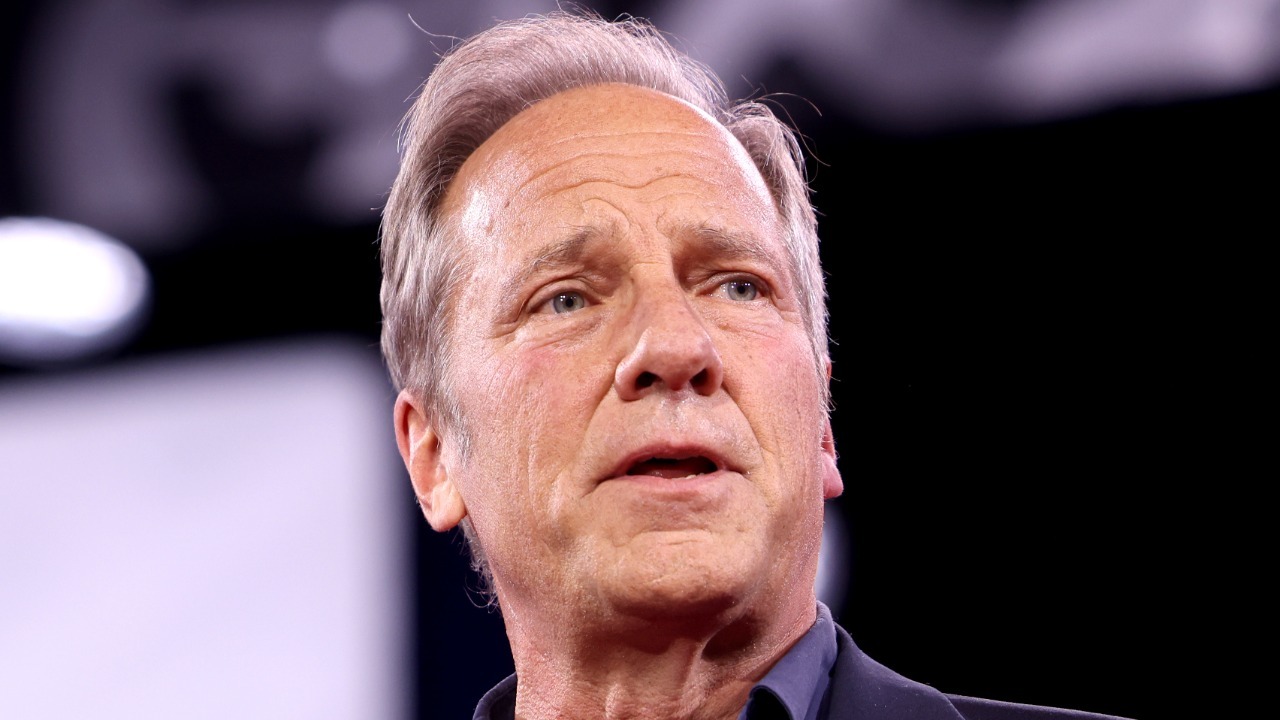
Mike Rowe has spent years arguing that the real threat to the American workforce is not a robot uprising but a cultural retreat from hard, hands-on jobs. As artificial intelligence races ahead and white-collar workers brace for disruption, he keeps returning to a simpler diagnosis: the country has a motivation problem, not just a technology problem. In his view, the crisis is the will to work itself, and the stakes run from stalled infrastructure to hollowed-out communities.
That argument is colliding with a labor market where millions of roles in construction, energy and logistics sit open even as able-bodied adults stay on the sidelines. Rowe is not dismissing AI, but he is trying to redirect the anxiety toward what he sees as a more basic question: who will actually show up to weld the pipe, fix the HVAC or keep the power grid running.
The ‘will gap’ that worries Mike Rowe
When Mike Rowe talks about a crisis in work, he is not talking about a lack of job postings or training programs. He is talking about people who could work but do not, and about a culture that, in his telling, has grown comfortable with that choice. In a recent interview, he warned that the core problem is not a shortage of skills or the rise of artificial intelligence, but a deeper erosion in the desire to participate in the labor force, a trend he framed as a human issue rather than a technological one, as reported in a detailed analysis.
Rowe has put a number on that concern. He has highlighted that 6.8 m able-bodied men are not just unemployed but are not even looking for a job, a figure he cites as evidence that the country is drifting into unfamiliar territory in peacetime. In his words, “The skills gap is real, but the will gap is realer,” a line captured in coverage of his warning to Americans about what that absence means for the job market.
AI threatens coders, not welders
Rowe’s critique lands at a moment when AI is often portrayed as an all-purpose job killer, yet he draws a sharp distinction between the kinds of work algorithms can absorb and the kinds they cannot. He has argued that the first wave of disruption is more likely to hit knowledge workers who sit behind screens than people who spend their days inside crawl spaces or on scaffolding. In his view, coders and other white-collar professionals are more exposed to automation than welders or pipe fitters, a point he underscored in comments about how AI is reshaping demand for different categories of labor, as reflected in reporting on his warning that AI threatens coders more than welders.
That distinction is central to his broader argument that the country is misreading the future of work. While office workers worry about chatbots, he points out that the supply of skilled tradespeople is shrinking even as demand for their services rises. Coverage of his comments notes that the skilled labor market has taken a beating as worker numbers fall, even though infrastructure projects, real estate redevelopment and energy production are projected to require hundreds of thousands of additional hands, a trend that has left employers scrambling for skilled blue-collar workers instead of replacing them with machines.
A ‘golden age’ for plumbing and the trades
Rowe’s answer to that mismatch is not resignation but opportunity. He has described the current moment as a “golden age” for people willing to work in the trades, arguing that the combination of aging infrastructure, housing shortages and domestic energy projects is creating a durable boom for hands-on careers. In one interview, he said that, in the short term, the country is entering the golden age of plumbing, steam fitting, pipe fitting, welding and HVAC, a cluster of jobs he believes will remain largely untouched by the coming AI revolution, a point captured in coverage of his comments about a new era for plumbing and trades.
He has also framed these roles as an “AI-proof environment” for workers who are willing to get trained and show up. In a widely shared segment, Mike Rowe touted trade work as a path to stability for people worried about automation, emphasizing that no algorithm can crawl under a house to fix a broken pipe or climb a cell tower in a snowstorm, an argument that underpinned his call for more respect and support for vocational paths in a recent Fox News Video.
Rural America’s twofold shortage
The stakes of that “will gap” are especially visible outside major cities. In rural regions, employers are facing what one labor market analysis described as a twofold shortage: not enough people to fill open roles and not enough people even applying. The gaps are particularly acute in construction, health care, transportation and warehousing, sectors that keep small towns functioning but that struggle to compete with urban salaries and remote work, according to a detailed look at how rural America is running short of workers in these fields.
Rowe’s argument about the will to work intersects directly with that picture. If millions of able-bodied adults are sitting out the labor market, the impact is magnified in places that already have thin talent pools and aging populations. Employers in rural counties report unfilled positions that delay road repairs, limit clinic hours and slow the movement of goods, even as national debates fixate on AI and office jobs. For Rowe, that disconnect is part of the problem: the country is obsessing over hypothetical future automation while communities today cannot find enough people to drive trucks, pour concrete or staff warehouses.
Leadership, culture and the path forward
Rowe is careful to say that technology is not the villain, and in some cases he sees AI and domestic energy projects as catalysts for a blue-collar resurgence. He has argued that the country is poised for a surge in work tied to pipelines, refineries and power plants, but only if there is enough political and corporate will to train and hire the people who will build and maintain them. In one interview, he linked the future of domestic energy and artificial intelligence to a broader call for leadership that can align policy, education and industry, stressing that the opportunity will be wasted without a renewed respect for work that gets dirt under the fingernails, a point captured in coverage of his comments on the need for leadership.
At the same time, he keeps returning to culture. In another detailed profile, Mike Rowe warned that the real crisis is not skills or AI but the will to work, arguing that as more able-bodied men exit the workforce, the country risks losing not just output but a shared sense of purpose and identity tied to work, a concern laid out in reporting on his warning that the core problem “isn’t technological, it’s human,” as summarized in a recent interview.
That is why he keeps steering the AI conversation back to attitude. In his telling, the country is on the verge of a short-term golden age for plumbing, steam fitting, pipe fitting, welding and HVAC, but only if enough people are willing to do the work, a point he made explicitly when he said that, in the short term, the trades are poised for growth even as AI advances, as reflected in coverage of his comments about this short term window. For Rowe, the real test is not whether AI can write code, but whether the country can rebuild a culture that still prizes showing up, getting trained and doing the jobs that no algorithm can yet touch.
More From TheDailyOverview

Grant Mercer covers market dynamics, business trends, and the economic forces driving growth across industries. His analysis connects macro movements with real-world implications for investors, entrepreneurs, and professionals. Through his work at The Daily Overview, Grant helps readers understand how markets function and where opportunities may emerge.

