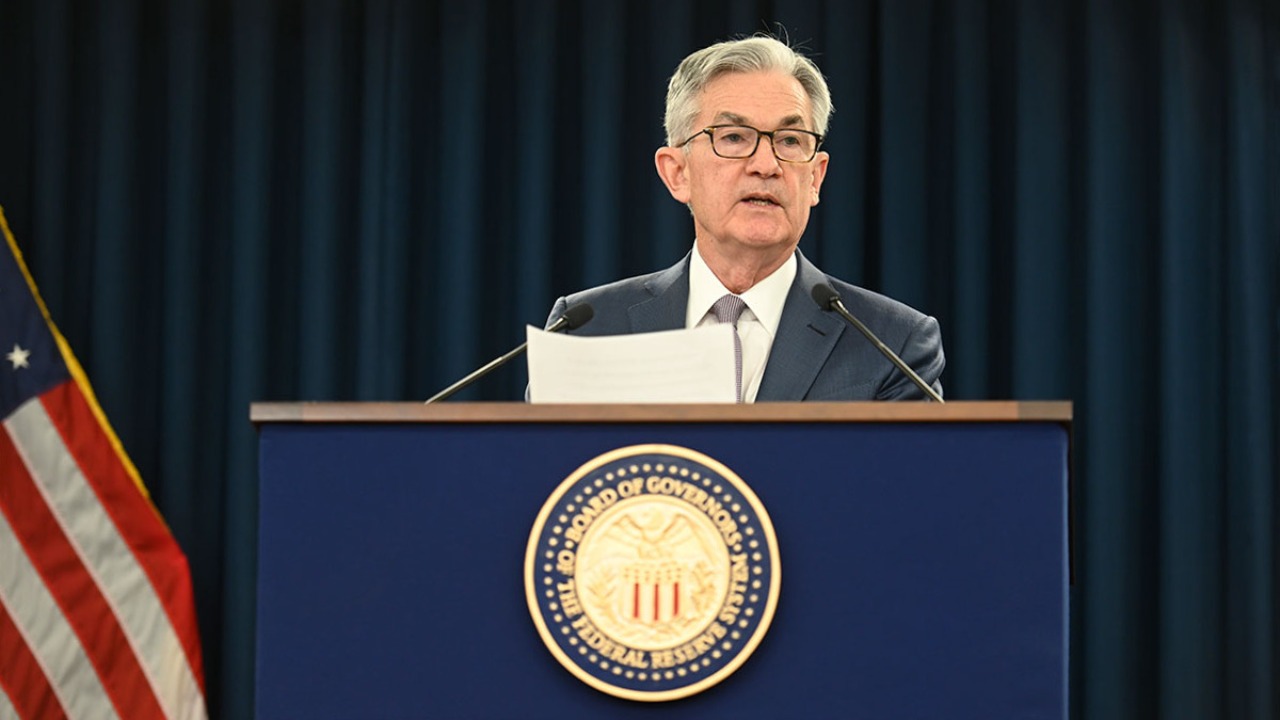
U.S. markets were jolted as stock index futures and the dollar dropped in rapid succession after Federal Reserve Chair Jerome Powell confirmed he is the subject of a federal criminal investigation. The sudden repricing reflects not only concern about the legal cloud over the central bank’s leader but also deeper anxiety about the future of the Fed’s independence and the policy path that underpins global asset prices.
Within hours of the news breaking on Sunday night, equity futures slid, haven currencies rallied and precious metals jumped, signaling a broad flight from risk. I see that reaction as less about any single allegation and more about investors confronting, in real time, the possibility that the political system could try to reshape the Fed just as the economy is navigating a delicate phase.
The shock to futures and the first wave of selling
The initial move came in U.S. equity futures, which turned sharply lower in thin Sunday trading once Powell acknowledged that federal prosecutors had opened a criminal inquiry into his conduct at the central bank. U.S. equity contracts that had been drifting were suddenly marked down as traders reassessed the stability of the institution that sets interest rates and manages the balance sheet, with the drop in futures accompanied by a rush into the Swiss franc and Japanese yen as classic safe havens. That knee‑jerk move underscored how tightly global risk appetite is tied to confidence in the Fed’s leadership, and how quickly that confidence can be tested when the chair himself is under scrutiny, as reflected in the swift slide in U.S. equity futures.
By the time regular investors woke up to the headlines, the damage in index futures was already visible on trading screens. In the benchmark contracts tracked by many portfolio managers, Dow Jones futures were quoted down 0.55% versus fair value, S&P 500 futures were off 0.5% and Nasdaq 100 futures were also in the red, signaling a broad‑based retreat rather than a narrow sector move. That pattern fits with what I would expect from a shock that is institutional rather than cyclical: investors are not reacting to a data point on growth or inflation, but to a perceived Threat to the Fed’s ability to operate without interference, which affects every asset class that depends on the central bank’s credibility.
Dollar stumbles as Fed independence comes into question
The foreign‑exchange market delivered its own verdict, and it was just as swift. The U.S. Dollar Index, which tracks the greenback against a basket of major currencies, slipped as traders digested the idea that the Fed might be pulled into a prolonged political fight at the very moment it is trying to calibrate policy. In one snapshot of the reaction, the Dollar Index, known as DXY, was trading around 98.90, down 0.23% on the day, a modest move in percentage terms but a meaningful signal given the recent firmness of the currency. That weakness dovetailed with a broader narrative of Fed Independence Concerns, as investors weighed whether the central bank could continue to set policy based on economic conditions rather than political influence.
Other gauges told a similar story. The dollar index slipped to around 98.9 on Monday, ending a four‑day rally that had been fueled by expectations of steady policy and relatively strong U.S. data, before the investigation headlines hit. That reversal, captured in the Dollar Falls narrative, suggests that currency traders are now pricing in a higher risk premium for U.S. assets, or at least a greater chance that future rate decisions could be second‑guessed or delayed. When the world’s reserve currency wobbles on governance worries rather than macro data, it is a reminder that institutional trust is itself a key economic variable.
Inside the criminal probe and the political cross‑currents
At the heart of the market reaction is the extraordinary fact that the Trump administration has launched a criminal probe of Fed Chairman Jerome Powell, a step that would have been almost unthinkable in previous eras of central banking. According to official accounts, federal prosecutors have opened an inquiry into Fed Chair Powell’s actions, and the central bank has been served with subpoenas, raising the specter of legal discovery into its internal deliberations. The move by President Trump’s team is widely seen on Wall Street as a direct challenge to the Fed’s independence, and investors are now forced to contemplate scenarios that range from a distracted leadership to the possibility of efforts to fire Powell outright.
Powell himself has pushed back, publicly criticizing the criminal probe and defending the central bank’s decisions on interest rate policy as grounded in data rather than politics. Yet the very existence of subpoenas and an active investigation means the Fed must now devote time and legal resources to responding, even as it prepares for upcoming policy meetings. In one account of the broader market picture, a Markets Wrap noted that U.S. Stock Futures Fall With Dollar on Threat to the Fed, and even floated the possibility of firing Powell as a scenario that traders are forced to consider. I see that as the core of the current volatility: not the legal details themselves, which remain sparse, but the precedent of using prosecutorial tools in a fight over monetary policy.
Overnight trading patterns: from Sunday shock to Monday positioning
The timing of the news, hitting on a Sunday evening in the United States, amplified the market’s initial lurch. Stock index futures dipped immediately Sunday evening as algorithmic traders and a handful of human desks reacted to the headlines, with contracts tied to the major benchmarks sliding in a classic “risk‑off” pattern. In that first phase, Futures on the Nasdaq 100 (US100:IND) were marked lower and the U.S. Dollar Index (DXY) fell 0.1%, a synchronized move that captured both equity and currency unease. That kind of knee‑jerk drop is typical when unexpected political or legal risk hits a core institution, and it often sets the tone for the next day’s cash session as market makers widen spreads and risk managers trim exposure.
By late evening, more granular data from pre‑market platforms showed how the selling was filtering through to specific contracts. In one widely watched table labeled US STOCK MARKETS FUTURES, the Name column showed DOW JONES Futures trading lower, with the Price field in the red and the percentage change column indicating a decline of roughly half a percent as of the recorded Time of 10:50:02 PM. Those details, captured in the STOCK MARKETS FUTURES snapshot, show how quickly the shock was translated into concrete pricing. At the same time, commentary from Asia noted that Markets appeared to take the news in stride, with some regional equity benchmarks even eking out gains as local investors focused more on domestic drivers than on Washington drama, a nuance reflected in coverage of how Markets balanced U.S. futures slippage against Asian share gains.
What the moves signal about risk, gold, and the road ahead
Beyond equities and the dollar, the reaction in other asset classes helps explain how investors are thinking about the Powell investigation. Gold and silver, which often serve as hedges in times of institutional stress, jumped as the news spread, reinforcing the impression of a broad shift toward safety. In overnight trading, Stocks fell in tandem with the rise in precious metals, a pattern that aligns with the idea that traders are not just reacting to a single headline but are repositioning for a potentially prolonged period of uncertainty around the Fed’s leadership and its interest rate policy. One account of the overnight session noted that Stocks fell in overnight trading Sunday after Powell confirmed the criminal probe, with reporter Sylvan Lane highlighting how the investigation hangs over the central bank’s rate decisions.
From my perspective, the most important signal is not the exact percentage move in any single contract but the way different markets are moving together. When U.S. Stock Futures Fall With Dollar on Threat to the Fed, as one Jan account of Sunday trading made clear, it suggests that investors are reassessing the entire policy framework rather than just trimming risk at the margin. The fact that the Dollar Index is hovering near 98.90, that DXY is down 0.23% on the day in some snapshots, and that haven currencies and metals are in demand, all point to a market that is suddenly less certain about the rules of the game. Until there is more clarity on the scope of the investigation, how aggressively the Trump administration intends to pursue Fed Chairman Jerome Powell, and whether Congress or the courts will push back to protect the central bank’s autonomy, I expect volatility around every Fed communication to remain elevated, with futures and the dollar primed to react to each new development.
More From TheDailyOverview

Grant Mercer covers market dynamics, business trends, and the economic forces driving growth across industries. His analysis connects macro movements with real-world implications for investors, entrepreneurs, and professionals. Through his work at The Daily Overview, Grant helps readers understand how markets function and where opportunities may emerge.

