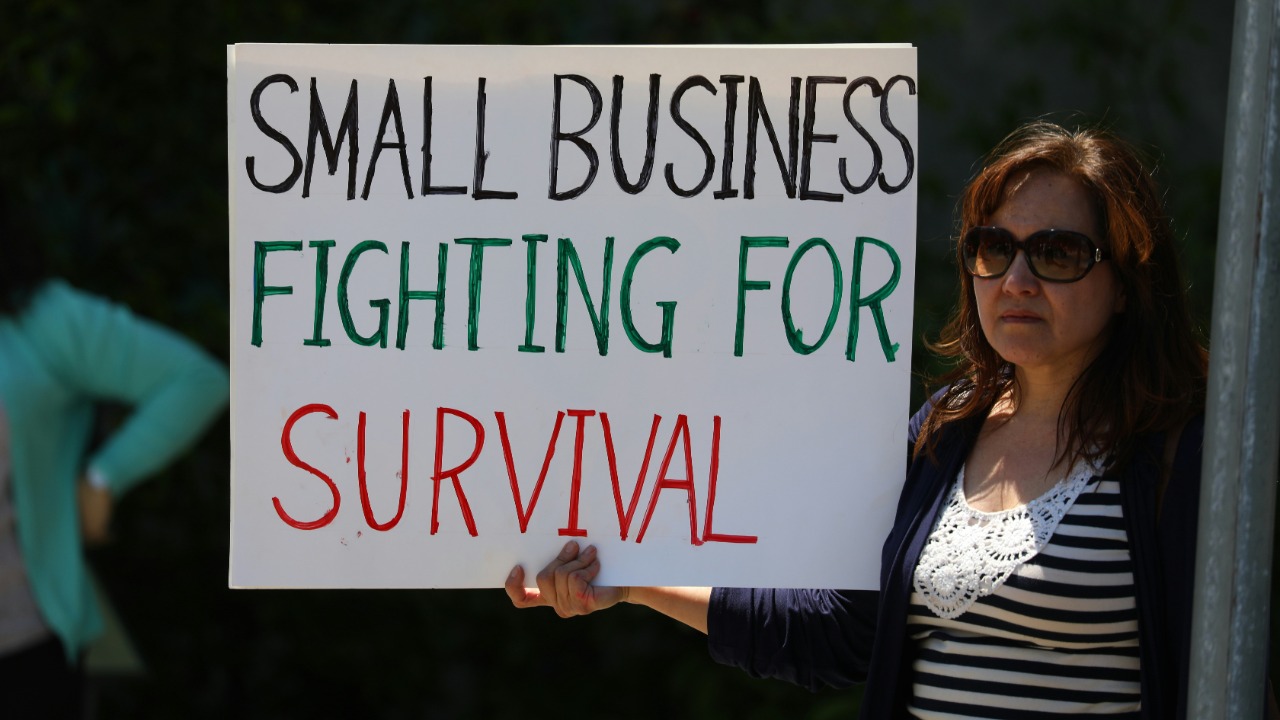
Across the country, small, closely held firms are hitting a financial wall as rising borrowing costs and heavy debt loads push more owners into court. The surge in mom-and-pop bankruptcies is not a blip, it is the sharp edge of a broader shift in how fragile the small business economy has become under higher interest rates and persistent inflation. I see a pattern emerging in the data that suggests many local employers are no longer just struggling with cash flow, they are restructuring for survival.
At the center of this story is a specialized corner of the bankruptcy code that was supposed to make reorganizations easier for small enterprises but is now capturing a record wave of distress. The numbers show that more owners are arriving at the same painful conclusion: the only way to keep the doors open, or close them in an orderly way, is to seek court protection from creditors.
The new record in Subchapter V filings
The clearest sign that mom-and-pop distress has reached a new phase is the record volume of cases under Subchapter V, the streamlined bankruptcy process tailored to smaller firms. Year to date through November, filings under this provision have climbed more than 8 percent, a jump that reflects how many closely held companies are now relying on the courts to reset their balance sheets. I read that this wave of Subchapter V activity has pushed Mom and Pop bankruptcies to a new high, with the trend intensifying as debts accumulate and cash buffers thin.
Subchapter V was designed to simplify reorganizations for businesses with limited resources, but the current spike shows how widespread the strain has become rather than just how accessible the law is. The fact that these cases have increased more than 8 percent in the first eleven months of the year, compared with the same period a year earlier, underscores how quickly conditions have deteriorated for small operators. That acceleration is captured in reporting that describes how Mom-and-Pop Bankruptcies Hit Record levels as debts pile up and Subchapter V cases outpace last year’s totals.
How a “small business” bankruptcy tool became mainstream
When I look at the architecture of Subchapter V, it is clear that it was built as a lifeline for smaller enterprises that could not afford the complexity of traditional Chapter 11. The framework trims some of the procedural hurdles and gives owners more control over their reorganization plans, which is why it has become the go-to option for local restaurants, contractors, and family retailers. Under President Donald Trump, this tool has taken on even greater prominence, with a record number of mom-and-pop businesses now using it to restructure obligations that have become unmanageable.
The same legal channel is also available to individuals with business-related debts, which helps explain why the caseload has grown so quickly. Reporting notes that a record number of owners and entrepreneurs have turned to this special form of bankruptcy, which was created to offer small firms and certain high net worth individuals a more efficient way to reorganize. That shift is captured in coverage that describes how a record number of mom-and-pop businesses have filed under this structure during Trump’s presidency, transforming what was once a niche option into a mainstream path through financial distress.
The scale of distress: 2,200 people and small firms
The raw headcount behind these trends is striking. Some 2,200 people and small businesses have used Subchapter V rules this year, a figure that captures both struggling firms and individuals whose personal finances are deeply tied to their companies. These rules are designed to help firms with less than $7.5 m in debt, a threshold that has effectively drawn in a wide swath of local employers that operate on modest margins but carry significant obligations.
That $7.5 million ceiling is not just a technical detail, it defines the universe of enterprises that can access this more flexible process. By limiting eligibility to companies below that debt level, the law focuses on the kinds of businesses that anchor neighborhood economies, from auto repair shops to small manufacturers. The fact that Some 2,200 such owners and individuals have already taken this route shows how deeply the current environment is cutting into the backbone of local commerce, and it gives bankruptcy courts a growing pool of cases to analyze as they assess how Subchapter V is working in practice.
Bankruptcies are rising across the board
The surge in mom-and-pop restructurings is part of a broader rise in bankruptcy activity that extends beyond small firms. Personal and business bankruptcy filings together increased 11.5 percent over the most recent twelve-month period compared with the previous year, according to judiciary data that tracks both consumer and commercial cases. That jump suggests that financial stress is not confined to a single segment of the economy, but is instead rippling through households and employers at the same time.
Even with that 11.5 percent increase, overall filings remain far lower than historical peaks, which tells me that the system is not yet in full-blown crisis territory. Still, the direction of travel is clear, and the fact that Personal and business cases are rising together points to shared pressures such as higher interest costs, lingering inflation, and tighter credit standards. For small business owners whose personal and corporate finances are intertwined, this convergence can be especially dangerous, since a hit to the company’s cash flow can quickly spill over into mortgage payments, credit card balances, and other household obligations.
Why Subchapter V is filling up: debts and design
One reason Subchapter V is capturing so much of the current distress is that it was explicitly crafted to make reorganizations faster and cheaper for smaller debtors. The process streamlines negotiations with creditors and can allow owners to keep control of their companies while they work through a court-approved plan. I see that more than 2200 people and small firms have already filed under these so-called Subchapter V rules this year, a tally that reflects both the appeal of the design and the severity of the underlying debt problems.
These cases are unfolding against a backdrop where consumer bankruptcy filings, typically brought by individuals with credit card, medical, or personal loan burdens, are also rising. That parallel trend reinforces the idea that the same forces squeezing households are also weighing on the small businesses they patronize. Reporting on how More than 2200 people and small firms have turned to Subchapter V, even as consumer cases climb, highlights how intertwined these financial pressures have become.
Credit gets tighter and interest costs bite
Behind the rising case counts is a simple but powerful driver: borrowing has become more expensive and harder to obtain. Credit availability to small businesses has tightened, and delinquencies remain above pre-pandemic levels, which means more owners are juggling late payments and fewer options for refinancing. When I look at the broader financial system, I see that interest rates have stayed elevated long enough to squeeze firms that relied on cheap debt to get through the pandemic and its aftermath.
For public firms in aggregate, higher rates have already pushed up interest expenses, and the same dynamic is hitting smaller enterprises that lack the cushion of large cash reserves. The risk is that if borrowing costs stay elevated, more companies will find that their existing debt loads are simply unsustainable, forcing them to consider formal restructuring. That concern is echoed in the Federal Reserve’s assessment of how Credit and Interest conditions could pressure businesses and households if current rate levels persist.
Small firms are carrying heavy debt loads
Even before interest rates climbed, many small employers were already operating with significant leverage, and that legacy debt is now harder to service. In survey data on employer firms, Mar findings show that 39% of firms reported having more than $100,000 in outstanding debt, a share that remained unchanged from the prior year but still higher than pre-pandemic levels. That means nearly two out of five small employers are carrying six-figure obligations into a period of higher borrowing costs.
Those balances might have been manageable when interest rates were near zero and lenders were eager to extend credit, but the math looks very different now. For an owner with a variable-rate line of credit or a short-term loan that needs to be rolled over, even a modest increase in rates can translate into hundreds or thousands of dollars in extra monthly payments. When I connect that reality to the bankruptcy data, it is not surprising that so many debt-heavy firms are now exploring Subchapter V as a way to restructure what they owe and avoid liquidation.
From statistics to storefronts: what the record means on the ground
Behind every Subchapter V case number is a specific business model that has run into the limits of its financing. A family-owned diner that took on a large equipment loan, a neighborhood gym that expanded just before the pandemic, or a small logistics company that leased a fleet of trucks on floating-rate terms can all find themselves in similar trouble once revenue growth slows and interest costs rise. The record level of filings described as Mom and Pop Business Bankruptcies Hit Record Debts Pile Up reflects thousands of such stories playing out in courtrooms across the country.
For local communities, the impact goes beyond the owners and their creditors. When a small manufacturer restructures or shuts down, suppliers lose orders and workers lose paychecks, which can feed back into consumer spending at other neighborhood businesses. I see this as a feedback loop: higher debts and tighter credit push more firms into bankruptcy, which in turn can weaken local economies and make it harder for surviving businesses to grow. The question for policymakers and lenders is whether the current wave represents a necessary clearing of unsustainable debt or an avoidable loss of productive capacity that could have been preserved with more flexible terms.
Nearly 40 percent of small businesses owe six figures
The debt burden facing small firms is not just a niche problem, it is close to being the norm. Recent statistics show that Small business loan debt is high, with Nearly 40 percent of small businesses holding over $100,000 in business debt. Many of these owners did not borrow to fund bold expansions or speculative bets, they took on loans simply to cover operating expenses during volatile years.
When I put that 40 percent figure alongside the Subchapter V caseload, it suggests that the current record in mom-and-pop bankruptcies may not be the peak. If a large share of small firms are carrying six-figure debts and face the same elevated interest rates and tighter credit standards, more of them could end up in court if revenues falter or costs rise again. The challenge now is whether lenders, regulators, and owners can find ways to restructure informally before problems escalate, or whether the formal bankruptcy system will continue to absorb a growing share of the small business sector’s financial pain.
More From TheDailyOverview
- Tennessee loses $2.6B megafactory and faces major layoffs
- Retired But Want To Work? Try These 18 Jobs for Seniors That Pay Weekly
- What to do with your pennies after the U.S. stops minting them
- Home Depot CEO warns of a troubling customer trend in stores

Grant Mercer covers market dynamics, business trends, and the economic forces driving growth across industries. His analysis connects macro movements with real-world implications for investors, entrepreneurs, and professionals. Through his work at The Daily Overview, Grant helps readers understand how markets function and where opportunities may emerge.

