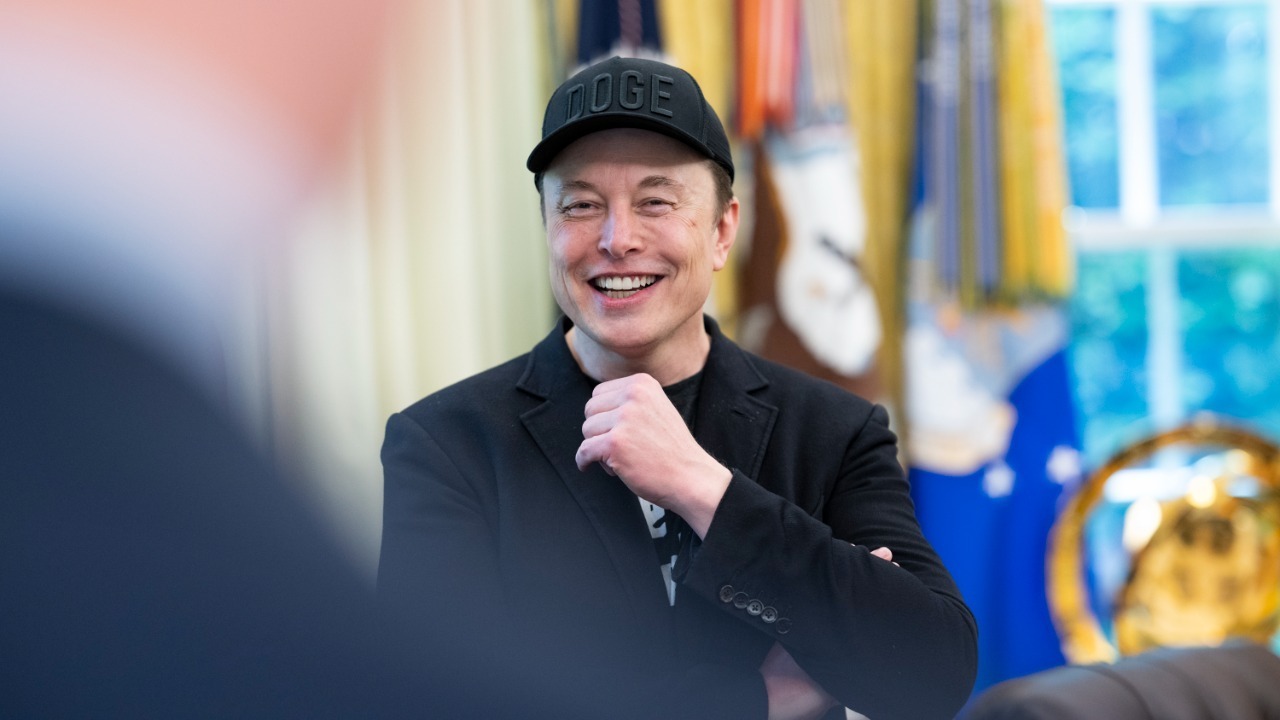
Elon Musk once framed a new federal cost-cutting office as a “chainsaw for bureaucracy,” a swaggering promise that the project known as DOGE would rip through red tape and shrink Washington. Less than a year later, that chainsaw has effectively disappeared, leaving behind a tangle of unanswered questions about what it actually cut and why it faded so quickly. The rise and quiet vanishing of DOGE captures how Musk’s political theater, crypto persona, and President Donald Trump’s governing agenda briefly fused, then unraveled.
The birth of DOGE as Trump’s first-day shock to Washington
The story of DOGE starts not with a meme coin but with one of President Trump’s earliest moves after returning to the White House. One of President Trump’s first executive orders on January 20, 2025 renamed and reorganized the United States Digital Service inside the Executive Office of the President, creating a new entity branded as DOGE and folding it into a broader push for aggressive federal cuts. According to a detailed fact sheet titled “The So-Called DOGE,” the initiative was pitched as a lean, tech-driven engine for streamlining government, even as critics warned that the restructuring risked hollowing out core public services and centralizing power in the Executive Office of the President, concerns that were baked into the very question, What is DOGE?.
By Mar 10, 2025, that same fact sheet from House Budget Committee Democrats was already framing DOGE as a political project rather than a neutral efficiency drive. It underscored that the rebranded unit sat at the center of Trump’s budget strategy, tying it to a broader ideological campaign to shrink the federal footprint while expanding presidential control over digital and data operations. In that telling, DOGE was less a quiet back-office tweak and more a flagship symbol of how the administration wanted to govern, with the Executive Office of the President positioned as the command hub for everything from software modernization to staffing decisions under the new DOGE structure.
Musk’s chainsaw moment and the spectacle of DOGE
If Trump’s executive order gave DOGE its legal life, Musk gave it cultural oxygen. Earlier in 2025, Musk appeared at the Conservative Political Action Conference in Washington, walking onstage in a black “Make America Great Again” hat, sunglasses and chain, and hoisting an actual chainsaw as he hyped the administration’s cost-cutting agenda. In that performance, captured in detail by political reporters, Musk used the prop to dramatize what he called a war on bureaucracy, a moment that linked his celebrity to Trump’s budget plans and to the new office that supporters said had already found $55 billion in savings, a claim embedded in coverage of how he Dressed in a black “Make America Great Again” hat and turned fiscal policy into stagecraft.
Public television cameras were rolling as well, documenting how Musk, introduced as a star guest, strode out with the chainsaw and invoked Argentine President Javier Milei’s own anti-bureaucracy theatrics. In that broadcast, viewers were urged to Watch Musk’s remarks “in the player above,” and the segment noted that the chainsaw had been used by Milei during his 2023 presidential campaign to symbolize deep cuts to the state, a symbolism Musk imported directly into the CPAC hall. The Feb 19, 2025 coverage of that appearance made clear that this was not a dry policy rollout but a made-for-television moment in which Musk’s persona, Trump’s agenda and the newly created DOGE were fused into a single image of a Watch Musk “chainsaw for bureaucracy.”
From crypto hype to government office: Musk’s long Doge fixation
To understand why Musk’s “chainsaw” line resonated, it helps to remember how deeply his public image is tied to Dogecoin and its jokey promise of disruption. On May 9, 2021, during a “Weekend Update” segment on “Saturday Night Live,” Elon Musk the self-proclaimed “Dogefather” joked that Dogecoin was “a hustle,” a moment that both thrilled and rattled crypto traders who had treated his tweets as market-moving gospel. In that Rolling Stone–branded news clip, host Reed Dumele introduced the segment with “Welcome to Rolling Stone news I’m Reed dumle Elon Musk the,” underscoring how mainstream the Dogecoin spectacle had become as Musk riffed on the coin’s volatility in front of a national television audience, a performance preserved in the Welcome to Rolling Stone news video.
Regulators in Europe took notice of that pattern of hype and trading. By Jan 8, 2025, members of the European Parliament were formally asking whether Mr Musk had influenced the price of the crypto-asset Dogecoin via statements on X before making trades, and whether those posts had measurable effects for Dogecoin holders. In a written question to the European Commission, lawmakers described how Mr Musk was accused of using his social media megaphone to move markets, then potentially profiting from the swings, a concern spelled out in the document on how Mr Musk was accused of manipulating the crypto-asset Dogecoin. That history of playful yet consequential market influence set the stage for Musk to carry the Doge brand from the world of tokens into the heart of U.S. governance.
DOGE as a budget weapon and political lightning rod
Inside Washington, DOGE quickly became shorthand for a broader clash over the size and role of the federal government. In an Apr 24, 2025 segment of the series American Battleground, titled “Tearing down the house with the richest man in the world,” CNN correspondent Tom Foreman delivered an extended Analysis of how Musk’s partnership with Trump was reshaping the budget debate. The report described how the White House and its allies touted DOGE as proof that they could slash spending without harming services, while opponents warned that the cuts were targeted at programs that underpinned everything from health care to environmental enforcement, a tension captured in the American Battleground episode “Tearing down the house with the richest man in the world.”
That same analysis highlighted how Musk’s presence gave Trump’s budget push a unique blend of Silicon Valley glamour and populist anger. Viewers saw the richest man in the world cast as a demolition expert, promising to rip out “waste” while insisting that there were “no prescribed reductions in headcount,” a phrase that would later surface in coverage of DOGE’s internal staffing plans. The political stakes were clear: Republicans framed DOGE as a technocratic fix that could deliver savings without pain, while Democrats portrayed it as a Trojan horse for weakening agencies that had long been in conservatives’ crosshairs, turning a once-obscure office into a lightning rod for the entire fiscal fight.
The quiet disappearance of a “chainsaw for bureaucracy”
By late 2025, however, the swagger around DOGE had given way to something closer to silence. Reporting on Nov 22, 2025 noted that Elon Musk once called DOGE “the chainsaw for bureaucracy,” but that the office had quietly ceased to exist well ahead of schedule, its functions either folded back into existing agencies or left in limbo. That same account stressed that Musk had insisted there were “no prescribed reductions in headcount” and that the focus was supposed to be on efficiency rather than layoffs, yet the project still wound down early, a reversal documented in coverage that explained how Elon Musk once called DOGE a “chainsaw for bureaucracy” even as it vanished.
A separate Nov 22, 2025 report on the same saga emphasized that the administration now framed the early shutdown as a sign of success, arguing that DOGE had completed its mission and that ongoing work could continue under more traditional structures. That piece also noted that there were no prescribed reductions in headcount and that the office’s centralized leadership under @USDS had been a key part of its design, even as the brand itself disappeared from official documents, a contradiction laid out in the account that described how He added that “there are no prescribed reductions in headcount.” The net effect was that a project launched with maximal fanfare ended with minimal transparency, leaving watchdogs to piece together what, if anything, the “chainsaw” had actually cut.
Musk’s Doge brand lives on, even as DOGE fades
Even as the government office that borrowed its name from crypto slipped into obscurity, Musk’s fascination with Dogecoin itself remained very much alive. On Nov 11, 2025, he resurfaced the meme in a different context, declaring that it was “Time” to “Put Dogecoin On The Moon But It Is Not DOGE That Surges,” a line that again sent traders scrambling to parse his intent. The report on that episode noted that while Musk’s rhetoric focused on Dogecoin, it was other assets that actually spiked, underscoring how his pronouncements can still jolt markets even when the underlying token does not move as expected, a dynamic captured in coverage headlined Elon Musk Says “Time To Put Dogecoin On The Moon But It Is Not DOGE That Surges.”
That contrast is striking: the government DOGE that Musk once celebrated as a bureaucracy-slaying tool has been wound down, while the Dogecoin brand he helped popularize continues to generate headlines, regulatory scrutiny and speculative spikes. The European Parliament’s Jan 8, 2025 inquiry into Mr Musk’s Dogecoin posts, the Mar 10, 2025 fact sheet asking “What is DOGE?” inside the Executive Office of the President, the Feb 19, 2025 CPAC spectacle with the chainsaw and the Apr 24, 2025 American Battleground Analysis all point to the same pattern. Musk’s ability to turn a joke currency into a political slogan and then into a federal office was real, but so was the fragility of a project built on spectacle. DOGE, the bureaucracy chainsaw, has vanished from the org chart. Doge, the meme and market signal, is still very much with us.
More From TheDailyOverview
- Dave Ramsey warns to stop 401(k) contributions
- 11 night jobs you can do from home (not exciting but steady)
- Small U.S. cities ready to boom next
- 19 things boomers should never sell no matter what

Grant Mercer covers market dynamics, business trends, and the economic forces driving growth across industries. His analysis connects macro movements with real-world implications for investors, entrepreneurs, and professionals. Through his work at The Daily Overview, Grant helps readers understand how markets function and where opportunities may emerge.