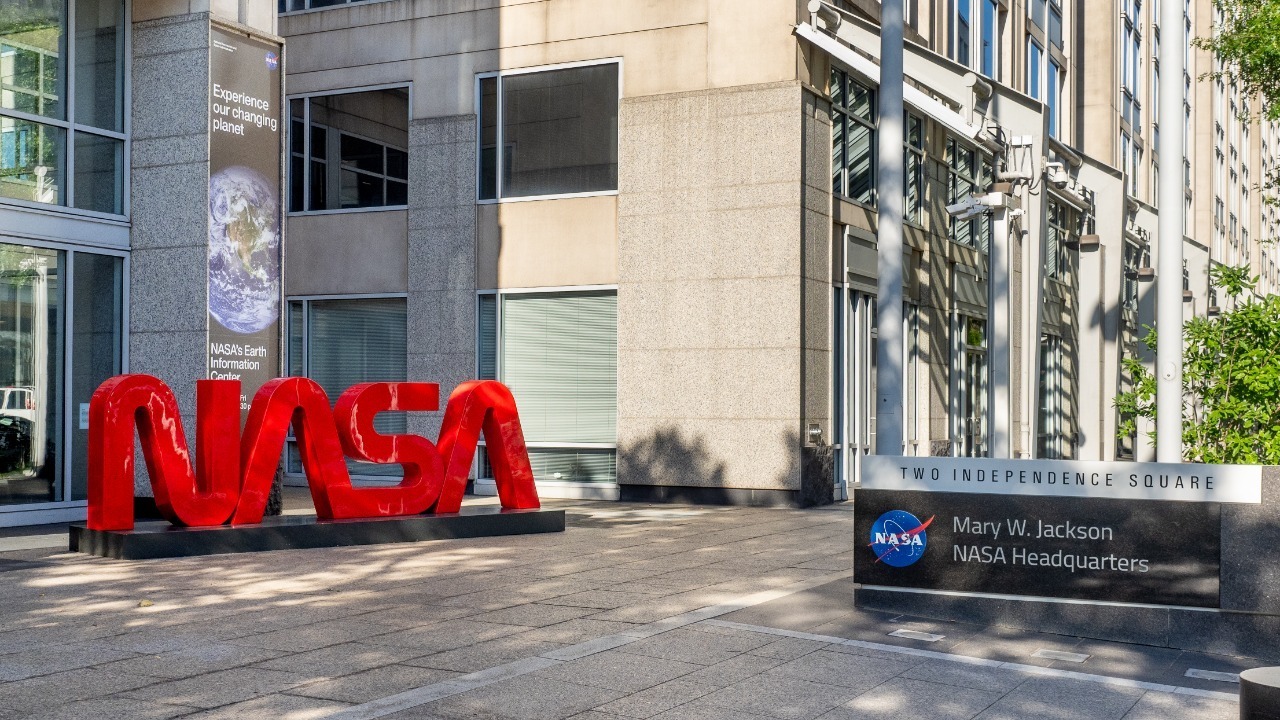
NASA has effectively stepped back from a flagship commercial spaceplane it once touted as part of the future of space station logistics, reshaping the trajectory of a program that has absorbed roughly a billion dollars in public and private money. Instead of flying a full slate of cargo missions to the International Space Station, Dream Chaser is now headed for a single demonstration flight with no guarantee of docking or follow-on work. The quiet contract surgery says as much about NASA’s shifting risk calculus as it does about Sierra Space’s struggle to turn an ambitious design into an operational vehicle.
What looked like a long-term partnership has been reduced to a one-off test, leaving Sierra Space to salvage its business case by leaning on defense work and private investment. The result is a cautionary tale about how quickly commercial space fortunes can change when schedules slip, certification stalls and a government customer decides it is “no longer obligated” to keep waiting.
The long slide from flagship partner to expendable option
The core shift is stark: NASA now says it is “no longer obligated” to use Dream Chaser for International Space Station resupply, a sharp turn from the original plan that envisioned multiple cargo runs. The spaceplane’s initial launch date, once set for 2020, slipped repeatedly as development dragged and other providers filled the gap, eroding the urgency for NASA to keep a place open on the manifest. By the time the agency formally signaled that it was no longer bound to fly the vehicle, Dream Chaser had gone from centerpiece to contingency in the station logistics portfolio, a change captured in NASA’s own explanation that the schedule had “slipped repeatedly” from that early 2020 target, as reflected in its statement that it is no longer obligated to use Dream Chaser for ISS resupply.
Those delays unfolded as NASA’s broader commercial cargo strategy matured, with other vehicles already flying regular missions and the agency under pressure to manage risk and cost as the station ages. In that context, Dream Chaser’s repeated slips made it easier for NASA to treat the program as optional rather than essential, even though the agency had once promoted the lifting-body design as a way to diversify its fleet. The language about being “no longer obligated” is bureaucratic, but it marks a decisive downgrade in status for a spacecraft that was supposed to be a workhorse.
How the contract rewrite stripped away guaranteed missions
The practical effect of NASA’s change in posture is a contract that no longer promises a string of paid cargo flights. NASA removed guaranteed cargo flight purchases from Sierra Space’s Commercial Resupply Services arrangement, leaving the company with a single demonstration opportunity instead of a pipeline of missions. That shift forces Sierra Space to rethink its revenue model, because the original plan had tied Dream Chaser’s economics to a steady cadence of ISS runs that would amortize development costs over time, a prospect that evaporated when NASA removed guaranteed cargo flight purchases from Sierra Space’s manifest.
Under the revised terms, Dream Chaser is now expected to fly in 2026 with no docking guarantee, a far cry from the earlier vision of routine berthings to the orbiting laboratory. The lack of a committed destination means the demonstration is as much a technology showcase as it is a logistics mission, and it leaves Sierra Space exposed if NASA decides not to buy additional flights afterward. For a company that built its business case around ISS cargo, the contract rewrite turns a once predictable revenue stream into a speculative bet on future demand.
NASA’s modified ISS cargo deal and Sierra Space’s pivot to defense
NASA’s decision did not happen in a vacuum, it coincided with Sierra Space’s own strategic shift toward defense and national security work. The agency formally modified the Dream Chaser ISS cargo contract as Sierra Space rebalanced its portfolio, a move that acknowledged both the company’s changing priorities and the reality that the ISS program is entering its final decade. In public statements, NASA framed the change as a mutual adjustment, describing how it modifies Dream Chaser ISS cargo arrangements as Sierra Space shifts to defense work.
For Sierra Space, leaning into defense contracts offers a more immediate path to revenue than waiting for a shrinking ISS market to justify the cost of a winged cargo vehicle. The company has signaled that national security customers may value Dream Chaser’s runway landing and cross-range capabilities in ways that NASA no longer does for station resupply. NASA, for its part, gains flexibility to allocate cargo missions to already proven capsules while still extracting some value from the Dream Chaser development through a single demonstration and potential future services if they make sense.
The debut mission that keeps slipping further away
Even as the contract shrank, Sierra Space struggled to get Dream Chaser to the launch pad, compounding NASA’s doubts. The spaceplane’s debut mission has been delayed again, and under the revised plan it will no longer dock with the station at all, instead flying a free-flight profile that tests systems without committing to ISS integration. That change reflects both schedule pressure and the agency’s reluctance to certify a new vehicle for station proximity operations before it has proven itself in space, a caution underscored when Sierra Space’s Dream Chaser debut mission was delayed again and no longer planned to dock.
Sierra Space has cited launch vehicle availability and integration complexity as factors, but from NASA’s vantage point, each slip reinforces the logic of relying on existing cargo providers. A debut that was once framed as the start of a long operational run is now a one-off test that must justify itself on technical merit alone. The longer that first flight remains on the horizon, the more Dream Chaser looks like a technology demonstrator rather than a core logistics asset.
From cargo workhorse to 2026 free-flight demo
The revised contract now centers on a 2026 free-flight demonstration that will test Dream Chaser’s performance without the complexity of station docking. Under the new deal, NASA and Sierra Space mutually agreed that the spaceplane will perform this single mission as a way to validate systems and gather data, with no promise of additional cargo flights afterward. The agency has described this as a pragmatic compromise that preserves some return on its investment while freeing it from long-term obligations, explaining that under the new deal, NASA and Sierra Space mutually restructured the Dream Chaser flight.
For Sierra Space, the free-flight demo is now both a proving ground and a high-stakes audition. A successful mission could still open doors to future NASA work, commercial station partnerships or defense applications, while a failure would make it far harder to justify continued investment in the platform. The 2026 timeline also underscores how far the program has drifted from its original 2020 target, stretching the gap between concept and reality to the better part of a decade.
Technical milestones that arrived just as NASA’s patience ran out
Ironically, some of Dream Chaser’s most impressive technical progress has come just as NASA has been scaling back its commitment. Sierra Space has announced that its Dream Chaser spaceplane successfully completes critical pre-flight milestones, including integrated testing and ground operations that clear the way for launch. The company highlighted work at its Colorado facilities and at Vandenberg Space Force Base, emphasizing that the Dream Chaser Spaceplane Successfully Completes Critical Pre-flight Milestones in LOUISVILLE and at Vandenberg.
Those achievements show that the vehicle is more than a paper design, yet they arrived after years of schedule slips that had already eroded NASA’s confidence. In a different timeline, these milestones might have been the prelude to a full manifest of ISS missions; instead, they now serve as evidence that the hardware is finally catching up just as the original customer is stepping back. The disconnect between technical progress and programmatic support is a reminder that in spaceflight, timing can be as important as engineering.
The billion-dollar bet behind Dream Chaser’s business case
Behind the scenes, Dream Chaser has been sustained by a substantial flow of private capital that was predicated on NASA’s long-term participation. Sierra Space Increases Total Investment to a Record $1.7 Billion with $290 million in Series B Funding, bringing its valuation into multibillion territory and signaling strong investor belief in the spaceplane’s potential. The company has touted that Dream Chaser is backed by significant active contracts, presenting the program as a cornerstone of a broader commercial space strategy, as it noted when Sierra Space Increases Total Investment to a Record $1.7 Billion with $290 in Series Funding.
That scale of investment made sense when Dream Chaser was expected to fly multiple NASA cargo missions, anchoring revenue projections and justifying the high upfront cost of a reusable lifting-body vehicle. With the ISS manifest now reduced to a single demonstration, Sierra Space must either replace that lost business with defense and commercial station work or accept a longer path to recouping its $1.7 Billion outlay. Investors who bought into the original vision will be watching closely to see whether the pivot can sustain the valuation that Series B Funding helped establish.
NASA’s public framing and the optics of a “modified” partnership
NASA has been careful to present the Dream Chaser changes as a mutual adjustment rather than a unilateral cancellation, a choice of language that reflects both legal realities and political optics. In its official communications, the agency emphasized that it worked with Sierra Space to modify the Commercial Resupply Services contract, highlighting the continued value of the development and the planned flight demonstration. The statement, attributed to a Public Affairs Specialist, described how Public Affairs Specialist language framed The Sierra Space Dream Chaser and its Shoo stack as part of ongoing development and the flight demonstration.
That framing allows NASA to argue that it is still supporting commercial innovation while quietly reducing its exposure to a program that has not yet flown. It also gives Sierra Space a way to claim continued partnership even as the financial underpinnings of that relationship shrink. For observers, the contrast between the upbeat rhetoric and the hard reality of lost missions underscores how much of modern space policy is managed through careful messaging as well as contract clauses.
Local fallout, expert doubts and what “walking away” really means
The consequences of NASA’s retreat are felt most acutely in Colorado, where Dream Chaser has been a source of pride and high-tech jobs. Local reporting has noted that the Colorado-built spaceplane loses NASA missions and faces yet another delay, with the new terms limiting Sierra Space to a free flight demonstration and leaving the rest of Dream Chaser’s development to be funded without guaranteed ISS work. That shift has raised concerns about the long-term future of the program in the state, as highlighted when coverage explained that Colorado-built Dream Chaser loses NASA missions, delayed again, and that Now, under the new terms, NASA will only fund a free flight while After that the company must carry the rest of Dream Chaser’s development.
Experts have also raised technical and certification concerns that help explain NASA’s caution. Analysts note that experts are still unable to certify the vehicle, and some suggest that perhaps their fears were influenced by the recent situation with the CST-100 Starliner, another crew-capable spacecraft that faced high-profile issues on its path to operational status. Those worries, combined with the missed schedules and shifting priorities, contributed to NASA’s decision to cancel its order for multiple Dream Chaser flights, with commentary pointing out that Experts are still unable to certify it and that Perhaps their fears were influenced by CST 100 issues, all of which led to NASA’s decision to walk away from the seven promised missions.
In that light, NASA’s quiet exit from a once high-profile partnership looks less like a sudden betrayal and more like the end point of a long, incremental loss of confidence. Dream Chaser is not dead, but it is no longer the agency’s chosen workhorse, and the burden of proving its worth now rests squarely on Sierra Space and its remaining backers.
More From TheDailyOverview
- Tennessee loses $2.6B megafactory and faces major layoffs
- Retired But Want To Work? Try These 18 Jobs for Seniors That Pay Weekly
- What to do with your pennies after the U.S. stops minting them
- Home Depot CEO warns of a troubling customer trend in stores

Grant Mercer covers market dynamics, business trends, and the economic forces driving growth across industries. His analysis connects macro movements with real-world implications for investors, entrepreneurs, and professionals. Through his work at The Daily Overview, Grant helps readers understand how markets function and where opportunities may emerge.