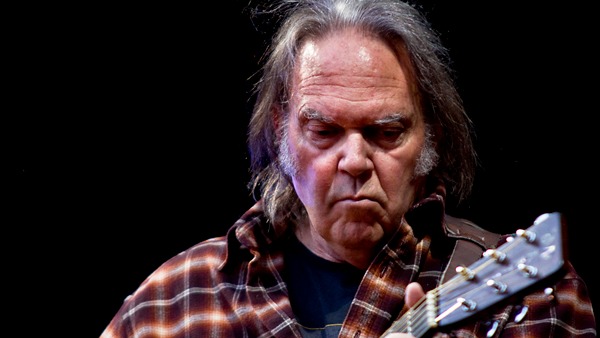
Neil Young has turned his latest protest toward the companies that help deliver his music and connect his fans. In a blistering new salvo, he accuses Apple, Verizon and T-Mobile of propping up what he calls a fascist Trump regime and vows to stop taking their money even if it costs him reach and revenue. The veteran songwriter is not just venting, he is reorganizing his business and his daily life around a boycott that he frames as a moral obligation rather than a branding exercise.
At a moment when corporate neutrality on politics is increasingly hard to sustain, Young is demanding that the tech and telecom giants that profit from his catalog pick a side. He is cutting ties with Big Tech distributors, ditching his own Verizon flip phone and urging fans to follow him in targeting what he describes as Trump-supporting companies. The campaign extends his long record of clashes with Donald Trump and with the billionaires Young believes are enabling the president’s power.
From streaming partner to target: Young’s break with Apple and Verizon
Young has never been shy about saying what he thinks is wrong with the music business, but this time his anger is aimed squarely at the platforms that carry his work. In a fiery essay on his Neil Young Archives site, he singles out Apple and Verizon as corporations that, in his view, are “backing the fascist Trump regime” and therefore no longer acceptable partners. One report notes that Neil Young has “never been the type to keep his mouth shut just because it is bad for business,” and he is now applying that principle to the very companies that distribute his songs. In the same broadside, he calls out Apple CEO Tim Cook by name and makes clear that T-Mobile is “apparently out” as well, folding the wireless carrier into his list of corporate offenders.
The split is not symbolic. Young says he is cutting off revenue streams that flow from these firms, arguing that he cannot accept money that he believes will ultimately help a government he describes as fascist. In a separate account of his decision to sever ties with digital giants, he is described as launching “Neil Young Cuts Ties With Big Tech, Pledges Fight Against The Regime,” with Neil Young Pledges what he calls The Regime and accusing tech companies of bending over backwards to support it. He frames the choice starkly, saying that continuing to accept distribution money would mean participating in a system that funnels resources toward a political project he considers illegitimate.
“No more upgrades”: personal boycott as political weapon
Young is not limiting his protest to corporate contracts. He is also reworking his own consumer habits, starting with the device in his pocket. In a post on the Neil Young Archives, he writes that he will get rid of his Verizon flip phone and stop giving money to the carrier, a move described in one account under the blunt headline “No more upgrades.” The report notes that on his Neil Young Archives site, Young spells out his plan to wage “war” on Apple and Verizon over what he sees as their Trump support, and he treats his own phone bill as part of that battlefield. It is a small but concrete example of how he wants to align his daily spending with his politics.
Elsewhere in the same post, Young connects his boycott to a broader critique of state violence, referencing recent killings and the arresting of innocent people that he attributes to the Trump administration. A follow up from the same outlet notes that Young explicitly links corporate money to that violence, arguing that companies like Verizon are helping sustain a regime that is killing and arresting people without cause. In his telling, canceling a phone contract is not a lifestyle tweak, it is a refusal to subsidize what he sees as state repression.
Calling out Tim Cook, T-Mobile and “Trump-supporting companies”
Young’s language toward specific executives and brands is unusually direct, even by the standards of celebrity activism. In his essay, he accuses Verizon, T-Mobile and Apple CEO Tim Cook of supporting what he calls the “fascist Tru” government, a phrase that appears in a social media summary noting that Neil Young has posted a “fiery essay” accusing those companies of backing that regime. Another account of the same text underscores that Verizon, Mobile and Apple CEO Tim Cook of Tru are all named in his indictment, which treats their political donations and business relationships as part of a single ecosystem of support for President Donald Trump.
He is also broadening the target list beyond those three brands. In a detailed breakdown of his campaign, one report notes that Neil Young is “serious about boycotts” and is seeking to avoid all Trump-supporting companies, including Apple and Verizon. Another piece describes how Neil Young Calls Supporting Companies, portraying him as actively working to boycott companies that support the Trump regime rather than simply criticizing them from afar.
“The Regime” and Young’s long war with Trump
To understand why Young is willing to blow up lucrative relationships, it helps to see this boycott as part of a longer confrontation with Donald Trump. Earlier this month, he published a searing editorial about the president, writing that Trump “has divided us” and asking, “How did we elect these creeps who have no spin, no values, no conscience, no way to save the USA.” That piece, described in one account of his How cold it feels in the USA, also laments that “many innocent people are dying,” underscoring the stakes he attaches to Trump’s policies. In another report, Neil Young is said to urge Americans to “rise up” in a new editorial criticizing Trump, accusing the president of eroding democratic norms and using material from across his career to rally opposition.
Young’s rhetoric about “The Regime” is not new either. Coverage of his latest moves notes that Neil Young Cuts, Pledges Fight Against The Regime, and that he sees tech billionaires as enablers of Trump’s power. Another account of his boycott campaign stresses that Young has continually spoken out against Trump and the tech billionaires who enable him, while also putting his words into action. Even his social media posts have carried this theme, including an earlier image of Trump and other elites captioned on Twitter as “The oligarchs gather & so starts the looting of America.”
Boycotts, Greenland and the alternative Young is offering
Young’s boycott push is not limited to Apple and Verizon, and it is paired with efforts to build alternatives. One detailed account explains that Neil Young says “I am trying to not give money to the Trump regime, one by one,” describing a methodical effort to strip his spending from companies he believes support the president. A companion version of that report, which repeats the framing that Neil Young Calls Supporting Companies, emphasizes that he is actively working to boycott companies that support the Trump regime, not just urging fans to do so. Another summary of his stance notes that Neil Young is serious about turning his catalog and his consumer choices into leverage.
At the same time, he is trying to show what a different model might look like. In a striking gesture of cultural diplomacy, reports say that Heads of government in Norway and Greenland have been involved in arranging free access to his entire music catalog for the people of Greenland. Another account explains that Neil Young has a gift for Greenland, offering free access to his music for a year through his Neil Young Archives site, “something” framed as an offer of peace and love. In effect, he is redirecting his catalog away from platforms he sees as compromised and toward channels he can control, even as he gives some of that access away for free.
More From TheDailyOverview
*This article was researched with the help of AI, with human editors creating the final content.

Grant Mercer covers market dynamics, business trends, and the economic forces driving growth across industries. His analysis connects macro movements with real-world implications for investors, entrepreneurs, and professionals. Through his work at The Daily Overview, Grant helps readers understand how markets function and where opportunities may emerge.

