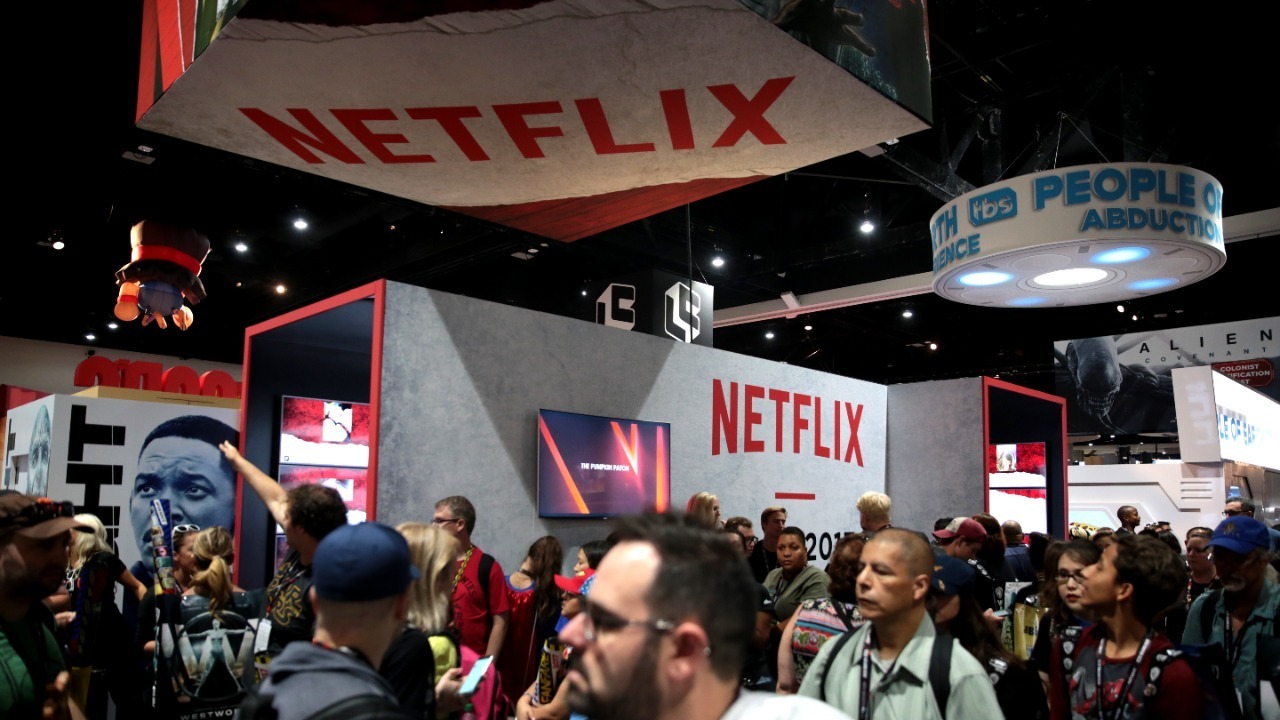
Netflix is ripping up its own playbook to win Warner Bros, swapping a mix of stock and cash for a fully funded bid that leaves no doubt about what shareholders will receive. The move turns a contested media takeover into a high-stakes balance sheet bet, and it raises pointed questions about how much short term pain NFLX investors are willing to tolerate for long term content dominance.
By shifting to an all cash structure, Netflix is signaling confidence in its financial firepower and its ability to wring value from Warner Bros’ film and TV assets, even as its own stock has come under pressure. I see the deal as a defining moment for how markets value streaming scale versus financial discipline.
The all‑cash pivot and what Netflix is actually buying
The core change is simple but dramatic: Netflix has revised its agreement so Warner Bros shareholders receive $27.75 per share in cash instead of a blend of equity and cash. That price, attached to a revised package valued at $72 billion, is designed to remove uncertainty about future NFLX share performance from the equation. Netflix and WBD have formally amended their merger agreement to reflect an all cash transaction that, according to their joint statement, simplifies the structure and accelerates the closing timeline for WBD stockholders. In parallel, Warner Bros will convene a special investor meeting so shareholders can vote on the revised deal, after its board signaled support for the new Netflix terms.
Under the revised structure, Netflix is not buying the entire conglomerate but a focused media engine. The Warner Bros arm that will change hands includes the company’s TV and film studio operations, including the flagship Warner Bros studio brand and associated franchises. One analysis pegs the overall package at about $83 billion when debt and related obligations are included, underscoring the scale of what Netflix is taking on. The company itself describes the all cash structure as continuing the strategic rationale of the original deal while providing greater certainty of value for WBD investors.
Paramount pressure and why Netflix chose cash over stock
The shift to an all cash bid is not happening in a vacuum, it is a direct response to a rival suitor. Netflix is facing a competing offer from Paramount, which has argued that the cable spinoff at the heart of Netflix’s earlier proposal is effectively worthless and has taken that dispute to court, according to reporting on the Paramount challenge. By stripping out the contested cable assets and paying cash instead, Netflix is effectively calling Paramount’s bluff and presenting Warner Bros shareholders with a cleaner, more easily comparable offer. Another analysis frames the revised bid as Netflix revising its Warner Bros Discovery proposal to make it an all cash transaction precisely as pressure from Paramount Pressure Builds.
From a shareholder politics standpoint, cash is a powerful weapon. Warner Bros Discovery investors no longer have to handicap future NFLX volatility or litigate the value of a cable carve out, they can simply compare the certainty of a $72 billion payout with whatever structure Paramount ultimately puts on the table. Commentators following the bidding war have described the contest over who will finally acquire WBD as a saga in its own right, with Warner Bros at the center of a tug of war between streaming and legacy media strategies. In that context, Netflix’s decision to lean on its balance sheet rather than its stock price is as much a signaling exercise as a financial one.
How the deal reshapes Netflix’s content and strategy
Strategically, the acquisition would give Netflix control of one of Hollywood’s deepest libraries at a time when original content costs are rising and subscriber growth is harder to find. The Warner Bros arm on the block includes the company’s TV and film studio businesses, including the storied The Warner Bros studio that sits behind franchises from superheroes to prestige dramas. Folding that pipeline into Netflix’s global distribution machine would not only bulk up its film slate but also give it more leverage in negotiations with talent and advertisers. Netflix itself has emphasized that the all cash transaction continues the strategic logic of its original agreement with WBD, even as the financing mix changes.
There is also a competitive moat argument. Analysts following the bidding have noted that, while Netflix is already a streaming giant, securing Warner Bros would lock up a portfolio of brands that rivals like Disney+ and Paramount+ have used to differentiate their own platforms. One breakdown of the situation describes how the saga over who will ultimately control Warner Bros has become a proxy for the broader streaming arms race. If Netflix wins, it not only removes a key asset from competitors’ reach but also gains more flexibility to window content across theatrical releases, streaming exclusives and licensing deals, which could support both subscriber growth and emerging ad tier revenue.
What the all‑cash bet means for NFLX’s finances
The price of that strategic upside is financial strain, and the market has already started to price that in. Commentary tracking the stock notes that when the Warner Bros deal was first announced in early December, Netflix was trading around 10322, but as of last week the shares had slipped to about $88. Investors are weighing not just the headline valuation but also how much new debt and cash outlay will be required to close the transaction. Netflix has told investors it expects earnings per share of $0.76 on revenue of $12.16 billion in the current quarter, slightly below what some on Wall Street had penciled in, which adds to the sense that the company is stretching to fund a transformative acquisition at a delicate moment for its own growth metrics.
For retail investors tracking NFLX on platforms like Google Finance, the headline numbers only tell part of the story. The real question is whether the Warner Bros assets can generate enough incremental cash flow to justify the higher leverage that an all cash deal implies. Netflix has already shown a willingness to use debt markets to finance content, and the company’s investor relations materials stress that the revised transaction still fits within its long term capital allocation framework for Netflix. But with its stock underperforming and earnings guidance under scrutiny, the margin for error is narrowing, and any integration misstep or regulatory delay could weigh further on NFLX’s multiple.
How investors should read the next chapter for NFLX
From my vantage point, the all cash structure clarifies the tradeoff for Netflix shareholders: accept near term financial risk in exchange for a once in a generation content haul. Analysts dissecting the bidding war have framed the contest over Warner Bros as a test of which strategic model investors trust more, a pure streaming player willing to lever up for IP, or a diversified media group like Paramount that is still balancing linear and digital bets. The fact that Netflix was willing to sweeten its proposal and move to an all cash bid as Paramount pushed back on the earlier structure suggests management believes the long term strategic upside outweighs dilution or balance sheet concerns.
For now, the market reaction has been cautious rather than euphoric, with some observers arguing that Netflix’s stock has not impressed investors lately and that the Warner Bros deal is not helping sentiment around Netflix. Yet if the transaction closes on the revised terms and integration proceeds smoothly, Netflix will emerge with a studio scale content engine that few global rivals can match. In that scenario, the current volatility around NFLX could look less like a verdict on the company’s future and more like the price of admission to a reshaped streaming landscape in which Netflix and Discovery assets sit at the center of a new Hollywood power map.
More From TheDailyOverview
*This article was researched with the help of AI, with human editors creating the final content.

Grant Mercer covers market dynamics, business trends, and the economic forces driving growth across industries. His analysis connects macro movements with real-world implications for investors, entrepreneurs, and professionals. Through his work at The Daily Overview, Grant helps readers understand how markets function and where opportunities may emerge.

