Smithfield Foods is preparing to close a major dry sausage facility in Springfield, Massachusetts, a decision that will eliminate 190 jobs and shift production to other states. The move underscores how a highly consolidated meat industry is quietly redrawing its map of where food is made, concentrating processing in the Midwest while coastal communities absorb the job losses. I see this closure as part of a broader strategic pivot that may improve corporate efficiency but deepen regional economic divides.
For Springfield, a city that has spent years trying to rebuild its industrial base, the loss of a longstanding plant is more than a line item in a corporate filing. It is a reminder that even profitable, well-known brands can vanish from a local landscape almost overnight, leaving workers and city leaders to pick up the pieces with limited leverage over what comes next.
The decision to close and what it actually covers
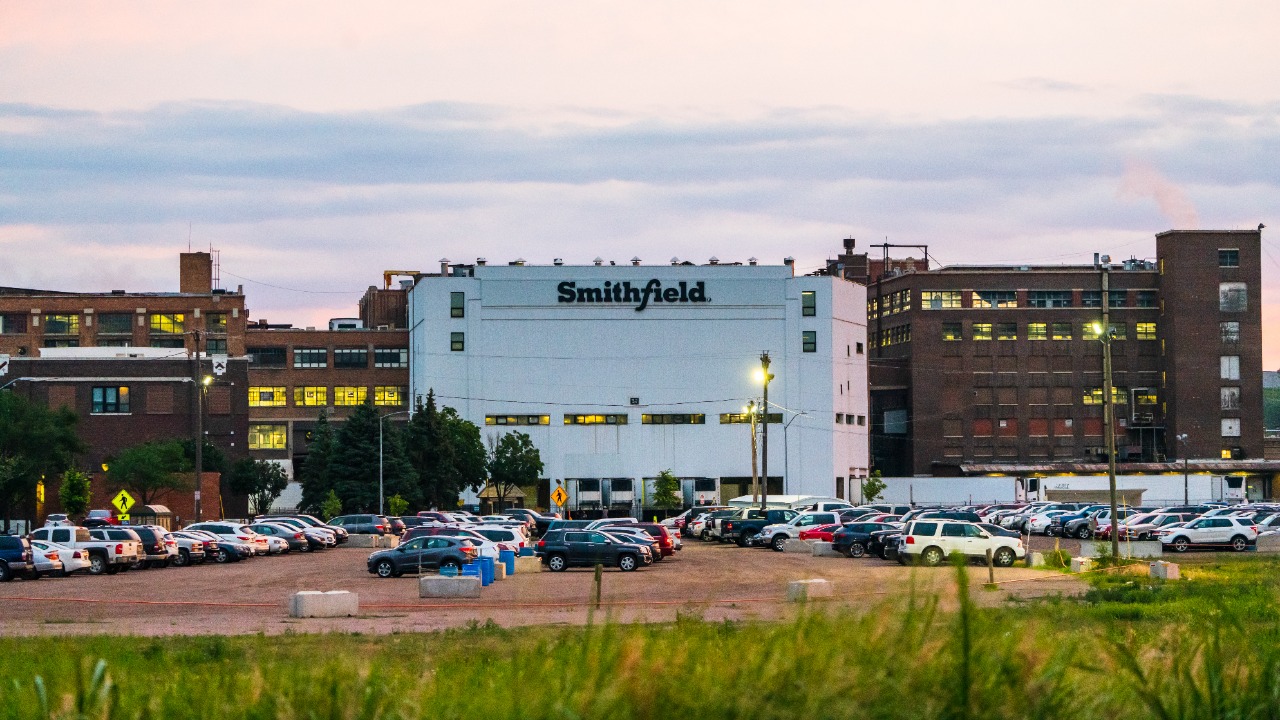
Smithfield Foods has confirmed that it will shut a dry sausage plant in Springfield, a facility that has been part of the city’s manufacturing fabric for decades. Company filings state that some 190 employees will be affected, with layoffs scheduled to roll out between April and September. That timeline gives workers only a narrow window to plan their next steps, especially in a specialized industry where comparable jobs are not always available nearby.
Local reporting describes the facility as a dry sausage and charcuterie operation, producing items that end up in supermarket deli cases across the region. The company has said production will be transferred to plants in Illinois, South Dakota, and Nebraska, a shift that keeps the products in circulation but removes Springfield from the supply chain. In practice, that means the brand will remain on shelves even as the community that helped build it loses its stake in the value created.
Why Springfield, and why now?
On paper, Smithfield’s explanation is straightforward: consolidate production, reduce costs, and use existing capacity in other facilities more intensively. The company has indicated that dry sausage work from Springfield will move to plants in Illinois, South Dakota, locations that sit closer to the country’s hog supply and major distribution corridors. From a logistics perspective, concentrating processing in the Midwest can trim transportation expenses and simplify operations, especially for a product line that does not depend on proximity to coastal ports.
What the corporate language tends to obscure is why Springfield, rather than another facility, ended up on the chopping block. The city is in western Massachusetts, a region that has worked to attract and retain manufacturing, but it is also far from the dense cluster of pork production in the central United States. When a company like Smithfield looks at its network, a plant in Springfield can start to look like an outlier, especially if the building is older or requires significant capital investment to stay competitive. The timing suggests a strategic recalibration rather than a sudden crisis, a choice to lean into a Midwest-centric footprint that may cut costs but leaves New England with fewer industrial anchors.
The human cost behind 190 pink slips
Behind the corporate filings are 190 individual stories, from line workers to supervisors, who now face a forced career pivot. A state filing and local coverage describe a detailed list of job titles slated for elimination, underscoring how deeply the closure will cut into the plant’s workforce. One report notes that nearly 200 people will be laid off from the longtime Springfield business, with a document outlining each affected role attached to the notice, a level of specificity that turns an abstract number into a roster of disrupted lives linked in the state paperwork.
For many of these workers, the plant is not just a job but a career built over years of specialized experience in meat processing. Severance packages and offers to apply for other positions within Smithfield can soften the blow, but they rarely replace the stability of a familiar workplace in a familiar city. When a plant like this closes, the impact ripples outward: families reassess mortgages and college plans, local businesses lose regular customers, and municipal leaders confront the prospect of a large industrial site going dark.
Springfield’s economic stakes and local response
Springfield has long balanced its identity as a regional hub with the reality of uneven economic fortunes, and the loss of a major employer tests that balance again. The city’s industrial corridor has seen waves of reinvention, from firearms to precision manufacturing to food processing, and each closure forces a new round of adaptation. The dry sausage plant sits within a broader ecosystem of warehouses, trucking firms, and suppliers that all feel the shock when a large facility winds down, especially in a community that has worked to rebuild its tax base and job market.
Local officials have acknowledged the blow and are likely to lean on state rapid-response programs, workforce boards, and retraining funds to help displaced employees. The facility’s location in Springfield, Mass also means regional planning agencies will be watching closely, since a large vacant industrial site can either become a magnet for new investment or a long-term drag on surrounding neighborhoods. The city’s challenge now is to turn a sudden corporate retreat into an opening for a different kind of employer, ideally one less vulnerable to distant consolidation decisions.
A pattern of consolidation, from Charlotte to New England
The Springfield shutdown is not an isolated event. Earlier, Smithfield announced the closure of a pork-processing facility in Charlotte, North Carolina, with the decision impacting 107 jobs and production shifting to other locations. That move, described in a filing that noted the decision impacted 107 jobs, signaled that the company was willing to pull back from established plants even in fast-growing Sun Belt markets.
Coverage of the Charlotte, North Carolina closure highlighted how work was redistributed within Smithfield’s network, a pattern that is now repeating in Massachusetts. A separate report on the company’s restructuring notes that in October the company announced the shutdown of the Charlotte, North Carolina facility and the transfer of its operations, with the decision again impacting 107 jobs. Taken together, Charlotte and Springfield suggest a deliberate thinning of coastal and near-coastal plants in favor of a tighter Midwestern core, a strategy that may streamline logistics but leaves a trail of shuttered facilities in its wake.
Corporate assurances versus on-the-ground reality
Smithfield has emphasized that charcuterie and dry sausage production will continue at other plants and that the company will maintain the same high standards of quality. In a statement about the Springfield closure, the company framed the move as part of a broader effort to optimize its manufacturing footprint while assuring customers that products would still meet the same high standards of quality at the facilities in Illinois, South Dakota. From a consumer perspective, that may well be true: recipes, food safety protocols, and brand specifications can travel from plant to plant with relative ease.
For workers and local leaders, however, those assurances ring hollow. A corporate promise that the salami will taste the same does little for someone whose job disappears or for a city that loses a chunk of its industrial tax base. One local report on the Springfield closure notes that the plant’s 190 jobs span a range of roles, from production workers to maintenance staff and administrators, and that the layoffs will unfold between April and September, a drawn-out process that prolongs uncertainty for families tied to the facility, as detailed in the layoff notice.
What the closure signals about the future of meat processing
Viewed through a strategic lens, the Springfield decision points to a meat industry that is doubling down on scale and geography. By shifting production to large plants in the Midwest, Smithfield can cluster operations near feedlots, slaughter facilities, and interstate highways, which likely trims transportation and overhead costs. While the company has not publicly quantified those savings, the pattern of recent closures suggests a belief that concentrating operations in the heartland will materially improve profitability, even if that means withdrawing from places like Massachusetts and North Carolina.
There is also a labor dimension to this shift. Larger Midwestern plants often draw from labor pools accustomed to meatpacking work, sometimes with lower wage expectations than coastal markets, and they can benefit from state and local incentives eager to keep or attract big employers. Smithfield Foods has said that affected Springfield employees will be able to apply for other positions within the company, a point reiterated in a statement confirming the closure of the Massachusetts plant and noting that Smithfield Foods would encourage workers to seek other positions with Smithfield, as described in the company communication. In practice, though, relocating from western New England to the Midwest is not realistic for many families, which means the benefits of consolidation accrue to the company while the costs stay local.
More From The Daily Overview
*This article was researched with the help of AI, with human editors creating the final content.

Grant Mercer covers market dynamics, business trends, and the economic forces driving growth across industries. His analysis connects macro movements with real-world implications for investors, entrepreneurs, and professionals. Through his work at The Daily Overview, Grant helps readers understand how markets function and where opportunities may emerge.