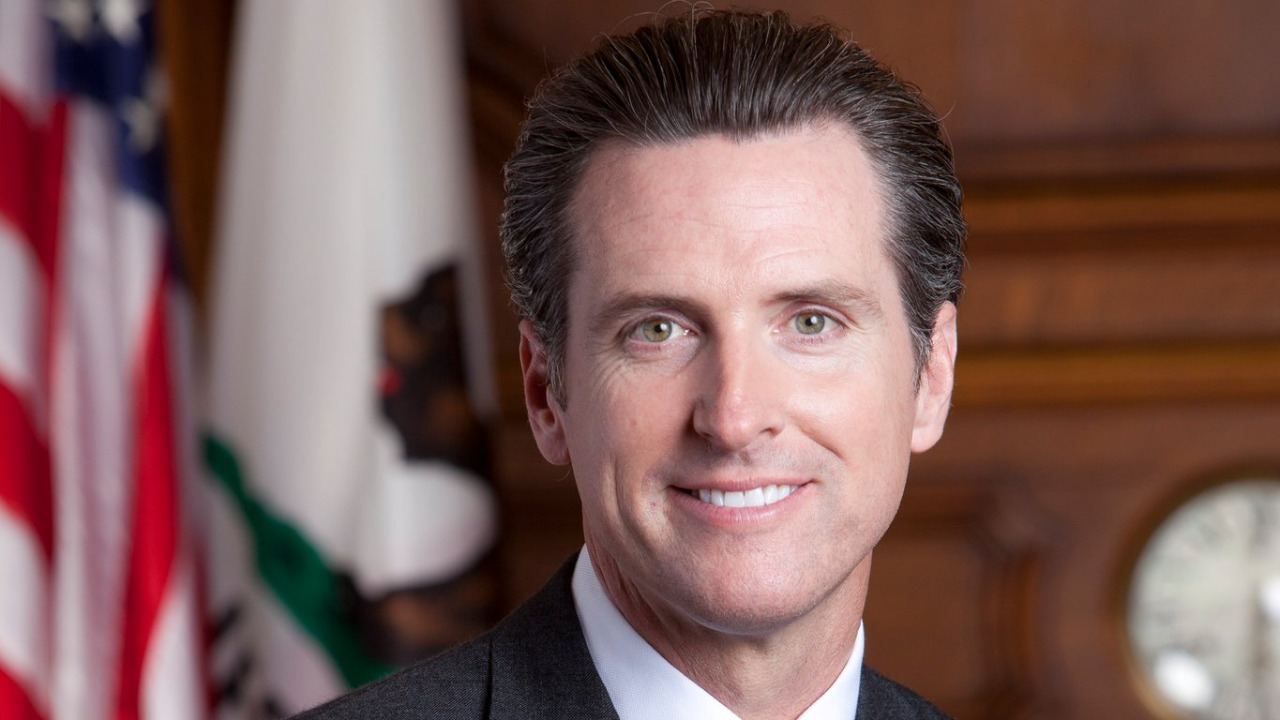
Governor Gavin Newsom has turned President Donald Trump’s sweeping tariff agenda into a political foil, casting the White House’s trade brinkmanship as both bad economics and ripe material for ridicule. As Trump leans on tariffs as a signature promise, Newsom is working to frame those same policies as a costly “grift” that hits California families and businesses while offering him a chance to mock the president’s economic bravado.
I see Newsom’s strategy as a blend of courtroom challenge, policy critique, and theatrical trolling, all aimed at exposing the gap between Trump’s tariff rhetoric and the real-world fallout. The result is an unusually personal clash over trade, in which the California governor is not just opposing the president’s agenda but openly taunting him for backing away from some of his own hard-line threats.
Newsom’s legal and economic case against Trump’s tariffs
At the core of Newsom’s pushback is a legal argument that Trump’s tariff powers have spun far beyond what Congress ever intended. Earlier this year, Gavin Newsom and Attorney General Rob Bonta filed a lawsuit challenging whether President Donald Trump has the constitutional authority to unilaterally impose broad tariffs, arguing that the administration is stretching emergency statutes to justify a permanent trade war. In that complaint, Gavin Newsom and his team contend that Congress, not the Oval Office, should decide when and how tariffs are used as a tool of economic statecraft.
Newsom has since escalated that argument to the national stage, urging the Supreme Court to rein in what he calls an abuse of emergency trade powers. In a formal appeal, he warned that the illegal tariffs imposed by President Trump threaten to devastate California’s economy, depriving it of $25 billion in trade and investment and undermining the state’s reliance on global markets. By asking the justices to reject what he labels a tariff “grift” under the International Emergency Economic Powers Act, President Trump is cast not as a tough negotiator but as a leader misusing national security law to sidestep Congress and punish his political foes.
California’s front-row seat to tariff fallout
California’s economy gives Newsom a powerful backdrop for that critique, because the state is unusually exposed to global trade shocks. Ports from Long Beach to Oakland move everything from Brazilian beef to Chinese electronics, and the governor has argued that Trump’s tariff salvos inject chaos into supply chains that underpin the state’s budget. When the administration’s shifting tariff threats rattled markets earlier this year, the resulting volatility tanked the stock market and created a huge risk for California’s forthcoming budget, which depends disproportionately on capital gains and high-income tax receipts tied to market performance, a dynamic highlighted in reporting on how California absorbs trade shocks.
Newsom has also tried to blunt the impact directly by appealing to foreign governments, a move that doubles as a rebuke of Trump’s approach. In a video message, he urged trading partners to carve out exemptions for California products, effectively asking them to treat the state differently from the rest of the country in response to federal tariffs. That pitch, delivered as Newsom rebuked Trump’s trade policy, underscored how deeply the state’s exporters, from Central Valley almond growers to tech manufacturers, feel the pinch. By stressing that California and even “Calif” branded goods should not be collateral damage in a Washington-driven trade war, he is turning local economic anxiety into a broader indictment of the president’s strategy.
Trump’s sweeping tariff promise meets hard numbers
Trump, for his part, has treated tariffs as a kind of all-purpose solution, promising that sweeping duties on imports can fund domestic priorities, discipline foreign rivals, and revive American manufacturing. That pitch hinges on the idea that other countries will shoulder most of the cost, but the numbers tell a more complicated story. According to one prominent analysis, Trump’s imposed tariffs will raise $2.1 trillion in revenue over the next decade on a conventional basis, but that same modeling finds the drag on growth and trade would shrink the net gain to $1.6 trillion once the broader economic hit is factored in, a trade-off detailed in estimates of how $2.1 trillion in tariff revenue interacts with slower investment and higher consumer prices.
Other modeling suggests the pain for households could be even more acute than headline revenue figures imply. Researchers at PWBM argue that Many standard trade models understate the long-run harm of tariffs, and their projections for Trump’s current policy mix point to a significant lifetime income loss for typical families. In that work, PWBM estimates that a middle-income household faces a $22K lifetime loss under Trump’s tariff regime, a figure that undercuts the president’s claim that foreign exporters alone will foot the bill. For a state like California, where high housing costs already squeeze middle-class budgets, those added trade costs land squarely on the voters Newsom is courting.
From courtroom briefs to cutting taunts
What makes this clash unusual is how aggressively Newsom has fused that economic critique with personal mockery of the president. When Trump recently backed off some of his own tariff threats, the governor rushed to claim credit, casting the shift as proof that sustained pressure from California and its allies had forced the White House to blink. In a social media broadside, he crowed, “WOW! FOLLOWING MY HISTORIC BRAZIL TRIP, ‘DOZY’ DON HAS FINALLY CAVED AND CUT TARIFFS. BEEF AND COFFEE ARE NOW CHEAPER,” a taunt that framed his overseas outreach as a HISTORIC diplomatic win and painted Trump as a sleepy, reluctant convert to lower trade barriers.
I read that kind of trolling as more than just a viral stunt. By mocking Trump’s retreat on specific tariffs, Newsom is trying to puncture the aura of strength that the president has built around his trade agenda, suggesting that the self-styled master negotiator folds when confronted by organized resistance from states and trading partners. The reference to a BRAZIL TRIP and cheaper beef and coffee is not just colorful language, it is a way of tying abstract tariff schedules to everyday prices at the grocery store, while casting Trump as the one who blinked first. In a political environment where both men are vying for national attention, the governor is using humor to frame the president’s economic reversals as evidence that the original tariff promise was more bluster than strategy.
MAGA-style mockery and the politics of tariffs
Newsom has even begun to parody Trump’s own political style, borrowing the cadence and imagery of MAGA rhetoric to lampoon the president’s trade record. In a recent holiday-themed bit, he leaned into exaggerated culture-war language to depict Trump’s tariffs as a kind of dinner-table food fight, complete with over-the-top references to family drama and partisan grievance. That performance, captured in a piece by Katie Francis, featured a Photo Illustration by Victoria Sunday and played with the idea of Trump supporters “storming” the holiday meal over economic frustrations, a wink at how trade policy has seeped into everyday political arguments.
By adopting that MAGA-style skewering, Newsom is signaling that he is willing to meet Trump on his own theatrical turf, but with the numbers on tariffs as his punchline. The reference to a 52 second clip and the stylized Photo Illustration are not incidental; they show how the governor’s team is packaging complex economic disputes into shareable, meme-ready content that can compete with the president’s own social media presence. For voters who may not follow the intricacies of the International Emergency Economic Powers Act or the finer points of tariff incidence, the image of Trump as the relative who ruins dinner with a trade war is a simple, memorable way to connect policy to lived experience.
Why this tariff feud matters beyond the zingers
Underneath the mockery, the stakes of this fight are substantial for both California and the national economy. If the Supreme Court sides with Newsom’s argument that Trump has overreached on tariff authority, it could sharply limit the president’s ability to use trade measures as a unilateral bargaining chip, forcing future administrations to seek more explicit approval from Congress. That would reshape how quickly presidents can escalate economic pressure on rivals, and it would validate the governor’s claim that the current tariff regime is not just bad policy but legally suspect, a point he has hammered home by warning that the illegal tariffs imposed by Trump are draining tens of billions from California’s trade flows.
Politically, the clash offers a preview of how Democrats may try to run against Trump’s economic record if he seeks another term beyond his current presidency. Rather than treating tariffs as a niche issue for economists, Newsom is turning them into a symbol of what he portrays as Trump’s broader governing style: sweeping promises, sweeping powers, and sweeping costs for ordinary households. By pairing detailed legal challenges with sharp-edged taunts, he is betting that voters will respond not only to the argument that tariffs hurt their wallets, but also to the image of a president who can be pushed off his most sweeping pledges when confronted by a state that refuses to play along.
More From TheDailyOverview
- Tennessee loses $2.6B megafactory and faces major layoffs
- Retired But Want To Work? Try These 18 Jobs for Seniors That Pay Weekly
- What to do with your pennies after the U.S. stops minting them
- Home Depot CEO warns of a troubling customer trend in stores

Grant Mercer covers market dynamics, business trends, and the economic forces driving growth across industries. His analysis connects macro movements with real-world implications for investors, entrepreneurs, and professionals. Through his work at The Daily Overview, Grant helps readers understand how markets function and where opportunities may emerge.

