Washington’s economy is not in free fall, yet the scale of public money flowing through the state keeps climbing, from federal “trillions” to state budgets that have swollen far faster than local growth. The disconnect between a broadly solid jobs picture and a government sector still primed for crisis spending is now colliding with a sharp revenue downgrade and a looming deficit. I see a state that has grown used to extraordinary cash, and is only beginning to reckon with what happens when the tide goes out.
At the federal level, President Donald Trump has repeatedly touted “trillions” of dollars being invested in America, framing it as proof that Washington, D.C., can keep priming the pump even as the broader economy stabilizes. In Olympia, that mindset has translated into a willingness to lock in higher spending commitments on the assumption that money will keep flowing, only to discover that the state’s own tax base is not keeping pace. The result is a fiscal squeeze that exposes how dependent Washington has become on a mix of aggressive state budgets and massive national outlays.
From federal ‘trillions’ to state habits of spending
When President Trump talks about “trillions” being invested in America, he is not just describing a one-off stimulus, he is signaling a governing philosophy that treats large-scale public investment as a permanent feature of economic policy. In a recent appearance, he described how “we’re doing positive things but it takes a while to get this thing going,” before emphasizing that vast sums are being deployed to keep the country moving in the “right direction,” a message that underscores how comfortable national leaders have become with multi-trillion dollar commitments even as growth cools. That rhetoric, captured in a clip that highlights how “TRILLIONS” are being invested, sets the backdrop for state-level choices, because it reassures local lawmakers that Washington, D.C., will keep the firehose open.
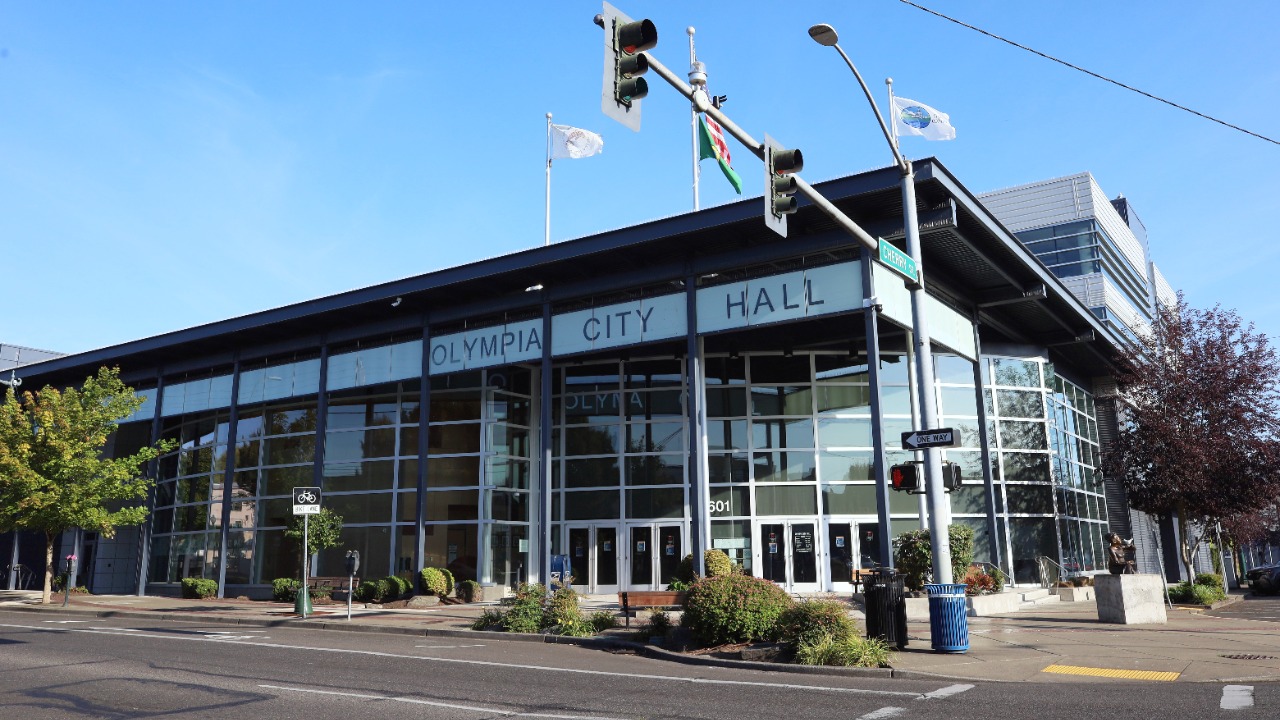
In that environment, it is not surprising that a state like Washington has built a fiscal culture around the expectation of ever-rising revenue and federal support. The state’s political class operates in a capital city that is itself synonymous with government largesse, a place where a quick search for Washington instantly surfaces images of power, spending and national decision making. That symbolic association matters, because it helps normalize the idea that big government checks are the default answer to economic anxiety, even when local indicators suggest a more nuanced picture.
A solid but uneven economy behind the fiscal anxiety
On the ground, Washington’s economy is not collapsing, it is slowing and shifting in ways that make budgeting harder. State lawmakers in SEATTLE have been poring over forecasts that show exports holding up even as overall growth softens, a reminder that some sectors remain resilient while others lag. That mix creates a “solid but fragile” backdrop, where headline employment numbers can look healthy even as taxable sales and specific industries show strain.
Economists are also warning that external shocks are complicating the picture. Forecasters have flagged tariffs that could raise prices on apparel, cars and natural gas, and they predict that Washingt could face broader headwinds if trade tensions deepen. At the same time, the state’s Chief Economist, Dr. Dave Reich, has outlined how inflation and real economic growth are interacting to slow revenue even as the broader U.S. and Washi economies continue to expand. In other words, the economy is not in crisis, but it is no longer delivering the effortless revenue gains that once made expansive budgets feel painless.
How Olympia locked in big spending on a shaky base
The real problem is that Washington’s spending commitments were built for a boom that is no longer guaranteed. Earlier this year, OLYMPIA, Wash, learned that projected Near General Fund revenue collections through 2029 had dropped by about $903, a jarring adjustment that instantly shrank the room for error. That downgrade did not arrive in a vacuum, it landed on top of a budget that had already assumed robust tax collections and continued economic strength.
According to The Office of Financial Management, the state’s four-year outlook was hit with a $903 m downward revision in projected state revenue, a $903 million hole that lawmakers had not fully prepared for. Much of the recent growth in spending went to government pay increases, a politically popular choice that is hard to unwind once it is in place. In effect, Olympia used the good years to hardwire higher baseline costs, rather than to build buffers that could absorb a slowdown.
Shortfalls in the hundreds of millions, habits built for trillions
That mismatch is now visible in a series of sobering fiscal snapshots. A video explainer on the state’s finances walks through how the four-year revenue forecast has dropped almost $900 million, with Spencer Paulie and investigative reporter TJ Martineell detailing how quickly the numbers have deteriorated. Their discussion underscores a basic tension: the state is dealing in hundreds of millions, but it has structured its obligations as if the federal “trillions” narrative would always trickle down in the form of buoyant tax receipts and generous aid.
That tension is even clearer in the political rhetoric around the budget. A separate briefing on the state’s fiscal trajectory, framed as Fiscal fallout, describes Washington as being “in the worst budget crisis we’ve ever had,” citing how the Economic and Revenue Forecast Council warned of running deficits that could reach into the billions if nothing changes. A detailed account shared with local readers notes that The Center Square reported how the Economic and Revenue Forecast Council told lawmakers that Washington faced running shortfalls, prompting the Senate Ways and Means Committee to confront the scale of the problem at its Tuesday meeting. The numbers are smaller than the federal “trillions,” but the habits of promising more than the tax base can reliably support are strikingly similar.
Tariffs, shutdowns and the illusion of endless federal rescue
Complicating the state’s planning is the assumption that Washington, D.C., will always ride to the rescue when things get tough. That belief has been shaken by a series of federal actions that have hit the local economy directly. One report on the impact of tariffs warns that price increases in key consumer categories could send shockwaves across the regional economy, with Reich noting that part of the lower-than-expected revenue is in taxable sales, but that not all sectors of the state’s economy are suffering equally. That “But” is crucial, because it shows that even targeted federal policies can create uneven pain that does not line up neatly with the state’s spending promises.
The government shutdowns under President Trump have delivered an even more direct shock. One account describes how Washington’s struggling economy took another hit from a federal closure that rippled through food banks and local businesses, even as national leaders in Washington, D.C., continued to talk confidently about long-term investments. A related report notes that Washington‘s local economy has taken blows from a series of actions by Trump, from layoffs of federal workers to delayed contracts, undercutting the notion that federal largesse is a one-way street. The same capital that talks about “trillions” can, with a shutdown order, yank support away overnight.
Entering a tight budget season with little room to maneuver
All of this is converging as Washington heads into a tight budget season with less fiscal space than its leaders expected. A recent briefing titled Entering tight budget season lays out how WA leaders are preparing for spending cuts after a $390 deficit was revealed, a figure that may grow if the economy slows further. That $390 gap is not catastrophic in a state budget measured in tens of billions, but it is a clear signal that the era of easy money is over, at least for now.
At the same time, local lawmakers are still grappling with the political expectations created by years of generous budgets and federal support. In State hearings, they are weighing options that range from new taxes on high earners and certain occupations to property tax adjustments, all while trying to avoid undercutting the very growth they need to restore the revenue base. A separate analysis of the fiscal outlook, shared in a conversation featuring Jul budget projections, notes that what looks like a manageable shortfall today could compound quickly if the next forecast brings another downgrade.
Washington’s reckoning with big-government expectations
What emerges from this tangle of forecasts, deficits and federal rhetoric is a state caught between two scales of government finance. At the national level, leaders talk casually about “trillions” and treat large deficits as a manageable cost of keeping the economy humming. At the state level, officials in Olympia are discovering that even a $903 million revenue miss or a $390 deficit can force painful choices, because they cannot print money or run persistent shortfalls without consequence. The habits of expansive spending, once formed, are proving hard to break.
Washington’s challenge now is to recalibrate its expectations without triggering a backlash from residents who have grown used to robust services and pay increases. The state’s experience, chronicled in conversations led by Spencer Paulie and in warnings from the Economic and Revenue Forecast Council, is a case study in what happens when local budgets are built in the shadow of federal “trillions.” The economy is still fundamentally solid, but the era of assuming that Washington, in every sense of the word, will always keep pumping money into the system is ending, and the adjustment will test both the state’s politics and its fiscal discipline.
More From TheDailyOverview
- Tennessee loses $2.6B megafactory and faces major layoffs
- Retired But Want To Work? Try These 18 Jobs for Seniors That Pay Weekly
- What to do with your pennies after the U.S. stops minting them
- Home Depot CEO warns of a troubling customer trend in stores

Grant Mercer covers market dynamics, business trends, and the economic forces driving growth across industries. His analysis connects macro movements with real-world implications for investors, entrepreneurs, and professionals. Through his work at The Daily Overview, Grant helps readers understand how markets function and where opportunities may emerge.

