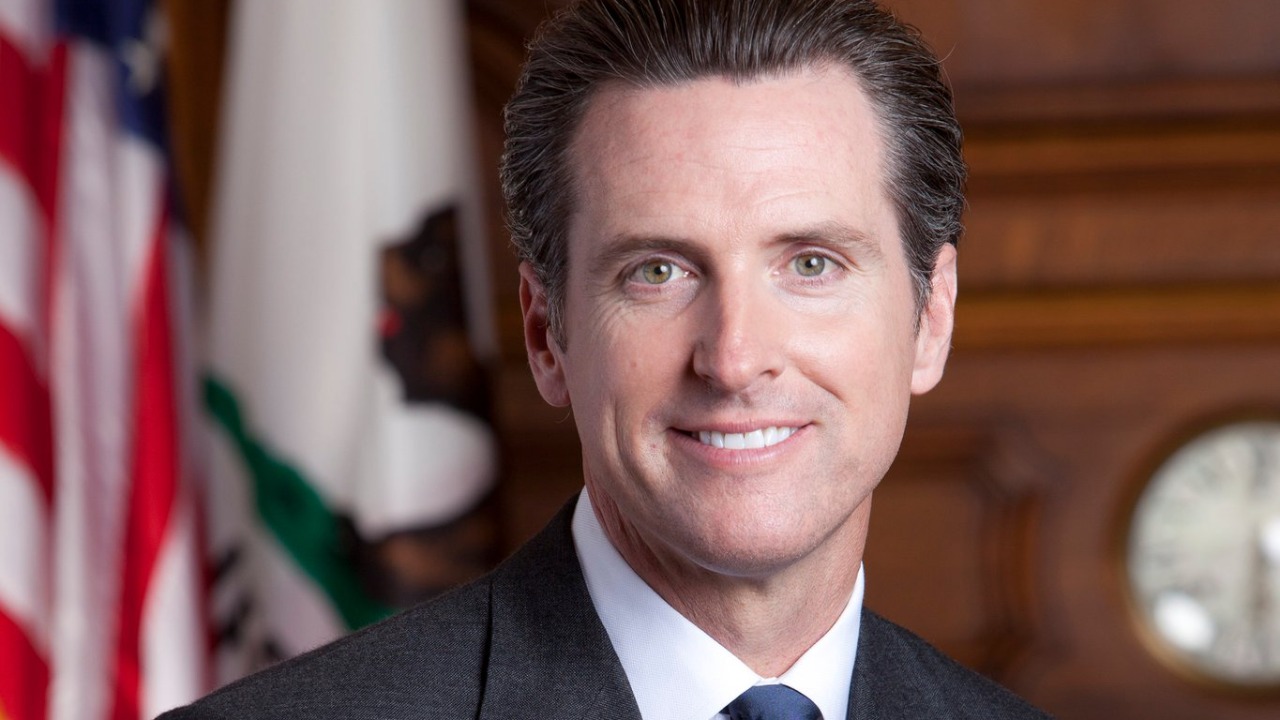
California Governor Gavin Newsom used a rare face-to-face moment with some of the country’s most powerful executives to accuse them of capitulating to President Donald Trump, turning a high-wattage business forum into a public shaming of corporate deference. His blunt language, aimed at CEOs, university presidents, and global elites, framed their outreach to the White House as less about patriotism and more about self-preservation, and he challenged them to rethink what they are willing to trade for access and influence.
In doing so, Newsom sharpened a long-running contrast between his own confrontational posture toward Trump and the more transactional approach favored by much of the business world. I see his remarks not just as a viral soundbite but as a deliberate attempt to redraw the ethical lines around how corporate America engages with a president whose politics many of these same leaders publicly claim to oppose.
Newsom’s DealBook broadside and the “kneepads” line
Newsom’s most searing critique came at The New York Times’ DealBook Summit, where he sat onstage in front of a crowd that included the very executives he was calling out. He argued that a subset of CEOs and financiers had effectively “bent the knee” to President Donald Trump, treating proximity to power as a status symbol rather than a responsibility. In his telling, the problem was not that business leaders met with the president, but that they did so without any visible red lines, signaling that their bottom lines mattered more than democratic norms or basic accountability.
To drive the point home, he reached for a vivid metaphor, saying some of these executives might need to buy “kneepads in bulk” because of how eagerly they were accommodating Trump’s demands. That jab, captured in coverage of how Gavin Newsom Slams CEOs and Others At the Summit For Bowing To Trump, was not just a throwaway insult, it was a way of accusing elite figures of trading dignity for access. I read that as a calculated choice: by using language that bordered on humiliation, he forced a room of image-conscious leaders to confront how their behavior might look from the outside, especially to workers and voters who do not enjoy the same access to the Oval Office.
Calling out CEOs, university presidents, and world leaders in the room
What made the moment especially striking was that Newsom did not speak abstractly about “corporate America” from a safe distance. He was, as one account put it, blasting a roomful of CEOs, university presidents, and world leaders directly to their faces for “bending the knee” to Trump. By addressing them in the second person, he turned a polished conference into a kind of moral tribunal, suggesting that the people in that ballroom were not just observers of American politics but active participants in enabling the president’s behavior.
California Gov Gavin Newsom has long cultivated a reputation as someone willing to confront Trump, but this was a different register, one that treated elite deference as a systemic problem rather than a series of isolated photo ops. In describing how these leaders had “bent the knee” and “groveled,” he implied that their private reassurances about disagreeing with Trump’s rhetoric were meaningless if they continued to show up smiling for the cameras. That framing echoed reporting that California Gov Gavin Newsom roasted the crowd for effectively selling out to President Donald Trump, and it underscored his view that silence in those rooms amounts to complicity.
“Some of you are probably fine with it”: confronting the upper 1 percent
Newsom’s critique was not limited to a generic notion of “elites,” he explicitly framed his audience as part of the upper 1 percent whose choices shape the country’s political trajectory. At one point he acknowledged that “some of you are probably fine with it,” a line that recognized a hard truth: a portion of the business class is comfortable with Trump’s agenda, whether because of tax cuts, deregulation, or the promise of favorable treatment. By saying this out loud, he punctured the polite fiction that everyone in the room was secretly horrified by the president but powerless to act.
That remark fit into a broader pattern in which he chided the wealthiest sliver of society for treating politics as a game of access rather than a test of values. Coverage of how he confronted business leaders noted that, while Elon Musk Chillingly Predicts What Happens After Trump in one part of the conversation, Newsom more often turned his attention to the broader class of executives who, in his view, were hedging their bets instead of taking a stand. The account that “But more often, he chided a portion of the upper 1 percent” captures how he used the stage to press this argument, and it is reflected in reporting that Elon Musk Chillingly Predicts What Happens After Trump appeared alongside that broader scolding. I see that juxtaposition as intentional: by pairing a high-profile tech figure with a critique of the entire class, Newsom suggested that no one in that tier could claim neutrality.
Ethics, access, and the “levels” Newsom says leaders must meet
Underneath the sharp one-liners, Newsom was making a more sober argument about ethics and power. He has said there “needs to be levels of ethics that are demanded of these leaders,” a phrase that signals his belief that simply following the law is not enough when dealing with a president who routinely tests democratic boundaries. In his view, CEOs and tech founders should be judged not only on shareholder returns but also on whether they use their access to push back against abuses, rather than quietly benefiting from them.
That framing is especially pointed when applied to the tech sector, where executives often present themselves as guardians of the future while simultaneously cultivating ties to Trump. Reporting on how Gov Gavin Newsom walks a fine line on tech’s Trump ties describes his approach as “very situational,” reflecting the tension between California’s economic dependence on tech and his insistence on ethical standards. When he says “There needs to be levels of ethics that are demanded of these leaders,” as captured in the piece linked through There, he is effectively arguing that access to Trump should come with obligations, not just perks. I read that as a challenge to tech leaders who want to be seen as ethical innovators while still enjoying the benefits of a transactional relationship with the White House.
DealBook as a stage for a broader political audition
Newsom’s performance at the DealBook Summit was not only about scolding CEOs, it also functioned as a kind of audition for a larger national role. In front of a high-profile audience and a digital crowd, he positioned himself as a Democrat willing to say out loud what many in his party hint at privately, that the business community cannot have it both ways when it comes to Trump. By leaning into confrontation rather than triangulation, he signaled that he sees political upside in drawing a sharp line between himself and the corporate class’s accommodation of the president.
That calculation was visible in how the event’s moderator, Sorkin, read from a piece noting that “For years Democrats and pundits have rolled their eyes at Gavin Newsom, but he’s positioned” himself differently now. The exchange, captured in coverage that highlighted how Sorkin framed Democrats and Gavin Newsom, underscored that his critique of CEOs is also part of a broader narrative about his evolution from a polarizing California figure to a national contender. I see his willingness to needle the very donors and power brokers who might one day fund a presidential run as both a risk and a branding exercise, one that casts him as a politician more interested in drawing ethical lines than in soothing elite anxieties.
From stage jabs to social media trolling of Trump
Newsom’s DealBook remarks did not come out of nowhere, they fit into a longer pattern of direct confrontation with Trump that extends from the stage to social media. He and his team have embraced a style that mixes policy criticism with a kind of trolling that mirrors the president’s own online persona. That approach is not just about scoring points, it is about signaling to Democratic voters that he is willing to meet Trump on his own rhetorical turf rather than treating him as a conventional opponent.
Earlier coverage of his digital strategy notes that California Gov Gavin Newsom has defended his press team’s decision to post mocking messages aimed at Trump, including one that suggested “all your groveling Trump needs” is already on display from certain elites. That line, referenced in reporting that California Gov Gavin Newsom blasted a roomful of CEOs while his team trolled Trump, shows how his in-person scolding and online messaging reinforce each other. I see this as a deliberate strategy: by pairing high-minded talk about ethics with sharp-edged jabs, he tries to keep the focus on elite behavior while also energizing a base that is accustomed to Trump’s own combative style.
Walking a fine line on tech’s Trump ties
Nowhere is Newsom’s balancing act more delicate than in his relationship with the tech industry that powers California’s economy. On one hand, he depends on companies like Tesla, Meta, and Google for jobs, tax revenue, and innovation. On the other, he has been explicit that their leaders cannot simply treat Trump as a useful partner while ignoring the broader implications of his presidency. That tension explains why he sometimes appears to criticize “tech’s Trump ties” in one breath while praising the sector’s contributions in the next.
Reporting on how Gov Gavin Newsom walks a fine line on tech’s Trump ties describes his approach as “very situational,” a phrase that captures the reality that he tailors his message depending on the audience and the stakes. When he says there “needs to be levels of ethics that are demanded of these leaders,” as highlighted in the piece linked through Gov Gavin Newsom, he is effectively telling tech executives that their public commitments to democracy and inclusion will be judged against their private dealings with the president. I read that as a warning that the reputational risks of cozying up to Trump may eventually outweigh the short-term policy wins.
Gambling on a fight with Trump as a political identity
Newsom’s decision to shame CEOs for their posture toward Trump is part of a larger gamble about his own political future. He has chosen to define himself, in significant part, through his willingness to pick a fight with the president, betting that Democratic voters will reward confrontation over conciliation. That choice carries risks, especially if Trump remains popular with a large share of the electorate and if corporate donors bristle at being publicly scolded, but it also offers a clear brand in a crowded field of ambitious Democrats.
Accounts of his trajectory note that, since a pivotal moment earlier in Trump’s presidency, Newsom and his staff have taken an increasingly aggressive and cheeky tone online, often mimicking the president’s own language, tone, and style. The description that “Since then, Newsom ( Gavin Newsom ) and his staff have taken an increasingly aggressive — and cheeky — tone online” appears in reporting on how he is Since
Why Newsom’s CEO takedown matters beyond the room
It would be easy to treat Newsom’s DealBook remarks as a one-day story, a viral clip that briefly embarrassed a few executives before everyone moved on. I think that would miss the deeper stakes. By accusing CEOs, university presidents, and world leaders of “bending the knee” and needing “kneepads in bulk,” he forced a conversation about what ethical leadership looks like in an era when Trump is back in the White House and corporate access to power is more visible than ever. His argument is that neutrality is not an option, that elite actors either reinforce or resist the president’s behavior through the choices they make in rooms the public rarely sees.
California Governor Gavin Newsom has made clear that he sees those choices as central to the country’s political future, not just to his own. When he chided CEOs at The New York Times’ gathering for bowing to Donald Tru, as captured in coverage that described how California Governor Gavin Newsom used the Summit for that purpose, he was effectively telling them that history will remember not only what Trump did, but who stood beside him and who pushed back. Whether his shaming changes any behavior is, for now, unverified based on available sources. What is clear is that he has chosen to make that confrontation a defining feature of his public identity, and in doing so, he has raised the cost of quiet complicity for the people who share those rooms with the president.
More From TheDailyOverview
- Tennessee loses $2.6B megafactory and faces major layoffs
- Retired But Want To Work? Try These 18 Jobs for Seniors That Pay Weekly
- What to do with your pennies after the U.S. stops minting them
- Home Depot CEO warns of a troubling customer trend in stores

Silas Redman writes about the structure of modern banking, financial regulations, and the rules that govern money movement. His work examines how institutions, policies, and compliance frameworks affect individuals and businesses alike. At The Daily Overview, Silas aims to help readers better understand the systems operating behind everyday financial decisions.