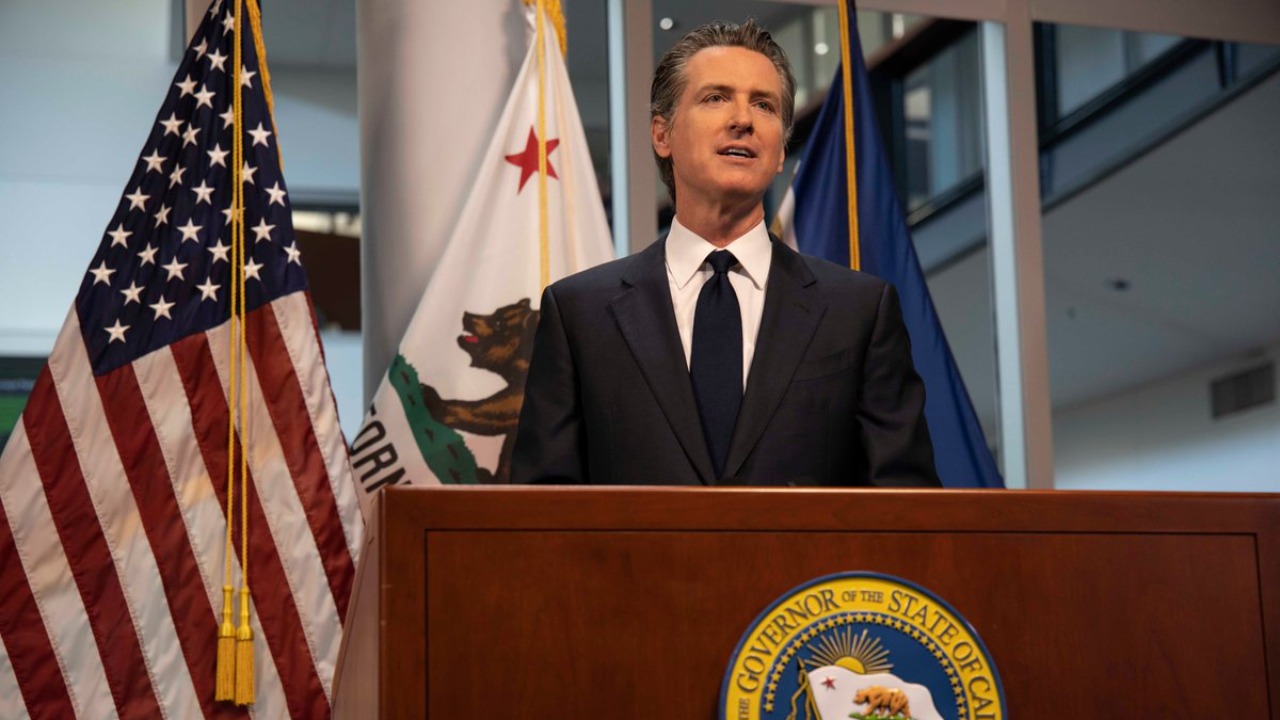
California is suddenly watching a tax debate turn into a capital flight story. As a proposed levy on billionaire wealth gains steam, Governor Gavin Newsom is warning that the measure could backfire by driving money and businesses out of the state just as fast as it tries to tax them. The clash is exposing a rift inside the Democratic Party over how far to go in chasing the fortunes of the ultra rich, and how much economic risk California is willing to tolerate in the process.
The Billionaire Tax Act and what it would actually do
At the center of the fight is a proposed initiative often referred to as The Billionaire Tax Act, a measure that would impose a one time 5 percent tax on the wealth of California residents worth at least 1,000,000,000 dollars. The plan targets the net worth of these individuals, not just their annual income, and is designed to tap into what supporters describe as an immense pool of wealth concentrated at the very top. According to a fiscal review, the proposal would apply to people who meet that threshold and were residents on Jan. 1, 2026, a detail that has already shaped how the ultra wealthy are thinking about their residency and their balance sheets, as the measure seeks to capture fortunes that have been built in the state regardless of where those fortunes might move next.
Supporters are not shy about the scale of the revenue they hope to raise. An analysis from the Legislative Analyst’s Office explains that California is home to several of the wealthiest people in the world and that the tax would be levied on their wealth over several years beginning in 2027, with the state counting on tens of billions of dollars to fund health care and other services. The same review notes that California Is Home to Many Billionaires and that the tax would be structured as a one time assessment paid in installments, a design meant to make it administratively feasible while still extracting a significant share of the targeted fortunes, according to the ballot analysis.
Newsom’s sharp break with the left on wealth taxes
Governor Gavin Newsom has moved quickly to distance himself from the proposal, even as it is being championed by progressives who are usually his allies. In an interview earlier this month, California Governor Gavin Newsom, a Democrat, said the initiative “makes no sense” and warned that it would be “really damaging” to the state’s long term economic health. He has argued that the measure would undermine California’s competitiveness at a moment when other states are aggressively courting high net worth residents, telling one interviewer that if the tax passes, “you can talk about 50 states” competing for that capital instead of just a handful of rivals, a point he underscored in comments cited by recent coverage.
Newsom’s criticism has been unusually blunt for a Democratic governor in a deep blue state. At a public event, he unloaded on the wealth tax proposal as something that “makes no sense” and suggested that Progressives who back it are underestimating how mobile capital has become. He has framed the measure as a threat to the state’s broader tax base, not just to a handful of billionaires, warning that if approved by voters, the measure would apply to anyone who was a California resident on Jan. 1, 2026 and that this retroactive reach could be “really damaging to the state,” according to remarks highlighted in one interview.
How the proposal tries to lock in California’s billionaires
The architects of The Billionaire Tax Act are well aware that the wealthy can move, and they have tried to design the measure to make leaving less effective as a tax dodge. The proposal would apply to anyone who was a California resident on Jan. 1, 2026, regardless of whether that person later relocates to Texas, Florida, or any other state. Because of that provision, tax lawyers and wealth advisers are already warning clients that simply changing their address after that date will not shield them from the one time 5 percent levy on their wealth, a feature that has become one of the most controversial elements of the plan, as described in explanations of the.
Backers of the initiative, including a large health care union that is bankrolling the signature drive, argue that this residency rule is essential to prevent a last minute exodus that would gut the tax before it even takes effect. They say the goal is to capture a fair contribution from fortunes that were built using California’s markets, workforce, and public infrastructure, and to channel that money into health care and social programs. A separate overview notes that a large health care union is attempting to place the proposal before voters in November and that the tax would tap an immense pool of wealth held by billionaires who have benefited from the state’s tech and entertainment booms, according to supporters of the.
Capital on the move: the billionaire exodus accelerates
Even before voters have a chance to weigh in, there are signs that the ultra wealthy are not waiting around to see whether the tax becomes law. Financial advisers report that some billionaires are accelerating plans to move assets and even operating companies out of California, a trend that has been visible in the relocation of tech founders, hedge fund managers, and media moguls to states with lower taxes. One account described a California billionaire exodus that is accelerating as Newsom pushes back on the 5 percent wealth tax, with panelists on The Big Money Show reacting to reports of billionaires moving money and businesses out of state and warning that the state could lose both investment and jobs if the trend continues, as reflected in recent commentary.
Newsom himself has cited these moves as evidence that the proposal is already having unintended consequences. He has said that billionaires are rushing to cash out or re domicile their companies in anticipation of the tax, and that this behavior undercuts the argument that the measure would be a painless way to raise money from people who can easily afford it. In one exchange, he pushed back on the idea that the tax would be a simple windfall, saying “Quite the contrary” and warning that the initiative, while it has not yet qualified for the November 2026 ballot, is already prompting some of the state’s wealthiest residents to move money and businesses out of California, a concern he linked to projections from the Legislative Analyst’s Office in his recent remarks.
A high stakes test of California’s economic model
For progressives, the wealth tax is the culmination of years of advocacy for a more aggressive approach to inequality. They argue that Progressives have long pushed for a levy on extreme wealth as a way to iron out soaring economic inequality and to fund services that benefit the broader public. Proponents still need to collect enough signatures to qualify the measure for the ballot, but they say the potential revenue could transform health care and social programs, and they frame the initiative as a test of whether California is willing to challenge the political power of billionaires, a case laid out by key Proponents in their arguments.
More From The Daily Overview

Grant Mercer covers market dynamics, business trends, and the economic forces driving growth across industries. His analysis connects macro movements with real-world implications for investors, entrepreneurs, and professionals. Through his work at The Daily Overview, Grant helps readers understand how markets function and where opportunities may emerge.

