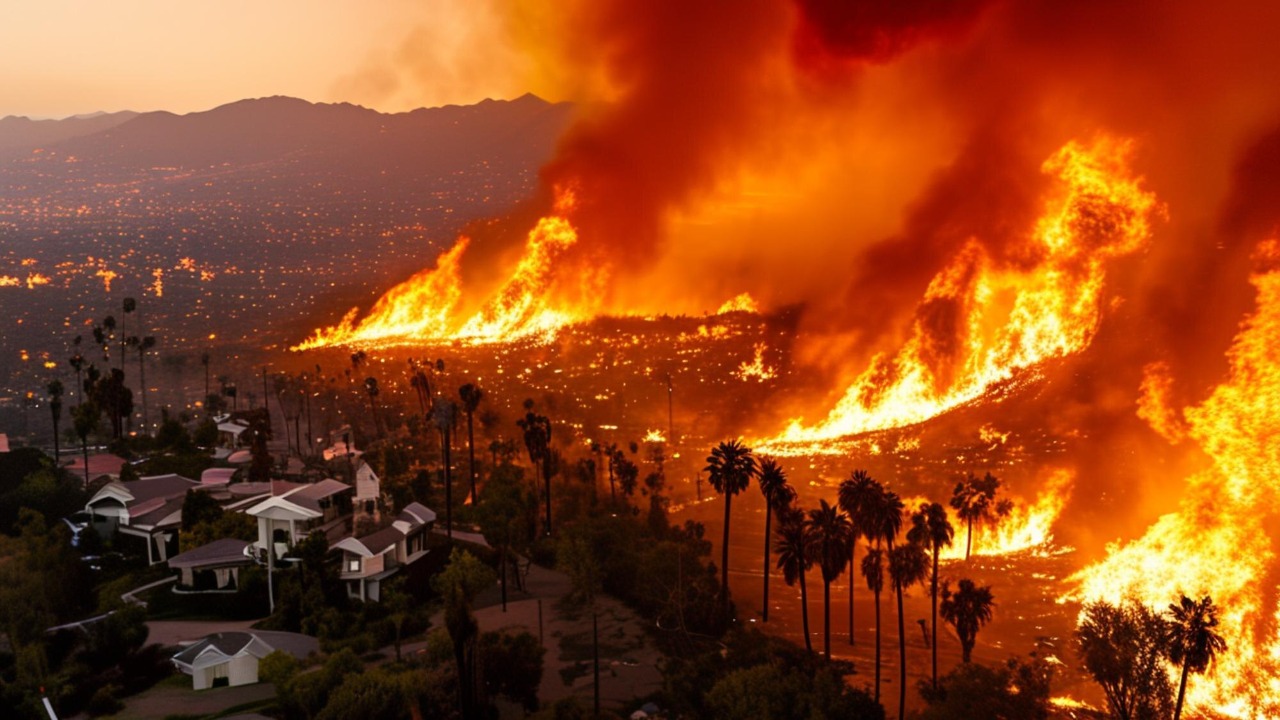
One year after wind driven flames tore through foothill neighborhoods from Pacific Palisades and Altadena to other corners of Los Angeles County, the skyline over the burn scar is still dominated by concrete foundations and twisted rebar instead of new roofs. Fewer than a dozen houses have been fully rebuilt, even as thousands of families remain scattered across rentals, relatives’ spare rooms, and distant cities. The gap between the scale of destruction and the pace of reconstruction is now the central question hanging over the region’s recovery.
Residents were promised a faster, smarter rebuilding effort, with streamlined permits and emergency orders meant to cut through red tape. Instead, they have run into a tangle of insurance shortfalls, construction bottlenecks, and policy choices that favor those with cash and credit over those who lost everything. I set out to understand why, a year on, almost no homes are back on their lots and what that says about how prepared Los Angeles really is for a future of repeat megafires.
The scale of loss versus the trickle of rebuilding
The January 2025 fires that swept through Los Angeles County killed 31 people and destroyed thousands of homes in a matter of hours, turning entire streets into ash and leaving only chimneys and scorched trees behind. In the hardest hit areas of Pacific Palisades and Altadena, researchers now describe recovery as “uneven,” with some pockets seeing early construction while others remain fields of debris and erosion control netting, a pattern that new data from One underscores as a warning for future disasters. Across Los Angeles County as a whole, officials report that Fewer than a dozen houses have actually been rebuilt, a figure that has become a shorthand for the frustration simmering in community meetings and temporary housing sites.
Behind that stark number is a more complicated picture of partial progress and stalled dreams. Real estate data show that Many Fear They’t Afford to Rebuild About 900 homes are under construction, potentially on pace to be completed later this year, but that still represents only a fraction of the destroyed housing stock. Local coverage notes that year after LA area wildfires destroyed thousands of homes, fewer than a dozen have been completed, even as drought and hurricane force winds keep the risk of another catastrophe high. The mismatch between the visible activity of framing crews on some streets and the vast stretches of untouched lots on others is what makes the recovery feel, to many survivors, less like a comeback and more like a sorting mechanism.
Permits, policy fixes, and a system still stuck in first gear
State leaders and Los Angeles officials responded to the disaster by promising to clear bureaucratic obstacles that had slowed rebuilding after previous fires. The state government and local officials signed emergency orders to speed up permitting and waive some environmental reviews, an effort described in detail in Jan that was supposed to get homeowners back on their land faster. Yet the same reporting notes that the system structurally is not designed for rapid, equitable recovery, and that many residents still find themselves navigating overlapping city, county, and state rules that were never built for a disaster of this scale.
Even with those orders in place, the pipeline of official approvals has been painfully slow. One Year After the LA Fires, Just 13% of Damaged Homes Have a Rebuilding Permit, with county agencies issuing 514 permits and the city 604, according to One Year After Damaged Homes Have. That means a large majority of fire victims are still stuck at the starting line, unable even to pour a new foundation. A separate analysis of the same crisis notes that at least 600 homeowners have applied for permits and only seven homes have been completed, a figure drawn from Jan that captures how far reality lags behind the rhetoric of a “fast track.”
Insurance gaps and the math that keeps families from coming home
For many survivors, the real bottleneck is not the permit counter but the insurance check. In Altadena, where Two days after fires swept down out of the foothills wiping out half of Altadena’s homes, Robert Lara stood outside the ruins of his house, residents describe “Insurance woes” as the defining feature of year two, with advocates warning that payouts often fall far short of what it now costs to rebuild in Southern California. One expert told reporters, “We’re seeing huge gaps between the money insurance is paying out, to the extent we have insurance, and what it will actually cost to rebuild,” a quote captured in Insurance that helps explain why so many lots remain empty.
The numbers behind those gaps are sobering. Construction costs have surged since the pandemic, and fire resistant building codes in Los Angeles, while critical for safety, add further expense that standard policies often do not fully cover. Many Fear They Can’t Afford to Rebuild About 900 homes are under construction, but thousands of other households are discovering that their coverage limits, deductibles, and temporary housing benefits leave them with six figure shortfalls, as detailed in Afford. In interviews, homeowners describe agonizing choices between taking on new debt, downsizing to a smaller footprint, or walking away from their land entirely, a pattern echoed in online discussions where users like Leothegolden talk about using insurance payouts as a down payment on a new spot rather than trying to rebuild in place.
Labor shortages, construction delays, and who gets to rebuild first
Even for families who have the money and the permits, finding someone to actually build the house has become its own ordeal. Contractors across Los Angeles describe a backlog of projects that stretches well into next year, with crews juggling fire rebuilds alongside ongoing demand in a chronically undersupplied housing market. One detailed account of the recovery notes that the fact that so many people are trying to rebuild at once has collided with a limited pool of skilled workers, many of whom are undocumented and face their own barriers, a dynamic explored in Jan. The result is a bidding war for labor that favors wealthier homeowners who can pay premiums to jump the line.
On the ground, that inequality is visible in the patchwork of progress across neighborhoods. Today, going back to the site, Holter wonders at how quickly nature rebounded, when rebuilding for the majority of displaced fire survivors has barely begun, a contrast captured in Today. In some cul de sacs, a handful of large custom homes are already framed out, while next door, smaller lots sit untouched as owners wait for a contractor to return their calls. A video report on the crisis shows how, in the immediate aftermath of the Los Angeles fires, homeowners were left calculating the costs and timelines of rebuilding But reality has since set in, with many realizing that the high price of materials and labor may keep them in limbo for years, a point vividly illustrated in Los Angeles.
Frustration, uneven recovery, and what comes next
As the recovery enters its second year, the emotional toll is becoming as visible as the physical damage. Los Angeles wildfire recovery enters second year as frustrations grows, with residents describing a sense of abandonment as they drive past empty slabs and charred trees on their way to rented apartments across town, a mood captured in Los Angeles. Local officials acknowledge that recovery remains slow and uneven, with some homeowners able to leverage savings, credit, and professional networks while others, including renters and lower income families, have far fewer options, a divide that Los Angeles County reporting highlights through the story of residents who do not have options like Koerner.
Supporting sources: Fewer than a, Why almost none.
More From The Daily Overview

Elias Broderick specializes in residential and commercial real estate, with a focus on market cycles, property fundamentals, and investment strategy. His writing translates complex housing and development trends into clear insights for both new and experienced investors. At The Daily Overview, Elias explores how real estate fits into long-term wealth planning.

