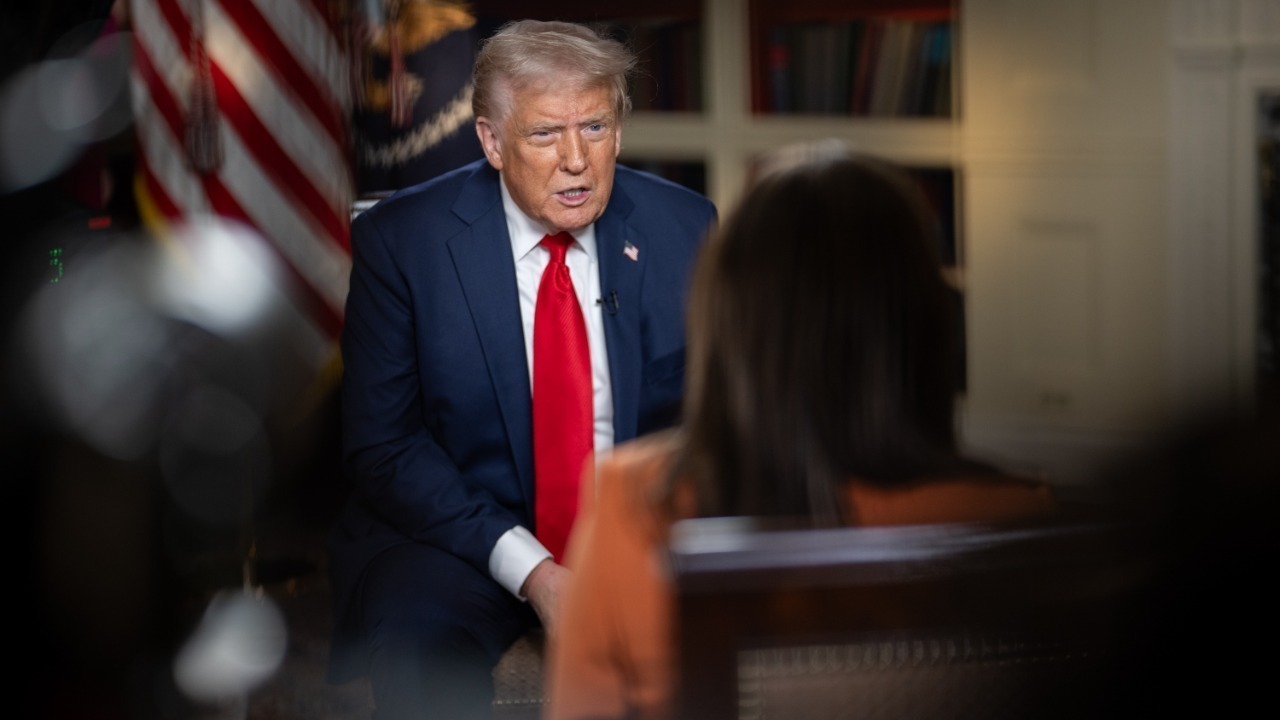
The next chair of the Federal Reserve will take office at a moment of strong growth, stubborn inflation risks, and deep political polarization. With President Donald Trump openly demanding loyalty on interest rates, the central bank’s next leader will be chosen less for distance from politics than for alignment with the White House’s economic instincts. No matter who ultimately gets the job, the tradition of a Fed chief insulated from presidential pressure is already being rewritten.
The end of the Powell era and a politicized vacancy
Federal Reserve Chair Jerome Powell is heading toward the end of a long and contentious tenure, and the looming vacancy is shaping up as a political prize rather than a technocratic handoff. Federal Reserve Chair Jerome Powell’s leadership term is set to expire in 2026, creating an opening that many in markets and Washington expect President Trump to use to reshape monetary policy in his own image, even as Key Takeaways stress that presidents are not supposed to interfere with the Fed’s independence. Powell has already been a lightning rod, with Senator Elizabeth Warren, Democrat of Massachusetts, sharply criticizing his record on financial regulation and ethics, a reminder that the chair’s authority has been contested from both the White House and Capitol Hill, as detailed in the profile of Jerome Powell.
Trump has signaled he is in no rush to calm those crosswinds. He has already pushed back his decision, with Trump Delays Fed Chair Announcement to Early 2026 Amid Rate Cut Pressure, a move that keeps markets guessing and underscores how central the appointment has become to his broader economic strategy. Powell, for his part, has tried to project institutional steadiness, telling an audience in Dallas that he “certainly” intends to stay at the Fed until his chairmanship ends and that remaining on the board afterward is not something he has “decided” or is “thinking about,” according to remarks reported from When he was asked during an appearance in Dallas. The contrast between Powell’s institutional language and Trump’s transactional approach sets the stage for a successor who will be chosen under far more overt political conditions.
Trump’s loyalty test for the next Fed chair
Trump has not hidden what he wants from the next Fed chief, and it is not arm’s-length independence. He has said bluntly that “For Trump, that isn’t good enough. ‘I want my new Fed Chairman to lower Interest Rates if the Market is doing well, no matter what the so-called experts say,'” a standard that ties monetary policy directly to stock performance and presidential preference, as recounted in an analysis of how For Trump the Fed Chairman should behave on Interest Rates when the Market is rising. That framing turns the chair’s job description into a loyalty test, not a mandate to weigh inflation, employment, and financial stability on their own terms. It also sends a clear message to potential nominees that public disagreement with the president’s preferred rate path could be disqualifying.
The loyalty filter has already shaped the emerging shortlist. Trump has reportedly told allies that “anyone who disagrees with him will never be the Fed chairman,” a warning delivered as rate fears rattled equity markets and as BlackRock Chief Investment Officer of Global Fixed Income Rich Rieder prepared for an interview for the role, according to a market dispatch that highlighted Chief Investment Officer of Global Fixed Income Rich Rieder. That kind of preemptive threat narrows the field to candidates who are either already aligned with Trump’s instincts or willing to signal deference in advance, a dynamic that makes genuine policy independence far harder to sustain once in office.
The candidates: technocrats in a political vise
Within that constrained environment, the names circulating for the top job are trying to walk a narrow line between credibility in markets and acceptability in the Oval Office. One of the most prominent is Federal Reserve Governor Christopher Waller, who has gone out of his way to stress that he would “absolutely” emphasize the importance of the Fed’s independence if chosen as chair, telling CNBC on a Wednesday interview that he sees political distance as central to the institution’s legitimacy, according to a clip in which Federal Reserve Governor Christopher Waller told CNBC about his priorities. Yet even Waller’s insistence on independence is being interpreted through a political lens, with Trump allies praising him as “magnificent” while also noting that the president has narrowed his choice for Federal Reserve chair to four candidates, a group sketched out in a rundown of how Key highlights describe Donald Trump weighing options for the Federal Reserve.
Another name that has gained traction is Kevin Hassett, a longtime conservative economist and former White House adviser, who is now widely discussed as a front-runner. One report framed the race with the headline that Powell, Fed Term Ends, Hassett Emerges as Likely Successor, underscoring how the end of Powell’s tenure has opened the door for a more overtly political figure, as summarized in coverage noting that Powell Fed Term Ends and Hassett Emerges as a Likely Successor according to Wire. Hassett’s critics worry that his close ties to Trump and his public advocacy for aggressive tax cuts and looser regulation could translate into pressure for easier money at politically convenient moments, while supporters argue that his experience would help him navigate the Fed’s internal divisions. Either way, the fact that the leading candidates are being evaluated first through their relationship with the president, and only second through their policy frameworks, is itself a sign that the next chair will operate under a political vise.
A divided Fed and a president who wants control
Even before a successor is named, the central bank is grappling with internal rifts that will make the next chair’s job harder and more exposed to outside pressure. Officials have split over how quickly to cut rates after the inflation shock, with some warning that moving too fast could reignite price spikes and others arguing that keeping policy too tight risks choking off growth. Those disagreements have been vivid enough that Added Ian Wyatt, chief economist at Huntington Bank, has warned that “The new chair will have a tough task herding cats and building a consensus,” a vivid description of the challenge that appeared in an assessment of how Added Ian Wyatt of Huntington Bank sees the Fed’s internal divisions carrying into 2026. A chair trying to corral that kind of policy split while also fending off presidential demands for rate cuts will find it difficult to claim the kind of detached authority that earlier generations of Fed leaders enjoyed.
Trump’s own rhetoric is likely to sharpen those tensions. He has already criticized Powell’s “slow” monetary easing and used the bully pulpit to push for faster cuts, a pattern that is expected to continue as he weighs his choice and as markets react to each hint of White House displeasure, according to accounts of how President Trump has leaned on the Fed Amid Rate Cut Pressure. At the same time, the institution is dealing with its own credibility issues, including questions about how it managed large internal projects that ballooned from $1.7 billion to $2.5 billion, with critics accusing Powell of mismanaging the renovation and oversight process, as described in a leadership analysis that noted how, in Jul, the Fed was Originally approved for a $1.7 billion project that swelled to $2.5 billion and how some are Accusing Powell of mishandling it, according to Jul coverage of the leadership transition at the Fed. A new chair will inherit not only a divided committee but also a skeptical public, making independence as much a communications challenge as a legal one.
Strong growth, fragile norms, and what “independence” now means
The irony is that Trump will be making this choice against a backdrop of robust economic data that, in theory, should give the Fed more room to operate on its own terms. The United States has just posted its strongest growth in two years, a milestone that has buoyed markets and political fortunes alike, as highlighted in a report that noted the U.S. Posts Strongest Growth in Two Years and paired that with the warning that Whoever Trump Picks, Next Fed Chair Won’t Be Independent, a juxtaposition captured in an analysis headlined Posts Strongest Growth in Two Years and Whoever Trump Picks, Next Fed Chair Won, Be Independent. In a more traditional era, such momentum might have strengthened the case for a chair who could lean against political cycles and focus on long term stability. Instead, it has emboldened the president to argue that low rates are a reward he is owed for delivering expansion, further eroding the norm that monetary policy should be insulated from electoral calculations.
That erosion is not just theoretical. When a president publicly insists that the next chair must be personally loyal, threatens that dissenters “will never be the Fed chairman,” and delays the appointment to maximize leverage over rate decisions, the message to markets and to future policymakers is clear: the central bank’s leadership is now part of the political spoils system. Even candidates who talk about independence, like Waller, or who bring technocratic credentials, like Hassett or Rich Rieder, will take office knowing that their tenure depends on keeping the White House satisfied as much as on keeping inflation in check. In that environment, the Fed can still make tough calls, and its staff can still produce rigorous analysis, but the chair’s independence will be conditional and contested from day one, not a presumption baked into the job.
More From TheDailyOverview

Grant Mercer covers market dynamics, business trends, and the economic forces driving growth across industries. His analysis connects macro movements with real-world implications for investors, entrepreneurs, and professionals. Through his work at The Daily Overview, Grant helps readers understand how markets function and where opportunities may emerge.

