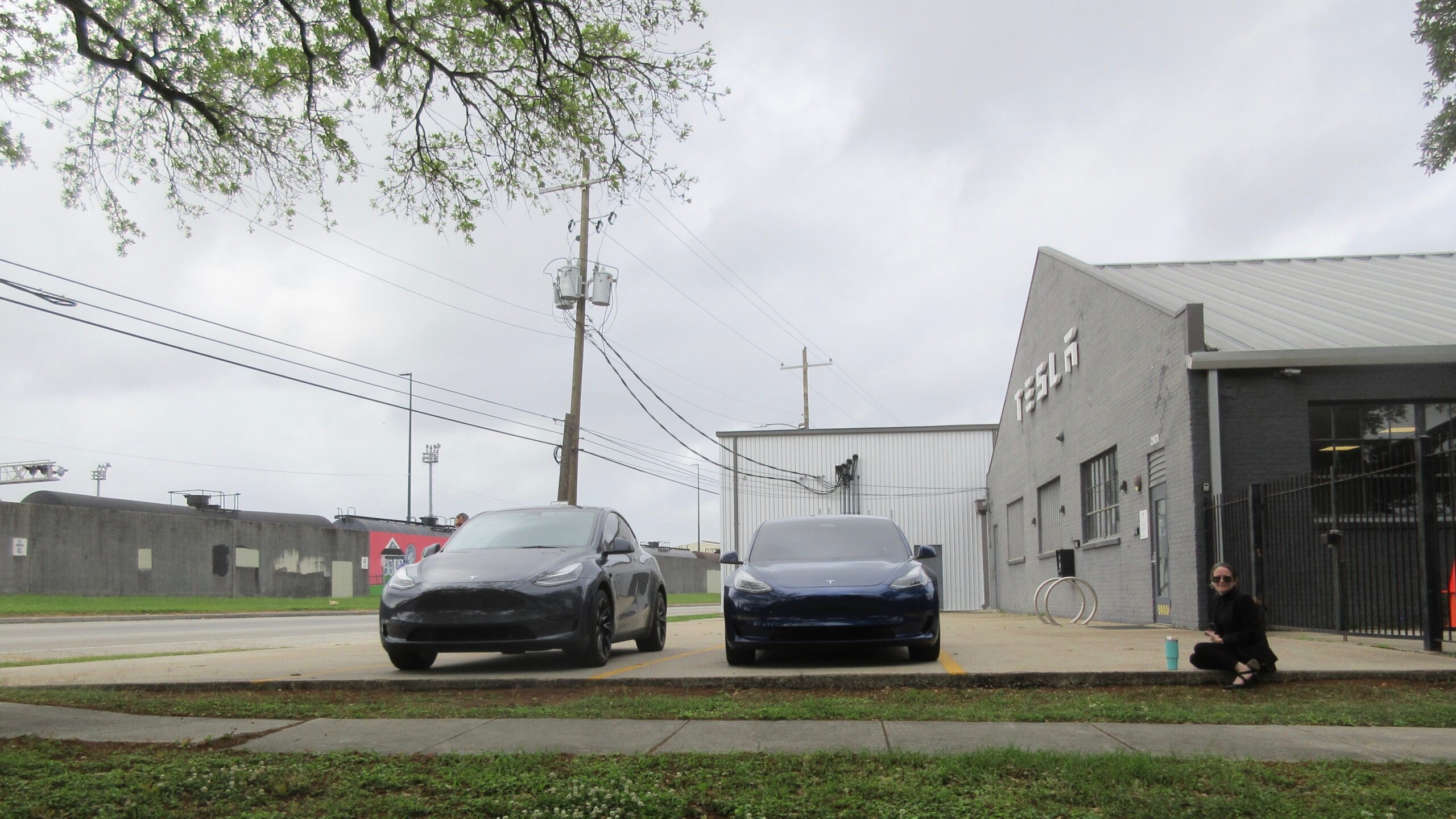
Tesla filed its latest annual report with the Securities and Exchange Commission confirming that the company designs, manufactures, and sells “high-performance fully electric vehicles,” directly contradicting speculation that it might pivot away from battery-powered cars. The 10-K for fiscal year 2025, along with record energy storage numbers and Tesla’s January 28 earnings webcast materials, paints a picture of a company continuing to build around electric vehicles rather than retreating from them.
SEC Filings Spell Out an All-Electric Identity
The clearest rebuttal to any “Tesla is leaving EVs” narrative sits in the company’s own sworn filings. Tesla’s 2025 annual report describes the company as a maker of “high-performance fully electric vehicles” and ties its future financial performance to demand for EVs and the adoption of autonomous driving technology. As a formal disclosure to investors, the 10-K language is a clearer signal of Tesla’s stated strategy than off-the-cuff remarks or social media posts.
This framing is consistent with the prior year’s filing. The 2024 annual report stated Tesla’s mission as working to “accelerate the world’s transition to sustainable energy,” defined its core business as fully electric vehicles plus solar and energy storage products, and listed a strategic priority to “introduce new and more affordable products.” The through-line across both filings is clear: Tesla sees affordable EVs as the growth engine, not a legacy business to be wound down. Any reading that the company is distancing itself from electric cars has to contend with these official documents, which repeatedly position EVs and autonomy as the pillars of long-term value creation rather than experiments the company might quietly abandon.
Production Numbers Tell the Same Story
Filings describe intent. Factory output measures follow-through. Tesla’s Q4 2025 production and delivery report showed the company still manufacturing and shipping electric vehicles at high volume. Alongside those vehicle figures, the company posted a record 14.2 GWh in energy storage deployments for the quarter, contributing to a full-year total of 46.7 GWh. That surge in stationary batteries does not compete with EVs; it complements them, since Tesla’s cell supply chain, pack designs, and manufacturing processes support both cars and grid-scale products. The same industrial base that turns out Powerwalls and Megapacks can be re-optimized to support new vehicle platforms if demand shifts.
The energy storage expansion actually strengthens the EV business case. Battery costs are a major variable in making electric cars affordable, and industry learning curves in cell manufacturing are often associated with cumulative output across applications. By scaling storage deployments to tens of gigawatt-hours per year, Tesla could potentially improve manufacturing scale efficiencies across its battery-related operations, which may support efforts to bring lower-priced vehicles to market. Critics who point to the growing energy division as evidence of an EV retreat are reading the balance sheet backward: the energy business is a second demand channel for the same core technology, spreading fixed costs and capital investments over more products and ultimately supporting cheaper electric vehicles.
Earnings Call Focused on EV Timelines, Not Exits
Tesla held its Q4 2025 earnings webcast on January 28, 2026; the webcast and related materials are framed around the company’s vehicle and autonomy roadmap, including production and product timing topics. Those are not the talking points of a company stepping away from electric vehicles. They are the agenda items of a firm trying to move faster on electrification and autonomy at the same time. The Cybercab discussion is particularly telling because it represents Tesla’s attempt to crack a lower price segment with a purpose-built autonomous vehicle, a bet that only makes sense if the company expects EV demand to keep growing and believes it can build a profitable business at higher volumes and lower margins.
The Robotaxi thread also reinforces the EV commitment rather than undermining it. A robotaxi fleet runs on electric vehicles; combustion engines are ill-suited to constant stop-start duty cycles and would undermine any climate branding tied to autonomy. Every autonomous mile Tesla envisions is an electric mile, which means the company needs more EVs on the road, not fewer. The capital spending priorities discussed during the call, according to the webcast event page, reflect investments in both manufacturing capacity and autonomy software, two sides of the same coin for a company whose entire fleet is designed around battery packs, electric drivetrains, and over-the-air software updates.
Policy Fights Show Tesla Protecting Its EV Market
If Tesla were truly indifferent to the future of electric cars, it would have little reason to fight for the policy incentives that make them cheaper for buyers. Yet the company did the opposite. Reporting from Politico describes how Tesla and its energy arm pushed back forcefully against Republican legislative proposals that would have eliminated clean-energy tax credits. The company warned that gutting those incentives would slow adoption of EVs and solar, a position that only makes strategic sense for a business whose revenue depends on selling electric cars and complementary energy products. Choosing to publicly challenge political allies over this issue underscores how central those incentives are to Tesla’s growth plans.
That pushback also carries a clear financial logic. Federal EV tax credits reduce the effective purchase price for consumers, which directly supports Tesla’s sales volume and cushions the impact of any price cuts the company makes on its own. Eliminating those credits would raise the total cost of ownership for buyers and hand a competitive advantage back to cheaper internal combustion models, especially in price-sensitive segments where Tesla hopes to expand. Tesla’s willingness to publicly argue for preserving those incentives suggests protecting EV demand remains an important business priority.
Environmental Claims Reinforce the Core Bet
Tesla’s 2024 environmental impact report quantifies the CO2-equivalent emissions the company claims its vehicles helped avoid during the year. The report reiterates a mission to accelerate the transition to sustainable energy, framing every Tesla sold as a measurable step toward that goal and highlighting the lifecycle emissions of its vehicles versus combustion alternatives. While corporate impact documents are self-published and should be read with appropriate skepticism, the metrics and narratives they emphasize still reveal what a company sees as its core value proposition. In Tesla’s case, that value proposition is inseparable from electric drivetrains and battery-powered products.
The real question raised by the impact data is not whether Tesla is walking away from EVs, but how quickly it can push electric technology into more segments and price points while maintaining profitability. The combination of SEC filings that define the business around fully electric vehicles, production and deployment figures that show expanding battery output, earnings calls dominated by EV and autonomy timelines, and lobbying efforts aimed at preserving EV incentives all point in the same direction. Rather than signaling an exit from electric cars, Tesla’s recent disclosures and actions describe a company doubling down on an all-electric future and betting that scale, software, and policy support will keep that strategy viable even as competition intensifies.
More From The Daily Overview
*This article was researched with the help of AI, with human editors creating the final content.

Grant Mercer covers market dynamics, business trends, and the economic forces driving growth across industries. His analysis connects macro movements with real-world implications for investors, entrepreneurs, and professionals. Through his work at The Daily Overview, Grant helps readers understand how markets function and where opportunities may emerge.

