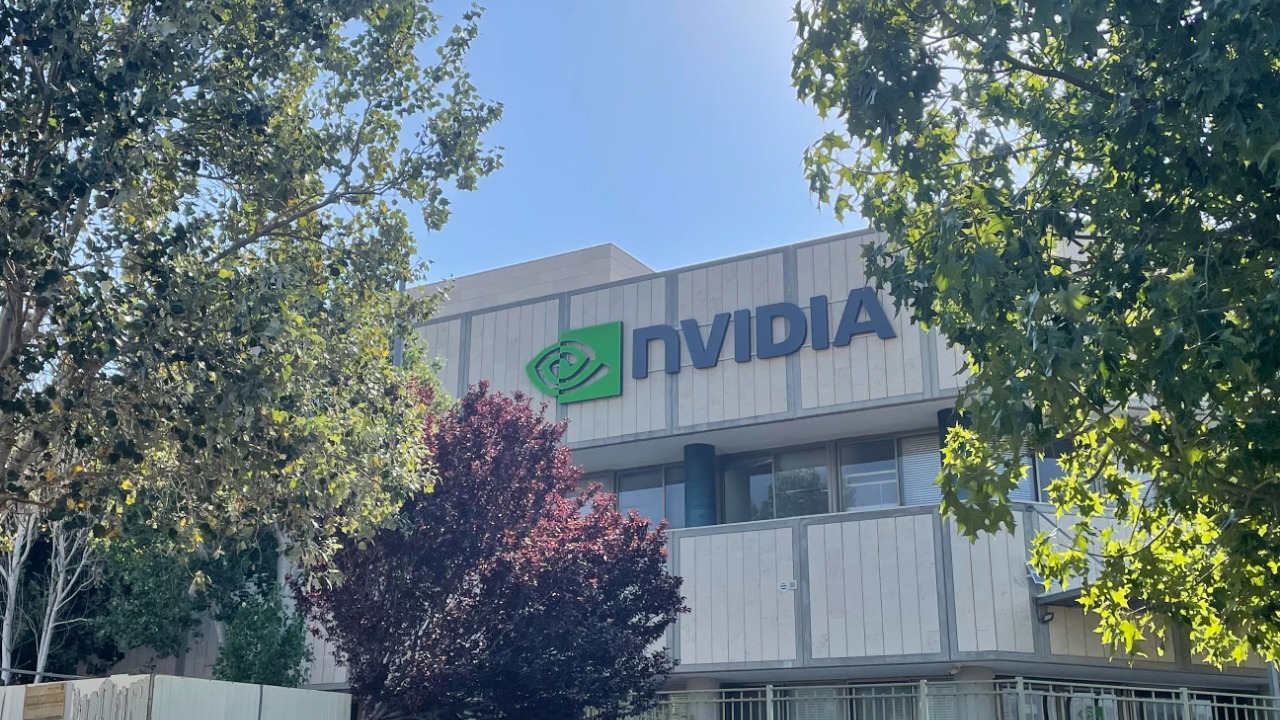
Nvidia and OpenAI have scrapped their ambitious $100 billion multi-year partnership and replaced it with a far simpler arrangement: a roughly $30 billion equity investment from the chipmaker into OpenAI’s next funding round. The dramatic restructuring, first reported by the Financial Times, signals that even the two most powerful companies in artificial intelligence are recalibrating how they finance the buildout of AI infrastructure. What began as a sprawling hardware-for-funding pact has collapsed into a cleaner financial bet, raising questions about the durability of mega-scale AI deals.
From $100 Billion Hardware Pact to $30 Billion Stake
Last September, OpenAI and Nvidia announced a strategic partnership at Nvidia’s Santa Clara, California, headquarters that promised to deploy 10 gigawatts of Nvidia systems for OpenAI’s AI workloads. The arrangement carried a price tag of up to $100 billion over multiple years, making it one of the largest commercial technology agreements ever proposed. Nvidia would supply the chips; OpenAI would get the computing muscle it needed to train and run increasingly powerful models, effectively locking in a dedicated pipeline of cutting-edge accelerators, networking gear, and software support.
That structure is now dead. According to the FT report, both companies have abandoned the deal and are instead pursuing a roughly $30 billion Nvidia equity investment as part of OpenAI’s next major funding round. The shift represents a 70 percent reduction in the headline dollar figure, but the change is about more than money. It reflects a fundamental rethinking of how the two firms want to be tied together: less as a quasi-vertically integrated hardware alliance and more as a flexible financial partnership that can adjust as the AI landscape shifts.
Why the Original Deal Fell Apart
The earlier arrangement was structured as a chips-for-funding exchange, according to reporting in The Guardian. Nvidia would effectively bankroll OpenAI’s computing needs by committing hardware at scale, and OpenAI would lock in years of chip purchases. That kind of deal required both sides to forecast demand far into the future, a risky proposition given how rapidly AI model architectures and training methods are evolving. A commitment to 10 gigawatts of Nvidia systems assumed a specific trajectory for power consumption, model size, and chip utilization that may no longer match OpenAI’s actual roadmap as it experiments with more efficient algorithms and potentially different chip designs.
The Wall Street Journal had flagged trouble earlier this year, reporting that the $100 billion megadeal was on ice. Complexity appears to have been the core problem. A multi-year hardware purchase commitment of that scale would have required detailed operational planning, regulatory clearance, and financial guarantees that neither side could finalize. The longer negotiations dragged on, the more exposed both companies became to technological and market shifts that could make the original terms unattractive. Rather than continue haggling over conditions that kept changing, such as delivery schedules, pricing formulas, and performance guarantees, both companies opted to start fresh with a simpler instrument they could execute more quickly.
Equity Without Hardware Strings Attached
The new structure strips away the hardware purchase commitment entirely. Instead of locking OpenAI into buying a specific volume of Nvidia chips, the roughly $30 billion investment gives Nvidia a direct financial stake in OpenAI’s business. This is a conventional equity play, not a supply agreement. Nvidia gains exposure to OpenAI’s growth without bearing the operational risk of overprovisioning chips into a single customer’s data centers or building capacity that might go underused if OpenAI’s strategy changes. OpenAI, meanwhile, gets capital it can deploy more flexibly, whether on Nvidia hardware, alternative accelerators, or broader infrastructure such as data centers and networking.
That flexibility matters because OpenAI’s compute needs are not static. The company has been exploring custom chip designs and alternative cloud providers alongside its Nvidia dependency, and it must balance raw performance against cost, energy use, and geopolitical constraints. A $100 billion hardware lock-in would have constrained those options and could have limited OpenAI’s leverage in negotiating with other suppliers. An equity investment, by contrast, lets both companies benefit from OpenAI’s success without dictating exactly how that success gets built. Nvidia still profits if OpenAI buys its chips, but it also stands to gain if OpenAI’s market valuation rises through new products, licensing deals, or software platforms that are not tightly coupled to any single hardware roadmap.
What This Means for AI Investment Strategy
Most coverage of this deal has focused on the dollar figures, treating the drop from $100 billion to $30 billion as a sign of cooling ambition. That reading misses the strategic logic. The original deal was structured around hardware procurement, which carries execution risk, depreciation, and the possibility that next-generation chips could make current commitments obsolete before they are fulfilled. Equity investment sidesteps all of those problems. Nvidia is not necessarily spending less on AI; it is spending differently, converting a supply-chain bet into a financial one that can be marked to market and adjusted over time as conditions change.
This restructuring also reflects a broader pattern in how AI companies and their chip suppliers are renegotiating relationships. The era of blank-check hardware commitments may be giving way to more targeted capital deployment and balance-sheet discipline. When institutional analysts evaluate Nvidia’s position, a $30 billion equity stake in one of the most prominent AI companies in the world carries different risk characteristics than a $100 billion obligation to deliver physical infrastructure on a fixed timeline. For investors watching Nvidia’s margins and cash flows, the swap trades operational complexity for financial optionality, allowing Nvidia to participate in AI upside without tying as much capital to specific factories, logistics chains, or long-term supply contracts.
For OpenAI, the equity round also serves a different purpose than a hardware deal. The company has been pushing its valuation higher through successive funding rounds, and a $30 billion commitment from Nvidia, its most important supplier, sends a strong signal to other investors about the firm’s trajectory. The Financial Times account suggests that Nvidia’s participation could help anchor a much larger raise by providing a reference point for pricing and terms. That, in turn, could give OpenAI more room to fund research, acquire startups, or build its own data centers without being forced into long-term take-or-pay agreements for any single vendor’s chips.
Signals for the Wider AI and Capital Markets
The collapse of the original pact and its replacement with equity also carries implications for wider capital markets. Central banks and regulators monitoring the intersection of tech investment and financial stability have been paying closer attention to concentrated bets on AI infrastructure, as highlighted by recent analysis on monetary-policy radar platforms. A $100 billion bilateral hardware commitment between two companies would have created a large, relatively illiquid exposure tied to one technology cycle. By contrast, a $30 billion equity position, while still massive, is easier to value, hedge, and, if necessary, partially exit.
For the broader AI ecosystem, the Nvidia-OpenAI reset may become a reference case. Startups and cloud providers now have a high-profile example of how even marquee, headline-grabbing alliances can be unwound when they prove too rigid. Hardware makers might increasingly seek blended arrangements that mix traditional supply contracts with equity stakes, while AI labs push for capital that does not dictate their technical roadmaps years in advance. As investors digest the new deal structure, they are likely to scrutinize whether similar mega-pacts elsewhere in the sector can survive in an environment where both technology and monetary conditions are shifting faster than long-term contracts can be renegotiated.
More From The Daily Overview
*This article was researched with the help of AI, with human editors creating the final content.

Grant Mercer covers market dynamics, business trends, and the economic forces driving growth across industries. His analysis connects macro movements with real-world implications for investors, entrepreneurs, and professionals. Through his work at The Daily Overview, Grant helps readers understand how markets function and where opportunities may emerge.

