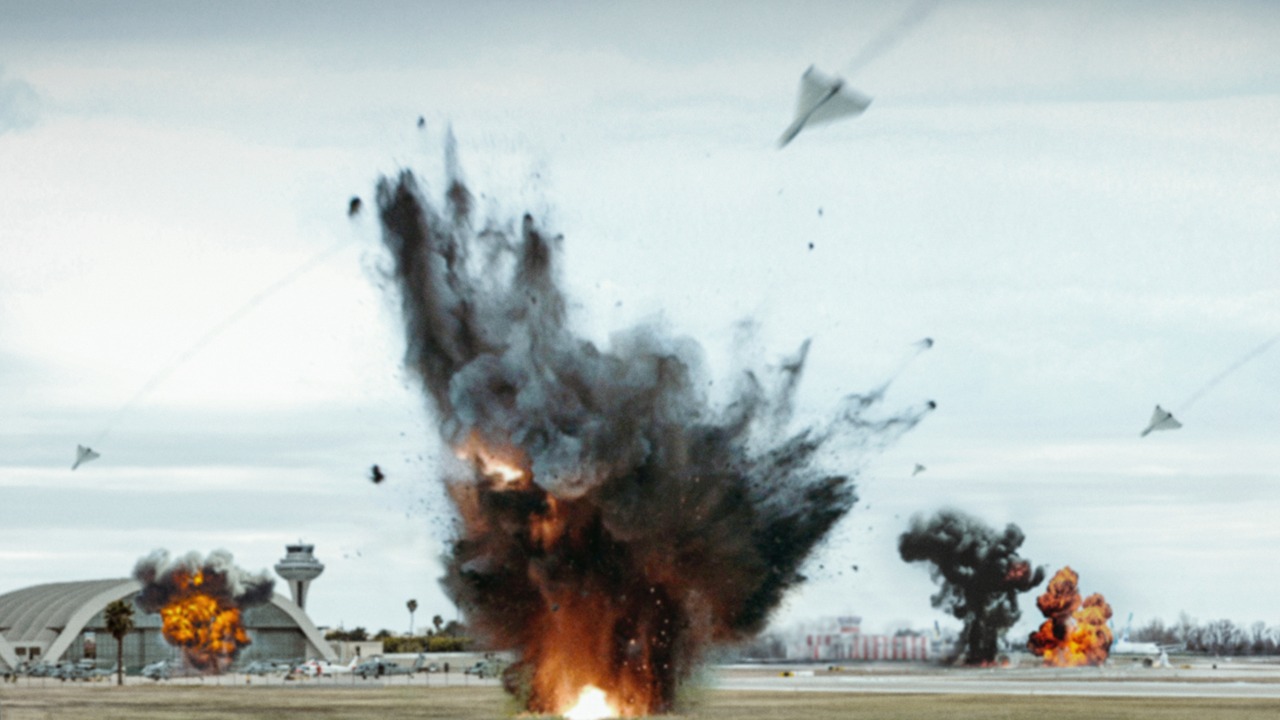
In a devastating escalation of the ongoing conflict, a swarm of Russian Shahed drones obliterated a supermarket in Sumy, Ukraine, on November 25, 2024. The attack, attributed to forces under Vladimir Putin, resulted in the complete destruction of the facility and the loss of groceries valued at $10 million. This incident has intensified local food shortages, leaving thousands of residents without essential supplies.
The Drone Attack Unfolds
The attack on the supermarket in Sumy began in the early hours, around 2:00 AM, when multiple Shahed-136 drones launched from Russian territory targeted the facility. The drones, equipped with explosives, caused a massive fire that consumed the entire 5,000-square-meter building. According to initial emergency response reports, the blaze was so intense that it was visible from miles away.
The immediate impact of the attack was catastrophic. The drones’ explosives ignited stored fuel and perishables, triggering secondary explosions that vaporized approximately 500 tons of groceries. These included fresh produce, dairy, and canned goods, which could have fed 10,000 families for a week. This devastating loss was quantified by local authorities. Eyewitness Maria Kovalenko described the scene, stating, “The sky lit up like daylight; we heard the drones buzzing before the blasts shook our homes,” as captured in on-site interviews.
Damage Assessment and Economic Toll
The structural damage to the supermarket, owned by the chain “Silpo,” was total. The roof and walls collapsed, and the fire rendered 100% of the inventory unsalvageable, resulting in a direct loss of $10 million, as reported by insurance evaluators. This destruction has broader economic implications, disrupting supply chains for Sumy’s 250,000 residents. Economic impact studies suggest that food prices in the region could rise by 20-30% due to the attack (source).
Beyond the immediate financial loss, the attack destroyed thousands of units of imported goods, including baby formula and medications stocked in the pharmacy section. This has particularly affected vulnerable populations, as noted by humanitarian NGOs. The loss of these essential items underscores the humanitarian crisis exacerbated by the ongoing conflict.
Russian Tactics and Shahed Drones
The Shahed drones used in the attack are Iranian-designed and have been supplied to Russia since 2022. In this incident, a swarm of at least 12 drones, each carrying 40-50 kg warheads, was deployed to target civilian infrastructure. This information is detailed in military intelligence briefs. The operation was reportedly ordered under Vladimir Putin’s strategy to escalate the conflict in Ukraine’s northeast, with launches confirmed from bases in Kursk Oblast, as supported by satellite imagery analysis.
This attack is part of a broader pattern, with Sumy experiencing 15 similar Shahed strikes in the past month. These attacks aim to demoralize the civilian population, as reported by defense ministry statements. The use of such tactics highlights the ongoing challenges faced by Ukraine in defending its infrastructure and civilian population.
Local Response and Humanitarian Fallout
In response to the attack, Ukrainian firefighters from Sumy Oblast arrived at the scene within 20 minutes. Despite their swift response, it took six hours to contain the blaze. Fortunately, they managed to evacuate 50 nearby residents without any casualties, according to rescue operation logs. The community’s resilience was further demonstrated by the Red Cross, which distributed emergency food parcels to 5,000 affected families the following day. Mayor Oleksandr Lysenko declared a local state of scarcity, emphasizing the urgent need for aid, as quoted in press conferences.
The long-term implications of the attack are significant. Rebuilding efforts could take months, placing additional strain on Ukraine’s $50 billion annual war economy. There are growing calls for international sanctions on drone suppliers, a measure advocated by UN observers. This incident underscores the need for a coordinated international response to address the humanitarian and economic fallout of the conflict.
More From TheDailyOverview

Grant Mercer covers market dynamics, business trends, and the economic forces driving growth across industries. His analysis connects macro movements with real-world implications for investors, entrepreneurs, and professionals. Through his work at The Daily Overview, Grant helps readers understand how markets function and where opportunities may emerge.

