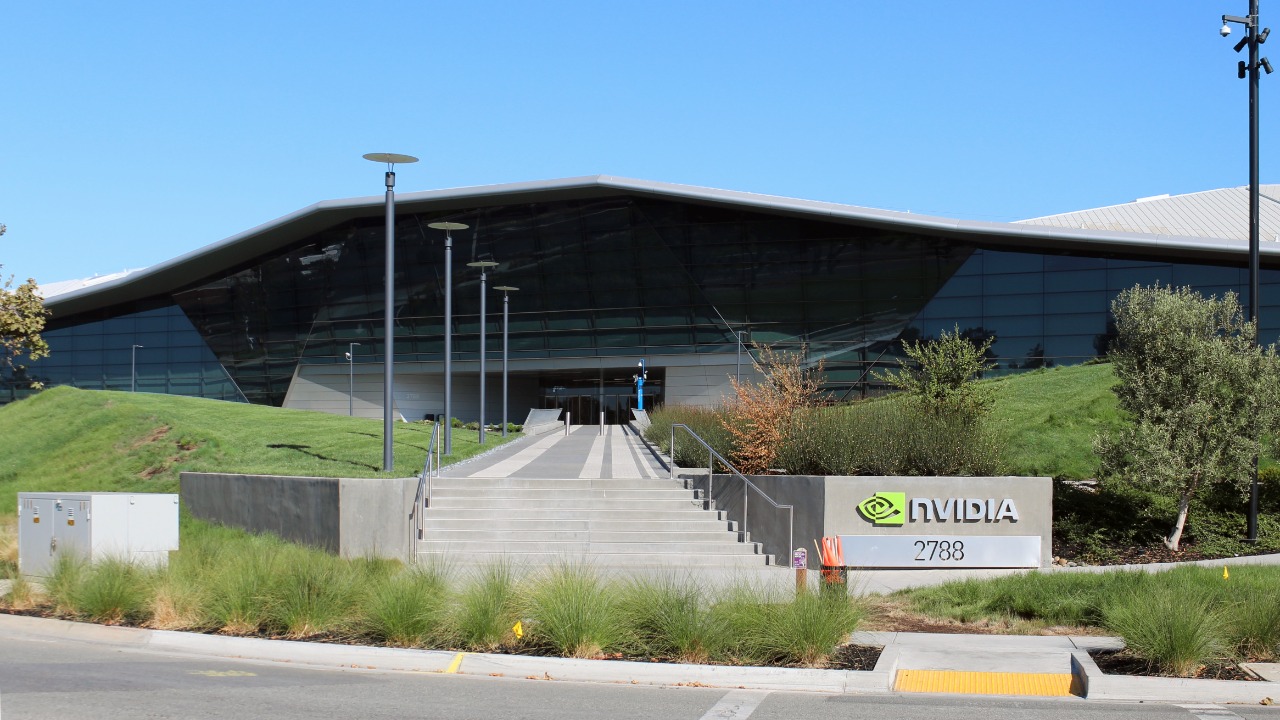
Nvidia’s latest wobble in the market is not just about a bad day for a hot stock. It is a stress test of the entire artificial intelligence trade, as investors suddenly confront the idea that Google’s homegrown chips might chip away at Nvidia’s dominance faster than expected. The selloff reflects real competitive risk, but it also risks missing the deeper story of how Nvidia is positioning itself as the default infrastructure layer for AI, even as hyperscalers like Google push their own silicon.
At the heart of the tension is a simple question: are investors reacting to a headline scare about Google’s progress, or to a structural shift in who controls the most valuable part of the AI stack? I see a market that is pricing in the former and only partially grappling with the latter, which is why the current volatility around Nvidia may say more about sentiment than about the company’s long‑term earnings power.
Google’s TPU push jolts Nvidia’s aura of inevitability
The immediate trigger for the latest bout of nerves is Google’s renewed push to commercialize its Tensor Processing Units, the custom chips that power many of its own AI workloads. According to reporting that surfaced in Nov 25, 2025, Google has been talking with potential customers about deploying its latest Ironwood TPUs, and Meta Platforms is a central part of that conversation. The prospect of a major cloud and social media player shifting some of its AI training and inference away from Nvidia hardware is exactly the kind of headline that can puncture the narrative of unassailable dominance that has surrounded Nvidia for the past two years.
That narrative took another hit when investors learned that Meta Platforms, described as one of Nvidia’s largest customers, is exploring a deeper partnership with Google. A Nov 25, 2025 update from a News Editor who previously worked at the Washington Post detailed how Meta Platforms is mulling an “AI allegiance” shift from Nvidia to Google, underscoring that the stakes are not theoretical. When a marquee customer even considers moving spend to a rival platform, it forces investors to rethink how sticky Nvidia’s data center revenue really is.
Meta’s flirtation with Google Cloud TPUs rattles the AI trade
The Meta angle matters because it crystallizes a broader fear: that hyperscale buyers will increasingly dual-source or even favor in‑house or partner chips over Nvidia’s GPUs. Reports that Meta is in talks with Google to rent its Cloud TPUs, highlighted in a Nov 24, 2025 dispatch on how Google so far has used its customer TPUs in its own data centers and rented them out, sent Nvidia’s shares lower as traders extrapolated a potential shift in spending. The idea that Meta could diversify away from Nvidia hardware, even partially, is enough to unsettle a market that has treated Nvidia’s data center backlog as almost guaranteed.
Nvidia’s public response shows how seriously it takes the optics. In a statement dated Nov 25, 2025, the company said it was “delighted” with Google’s success, but added a pointed reminder that it is “the only platform that runs every AI model,” a line reported after The AI giant posted on X in the wake of Meta’s proposed deal to acquire Google Cloud TPUs. That backhanded compliment, captured in coverage of Cloud TPUs, is a reminder that Nvidia is betting its long‑term moat on breadth and compatibility, not just raw chip performance.
Wall Street’s mood swing: from “crushing it” to “we’re all screwed”
Investor psychology has swung sharply as Google’s AI progress has come into focus. Earlier coverage framed how Google is “crushing it” in AI, a phrase that captured the sense that its models and infrastructure were finally matching or surpassing rivals. That same reporting noted that, Nov 23, 2025, some market watchers warned that, however strong the upside, those seeking a safer bet might want to look elsewhere, and urged readers to think about The Future of AI with a “Buckle Up for the Ride Whether Nvid” mindset. That kind of language captures both the excitement and the anxiety that now surround any stock tied to the AI build‑out.
The mood darkened further as analysts began to spell out what Google’s TPU momentum could mean for Nvidia’s valuation. On Nov 24, 2025, one analyst warned that Google’s AI wins were bad news for Nvidia stock and the broader AI trade, saying “I expect the vibes out there to be rough for a bit” and suggesting that Google shares were already reflecting some of that concern. The same commentary, which also referenced the impact on the Nasdaq Composite and on Google’s TPU‑making partner, captured the fear that if Google’s custom chips gain traction, “we’re all screwed,” a stark phrase embedded in analysis of Google’s AI wins. That kind of rhetoric feeds volatility, especially in a market where Nvidia has become a bellwether for the entire AI theme.
Is the market misreading the real risk to Nvidia?
Behind the drama, some analysts argue that investors are focusing on the wrong question. Instead of obsessing over which company “wins” the AI chip market, they suggest the more important issue is how large the overall pie becomes and how much of the value Nvidia can capture across hardware, software, and services. A Nov 24, 2025 analysis framed Nvidia’s stock drop on Google fears as a sign that, While investors debate which company will win in the AI chip market, a Bernstein analyst believes the question is more about the durability of AI demand and Nvidia’s role in enabling it. That reframing suggests the market may be overreacting to competitive headlines while underestimating the secular tailwind.
There is also a case that Nvidia’s platform strategy gives it more resilience than a pure chip vendor would enjoy. Reporting on the rise of Google’s TPU chips noted that, in response to allegations about its financing structure, NVIDIA clarified that its Global Strategy investment in a third party was part of a broader approach to support the ecosystem, and that Google’s TPUs are emerging as a viable alternative to NVIDIA products. The same Nov 25, 2025 coverage, which highlighted Revolving financing and NVIDIA’s Global Strategy, underscores that Nvidia is not just selling chips, it is investing in partners and software stacks that make its hardware harder to displace. That does not eliminate the risk from Google’s TPUs, but it complicates the simple “winner takes all” narrative that has driven some of the recent selling.
Volatility cuts both ways: Nvidia’s rebound hints at deeper conviction
Market action in the days around the Google headlines shows how quickly sentiment can swing. After an initial drop tied to fears about Google’s AI chips, Nvidia shares rebounded, with one report noting that Nvidia Stock Rebounds and that the stock rose 2.2% after a 2.6% drop. That Nov 25, 2025 move, captured in analysis under the banner of Why Google Chips Shouldn Worry Investors, suggests that a meaningful cohort of investors still sees pullbacks as buying opportunities rather than the start of a structural derating.
At the same time, other coverage on Nov 24, 2025 described how Nvidia is usually the company other firms have to respond to, Not the one scrambling to answer a rival. Yet on that Tuesday, the $4 trillion chip giant found itself reacting to Google’s sudden AI comeback, a reversal captured in a piece that said Nvidia is so spooked it felt compelled to address the situation in a post on X. That juxtaposition, between a stock that can bounce 2.2% in a day and a company that is suddenly on the defensive, is exactly why the AI trade remains so sensitive to every new data point.
What the Google scare really says about the AI cycle
Stepping back, the Google‑Nvidia drama is less about a single customer or product and more about the maturation of the AI infrastructure market. As hyperscalers like Google and Meta Platforms ramp their own silicon, the easy phase of Nvidia’s run, when demand vastly exceeded supply and competition was limited, is giving way to a more contested landscape. Yet the same reports that highlight Google’s progress also concede that Nvidia’s dominance will remain intact for now, even as Google’s latest Ironwood TPUs create another risk for the stock. The Nov 25, 2025 assessment that Google’s latest chips are a credible alternative but not yet a full replacement captures that nuance.
For investors, the key is to separate cyclical jitters from structural change. The flurry of reports across Nov 23, 2025, Nov 24, 2025, and Nov 25, 2025 show a market that is quick to punish any hint that Nvidia’s grip might loosen, whether through Meta Platforms exploring a new supplier, Google expanding access to its TPUs, or analysts warning that “we’re all screwed” if custom chips proliferate. Yet the same body of reporting also points to enduring demand for AI compute, a still‑dominant Nvidia platform, and a company that is investing through its Global Strategy to stay central to the ecosystem. That is why, even as Nvidia slides on Google worry, I see a market that may be underpricing the company’s ability to adapt to a more crowded, but still rapidly expanding, AI future.
More From TheDailyOverview
- Dave Ramsey warns to stop 401(k) contributions
- 11 night jobs you can do from home (not exciting but steady)
- Small U.S. cities ready to boom next
- 19 things boomers should never sell no matter what

Grant Mercer covers market dynamics, business trends, and the economic forces driving growth across industries. His analysis connects macro movements with real-world implications for investors, entrepreneurs, and professionals. Through his work at The Daily Overview, Grant helps readers understand how markets function and where opportunities may emerge.

