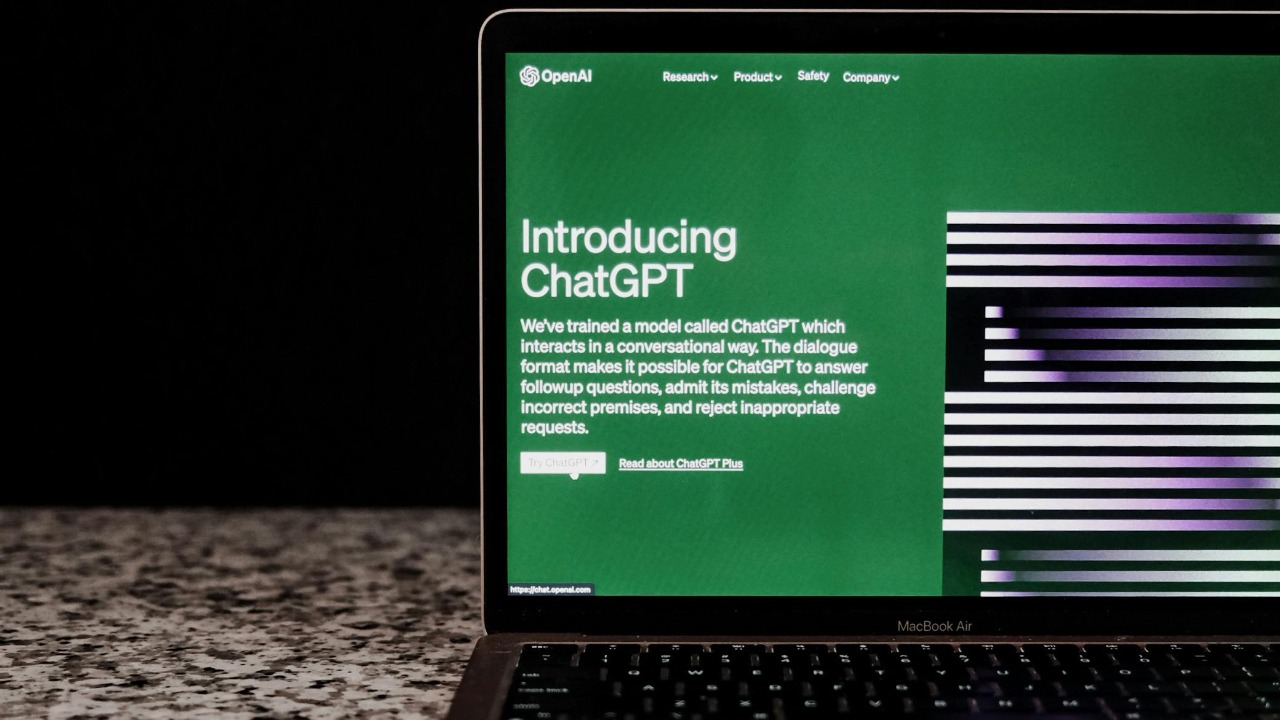
The most eye catching number in the AI boom, Nvidia’s reported $100 billion pact to bankroll OpenAI’s next generation data centers, has quietly been walked back. What sounded like a once in a generation mega deal has now been recast by Nvidia’s leadership as a non binding idea rather than a firm obligation, raising fresh questions about how much of the AI infrastructure boom is real spending and how much is aspirational signaling.
The reversal matters far beyond two companies. OpenAI is planning unprecedented infrastructure outlays, cloud providers are racing to lock in multi decade contracts, and investors are trying to price an AI future built on multi hundred billion dollar checks. When a headline figure as large as $100 billion effectively disappears, it forces a closer look at how these deals are structured and what they actually guarantee.
The $100 billion that never was
The first thing I need to untangle is what Nvidia actually promised. Nvidia Corp’s leadership had been associated with a proposed $100 billion investment in OpenAI, a figure that instantly became shorthand for the scale of the AI arms race. Yet when pressed, the company has now characterized that figure as an upper bound scenario rather than a binding commitment, a subtle but crucial distinction for anyone trying to understand the real flow of capital into AI infrastructure.
According to follow up comments, the structure was framed less as a single check and more as a long term plan to support OpenAI’s build out of massive data centers. The arrangement was described as a way to help OpenAI construct facilities with at least 10 gigawatts of power capacity, enough to train and deploy increasingly large AI models, but the language around the $100 billion was always conditional and has now been explicitly clarified as “never a commitment” in subsequent explanations.
Inside Nvidia’s shifting message
The clearest signal of that shift came from the very top. Nvidia Corp, which trades under the ticker NVDA, saw its own narrative change when Chief Executive Officer told reporters that the proposed OpenAI investment was not a firm pledge. That clarification undercut earlier interpretations that Nvidia was locked into a colossal, single partner bet and instead framed the relationship as one option among many in a broader ecosystem of AI customers.
Huang’s comments were echoed in other venues, where Jensen Huang reiterated on a Sunday that NVIDIA’s previously floated $100 billion plan for OpenAI was “never promised” and would instead be evaluated gradually. That kind of language is typical of capital allocation in cyclical industries, but it stands in sharp contrast to the way the original figure was received, as if Nvidia had already wired the money. The clarification suggests Nvidia wants to preserve strategic flexibility while still signaling support for OpenAI’s growth.
OpenAI’s trillion dollar infrastructure ambitions
Even without a locked in Nvidia mega deal, OpenAI’s own spending roadmap is staggering. Analysis of its long term plans indicates that OpenAI has committed to spending $1.15 trillion on hardware and cloud infrastructure between 2025 and 2035, a figure that dwarfs even the largest single vendor deals. That budget is spread across multiple providers, including hyperscale clouds and specialized GPU clouds, which means no single supplier, not even Nvidia, can claim to be the sole backbone of OpenAI’s compute future.
Those numbers are part of a broader view that OpenAI is building what some investors describe as a new kind of utility scale digital infrastructure. A deeper breakdown of this hardware spending shows commitments to both traditional cloud platforms and newer players such as CoreWeave, which is slated to receive a significant share of the capital. In that context, the disappearance of a single $100 billion line item looks less like a retreat and more like a recalibration within an already massive, multi provider strategy.
Rival mega deals and the race for AI compute
The Nvidia OpenAI saga is not happening in isolation. Around the same time, reports surfaced that Oracle had allegedly signed a $300 billion compute agreement tied to the AI boom, underscoring how cloud and chip vendors are using headline figures to signal dominance. In one widely shared post, Amit on X Wrote about the implications for tickers like NVDA, AMD and AVGO, arguing that such multi hundred billion dollar contracts could reshape expectations for the entire sector and pull capital toward the perceived winners.
These giant numbers are also intersecting with corporate valuations. Microsoft and OpenAI reach new deal valuing OpenAI at $500 billion, a valuation that effectively bakes in expectations of sustained, enormous infrastructure spending and revenue growth. When I line up a $500 billion valuation next to a $1.15 trillion infrastructure plan and a not quite real $100 billion supplier deal, it becomes clear that the AI narrative is being built on a tightly interwoven set of aggressive assumptions.
Speculative bubble or rational infrastructure build out?
For investors and policymakers, the key question is whether these mega figures reflect rational planning or a speculative overshoot. One critic framed it starkly, arguing that when the CEO signs multi hundred billion dollar compute and infrastructure deals, such as the reported $1 trillion plus infrastructure commitments, it becomes hard to ignore the signs of a speculative bubble in the AI economy. From that perspective, the quiet retreat from a $100 billion Nvidia OpenAI commitment looks less like a disappointment and more like a necessary correction toward more grounded expectations.
At the same time, there is a case to be made that the scale of spending is at least directionally justified. Detailed breakdowns of OpenAI’s Trillion Infrastructure Spend argue that the capital will be deployed over a decade across multiple vendors and layers of the stack, from GPUs to networking to data center real estate. Nvidia’s own pattern of investments, including participation in a $6.6 billion funding round for a fast growing AI customer, shows that the company is still deeply committed to the ecosystem even as it resists being pinned to a single headline number.
Ultimately, I see Nvidia’s clarification as a reminder to treat every eye popping AI figure with skepticism until the underlying contracts and cash flows are clear. The initial framing of a $100 billion OpenAI investment helped fuel a narrative of limitless demand, but the subsequent walk back suggests that even the most aggressive players are hedging their bets. As more details emerge about how OpenAI, Nvidia and their rivals actually structure these deals, the story of the AI boom will likely be written less in round numbers and more in the fine print.
More From The Daily Overview
*This article was researched with the help of AI, with human editors creating the final content.

Grant Mercer covers market dynamics, business trends, and the economic forces driving growth across industries. His analysis connects macro movements with real-world implications for investors, entrepreneurs, and professionals. Through his work at The Daily Overview, Grant helps readers understand how markets function and where opportunities may emerge.