New York City’s new “affordability” mayor, Zohran Mamdani, has promised to reset the housing market in favor of tenants, but his agenda is already colliding with powerful real estate interests and anxious residents who fear the city is about to repeat the mistakes of other high-cost metros. Instead of a narrow fight over a single $1 billion pipeline, the real battle is over whether aggressive rent controls, massive public building plans and higher taxes will stabilize life in the five boroughs or accelerate an exodus of people and capital. I see a city trying to decide if its next chapter will be defined by bold social policy or by the limits of economic gravity.
The ‘affordability’ mayor and his rent-freeze promise
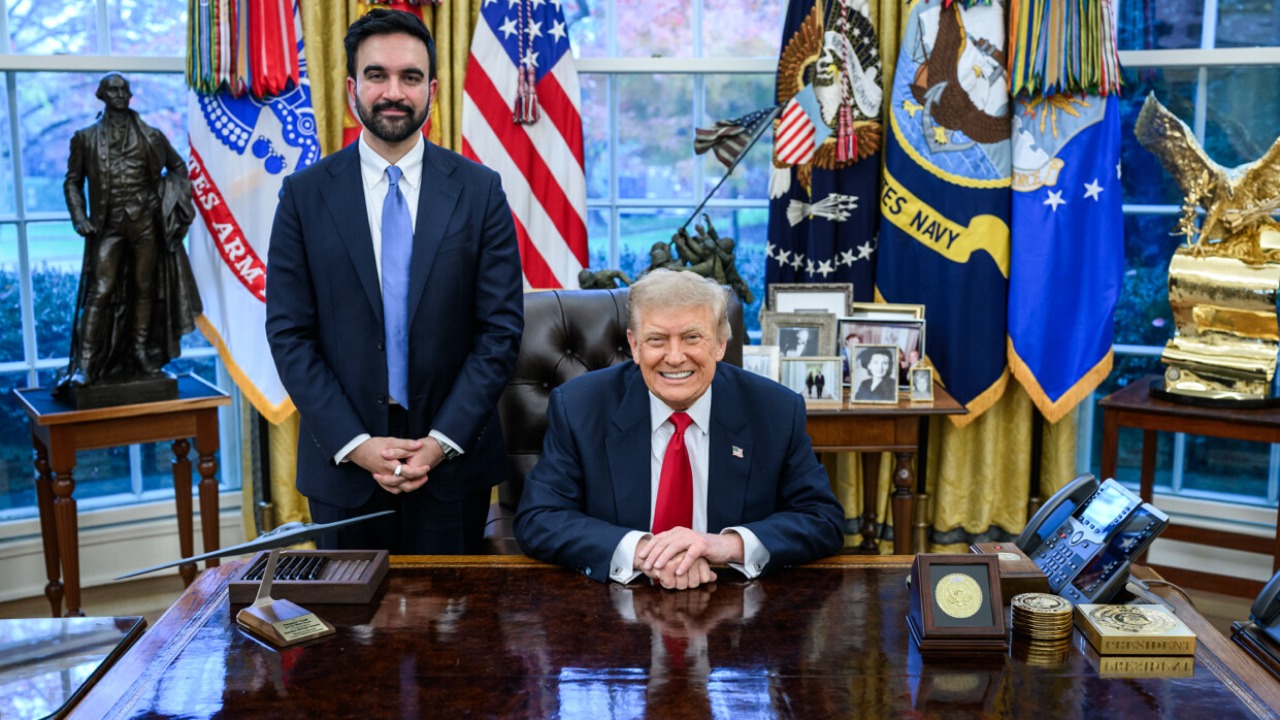
Zohran Mamdani ran for mayor on a simple, potent message: New York is unaffordable, and the city should use its power to change that. Central to that pitch was a pledge to freeze the rent for all stabilized apartments, a sweeping promise that would lock in current prices for tenants who already benefit from regulation and, in his view, give working families breathing room in a brutal market. As a democratic socialist, Mamdani framed this rent freeze as a moral obligation rather than a technocratic tweak, arguing that the city’s housing crisis is the predictable result of treating shelter as a commodity instead of a right, a stance that has now become the defining test of his tenure.
The scale of that promise is not theoretical. Mamdani’s vow to keep the rates the same for stabilized units is laid out explicitly in his campaign agenda, which committed him to a citywide rent freeze that would reach deep into the existing stock of regulated apartments and reshape expectations for both landlords and tenants. That pledge sits alongside his broader identity as the “mayor of affordability,” a label that has raised expectations among renters while sharpening opposition from property owners who see a direct hit to their balance sheets. The details of Mamdani’s promise to freeze the rent make clear that this is not a symbolic gesture but a structural intervention in how New York’s housing market functions.
A $100 billion building plan and Wall Street’s warning
The rent freeze is only one pillar of Mamdani’s housing strategy. He has also embraced a vast public building program, backing a proposal for a $100 billion, decade-long effort to construct new units that would, in theory, expand supply while keeping prices in check. The plan is meant to signal that City Hall will not simply cap rents and hope for the best, but will also try to add homes at a scale that matches the city’s population and job base. In political terms, it allows Mamdani to argue that he is both protecting current tenants and investing in future ones, a dual track that he insists is necessary to restore affordability.
Yet some of the city’s most influential investors argue that the math does not work. The Pershing Square chief, Bill Ackman, has said that Mamdani is right to focus on affordability but has the wrong solution, warning that a $100 billion public building push layered on top of strict rent controls could actually worsen the city’s housing shortage by scaring off private development and constraining supply. In Ackman’s view, the combination of a decade-long public program and tighter regulation risks locking New York into a low-construction equilibrium where demand keeps rising but new projects never pencil out. His critique of $100 billion in planned spending is not just about taxpayer cost, it is about whether the city can afford to alienate the very capital it needs to build.
Real estate fears of an NYC exodus
On the ground, brokers and developers are already gaming out what Mamdani’s agenda could mean for where people choose to live. Real estate experts have warned that if the democratic socialist mayor follows through on his full program of rent freezes, higher taxes and tighter rules, many New Yorkers will “VOTE WITH THEIR FEET,” leaving for regions that feel more predictable and business friendly. Their argument is straightforward: when owners cannot raise rents to cover rising costs and investors see limited upside, new construction slows, quality declines and higher earners quietly decamp to other states, taking their tax dollars with them.
Those concerns are not abstract. After Mamdani’s primary win, brokers reported a surge of interest from high-net-worth individuals and institutional investors looking at properties in Florida, with inquiries jumping by roughly half as clients sought a hedge against what they saw as a leftward lurch in City Hall. They described how They are seeing interest from wealthy New Yorkers who want to diversify into lower-tax markets, and how Within that group, many are explicitly citing fears of increased taxes and rent control in New York as a reason to look south. One New York-based firm, Douglas Elliman, has been highlighted as a key player in this shift, with its agents noting that clients are spooked by the uncertainty around future rules and are already exploring exits through Florida properties.
National market pressures collide with local ideology
Even if Mamdani’s policies were perfectly calibrated, he would still be governing into the most distorted housing market in decades. Ryan Serhant, one of the country’s best-known brokers, has described the current environment as “nobody’s market,” a period when mortgage rates are high, prices are sticky and both buyers and sellers feel trapped. In his view, the era of ultra-cheap money is over, and rates are not coming down substantially anymore, which means that if there is a new normal, it is one where housing is somewhat unaffordable by design. That national backdrop makes it harder for any mayor to deliver quick relief, no matter how aggressive the local policy toolkit.
Serhant’s assessment that the first 35 days of 2025 signaled a major shift in the housing landscape underscores how much of New York’s affordability crisis is imported from broader financial conditions rather than created at City Hall. When he says it is not the buyer’s market and not the seller’s market, he is describing a stalemate that leaves renters squeezed and owners reluctant to sell, a dynamic that complicates Mamdani’s promise to reset the system. The idea that “somewhat unaffordable” is the new baseline, captured in Serhant’s comments, suggests that even a $100 billion building plan and a rent freeze may only nibble at the edges of a deeper structural problem.
Lessons from other cities and the rent-control backlash
New York’s debate is unfolding in parallel with fights in other high-cost cities, where rent control has become a political rallying cry and an economic flashpoint. In Los Angeles, for example, celebrity broker Mauricio Umansky has blasted local rent-control policies as a tremendous mistake, arguing that they discourage investment, reduce the quality of housing stock and ultimately hurt the very tenants they are meant to protect. His critique is not just ideological; it reflects a belief that when governments cap returns too tightly, capital simply moves elsewhere, leaving behind a smaller, older and more strained rental market.
Those warnings resonate in New York, where landlords and developers see Mamdani’s rent freeze as a step down the same path. They point to the experience of other cities as evidence that strict controls can backfire, especially when layered on top of high construction costs and complex permitting rules. At the same time, macroeconomic indicators like the Delayed PCE inflation report and the AI boom are shaping expectations for the 2026 economy, reminding investors that local policy choices sit inside a larger national cycle. The tension between a mayor who brands himself as the “mayor of affordability” and critics who fear he will repeat Los Angeles’s missteps is sharpened by the example of Zoran Monda and the backlash to aggressive rent caps on the West Coast.
Political crosscurrents from Wall Street to the White House
Mamdani’s housing agenda is not just a local zoning fight; it has become a proxy battle for larger ideological currents inside the Democratic Party and beyond. Critics of Mamdani, including some aligned with national figures, argue that his proposals are unrealistic and risk locking New York into a permanent shortage of quality housing. They see his rent freeze and public building push as part of a broader attempt to shift the city toward a more state-directed model, one that they believe will ultimately reduce choice and mobility for residents. Supporters counter that decades of market-first policies have failed to deliver affordability, and that only a more muscular public role can break the logjam.
The national stakes are heightened by the fact that President Donald Trump looms over the conversation, with some in his orbit reportedly exploring ways to boost more centrist alternatives to Mamdani in future races. Speculation has swirled around whether Trump world might quietly support figures like Andrew Cuomo as a counterweight to the democratic socialist mayor, betting that a more business-friendly Democrat would be easier to work with on issues like infrastructure and tax policy. The very fact that Critics of Mamdani are being discussed in the same breath as Zohran Mamdani and President Donald Trump shows how New York’s housing fight has become entangled with national partisan strategy.
Will New Yorkers really ‘VOTE WITH THEIR FEET’?
For all the high-level debate, the most important question is how ordinary New Yorkers respond. Real estate experts have already warned that if Mamdani’s policies go too far, residents and investors will VOTE WITH THEIR FEET, shifting to suburbs and Sun Belt cities that offer lower taxes, fewer regulations and a clearer path to building. They point to early signs of this trend in migration data and in the behavior of clients who are quietly listing Manhattan co-ops while shopping for townhouses in Miami or Austin. The phrase “Here is where they are going” has become a shorthand among brokers for a map of emerging hot spots that are absorbing disillusioned New Yorkers.
Those same experts have highlighted specific neighborhoods and regions that are drawing this outflow, from fast-growing Florida metros to secondary cities in the Carolinas and Texas that promise more space and less political drama. Their message is that housing policy does not exist in a vacuum: when one city tightens the screws, others stand ready to welcome the people and capital that leave. The warning that residents will VOTE WITH THEIR FEET is not just a slogan, it is a reminder that New York’s affordability experiment will ultimately be judged by whether people choose to stay.
Energy, inflation and the affordability squeeze
Housing is only one piece of the affordability puzzle confronting Mamdani. Energy costs, transportation and everyday inflation all shape how livable the city feels, and they are influenced by forces far beyond City Hall. Former Energy Secretary voices have argued that electric vehicles will have a place in the market but that policymakers need to understand where they fit, a caution that applies equally to how cities plan for charging infrastructure, grid capacity and transit investments. For New Yorkers, the cost of commuting, heating and powering their homes is inseparable from the rent they pay, which means that any serious affordability agenda has to grapple with the full household budget, not just the lease.
At the same time, national indicators like the Delayed PCE inflation report are watched closely by investors and policymakers who are trying to gauge how long elevated prices will persist and how the Federal Reserve will respond. If inflation remains sticky, borrowing costs for both developers and homebuyers could stay high, limiting the impact of local efforts to spur construction or subsidize rents. The broader conversation on Energy, Delayed PCE and the transition to new technologies like EVs underscores how intertwined New York’s housing story is with national economic trends that no mayor can fully control.
The stakes for New York’s next chapter
Behind every policy paper and investor memo is a simple reality: New York’s identity has always depended on its ability to attract and retain people who are willing to pay a premium to live there. Mamdani’s bet is that by freezing rents for stabilized tenants and launching a $100 billion building push, he can make the city more livable without breaking that magnetism. His critics argue that he is underestimating how quickly capital and talent can move when they feel boxed in, and that the early signs of an exodus to Florida and other states are a warning, not a bluff. Both sides agree on one thing, however, which is that the status quo was unsustainable and that some kind of reset was inevitable.
As I weigh the evidence, I see a city at an inflection point, pulled between the urgency of its affordability crisis and the constraints of markets that are already strained by high rates and national inflation. The experience of other cities, the warnings from investors like The Pershing Square chief, the migration patterns tracked by brokers and the political maneuvering that now involves President Donald Trump all suggest that New York’s housing experiment will reverberate far beyond the five boroughs. Whether Mamdani is remembered as the “mayor of affordability” who tamed the crisis or as the leader who pushed too hard and triggered a new wave of flight will depend less on any single policy than on how all these forces interact in the years ahead.
More From TheDailyOverview
- Tennessee loses $2.6B megafactory and faces major layoffs
- Retired But Want To Work? Try These 18 Jobs for Seniors That Pay Weekly
- What to do with your pennies after the U.S. stops minting them
- Home Depot CEO warns of a troubling customer trend in stores

Elias Broderick specializes in residential and commercial real estate, with a focus on market cycles, property fundamentals, and investment strategy. His writing translates complex housing and development trends into clear insights for both new and experienced investors. At The Daily Overview, Elias explores how real estate fits into long-term wealth planning.