Federal prosecutors say a Brooklyn warehouse became the unlikely front line of the global AI race, where workers allegedly peeled and reapplied labels on Nvidia hardware by hand so the chips could slip past U.S. export controls. Investigators now describe a pipeline that moved roughly $160 million in advanced processors from New York to buyers in China, turning a mundane logistics operation into a test of how far Washington can really police the flow of strategic technology.
The case, which officials link to a broader smuggling network, exposes how easily a few pallets of mislabeled electronics can undermine complex sanctions regimes. It also lands at a moment when President Donald Trump is tightening and tweaking AI chip rules in real time, even as demand in China for cutting edge compute keeps climbing.
The Brooklyn relabeling hub that fed a $160 million pipeline
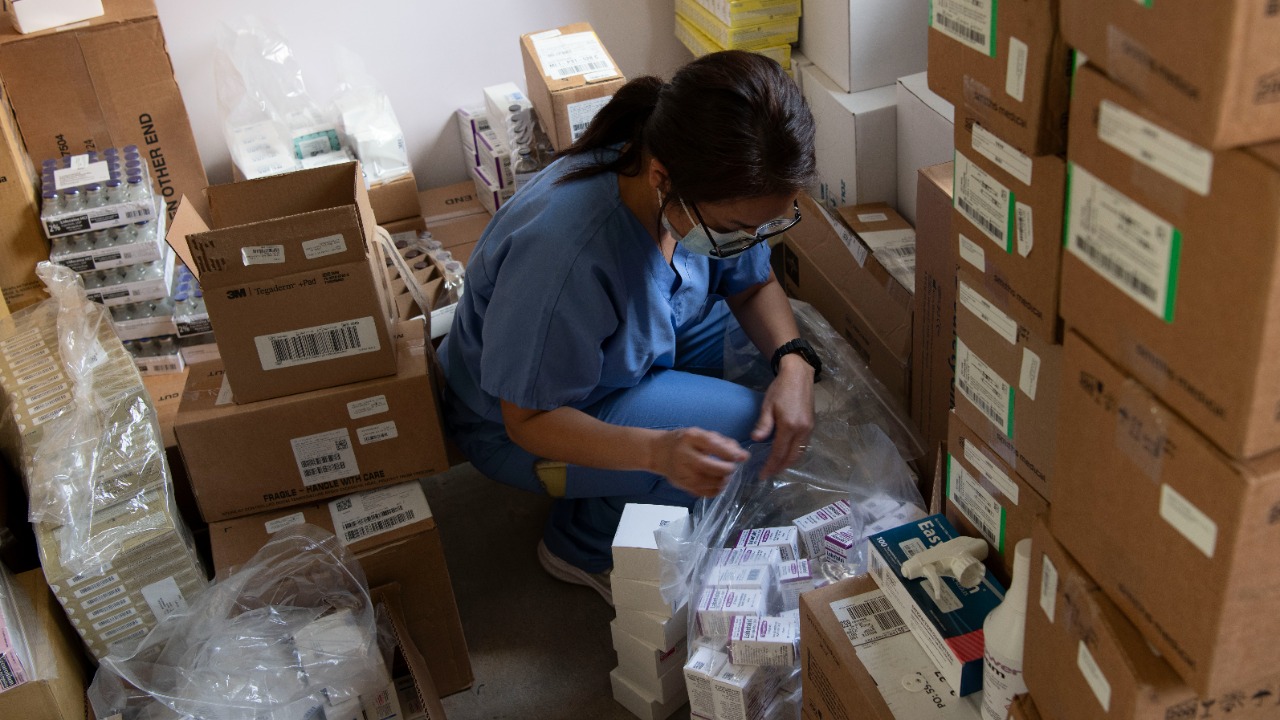
According to federal filings, the scheme’s most vivid detail is also its most brazen: in a warehouse in Brooklyn, workers allegedly removed original identifiers from Nvidia hardware and relabeled the gear by hand so it could be shipped as lower grade components. Investigators say the operation was run by Chinese businessmen in New York who used the Brooklyn site as a staging ground before the hardware was packed into export-bound containers and routed toward buyers in China, with the total value of the AI chips pegged at about $160 million.
Prosecutors say the network relied on the simplest of tricks, altered paperwork and swapped labels, to disguise export controlled Nvidia units as innocuous electronics. The Brooklyn warehouse was only one node in a chain that stretched from Chinese financiers to freight forwarders and shell importers, but it illustrated the core tactic: strip away anything that would reveal the chips as restricted AI accelerators and present them instead as generic product destined for commercial data centers.
Operation Gatekeeper and the Houston connection
The Brooklyn activity did not exist in isolation. Federal prosecutors with the Southern District of Texas describe a broader smuggling effort, dubbed Operation Gatekeeper, that allegedly moved the same class of Nvidia AI chips through multiple ports and front companies. In that case, Dec filings say Three men, including one from the Houston area, were charged with conspiracy to violate export laws by routing advanced AI technology to China, with the government tying them to a $160 million pipeline of restricted GPUs and related hardware that mirrored the New York pattern of misdeclared cargo and falsified invoices Houston.
In public summaries of Operation Gatekeeper, Federal prosecutors stress that the network relied on removed Nvidia labels, doctored customs entries and Chinese funding to keep the shipments flowing. Officials in the Southern District of Texas say the same pattern of mislabeled boxes, shell buyers and covert payments allowed the group to move high end Nvidia AI hardware to China despite formal export bans, until investigators pieced together the trail and brought charges connected to Operation Gatekeeper.
Undercover work in Secaucus and the mechanics of the scheme
As agents tried to understand how the network functioned, they sent an undercover operative into a warehouse in Secaucus, New Jersey, where the same group allegedly staged additional shipments. There, according to a detailed account of the investigation, the operative watched as staff prepared export controlled Nvidia units for overseas delivery, describing them in paperwork as low sensitivity items such as “controllers” or “contactors” to avoid triggering automated checks, a tactic that mirrored what investigators had already seen in Brooklyn and in the Houston linked pipeline through Secaucus.
From the undercover agent’s vantage point, the mechanics were straightforward: high value GPUs arrived with full Nvidia branding, workers stripped or obscured the identifiers, repackaged the boards and then paired them with invoices that described something far less sensitive. The shipments were then handed off to freight forwarders who, on paper, were exporting industrial electronics rather than AI accelerators. By the time the containers reached ports bound for China, the hardware had been laundered through layers of paperwork that made it look like any other mid tier IT shipment headed into the vast China electronics market.
Why Nvidia’s H100 and H200 became smuggling magnets
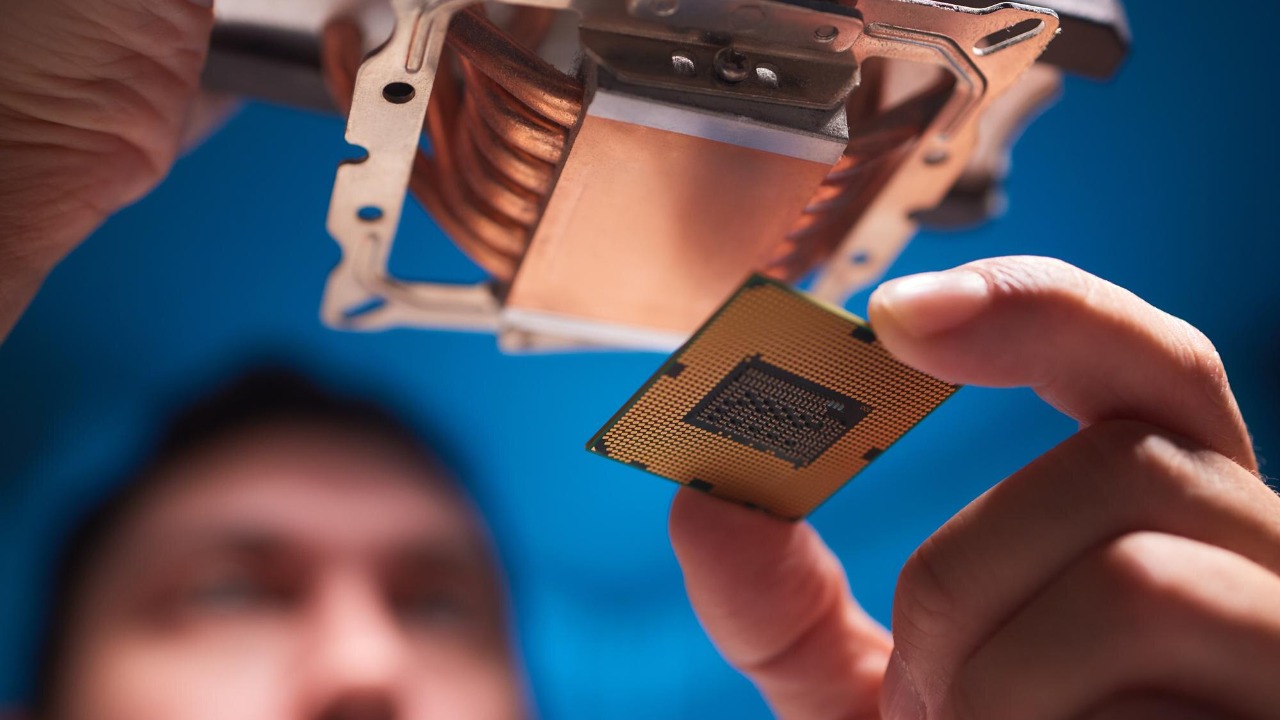
The hardware at the center of the case is not generic compute. Federal summaries describe shipments built around Nvidia’s H100 and H200 class GPUs, accelerators that have become the default engine for large scale AI training and inference. Analysts note that these chips, which sit at the heart of modern data centers, are treated by Washington as strategic semiconductors essential for AI development, a status that helps explain why U.S. officials were alarmed when they uncovered $160 million in Nvidia H100 and H200 GPU smuggling to China amid Trump’s evolving export policy on GPU.
President Trump has tried to walk a narrow line, allowing some Nvidia shipments while keeping the most advanced designs off limits. In one high profile move, Trump allowed Nvidia to ship H200 chips to China with a 25 percent tariff, a decision he framed as a way to preserve U.S. leverage while still giving American firms limited access to a lucrative market under specific national security conditions, a stance that was spelled out when Trump announced the tariff linked carve out.
Export controls, Blackwell and Rubin, and the limits of enforcement
Even as the H100 and H200 dominate current deployments, the policy fight is already shifting to Nvidia’s next generation. Trump has publicly emphasized that Nvidia’s most advanced AI chips, the Blackwell and Rubin GPUs, are still not authorized for export, underscoring that Washington intends to keep the bleeding edge of AI compute firmly onshore even as it experiments with tariffs and quotas on older lines, a position he reiterated when discussing how Blackwell and Rubin would be treated.
Yet the Brooklyn and Houston cases highlight how difficult it is to enforce those lines in practice. Analysts tracking the AI hardware market in Southeast Asia point out that the Megapseed controversy, where Nvidia’s biggest customer in the region became a flashpoint, is part of a broader pattern in which a market ripe for smuggling has emerged because demand for AI compute remains enormous and regional controls are patchy, a dynamic that was laid bare when observers noted that Megapseed was exploiting gaps in oversight.
Feds, first convictions, and what the crackdown signals
For U.S. law enforcement, the Brooklyn warehouse and Operation Gatekeeper have become test cases for how aggressively Washington will pursue AI chip smuggling. Federal summaries of the crackdown describe how Feds dismantled a $160 million Nvidia AI smuggling ring to China by tracing wire transfers, intercepting mislabeled shipments and following the money trail back to Chinese funding sources, a playbook that culminated in a sweeping set of charges once Feds felt they had mapped the network.
The Justice Department has already touted the First AI Chip Smuggling Conviction as proof that it can shut down a $160M NVIDIA Pipeline Shut Down, casting the case as a warning to anyone tempted to treat export rules as a paperwork problem rather than a criminal risk. In a detailed recap, officials stressed that the DOJ had not only seized hardware but also disrupted the financial and logistics backbone of the network, a point they underscored when they described how the DOJ effectively severed the smuggling pipeline.
The geopolitical stakes: AI, tariffs and a hungry Chinese market
Behind the warehouse raids and courtroom filings sits a larger geopolitical contest. Beijing has made clear that it sees AI as a core national priority, and the appetite for high end GPUs in China has only intensified as domestic firms race to match Western models, a trend visible in the surge of corporate and state backed demand across China’s tech sector.
For Washington, that means every mislabeled crate in Brooklyn or Secaucus is not just a customs violation but a potential boost to a rival’s AI capabilities. As President Trump adjusts tariffs and carve outs for Nvidia while keeping the most advanced Blackwell and Rubin lines locked down, the Brooklyn bust and the $160 million pipeline to China serve as a reminder that policy on paper is only as strong as the weakest warehouse in the chain. The next phase of the AI race may hinge less on new rules than on whether enforcement can keep up with the ingenuity of smugglers who are willing to scrape off a label and rewrite a manifest to get the world’s most coveted chips where they are not supposed to go.
More From The Daily Overview

Grant Mercer covers market dynamics, business trends, and the economic forces driving growth across industries. His analysis connects macro movements with real-world implications for investors, entrepreneurs, and professionals. Through his work at The Daily Overview, Grant helps readers understand how markets function and where opportunities may emerge.