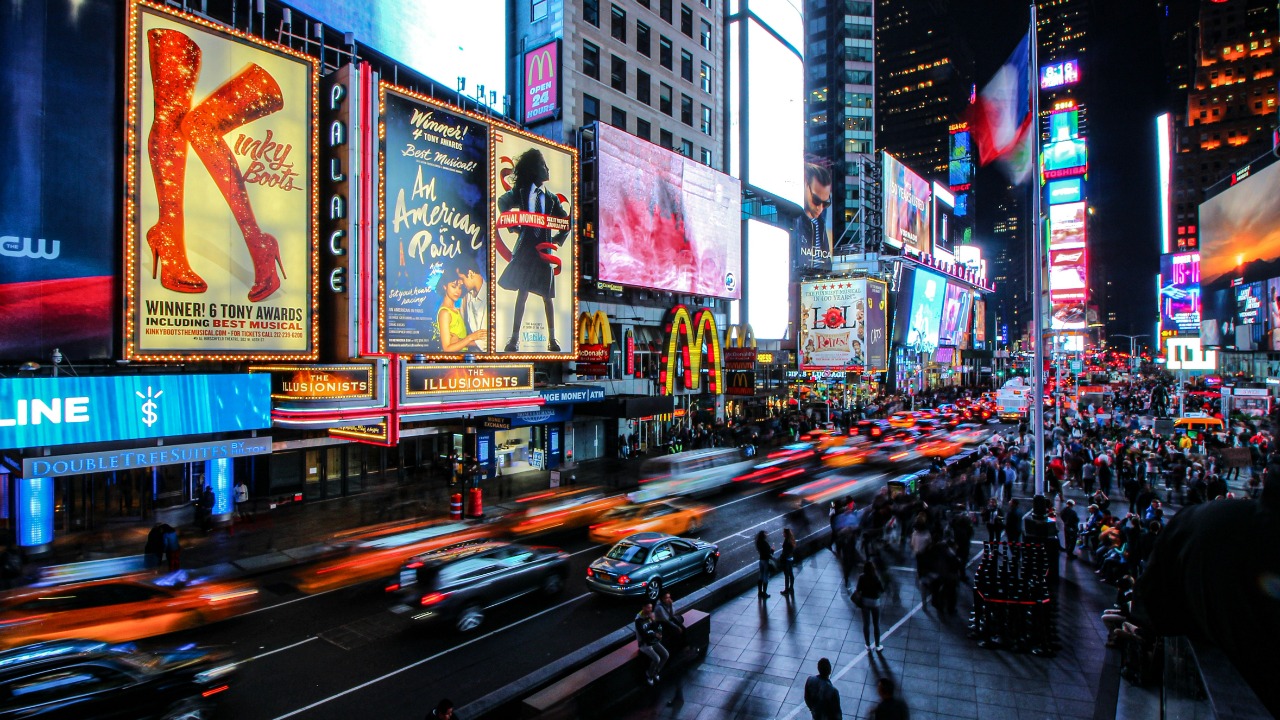
New York City’s congestion pricing experiment has delivered the kind of numbers that usually live in planning textbooks, not on real streets. Traffic into the core has dropped by the tens of millions of trips, speeds are up, and the air is measurably cleaner, all while the city quietly banked hundreds of millions of dollars for transit. The results look dramatic because they are, and the data now coming in from agencies and researchers backs up the scale of the shift.
After a year of tolls in Manhattan’s central business district, the picture that emerges is not a marginal tweak but a structural change in how people move through the city. Fewer drivers are entering the zone, more riders are choosing trains and buses, and the economic indicators that were supposed to crater have instead held steady or improved. I want to walk through what the numbers actually show, where the benefits are landing, and what tradeoffs still need to be confronted.
Traffic volumes plunged, and the core finally exhaled
The most striking outcome is how many vehicles simply stopped entering the congestion relief zone. Officials report that, following the launch of the tolls, more than 27 million fewer cars have crossed into the CRZ compared with the previous baseline, a shift that would have sounded fanciful when the policy was first debated. That drop is not a rounding error, it is the equivalent of erasing months of typical traffic into the heart of Manhattan, and it is the foundation for almost every other improvement that shows up in the data. The same analysis notes that on any given day, over 73 thousand fewer vehicles are now entering the zone, a daily reset that has changed how streets feel at all hours.
Those aggregate numbers are echoed by more granular counts. According to the According to the MTA, the number of daily vehicles entering the zone is down by 11 percent compared to the historical average, a figure that lines up with the broader tally of 27 million fewer entries. That kind of reduction is large enough that drivers notice it in their mirrors and on their navigation apps, and pedestrians notice it in the gaps between platoons of cars. It is also large enough to start bending long standing trends in congestion that had seemed locked in for years.
Streets are moving faster, from the Brooklyn Bridge to the Williamsburg
Cutting volumes is one thing, but the real test for drivers and bus riders is whether trips are actually faster. Here, too, the numbers are hard to ignore. City data shows that weekday car speeds in the zone have increased by about 4 percent, a modest sounding figure that translates into real minutes saved on crosstown trips that used to crawl. Bus riders, who have historically borne the brunt of gridlock, are seeing a 2.3% increase in bus speeds, a gain that compounds across thousands of daily runs and makes surface transit more competitive with ride-hail and private cars.
The improvements are especially visible on key river crossings that once functioned as rolling parking lots. Travel times on the Brooklyn Bridge are reported to be roughly 15 percent faster, while runs across the Williamsburg Bridge are now 28.3 percent faster, a change that has reshaped commutes from neighborhoods like Williamsburg and Downtown Brooklyn into Lower Manhattan. Those bridge gains are part of the broader package of Following the launch metrics that officials are touting, and they help explain why skepticism among some drivers has softened once they experienced the new travel times in practice.
Transit ridership is climbing as drivers switch modes
Congestion pricing was always sold as a way to push some drivers toward trains and buses, and the ridership data suggests that is exactly what has happened. According to agency figures, subway and bus use in and around the zone has ticked up as drivers who once defaulted to a car now weigh the toll against a MetroCard or OMNY tap. The shift is not just anecdotal. One analysis notes that, over the first year of the program, the share of trips into the area made by public transit increased while car entries fell, a sign that the policy is nudging behavior rather than simply deterring trips altogether.
That pattern is reinforced by survey work and a formal poll that asked residents and commuters how they were adjusting. Respondents reported leaving their cars at home more often and choosing the subway, the bus, or commuter rail instead, especially for routine trips into Midtown and the Financial District. The same research that documented the 2.3% increase in bus speeds also found that faster and more reliable service was a key reason people were willing to switch modes, suggesting that congestion pricing and transit performance are locked in a virtuous cycle. The broader trend, captured in According to the MTA data, is a steady move in favor of public transit that planners have been chasing for years.
Air is cleaner and streets feel less punishing
Traffic is not just an annoyance, it is a public health problem, and the early environmental data suggests congestion pricing is easing that burden. Measurements in and around the zone show a 22 percent drop in air pollution compared with pre-toll levels, a change that reflects both fewer tailpipes and less idling as vehicles move more smoothly through intersections. For residents of dense neighborhoods south of 60th Street, that means fewer days with visible smog trapped between towers and a quieter baseline of background noise from honking and revving engines.
Those environmental gains are part of a broader package of quality of life improvements that are harder to quantify but easy to feel. With fewer cars squeezing through every green light, crosswalks are less intimidating for older New Yorkers and families with strollers, and cyclists report that protected lanes feel less hemmed in by turning vehicles. The same program that delivered the 4 percent speed increase and the 2.3% bus gains also funded new bike and pedestrian infrastructure, including installations at five subway stations that make transfers safer and more accessible. All of these changes are captured in the city’s summary of Those include a 4% increase outcomes, which link cleaner air to a more humane street environment.
Billions in value: revenue, tax receipts, and investment
Even as traffic has thinned, the financial side of congestion pricing has come in stronger than many forecasts. One year of tolls has generated $550 million in new revenue dedicated to transit upgrades, a sum that gives the Metropolitan Transportation Authority a stable funding stream for signal modernization, new rolling stock, and accessibility projects. That $550 figure is not a theoretical projection, it is money already flowing into capital plans that had been stuck on the drawing board for lack of cash. For riders, it means that long promised improvements like modern signals on the A and C lines or new elevators at key transfer hubs are more likely to materialize on a reasonable timeline.
The program’s impact is also visible in the city’s broader fiscal picture. After a year of congestion pricing, tax revenue increased 6.3% in the city through November, a larger jump than surrounding areas that do not have a toll cordon. That suggests that fears of an economic collapse in the central business district were overstated, and that a less congested core can still generate robust sales and income tax receipts. The combination of dedicated toll revenue and stronger general tax growth is one reason officials are describing congestion pricing as a transformational success for After a year of congestion pricing, not just a traffic management tweak.
Governor Kathy Hochul’s bet on New York City is paying off
Politically, congestion pricing was a high wire act, and Governor Kathy Hochul staked significant capital on pushing it through. She framed the tolls as a way to secure the long term health of New York City’s transit system and to keep the region competitive with global peers that already use similar tools. On the program’s first anniversary, Governor Kathy Hochul highlighted the 27 million fewer cars, the faster bridges, and the cleaner air as proof that the gamble was worth it, casting the policy as part of a broader effort to modernize how New York City manages its streets and climate obligations.
Her argument rests on the idea that a thriving city cannot be built around unlimited car access to the most crowded blocks in Manhattan. The early data gives her a strong case. With the CRZ functioning as intended, she can point to fewer vehicles, better bus speeds, and hundreds of millions in transit funding as tangible returns on a controversial decision. In her remarks, Governor Kathy Hochul explicitly tied congestion pricing to New York City’s identity as a place that leads on transportation and climate policy, signaling that she sees the program as a model rather than a one off experiment.
On the ground in the zone: 23.7 m fewer entries and shifting habits
Zooming in on the streets south of 60th Street, the changes are even more pronounced. One detailed review found that 23.7 m fewer vehicles have entered the zone than in the comparable period in 2024, a staggering figure for an area that includes Midtown, Chelsea, Soho, and the Financial District. Daily entries are down, not just at the margins but in the thick of the workweek, which means that the familiar midafternoon and early evening snarls have eased. For workers who still drive in, that has translated into more predictable commutes and fewer nights spent inching toward the Queens Midtown Tunnel or the Holland Tunnel.
Those numbers are paired with evidence that people are rethinking how often they need to bring a car into Manhattan at all. Residents of outer borough neighborhoods who once reflexively drove for errands or social trips into the core are now mixing in more subway rides, commuter rail trips, and even express buses, especially when apps like Citymapper or Google Maps show that the transit option is faster door to door. The behavioral shift is captured in the Daily entries breakdowns that track not just vehicle counts but mode share, and they suggest that the city is slowly chipping away at car dependence in its most transit rich neighborhoods.
Business impacts are mixed, but the feared collapse never came
From the start, some business owners warned that congestion pricing would scare off customers and hollow out retail corridors. After a year, the reality looks more complicated. Data shows congestion pricing a success by most transportation metrics, but businesses report mixed results, with some storefronts near the edge of the zone seeing fewer drive in customers while others closer to major subway hubs have held steady or even gained foot traffic. The pattern seems to depend on how easily customers can switch to transit and whether a shop’s clientele was heavily car dependent to begin with.
What has not materialized is the broad based economic downturn that opponents predicted. Office occupancy trends, restaurant reservations, and hotel bookings in the core have tracked more closely with broader economic conditions than with the toll’s introduction, and the 6.3% rise in tax revenue suggests that overall activity remains healthy. Some commercial landlords and small business groups are still pushing for tweaks, such as more exemptions for delivery vehicles or off peak discounts, but the basic structure of the program has held. The nuanced picture is reflected in reporting that notes that, After a year, the tolls are delivering on congestion and revenue goals even as some commercial corridors adjust.
What the first year means for NYC, and what comes next
Stepping back, the first year of congestion pricing has effectively rewritten the rules of how New York manages its most valuable real estate, the streets of Manhattan south of 60th St. One year after New York’s much delayed and hotly debated congestion toll went into effect, officials like Gov Hochul and Mayor Mamdani are pointing to 27 million fewer cars and $550 million in revenue as proof that the city can price road space the way it prices scarce housing or commercial leases. For NYC, that means the central business district is no longer treated as an infinite sink for free car storage, but as a finite resource that must be rationed with a price signal.
The implications extend beyond traffic counts. As New York City’s congestion pricing turns 1, analysts are watching how the program shapes long term decisions about where people live, how they commute, and how businesses choose locations. MTA data showed a 3.4 percent increase in transit ridership into the zone and a noticeable shift in peak hour patterns, with some drivers moving trips to the shoulders of the rush or consolidating errands to avoid multiple toll hits. Coverage such as How well did congestion pricing help with traffic has emphasized that the zone actually saw more people overall, just arriving by different modes. That is the core promise of congestion pricing: not an empty city center, but a busier one that is less choked with cars and more accessible by train, bus, bike, and on foot.
NYC as a test case for the rest of the country
New York is not the first city to try congestion pricing, but it is by far the largest and most complex in the United States, which makes its early results a powerful reference point for other regions. One year of congestion pricing in NYC, with 27 million fewer vehicles and $550 in revenue per year in the early phase, shows that even a car saturated metropolis can change course when the right incentives are in place. For planners in places like Los Angeles, San Francisco, or Chicago, the New York experience offers a live example of how tolling can be paired with transit investment to shift behavior without strangling downtown economies.
The political narrative is evolving as well. As New York City’s congestion pricing turns 1, here’s how the conversation is shifting: initial outrage has given way to a more pragmatic debate over fine tuning exemptions, adjusting rates at the margins, and ensuring that outer borough neighborhoods see tangible transit improvements funded by the tolls. Commentators like As New York City analyst Devin Pavlou have noted that the program’s success is forcing a rethink of long held assumptions about American drivers’ tolerance for road pricing. If the next year of data looks anything like the first, the stunning results in Manhattan’s CRZ may soon be less an outlier and more a template for cities across the country.
More From TheDailyOverview

Grant Mercer covers market dynamics, business trends, and the economic forces driving growth across industries. His analysis connects macro movements with real-world implications for investors, entrepreneurs, and professionals. Through his work at The Daily Overview, Grant helps readers understand how markets function and where opportunities may emerge.

