The world is swimming in crude, yet Washington is trying to pull Venezuela’s barrels back into the market and under tight political control. That tension between oversupply and geopolitics will determine whether buyers are willing to pay a premium for one of the dirtiest and most politically fraught oil streams on the planet. I want to unpack how a growing glut, high costs and climate pressure collide with strategic demand for heavy crude to shape the real price of Venezuelan oil.
Oil glut collides with a political power play
Global producers are already grappling with what analysts describe as a massive surplus of crude, with storage filling and traders warning that extra supply could drag prices lower for months. Detailed Markets and Pro Farmer Analysis of the Global Crude Oil Glut describe Growing concerns that new barrels will only deepen the imbalance and intensify the challenges faced by the industry. Against that backdrop, the idea of adding millions of Venezuelan barrels sounds, on its face, like a recipe for even weaker prices.
Yet at the same time, The US is asserting sweeping control over those very barrels, saying it will dictate decisions to the Venezuelan government and manage oil sales “indefinitely” as part of a broader strategy. Officials have signaled that The US intends to decide how proceeds from Venezuelan exports are used, effectively turning the country’s crude into a lever of foreign policy rather than a purely commercial commodity. That political overlay means buyers are not just weighing price and quality, they are also calculating sanctions risk, reputational exposure and the possibility that future policy shifts could strand investments overnight.
Trump’s promise to “unleash” Venezuelan oil
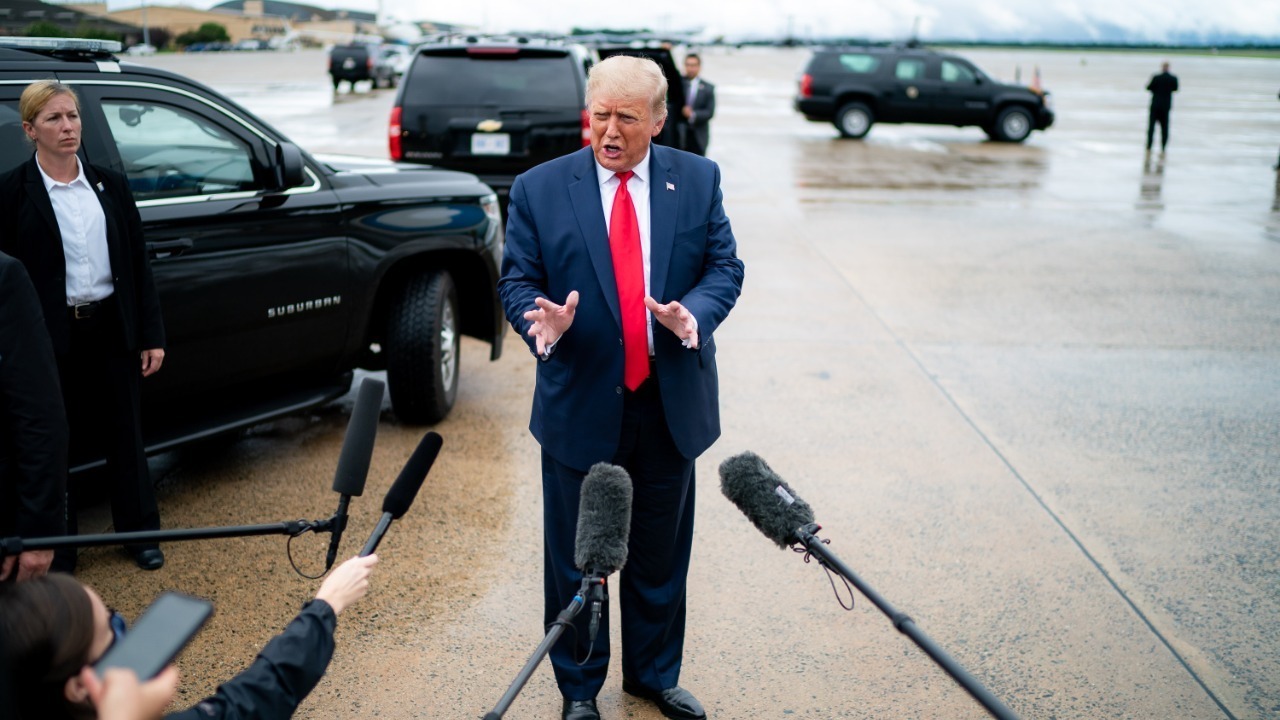
President Trump has framed the new push as a way to “unleash” Venezuela’s oil wealth, promising that the country will “turn over” between 30 and 50 m barrels to the United States in the near term. In parallel, officials in Washington have talked up a longer horizon, with one commodities roundup noting that the Trump team is working on a sweeping plan to control Venezuelan oil “for years to come,” even as Prices in Europe and other markets react to shifting supply expectations. The White House has also trumpeted a separate arrangement under which Venezuela will send up to 50 million barrels to the US, a move that helped push benchmark prices lower once traders factored in the extra supply.
In official briefings, aides have stressed that this is not a short-term swap but part of a broader strategy to reshape the regional energy map. The US strategy was first outlined in a late-night social media post from President Donald Trump and then fleshed out as a plan to channel Venezuelan flows through US-controlled mechanisms while also reassuring allies about energy and climate change. That approach dovetails with a separate statement that The US plans to control Venezuela’s oil sales “indefinitely,” a line attributed to Jillian Ambrose and Jasper Jolly in coverage that also noted how traders reacted when The US president said Venezuela would send up to 50 million barrels. For buyers, that means any deal for Venezuelan crude is now inseparable from the White House’s geopolitical agenda.
Too much oil, too little incentive
From a purely market perspective, the timing could hardly be worse for a big Venezuelan comeback. Analysts point out that One big factor in the current pricing “math problem” is that the world is producing more oil than it consumes, creating what one report simply calls “an oil glut and low prices” that make new investments hard to justify. As one detailed segment on global markets put it, An oil glut and low prices mean that some projects “make no sense” economically, especially when they involve complex geology or politically risky jurisdictions.
Independent research on the economic state of the industry reinforces that view, describing a “massive supply glut” that has depressed prices and left companies cautious about committing capital to long lead time projects. One academic analysis notes that the current intervention in Venezuela is not primarily linked to oil supply needs, arguing instead that the sector is already awash in crude and that incentives are shaped more by strategic and domestic political considerations than by scarcity. In that assessment, the economic state of the oil industry is one where supply exceeds demand, so any additional Venezuelan barrels are likely to weigh on prices unless offset by cuts elsewhere.
High costs and dirty barrels
Even if buyers can stomach the politics, the physical characteristics of Venezuelan crude present another hurdle. The country’s oil is heavy and carbon intensive, which makes it more expensive to process and an environmental liability in an era of tightening climate scrutiny. One assessment of the resource notes that this is “an environmental mark against Venezuelan crude,” highlighting that refiners must import specialized diluents and invest in complex equipment to handle the thick, sulfurous blend, all of which raises costs and emissions. That same analysis points out that Venezuelan projects require significant upfront spending on equipment before operators can make more money.
On top of that, the breakeven price for many projects in the country is far higher than for rival producers. One detailed market segment notes that, Meanwhile, the breakeven price for projects in Venezuela to turn a profit is more like $80 per barrel, according to Claudio Galimb, who also notes that investors will look for proof of political stability before committing capital. In a world where benchmark prices are well below that level and where cleaner, lighter barrels are plentiful, it is hard to see why companies would pay up for a product that is both costlier to produce and more polluting to burn.
Refiners that still want heavy crude
Despite those headwinds, there is a niche but important segment of the market that still values Venezuelan barrels. Complex refineries along the US Gulf Coast were built to run heavy crude, and many have been scrambling for suitable feedstock since sanctions and production collapses choked off flows from Caracas. Analysts note that Venezuelan heavy crude is poised to benefit Gulf Coast refineries and ease fuel prices nationwide, with one estimate suggesting that the arrangement could be worth billions of dollars at current market prices. In that context, the barrels are less a speculative bet and more a way to optimize existing hardware.
Industry voices underscore that point. Jaime Brito, executive director at a consultancy that tracks Latin American flows, has argued that US plants configured for heavy crude can capture significant margins if they secure discounted Venezuelan supply. That logic also shows up in shipping data, where market sources say Venezuelan crude could displace Mexican fuel oil amid USGC supply glut, as refiners swap out Mexican high sulfur fuel oil for Venezuelan grades that better fit their cokers. In that narrow band of the market, there is certainly a demand for heavy crude oil such as that found in Venezuela, even if the rest of the world is awash in lighter alternatives.
Investors’ cold feet and the cost of risk
For international oil companies, the bigger question is not whether they can sell Venezuelan crude today but whether they can justify sinking billions of dollars into fields that may take a decade to fully develop. Analysts who track corporate strategy say that All combined, the unstable environment and oil glut likely serve to disincentivize oil companies from making new investments in production in what could be hostile terrain. One detailed assessment of US corporate behavior notes that All of these factors, from political uncertainty to oversupply, are pushing firms to hold off on entering Venezuela for now.
Company specific examples reinforce that caution. Chevron is currently the only major US oil company still operating in the country, and even it has been hesitant to commit new dollars to long term projects while sanctions, governance questions and price volatility cloud the outlook. One national and international news segment notes that Chevron stands alone among US majors in Venezuela, and that companies might be hesitant to rush back in or commit billions of dollars to long term projects under current conditions. Philippe Benoit, a research scholar at the Center on Global Energy Policy at Columbia University, has said that major US oil companies will eye Venezuela warily, in part because the market is less segmented than in the past and any misstep can quickly affect global reputations.
Geopolitics: Washington, Beijing and beyond
Behind the commercial calculations sits a fierce geopolitical contest. The US strategy is explicitly designed to pull Caracas out of the orbit of rivals and into Washington’s sphere of influence, a shift that would reverberate across the Middle East and the Americas. One detailed explainer notes that Russia and Iran, meanwhile, would see a key political ally pulled firmly into Washington‘s orbit, while Cuba, which relies on subsidized Venezuelan oil, could face severe economic strain. That same analysis notes that Chevron is still operating in the country, underscoring how energy and geopolitics are intertwined on the ground.
China is also deeply entangled. The Chinese reaction to President Trump’s announcement that Venezuela will “turn over” between 30 and 50 million barrels to the US has been to scramble to protect their existing investments and loans. Reports describe how The Chinese energy companies are working to shield Venezuelan assets from what they see as another blow from US foreign policy, worried that repayment streams tied to oil exports could be disrupted. In Europe, leaders are watching closely, with French President Emmanuel Macron using a speech at the Elysee Palace in Paris, France, captured in an image by Michel Euler, to signal European unease with unilateral moves that reshape global energy flows without broader consultation.
Limited impact on North American producers
One of the paradoxes of the current debate is that, despite the political drama, the near term impact on North American producers looks modest. Credit analysts who have modeled different scenarios say that US involvement in Venezuela could give companies access to the country’s vast reserves and opportunities to invest in the long run, but that the immediate effect on shale drillers and Canadian producers is limited. A recent corporate finance assessment notes that Venezuela‘s oil sector would require substantial investment and time to ramp up, and that any impact on North American producers would be more pronounced if oil prices weaken further.
That nuance matters for the price outlook. If Venezuelan output rises slowly and remains constrained by infrastructure and capital, it may not flood the market enough to crush prices, especially if OPEC and other producers adjust. But if Washington’s push accelerates flows more quickly than expected, the combination of a global glut and new heavy barrels could pressure benchmarks and squeeze higher cost producers. Traders are already watching how prices respond to each new announcement, with one business report noting that oil prices fell after Trump said Venezuela would send up to 50 million barrels to the US, even as a White House spokesperson insisted that The US would maintain control of Venezuela in the marketplace. That dynamic underscores how sentiment can shift on a single headline, even if the physical barrels take months to arrive.
The long game: climate, demand and stranded assets
Beyond the next few quarters, the bigger question is how long demand for heavy, carbon intensive crude will hold up in a decarbonizing world. Analysts warn that There are already concerns that an oversupply of oil worldwide could send prices tumbling over the next year, making new investments in high cost fields even riskier as electric vehicles and efficiency gains erode consumption. One detailed climate and energy analysis notes that There is a growing consensus that demand growth will slow and that the shift away from fossil fuels will gather pace from 2035 onwards.
Companies with “an eye to the future” are factoring that into their decisions about Venezuela. Then, of course, they have to consider the long game: there is an oil glut today, But what happens if demand peaks sooner than expected and assets become stranded. One public media segment frames it this way: An eye to the future means weighing not just current prices but the risk that fields with as much oil potential as Venezuela may never be fully developed if climate policies tighten. In that scenario, only buyers with very specific refining needs or geopolitical motives are likely to pay up for Venezuelan crude, while most others will look for cheaper, cleaner and less politically entangled alternatives.
More From TheDailyOverview

Grant Mercer covers market dynamics, business trends, and the economic forces driving growth across industries. His analysis connects macro movements with real-world implications for investors, entrepreneurs, and professionals. Through his work at The Daily Overview, Grant helps readers understand how markets function and where opportunities may emerge.