The strike that tore into the heart of Russia’s Black Sea command in occupied Crimea was not just another explosion in a long war, it was a carefully engineered blow against the nerve center of Moscow’s naval power in the region. By hitting the headquarters of the Russian Black Sea Fleet in Sevastopol, Ukraine signaled that even heavily defended command hubs were no longer safe and that the fleet’s traditional dominance in the Black Sea could be contested. I see that attack as the moment a grinding naval campaign flipped into a contest of precision, reach, and psychological pressure.
Understanding how a single operation could so deeply unsettle one of Russia’s most prestigious formations means looking at three things at once: the symbolism of the target, the technology that made the strike possible, and the way Moscow’s behavior at sea shifted afterward. Taken together, the evidence shows a fleet forced into a defensive crouch, its losses mounting and its freedom of action shrinking.
The headquarters that became a bullseye
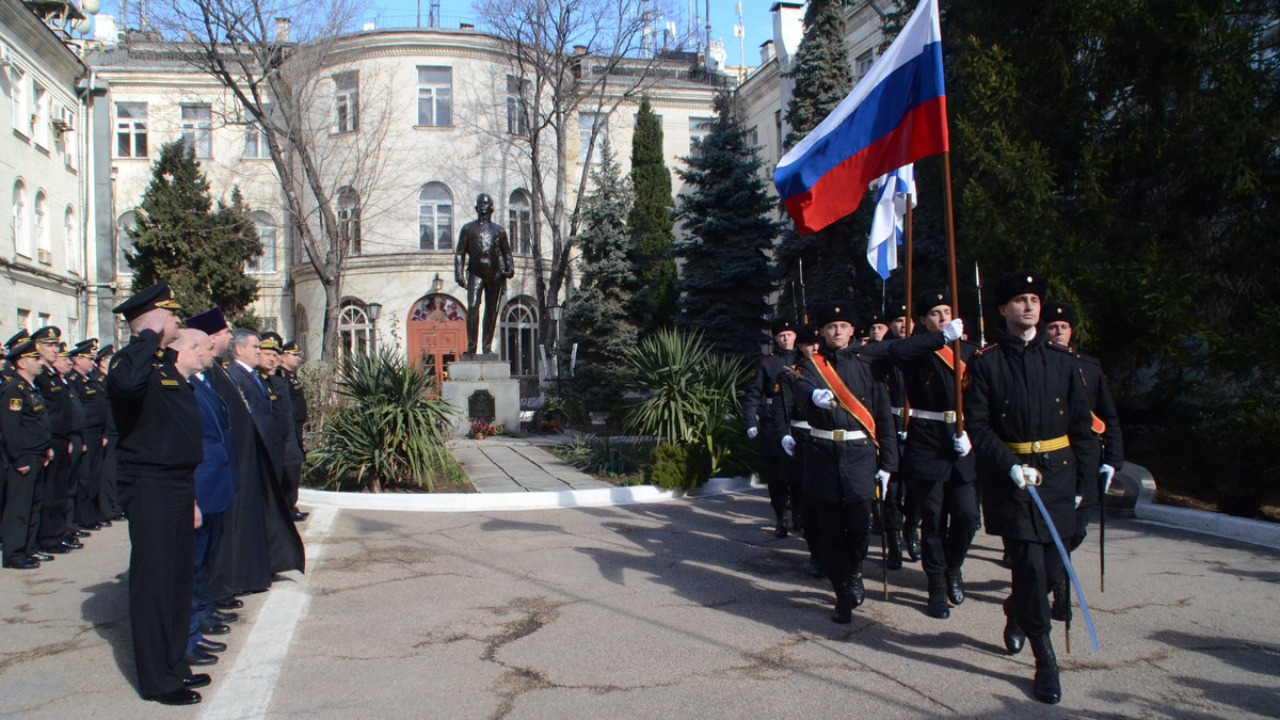
The Russian Black Sea Fleet’s headquarters in Sevastopol was never just another building, it was the visible brain of Moscow’s naval presence in Crimea and a key hub for operations against Ukraine. When a Missile attack hit that complex in September, it struck at the command structure that coordinated ships, submarines, and coastal defenses for the entire formation, according to detailed accounts of the Missile strike on the Black Sea Fleet headquarters. The fact that the target sat in Sevas, deep inside territory Russia had treated as secure, made the impact as political as it was military.
Reports describe how, at noon on 22 September 2023, the headquarters of the Russian Black Sea Fleet at Sevas was hit in a concentrated attack that pierced layers of air defenses and electronic protection. Ukrainian planners appear to have exploited a window in Russian readiness, using intelligence on routines and vulnerabilities to ensure the strike package was able to hit the headquarters at the moment of maximum effect, a pattern that aligns with reconstructions of how the Black Sea Fleet command site was exposed. By turning the fleet’s own pride of place into a bullseye, Ukraine showed that distance and prestige no longer guaranteed safety.
Storm Shadow and the art of reaching Sevastopol
The strike on the headquarters did not happen in isolation, it was part of a broader campaign that used Western-supplied long range weapons to reach deep into Sevastopol and other Crimean targets. Ukrainian officials have said that Storm Shadow cruise missiles were central to this effort, giving Kyiv the ability to hit hardened naval infrastructure from far outside Russian air defense umbrellas. Reporting from Sep 21, 2023 notes that Ukraine used Storm Shadow in a strike against the Russian Black Sea Fleet headquarters in Sevastop, tying the weapon directly to the attack on the command complex and to earlier blows against a submarine and a landing craft in the same port, as detailed in coverage of Ukraine’s use of Storm Shadow.
By the time that Sep operation unfolded, Sevastop had already been hit repeatedly, including attacks on dry docks and repair facilities that are essential for keeping warships and submarines in the fight. Analysts have pointed out that in modern warfare, dry docks are high priority targets because they are complex pieces of heavy machinery that cannot be easily replaced, a point underscored in assessments of why Ukraine’s strike on Sevastopol’s naval infrastructure in Sep 12, 2023 was such a big deal for Russia’s Black Sea fleet, as explored in analysis of Sevastopol naval infrastructure. When those facilities are damaged, every subsequent hit on a ship or submarine becomes more costly, because the pipeline for repairs is choked off.
A strike timed for maximum leadership shock
What made the headquarters attack uniquely destabilizing was not only the building it hit but the people who were reportedly inside. Ukrainian officials said they timed the strike to coincide with a meeting of the fleet’s senior leadership, aiming to decapitate the command layer that directed operations across the Black Sea. Accounts from Sep 24, 2023 describe how Ukraine said it coordinated the blow against Russia’s Black Sea Fleet so that it landed while top officers were gathered, using intelligence on schedules and movements to compress the window between detection and impact, a tactic laid out in reporting on how Ukraine timed the headquarters strike.
Ukrainian claims went further, asserting that Russia’s Black Sea Fleet commander was among 34 killed in the attack, a figure that, if accurate, would represent one of the most severe single day leadership losses for any Russian service since the invasion began. Reports from Sep 24, 2023 and Politics Sep 25, 2023 describe how Ukraine said the strike in Crimea killed the commander and destroyed a key hub supporting the invasion, underlining the scale of the shock to Russia’s chain of command, as detailed in coverage of 34 k killed in Crimea. Moscow has disputed aspects of those casualty claims, and some details remain unverified based on available sources, but even partial confirmation of senior losses would help explain the subsequent disruption in Russian naval operations.
From flagship losses to a fleet in retreat
The headquarters strike landed on a fleet that was already bleeding ships and prestige. Since the start of the full scale invasion, Russia’s Black Sea formation has lost a growing list of warships to missiles, drones, and sabotage, a pattern catalogued in assessments of Russian Black Sea Fleet’s losses since the Ukraine war began, which note that the tally of sunk and damaged vessels has become even more striking when augmented with other reported losses, as laid out in the full list of warships sunk or damaged. Each loss has chipped away at Russia’s ability to enforce blockades, launch cruise missile barrages, and project power along Ukraine’s coast.
By May 14, 2024, analysts were describing how warships of Russia’s Black Sea fleet that once blockaded Ukrainian ports had been forced to fall back amid staggering losses, a retreat driven by a mix of Ukrainian innovation, audacity, and Russian incompetence, as described in reporting on how Russia’s Black Sea fleet falls back. The headquarters strike slotted into that trajectory as a kind of culmination, turning a series of tactical blows into a strategic crisis for Moscow’s naval planners.
How Ukrainian strikes reshaped Black Sea operations
By late 2023, the cumulative effect of Ukrainian attacks had forced Russia to rethink how and where it deployed its ships in the Black Sea. Detailed analysis from Dec 16, 2023 argues that Ukrainian Strikes Have Changed Russian Naval Operations in the Black Sea, pushing Moscow to disperse assets, shift some vessels to Russian controlled Ochamchire in Abkhazia, and rely more heavily on coastal missile batteries instead of forward deployed warships, as outlined in the study of how Ukrainian Strikes Have Changed Russian Naval Operations. The headquarters attack accelerated that shift by undermining the central node that coordinated those dispersed forces.
Other Ukrainian blows reinforced the message that no part of the fleet’s ecosystem was safe. Earlier in Oct 3, 2023, missiles struck the naval base in Sevastopol, home of the Russian Navy’s Black Sea Fleet, damaging a large landing ship (LST) and a submarine, a combination that hit both amphibious and undersea capabilities at once, as summarized in the attack on Sevastopol key takeaways. Each of these operations, from the dry dock strikes to the headquarters hit, layered pressure on Russian commanders who now had to assume that any concentration of ships, infrastructure, or leadership could be targeted.
Why the Black Sea still matters after the headquarters hit
Even after the headquarters strike and the subsequent losses, Russia has not abandoned the Black Sea, and Ukraine has not secured uncontested control of its waters. Moscow continues to launch cruise missiles from surviving ships and submarines, and it has tried to adapt by hardening defenses and dispersing assets. On Dec 25, 2023, for example, Russia confirmed that one of its warships in the Black Sea had been damaged in another attack, even as officials insisted that the port’s transport operations were functioning as normal after the area was cordoned off and a fire contained, a pattern described in coverage of how Russia confirms damage to a warship. Those statements show a navy trying to project resilience while quietly absorbing yet another hit.
For Ukraine, the campaign has been about more than symbolism, it has been a way to pry open maritime trade routes and reduce the volume of missile strikes launched from the sea. Earlier in the war, Warships of Russia’s Black Sea fleet blockaded Ukrainian ports and threatened shipping across the region, but by May 14, 2024 that posture had been eroded by a mix of long range missiles, naval drones, and targeted raids, as chronicled in accounts of Warships of Russia losing their grip. The headquarters strike crystallized that shift, turning what had been a slow attrition of hulls into a direct challenge to Russia’s ability to command and control its Black Sea forces from Crimea.
More From TheDailyOverview
- Dave Ramsey says these two simple questions show whether you’re rich or poor
- Retired But Want To Work? Try These 18 Jobs for Seniors That Pay Weekly
- IRS raises capital gains thresholds for 2026 and what’s new
- 12 ways to make $5,000 fast that actually work

Grant Mercer covers market dynamics, business trends, and the economic forces driving growth across industries. His analysis connects macro movements with real-world implications for investors, entrepreneurs, and professionals. Through his work at The Daily Overview, Grant helps readers understand how markets function and where opportunities may emerge.

