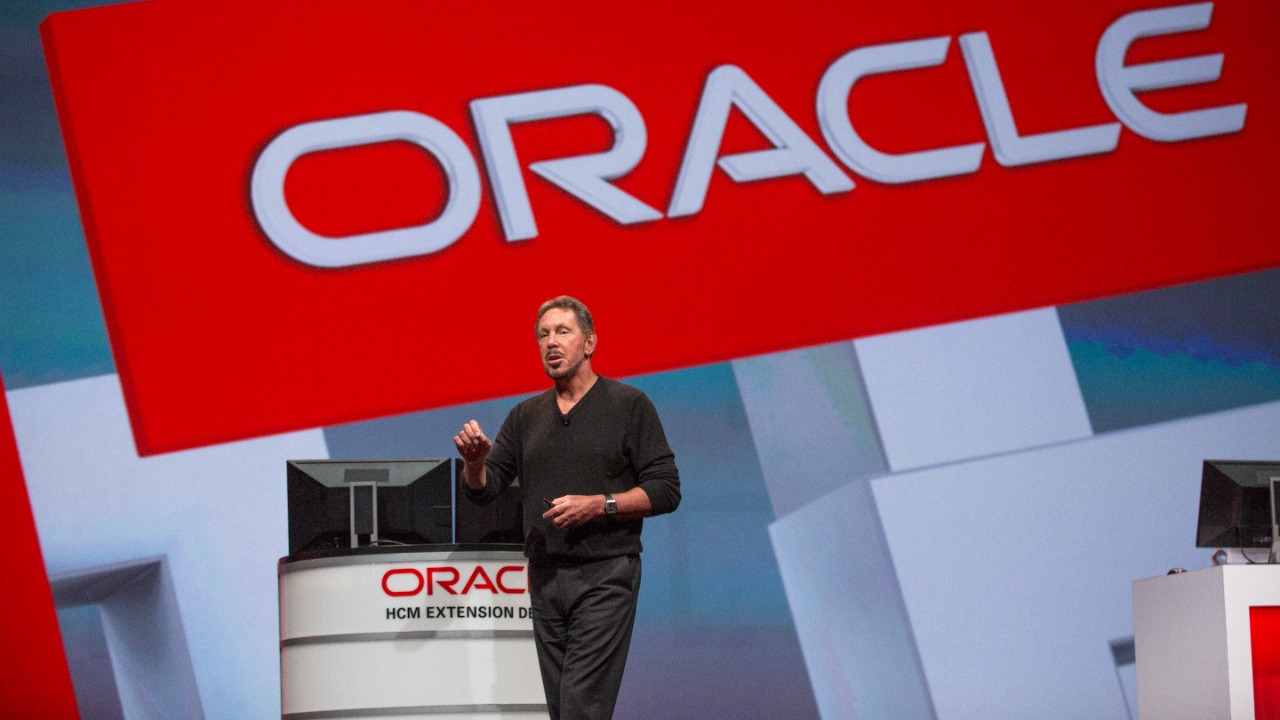
Oracle has gone from market darling to cautionary tale in a matter of weeks, with its stock dropping roughly 28% in a single month as investors reassess how much risk they are willing to take on artificial intelligence infrastructure. The selloff has raised a sharper question than any quarterly earnings call can answer: are markets finally waking up to the possibility that the AI buildout might be moving faster than the profits that are supposed to justify it?
I see the Oracle slide as a stress test for the entire AI trade, not just a verdict on one company. The same forces that powered the rally into the hype cycle are now exposing how fragile confidence can be when capital spending, leverage and long-dated promises collide.
The scale of Oracle’s AI bet, and why it spooked investors
Oracle has positioned itself as a core utility provider for the AI boom, pouring money into data centers and cloud infrastructure to host workloads for marquee customers like OpenAI. The company is aggressively building out AI data centers, most notably under a massive multi‑year deal that ties its fortunes to OpenAI’s growth and to the broader demand for generative models, a strategy that has made Oracle one of the most visible infrastructure plays in the sector. That scale of investment, while potentially transformative, also magnifies execution risk if AI spending slows or shifts to rival platforms.
Markets have started to price in that risk with unusual speed. Over the past month, shares of Oracle, which trades under the ticker ORCL on the NYSE, fell 28% as investors questioned whether the company’s AI infrastructure push can deliver the cash flows needed to support its balance sheet. That drop capped a broader 40% peak‑to‑trough correction in the stock price, a swing that reflects not just disappointment with one quarter but growing unease about how much capital is being sunk into AI capacity before long‑term demand is proven.
Debt, duration and the “riskiest AI stock” label
The funding structure behind Oracle’s AI expansion is a big part of what has investors on edge. The company has leaned heavily on debt to finance its buildout, stacking up obligations that will need to be serviced even if AI revenue ramps more slowly than hoped. Analyst Dave Novosel at Gimme Credit has flagged the company’s long‑dated borrowings as “unusual” for a technology company, arguing that these long maturities lock Oracle into a capital structure that could become a burden if the AI cycle turns, a concern that has helped fuel the view that Oracle might be the riskiest AI stock in the current market.
That anxiety is showing up not only in the equity price but also in the cost of insuring Oracle’s debt. The price of 5‑year credit default swaps on the company’s bonds has climbed to the highest level since October of 2022, a move that signals bondholders are demanding more protection against a potential deterioration in credit quality and that AI bubble fears are bleeding into the credit market as well, as highlighted in a recent credit protection discussion. When both stock and credit investors start to question the same leverage‑driven growth story, it is a sign that concerns about AI spending are not just a passing mood swing.
From surge to slide: how the AI narrative flipped
The violence of the recent selloff is easier to understand in the context of how far and how fast Oracle ran on AI enthusiasm earlier this year. Oracle stock has plummeted 33% since September, even after a brief 36% surge when investors initially cheered its AI infrastructure promises and ambitious cloud revenue targets, a round‑trip that underscores how quickly sentiment can reverse when expectations outrun fundamentals, as detailed in a recent analysis. The same AI story that once justified a premium multiple is now being re‑rated through the lens of balance sheet risk and execution uncertainty.
Other snapshots of the downturn tell a similar story. One report noted that Oracle stock crashed about 25% in a month and has plunged roughly 40% from its peak, with the meltdown tied to concerns about the tech giant’s sudden change in trajectory and questions around insider selling and capital allocation, a pattern captured in a recent breakdown. When a stock swings from a 36% AI‑driven spike to a 33% slide in a matter of weeks, it is a sign that investors are no longer willing to give management the benefit of the doubt on long‑dated AI promises without clearer evidence of durable earnings.
Are AI jitters justified, or is Oracle oversold?
For all the anxiety, there is a credible case that the market may have overcorrected on Oracle. Some analysts argue that the stock is now “oversold” and that the underlying AI and cloud demand story remains intact, pointing to the company’s entrenched enterprise relationships and the potential for its infrastructure to capture a meaningful share of long‑term AI workloads, a view laid out in a recent bull case that frames the current drawdown as a buying opportunity. From this perspective, the 28% monthly drop and the broader 40% correction reflect fear rather than a fundamental collapse in the business.
Even the more cautious voices acknowledge that AI infrastructure will remain a critical part of the digital economy, but they worry that the timing and scale of Oracle’s commitments leave little room for error. One detailed review of the stock’s 28% monthly slide emphasized that AI infrastructure fears have triggered a 40% peak‑to‑trough correction and highlighted operational risks from heavy debt, warning that volatility can hit both ways when expectations are this elevated, as summarized in a recent quick read. In my view, that tension between long‑term opportunity and near‑term balance sheet strain is exactly why the stock has become a lightning rod for broader AI spending jitters.
What Oracle’s turmoil signals for the wider AI trade
Oracle’s troubles are resonating far beyond a single ticker because they crystallize a broader debate about whether the AI boom is veering into bubble territory. Commentators have started to describe trading in Oracle’s credit default swaps as an “Anti‑AI Trade,” a way for investors to hedge against the risk that AI infrastructure spending has been overdone and that some of the most aggressive builders could face a painful reset, a theme explored in a recent episode of the Skinny on Wall Street with Kristen and Jen that dissected Oracle CDS pricing. When sophisticated investors are using a single company’s debt as a proxy bet against the AI narrative, it suggests that skepticism is becoming more organized.
At the same time, the fact that Oracle is being singled out as a particularly risky AI stock does not mean the entire sector is doomed. The key question is whether the current wave of data center and infrastructure investment is broadly rational or whether, as some critics argue, easy money and hype have fueled overinvestment that will be hard to earn back, a concern that has been raised explicitly in discussions of AI infrastructure spending. For investors trying to navigate the next phase of the AI cycle, Oracle’s 28% monthly plunge is less a verdict than a warning: when leverage, long‑dated promises and shifting sentiment collide, even the most hyped stories can unravel quickly.
How investors can read the signals without overreacting
For individual investors, the Oracle episode is a reminder to separate narrative from numbers. It is tempting to treat every AI‑linked stock as a pure play on the future of technology, but the market is now forcing a closer look at balance sheets, contract structures and the durability of customer demand. Tools like Google Finance make it easy to track price moves and basic financial metrics, yet the real work lies in understanding how those numbers interact with the specific risks of AI infrastructure, from energy costs to hardware supply chains.
I see three practical lessons emerging from Oracle’s slide. First, rapid multiple expansion on the back of AI headlines can reverse just as quickly when expectations are not met. Second, heavy reliance on debt to fund speculative growth amplifies both upside and downside, as Oracle’s 33% drop since September and 40% peak‑to‑trough correction have shown. Third, credit markets often flash warning signs before equity investors fully adjust, as seen in the surge in 5‑year credit default swaps to their highest level since October of 2022 and the growing use of Oracle’s CDS as an “Anti‑AI Trade.” None of this means AI is a mirage, but it does suggest that the next phase of the boom will reward investors who can distinguish between sustainable infrastructure plays and those whose ambitions rest on balance sheets that are already stretched.
More From TheDailyOverview
- Tennessee loses $2.6B megafactory and faces major layoffs
- Retired But Want To Work? Try These 18 Jobs for Seniors That Pay Weekly
- What to do with your pennies after the U.S. stops minting them
- Home Depot CEO warns of a troubling customer trend in stores

Elias Broderick specializes in residential and commercial real estate, with a focus on market cycles, property fundamentals, and investment strategy. His writing translates complex housing and development trends into clear insights for both new and experienced investors. At The Daily Overview, Elias explores how real estate fits into long-term wealth planning.

