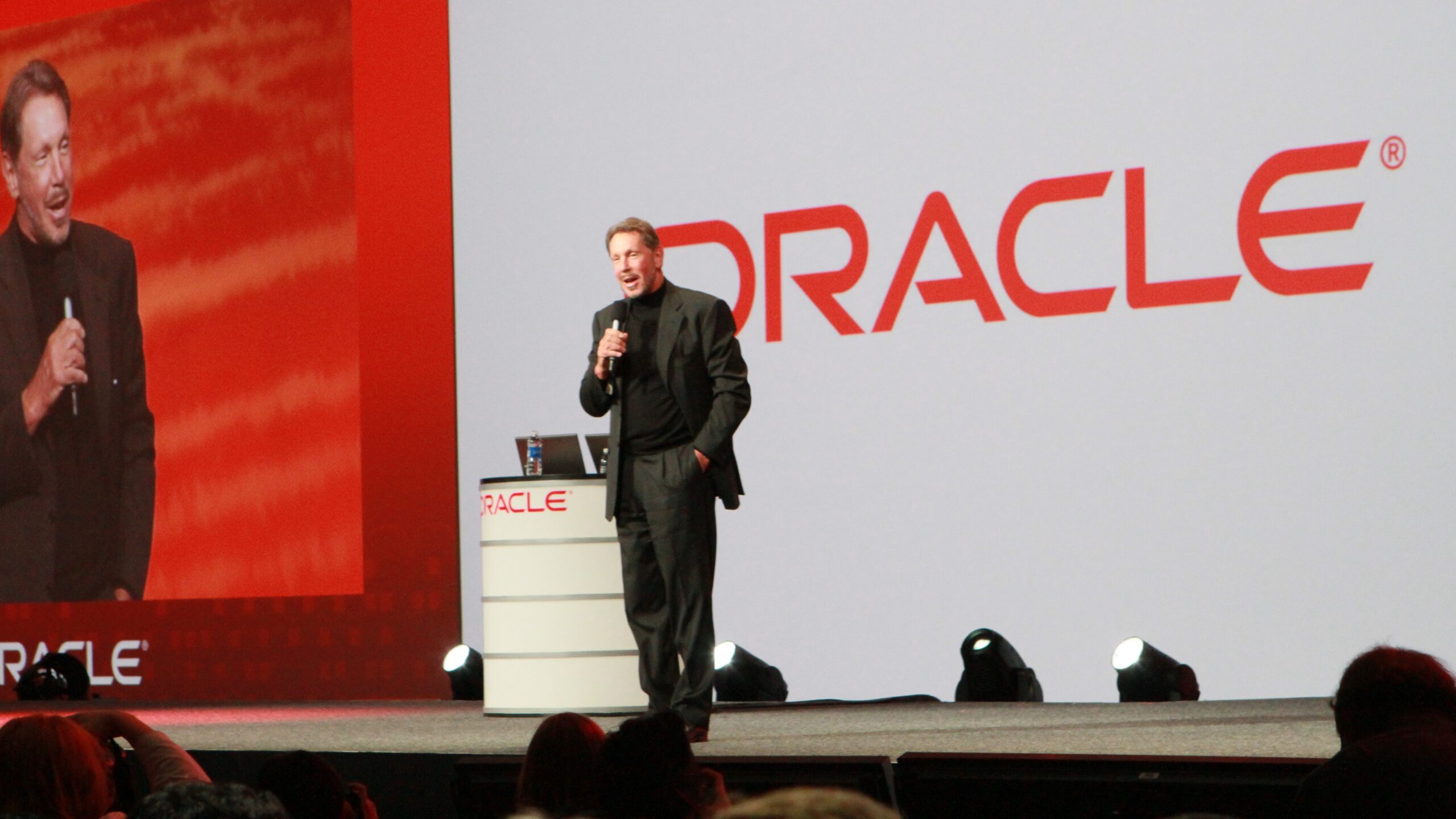
Oracle cofounder Larry Ellison has just endured one of the steepest wealth drops of any tech titan, with roughly $49 billion erased from his fortune in a matter of weeks. The rout, driven by a brutal selloff in software and AI-adjacent names, has turned a long-favored market winner into a case study in how quickly sentiment can flip on even the most established platforms. I see Ellison’s reversal not as an isolated misstep, but as a signal of how unforgiving investors have become toward big-spending cloud and AI strategies.
The damage to Ellison’s net worth is inseparable from the pressure on Oracle’s stock, which has been hit by worries over debt, legal risk, and the durability of its AI partnerships. At the same time, the slump has enriched short-sellers and knocked a broader cohort of software billionaires down the global wealth rankings. The question now is whether Oracle’s aggressive funding plans and AI bets can turn this drawdown into a temporary detour rather than the start of a longer slide.
The $49 billion hit and a software-wealth reckoning
Ellison’s personal loss is staggering even by billionaire standards. Earlier this year, multiple wealth trackers estimated that $49 billion had been wiped from his net worth as software stocks tumbled. Separate reporting on the same market slide underscored that Oracle cofounder Larry Ellison has seen an unrivaled $49 billion erased from his fortune, with His wealth tracked closely to the stock’s slide. A separate breakdown of the same plunge reiterated that Larry Ellison has been the single biggest loser in this software crash, underscoring how concentrated his fortune is in Oracle equity.
The broader context is a sharp reset in software and AI valuations. A wealth index tracking tech fortunes found that Software Billionaires See as part of a $62 billion drawdown tied to an AI-driven stock slump, with Software fortunes behind eight of the ten largest declines among United States billionaires. Even after the hit, Ellison remains one of the world’s richest people, but his position has slipped: a recent Forbes Valuation pegged his wealth at $225.8 billion, down $5.3 billion, or 2.3%, in a single session, leaving Ellison just behind Mark Zuckerberg in the global rankings.
Oracle’s stock slide, AI anxiety, and the short-seller windfall
The market’s verdict on Oracle has been swift. Over one bruising week, Oracle shares on the NYSE, trading under the ticker ORCL, dropped 15.8% by Thursday afternoon, a move some analysts already describe as overdone. A separate breakdown of the same rout noted that Here is where some investors argue the selling has overshot fundamentals, even as others focus on mounting risks. One of those risks is legal: a detailed analysis of Why Oracle Stock the year highlighted a class action lawsuit from bondholders who claim Oracle misled investors, a cloud hanging over the company just as it tries to convince markets it can finance a massive infrastructure buildout.
At the same time, the AI narrative that once powered Oracle’s rally has become a source of volatility. A set of Key Points circulated among investors stressed that recent developments involving Nvidia and OpenAI have not fully calmed concerns about Oracle’s positioning. The company has tried to reassure markets that The Nvidia and OpenAI deal has “zero impact” on its financial relationship with OpenAI, even as it continues to build data centers largely tailored to that partner. Meanwhile, the same software crash that punished Oracle has generated a reported $24 billion haul for short-sellers, according to analysis of the software crash, underscoring how aggressively traders have bet against the sector.
Debt-fueled AI bets and what comes next for Ellison
Ellison’s strategy for clawing back those paper losses hinges on Oracle’s ability to scale its cloud and AI infrastructure without spooking creditors or shareholders. The company has signaled it is willing to lean hard on capital markets, telling investors that Oracle plans to raise up to $50 billion in debt and equity this year, with one report citing a 39 basis-point reference in the context of that funding plan. A separate breakdown of the same initiative noted that Thomson Reuters Feb the company was already outlining how that capital would finance its infrastructure plans, while another analysis of the same strategy emphasized that Feb would mark Oracle’s largest such raise in at least five years. I see that as a high-wire act: the same leverage that could turbocharge growth also magnifies the downside if AI demand disappoints.
More From The Daily Overview
*This article was researched with the help of AI, with human editors creating the final content.

Grant Mercer covers market dynamics, business trends, and the economic forces driving growth across industries. His analysis connects macro movements with real-world implications for investors, entrepreneurs, and professionals. Through his work at The Daily Overview, Grant helps readers understand how markets function and where opportunities may emerge.

