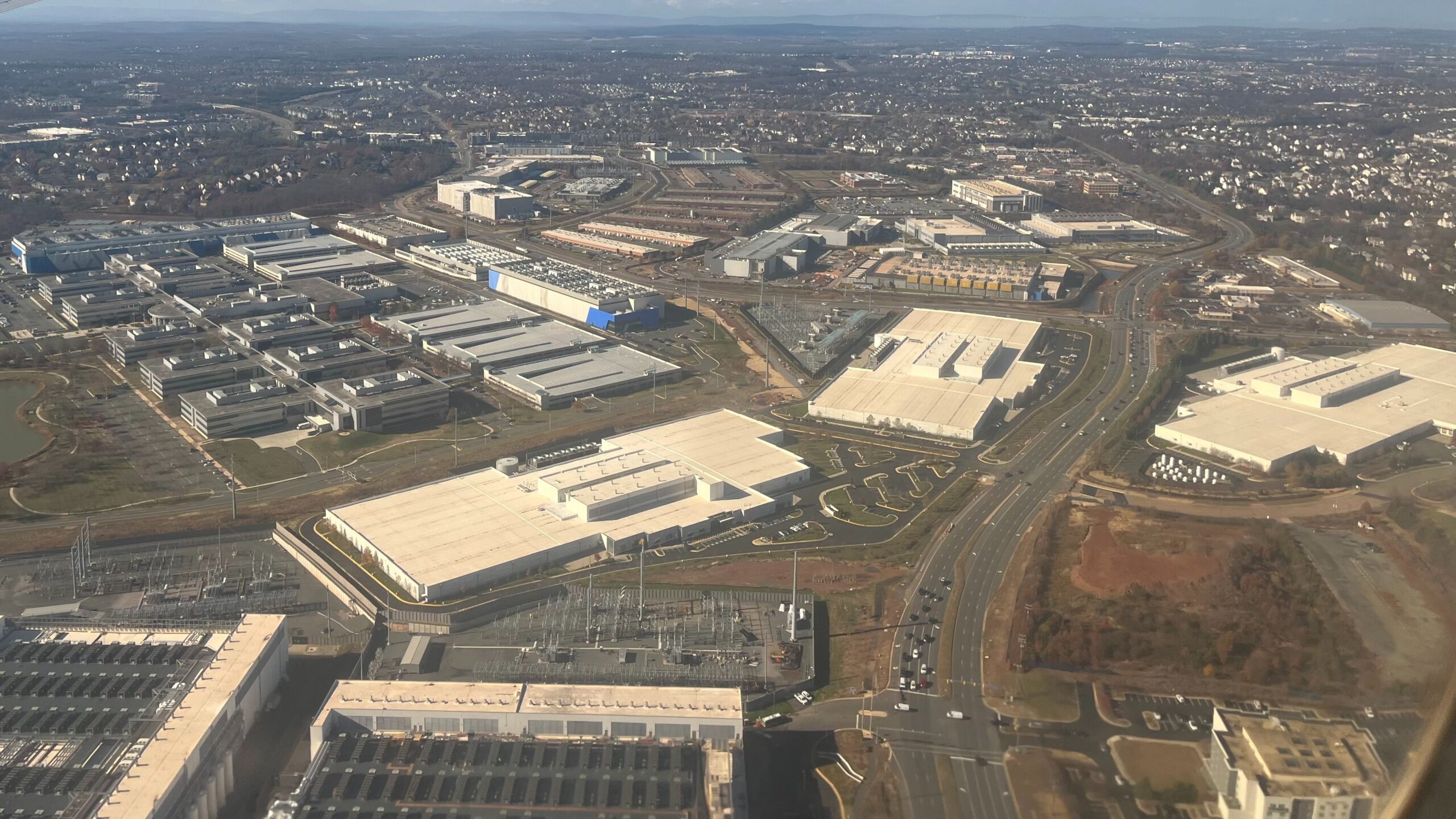
Oregon lawmakers are advancing legislation that would dramatically expand property tax exemptions for large-scale data centers, building on the state’s existing enterprise zone framework to offer abatements stretching up to 15 years. The proposal arrives as tech companies race to build massive server farms to power artificial intelligence workloads, raising hard questions about whether rural communities will see enough return from forgone tax revenue. At stake is a growing gap between the billions in capital investment these facilities represent and the shrinking local tax base that funds schools, fire departments, and roads.
Supporters argue that Oregon must compete aggressively for data center projects or risk losing them to neighboring states that also offer generous tax incentives and fast-track permitting. They emphasize that long-lived server campuses can anchor fiber upgrades and substation expansions that benefit other employers, and note that enterprise zone deals typically include wage and hiring commitments. Critics counter that the jobs-per-dollar ratio is low compared with traditional manufacturing and that property tax abatements have become so routine that companies treat them as a baseline expectation rather than a true incentive. The new legislation tests how far Oregon is willing to stretch that bargain, especially as AI-related electricity demand accelerates.
How Enterprise Zones Became a Data Center Magnet
Oregon’s enterprise zone system, codified under ORS Chapter 285C, is the primary statutory backbone for property tax abatements that data centers have increasingly relied on. The statute, last amended in 2023, lays out the framework for exemptions, required reporting by county assessors, and school support fee provisions meant to offset lost education funding. Standard enterprise zone deals wipe out property taxes on new investment for three to five years, but the program’s long-term rural track extends that window far beyond what most states offer, turning what was once a short-term development tool into a multi-decade planning factor for local governments.
The proposed legislation would build on this existing architecture rather than create a new incentive from scratch. That matters because the enterprise zone program already has decades of administrative infrastructure, including datasets and a 2024 transparency study linked through the Business Oregon portal. By layering new data center provisions onto a familiar statutory framework, the bill sidesteps the lengthy rulemaking process a standalone program would require. But it also inherits the existing program’s weaknesses, including limited public visibility into how much revenue individual facilities actually cost local governments and how consistently local sponsors enforce job and wage covenants once construction is complete.
15-Year Abatements and the Rural Calculation
The most significant incentive in the package draws from Oregon’s Long-Term Rural Enterprise Zone program, which already provides up to a 15-year property tax abatement for qualifying investments in eligible counties. According to the state program description, eligibility hinges on county-level criteria including minimum investment thresholds tied to real market value, job creation counts, and wage requirements benchmarked against local averages. The program also distinguishes between projects located along the Interstate 5 corridor and those in more remote areas, a design choice that shapes where data centers actually land and which communities can realistically pitch themselves as hosts.
That geographic filter deserves scrutiny. Most of Oregon’s large data center clusters sit in areas with reliable fiber connectivity and power infrastructure, which tend to be near the I-5 corridor or along major transmission lines in north-central Oregon. The 15-year abatement is often central to large rural data center packages, but the communities most eager for economic development are not always the ones with the grid capacity to host a 100-megawatt server farm. The result is a program that channels investment toward a narrow band of eligible rural counties while leaving others with the downstream effects of statewide energy demand growth but none of the capital spending, a dynamic that the pending legislation does little to rebalance.
Strategic Investment Program Sweetens the Deal
On top of the enterprise zone breaks, large data centers can also tap Oregon’s Strategic Investment Program, which provides a separate 15-year property tax exemption for major capital projects. The SIP guidance specifies that indexed minimum investment thresholds take effect starting in 2025, and the taxable base on approved projects grows at just 3% annually. That slow growth rate means the gap between a facility’s actual market value and its taxable value widens every year, compounding the revenue loss for local jurisdictions over the life of the exemption and making it harder for school districts and counties to catch up once abatements expire.
The SIP framework does require statutory community service fees, payments meant to partially compensate local governments for the services data centers consume. But those fees are set by formula rather than by negotiation, and they represent a fraction of what full property taxation would generate. For a facility worth hundreds of millions of dollars, the community service fee can look modest relative to the infrastructure demands a large data center places on local water systems, roads, and emergency services. The proposed bill does not appear to recalibrate those fee structures to match the scale of modern AI-driven data center builds, which are significantly larger and more energy-intensive than the facilities Oregon’s incentive programs were originally designed to attract.
Transparency Gaps in Revenue Tracking
Oregon does maintain a formal accounting system for tax breaks. The Department of Revenue publishes a biennial Tax Expenditure Report for the 2025–27 period that catalogs revenue-loss estimates and descriptions of each incentive. County assessors are required under ORS 285C to report both the exempt assessed value and the estimated taxes that would have been imposed absent the exemption, and those figures feed into statewide summaries. A separate statute, ORS 276A.256, establishes a mandatory reporting framework for tax expenditures connected to economic development, signaling legislative intent that these programs be tracked in a systematic way rather than treated as off-the-books arrangements.
Yet the reporting architecture has not kept pace with the scale of modern data center investments. The transparency mechanisms were designed when a large enterprise zone project might involve a single manufacturing plant, not a campus of server buildings with capital costs that can dwarf the assessed value of an entire rural county. The Tax Expenditure Report provides aggregate estimates, but it does not break out individual facility-level data in a way that lets taxpayers or school boards evaluate whether a specific deal is delivering on its promises. While property tax account data can be accessed through the state’s Revenue Online system, that portal is geared toward individual taxpayers and business filers, not toward synthesizing the cumulative impact of layered abatements on local budgets.
Who Bears the Cost When Tax Rolls Shrink
The most direct consequence of expanded data center tax breaks falls on local school districts. Oregon’s enterprise zone statute includes school support fee provisions, but those fees are structured as supplements rather than full replacements for lost property tax revenue. When a data center worth several hundred million dollars sits on the tax rolls at a fraction of its value, or disappears from the rolls entirely during a full abatement period, the local share of education funding contracts. The state school funding formula can backfill some of that loss, but doing so effectively shifts the burden onto broader state revenues and, indirectly, onto taxpayers in communities that may never see a data center built within their borders.
Counties and special districts face similar trade-offs. Fire protection agencies must be prepared to respond to complex electrical and cooling-system incidents at facilities that may not be paying anywhere near their full share of property taxes. Road departments shoulder the wear and tear from construction traffic and ongoing equipment deliveries, while water districts grapple with the cumulative impact of cooling demands layered on top of existing agricultural and residential uses. As lawmakers debate whether to extend and expand 15-year abatements, the core policy question is not just how many data centers Oregon can attract, but how the state will ensure that the communities hosting them are made whole for the long-term public costs that follow.
More From The Daily Overview
*This article was researched with the help of AI, with human editors creating the final content.

Grant Mercer covers market dynamics, business trends, and the economic forces driving growth across industries. His analysis connects macro movements with real-world implications for investors, entrepreneurs, and professionals. Through his work at The Daily Overview, Grant helps readers understand how markets function and where opportunities may emerge.

