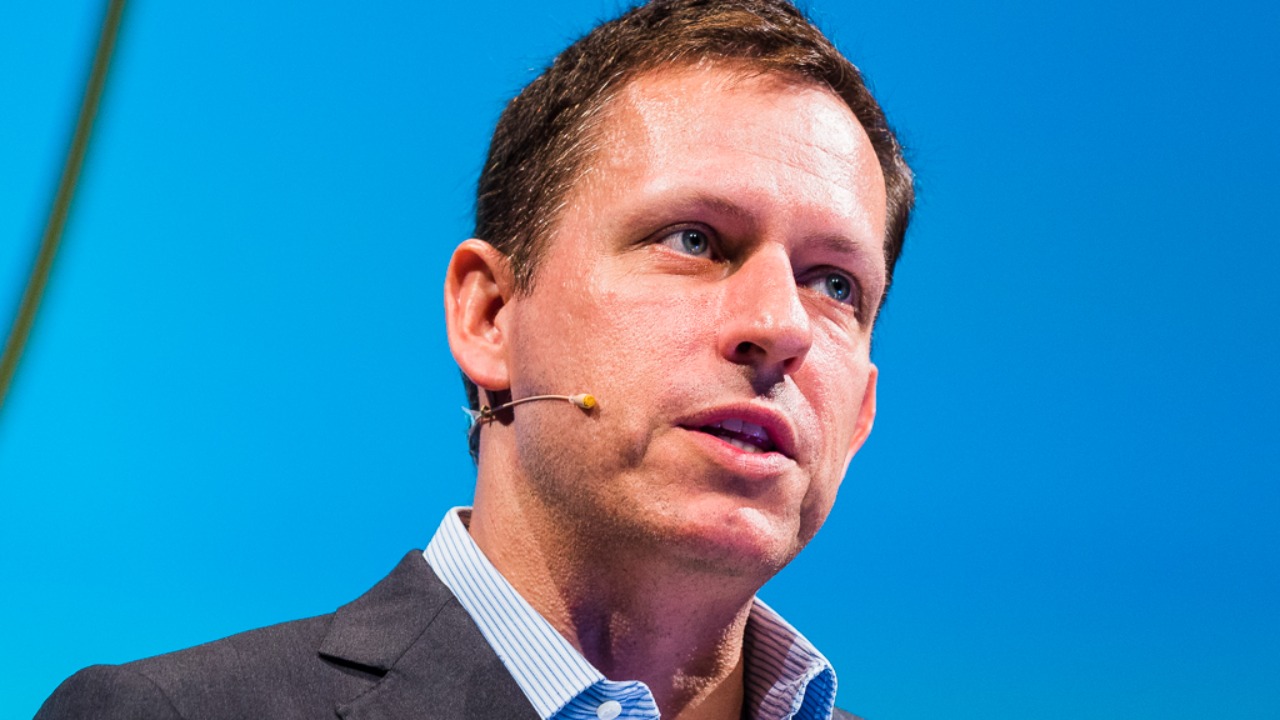
Palantir co-founder Peter Thiel has quietly executed one of the most dramatic portfolio pivots of the current artificial intelligence boom, unloading high‑profile stakes in Nvidia and Tesla to concentrate capital in a single software giant whose stock has surged an astonishing 483,000% since its market debut. The shift, carried out through his hedge fund Thiel Macro, signals a sharp view on where the next phase of AI value will accrue and how quickly today’s market darlings could be repriced.
By exiting the chip leader that dominates AI accelerators and slashing exposure to the world’s most closely watched electric‑vehicle maker, Thiel is effectively betting that the most durable profits will flow to a different layer of the stack. His moves offer a rare, high‑stakes case study in how one of Silicon Valley’s most influential investors is repositioning for the next leg of the AI cycle.
Thiel’s bold rotation out of Nvidia and Tesla
Thiel’s hedge fund, Thiel Macro, has not tinkered at the margins. It has carried out a wholesale reset of its exposure to two of the market’s most widely held AI proxies, Nvidia and Tesla, in favor of a concentrated position in a single AI‑exposed software name. According to recent portfolio disclosures, Thiel Macro sold 100% of its stake in Nvidia(NASDAQ: NVDA), walking away from a position that had become synonymous with the AI hardware trade. That exit came alongside a deep cut to its Tesla exposure, signaling that Thiel sees better risk‑adjusted upside away from the most crowded AI trades.
Earlier filings show just how significant those holdings once were. At the end of the second quarter, Thiel held more than 272,000 shares of Tesla and more than 537 thousand shares of Nvidia through his vehicles, positions that put him squarely in the camp of investors using these names as core AI proxies. By the third quarter, however, Thiel sold Tesla and Nvidia in size, with Thiel Macro fully liquidating what had been a $100 million NVIDIA stake and reducing its Tesla position by 76%, according to Thiel Macro disclosures. The speed and scale of that reversal underscore how decisively he is repositioning around a different vision of AI leadership.
Why walking away from the AI hardware king is so striking
Stepping aside from Nvidia is not a trivial call. The chip designer has become the de facto toll collector for modern AI, with its graphics processors powering everything from large language models to recommendation engines. Recent analysis notes that Nvidia has more than 80% market share in artificial intelligence accelerators, a dominance that has turned the company into the most important hardware supplier for hyperscale data centers. For an investor to exit entirely from such a franchise suggests a belief that the best part of the story may already be reflected in the price or that the balance of power will shift higher up the stack.
Thiel’s move also comes at a time when many institutional portfolios still treat Nvidia as a must‑own name for any AI allocation. The fact that Thiel Macro sold 100% of its Nvidia stake, rather than simply trimming, indicates a conviction that the risk of over‑concentration in a single hardware vendor is no longer worth the potential upside. Reporting on his trades highlights that this decision was not made in isolation but as part of a broader reallocation into a software‑centric AI leader, even as Nvidia continues to dominate accelerator shipments. In effect, Thiel is choosing to forgo the chip toll road in favor of the platforms that will decide how those chips are used.
Tesla’s AI promise versus Thiel’s shrinking stake
If Nvidia is the hardware backbone of the AI boom, Tesla has tried to position itself as an AI‑first automaker, pitching investors on autonomous driving, robotics, and in‑house supercomputing. The company has built a massive installed base of connected vehicles and is training neural networks on billions of miles of driving data, which it argues will eventually support full self‑driving and new software revenue streams. That long‑term narrative has drawn in investors who see Tesla not just as a carmaker but as a vertically integrated AI and energy platform.
Thiel’s portfolio tells a different story about how he weighs that promise against nearer‑term execution risk. At the end of the second quarter, At the fund level he held more than 272,000 Tesla and more than 537 thousand Nvidia shares, but by the third quarter Thiel Macro had cut its Tesla position by 76% while exiting Nvidia entirely, according to Thiel Macro’s reported trades. Separate analysis of his holdings notes that Thiel sold Tesla and Nvidia during Q3 and that At the end of Q2 those Tesla and Nvidia stakes were still substantial, underscoring how quickly he moved to reallocate capital. The decision to shrink Tesla so dramatically, even as Tesla has a massive long‑term AI story, suggests that Thiel is prioritizing more immediate, software‑driven AI monetization over hardware‑heavy, capital‑intensive bets.
The AI stock up 483,000% that is drawing Thiel’s cash
The destination for much of this freed‑up capital is a single software titan that has become central to the AI ecosystem and whose shares have climbed roughly 483,000% since its initial public offering. Reporting on Thiel’s trades identifies this company as a core beneficiary of his rotation, reflecting its role as both a cloud infrastructure provider and a leading developer of AI tools. That staggering long‑term return figure underscores how much value has already accrued to early believers, yet Thiel’s decision to add exposure now indicates he still sees a long runway as AI workloads expand.
One detailed breakdown of his 13F filing notes that Thiel Macro, led by Peter Thiel, sold its entire stake in Nvidia during the third quarter and used part of the proceeds to build a position in this AI‑leveraged software name, which has compounded into that 483,000% gain since its IPO. The same analysis points out that Thiel has publicly argued that 90% of the economic value from AI may accrue to a relatively small number of dominant platforms, a view that helps explain why he is willing to concentrate capital in a single winner rather than spread it across dozens of smaller, more speculative plays. By shifting from chip and auto exposure into this software leader, he is effectively betting that control of AI infrastructure and developer tools will matter more than owning the underlying hardware.
Inside Thiel Macro’s 13F: what the filings actually show
To understand the scale of Thiel’s repositioning, it helps to look closely at the regulatory filings that map out his hedge fund’s holdings. According to the 13F filing submitted by his hedge fund, Thiel Macro, to the U.S. Securities and Exchange Commission, the fund moved from a diversified mix of AI‑adjacent names into a more concentrated bet on the software company that has already delivered that 483,000% return. The filing confirms that Thiel Macro sold 100% of its Nvidia stake and slashed its Tesla holdings, while simultaneously increasing its exposure to the AI‑focused software platform.
Those same disclosures show that Thiel Macro is not simply chasing momentum but is aligning its portfolio with a specific thesis about where AI value will pool. The fund’s decision to exit Nvidia, despite its more than 80% share of AI accelerators, and to reduce Tesla by 76%, even as Tesla has a massive AI narrative, reflects a belief that the most durable profits will accrue to companies that own the operating systems, cloud platforms, and developer ecosystems that sit on top of the hardware. The 13F data, summarized in multiple analyses of Thiel’s trades, paints a picture of a manager willing to abandon even highly successful positions when they no longer fit his view of the AI industry’s evolving structure.
How Thiel’s AI thesis differs from the crowd
Most investors who want AI exposure still default to a familiar basket: Nvidia for chips, Tesla for applied autonomy, and a handful of cloud providers for infrastructure. Thiel’s recent moves suggest a more concentrated and perhaps more contrarian view. By selling Tesla and Nvidia and redirecting capital into a single software‑centric AI leader, he is effectively arguing that the market is overpaying for hardware scarcity and underestimating the compounding power of software platforms that can monetize AI across many use cases.
In public comments referenced in coverage of his trades, Thiel has suggested that a very high percentage of AI’s economic gains will accrue to a small number of dominant platforms, a view that aligns with his decision to focus on one company whose stock is up 483,000% since its IPO. That perspective contrasts with the more diversified approach taken by many peers, who spread bets across chipmakers, device manufacturers, and application‑layer startups. By contrast, Thiel Macro’s filings show a deliberate choice to concentrate in the software layer, even as Nvidia and Tesla remain central to many AI narratives. It is a thesis that prioritizes control of data, cloud infrastructure, and developer mindshare over ownership of fabs or factories.
What other billionaire investors are doing with AI
Thiel is not the only high‑profile investor reshaping a portfolio around AI, but his approach stands out for its concentration. Other hedge fund managers have also been tilting toward companies that can monetize AI across multiple verticals, rather than betting solely on chip demand. Daniel Loeb and Third Point Management, for example, have built positions in what they describe as “genius stocks” for 2026, focusing on businesses that can compound earnings as AI adoption spreads across industries. Their third‑quarter moves, highlighted in a recent breakdown of Daniel Loeb and Third Point Management, show a preference for scalable software and data platforms rather than pure hardware plays.
Where Thiel differs is in his willingness to walk away entirely from Nvidia and to cut Tesla by 76%, even as many peers continue to treat those names as core holdings. Some billionaire investors are layering AI exposure on top of existing positions, adding cloud and software names while keeping their chip stakes intact. Thiel, by contrast, has used the sale of Tesla and Nvidia to fund a more focused bet on a single AI software leader whose stock has already risen 483,000% since its IPO. That divergence highlights a broader debate among professional investors about whether the next leg of AI returns will favor the hardware suppliers that enabled the boom or the software platforms that will define how AI is actually used.
What Thiel’s pivot signals for everyday investors
For individual investors watching from the sidelines, Thiel’s portfolio overhaul offers both a signal and a caution. On one hand, his decision to sell Tesla and Nvidia and to buy a software‑centric AI leader underscores the idea that the most obvious winners of the first AI wave may not deliver the best risk‑adjusted returns from here. On the other hand, the fact that he is concentrating capital in a stock that is already up 483,000% since its IPO is a reminder that following billionaire trades without context can mean buying into a story after much of the easy upside has already been captured.
Retail investors also lack the same flexibility and information advantages that a hedge fund like Thiel Macro enjoys. While Thiel can rapidly move in and out of positions based on his evolving thesis, smaller investors may be better served by a more diversified approach that includes a mix of hardware, software, and cloud names rather than a single concentrated bet. Coverage of his trades notes that At the end of Q2 he still held more than 272,000 Tesla and more than 537 thousand Nvidia shares, yet by Q3 those positions had been dramatically reduced or eliminated, illustrating how quickly professional capital can pivot. For most individuals, the lesson is less about copying Thiel’s exact trades and more about understanding the underlying thesis: that in AI, control of platforms and data may ultimately matter more than owning the shovels of the gold rush.
The next phase of the AI trade
Thiel’s rotation out of Nvidia and Tesla and into a software‑driven AI leader crystallizes a broader shift in how sophisticated investors are thinking about the sector. The first phase of the AI trade rewarded those who recognized early that training large models would require vast amounts of compute, which in turn drove explosive demand for Nvidia’s accelerators and helped justify Tesla’s investments in in‑house AI infrastructure. The next phase may be defined less by who sells the most chips or cars and more by who controls the platforms where AI is built, deployed, and monetized.
As filings and analyses of Thiel Macro’s moves make clear, According to the 13F data he is aligning his capital with that second phase, even at the cost of walking away from companies that still dominate headlines. His willingness to sell Tesla and Nvidia, despite Nvidia’s more than 80% share of AI accelerators and Tesla’s massive AI ambitions, in order to buy a software stock up 483,000% since its IPO, is a stark expression of that view. For investors trying to navigate the AI landscape, the message is not that hardware no longer matters, but that the balance of power may be tilting toward the platforms that orchestrate how that hardware is used, a shift that could define AI investing for years to come.
More From TheDailyOverview

Silas Redman writes about the structure of modern banking, financial regulations, and the rules that govern money movement. His work examines how institutions, policies, and compliance frameworks affect individuals and businesses alike. At The Daily Overview, Silas aims to help readers better understand the systems operating behind everyday financial decisions.

