China’s growth model is colliding with a new kind of resistance: households and private firms that would rather hoard cash than spend or borrow. The result is a powerful, bottom-up squeeze on policymakers in Beijing, who are discovering that even the most muscular central bank cannot force wary savers to open their wallets. As the International Monetary Fund and other analysts warn about the limits of investment-led expansion, the People’s Bank of China is being pushed into a more delicate, less effective role than at any point in the reform era.
The rise of China’s new penny pinchers
The most striking shift in China’s economy is not in factories or ports but in living rooms and bank apps, where families are quietly choosing savings over shopping. I see this in the data on household behavior, which show that Households continue to save aggressively even as the government urges more consumption, with Total deposits piling up instead of flowing into malls, restaurants, or new apartments. Analysts tracking the consumer market describe a pattern in which precautionary saving has become the default, a rational response to slower income growth, a weaker property market, and lingering uncertainty about jobs and pensions, all of which are captured in research on Households and Total deposits.
This frugality is now visible in headline indicators that used to be the pride of Chinese planners. Retail spending, once a pillar of the “dual circulation” strategy, has slowed to a crawl, with Retail sales growing just 1.3% in November from a year earlier even as factories hum and exports surge. That figure, paired with weak auto trade-ins and softer big-ticket purchases, underscores how deeply the new penny-pinching mindset has taken hold. For a system that long relied on ever-rising consumer demand to absorb industrial output, this behavioral turn is not a minor mood swing, it is a structural headwind that no single rate cut can easily reverse.
IMF warnings and the limits of the old growth model
Behind the anxiety in Beijing is a blunt message from international institutions: the old formula of pouring capital into infrastructure and chasing foreign demand is running out of road. The International Monetary Fund has warned that China’s heavy reliance on investment and exports, rather than household consumption, is leaving the economy more vulnerable to shocks and less capable of generating broad-based prosperity. In its assessments, The International Monetary Fund highlights how this imbalance, visible in cities from coastal hubs to the central city of Wuhan, is now colliding with a consumer base that is reluctant to spend, a tension that is captured in analysis of The International Monetary Fund and China.
As I read those warnings, the core problem is not simply cyclical weakness but a model that channels too much credit into projects with diminishing returns while leaving households under-supported. When China leans on state-led investment to hit growth targets, it can keep cranes swinging and steel mills busy, but it does little to reassure families worried about healthcare, education, or retirement. That is why the International Monetary Fund’s call for a rebalancing toward consumption is so politically sensitive: it implies shifting resources away from entrenched interests and toward social safety nets and direct support for consumers. Until that shift is more fully embraced, the central bank will be asked to do more with tools that are increasingly blunt against the new thrift.
A new policy mix, with sharper constraints
Faced with this consumer retrenchment, policymakers are experimenting with a more targeted, less spectacular set of interventions. Instead of the all-out stimulus packages that defined earlier downturns, Officials are trying to fine-tune credit flows and support specific sectors, a strategy that reflects both fiscal constraints and a recognition that blanket easing can fuel new bubbles. In recent weeks, the Ministry has rolled out measures aimed at stabilizing housing, nudging banks to lend to small firms, and encouraging local governments to clean up their balance sheets, a more surgical approach described in reports on Officials and the Ministry.
I see this shift as an admission that the deeper challenge is not a lack of liquidity but a lack of confidence. When households and entrepreneurs doubt future income or policy stability, they respond to new credit lines by paying down debt or parking cash, not by expanding spending. That is why the new policy mix, for all its sophistication, has yet to break the grip of caution. The more Beijing leans on targeted tools, the more it reveals how constrained it has become by high local government debt, a fragile property sector, and global trade tensions that limit the export escape valve. The central bank is no longer the omnipotent actor of popular imagination, it is one player in a crowded field of institutions trying to coax a wary public back into motion.
The PBOC’s shrinking room for maneuver
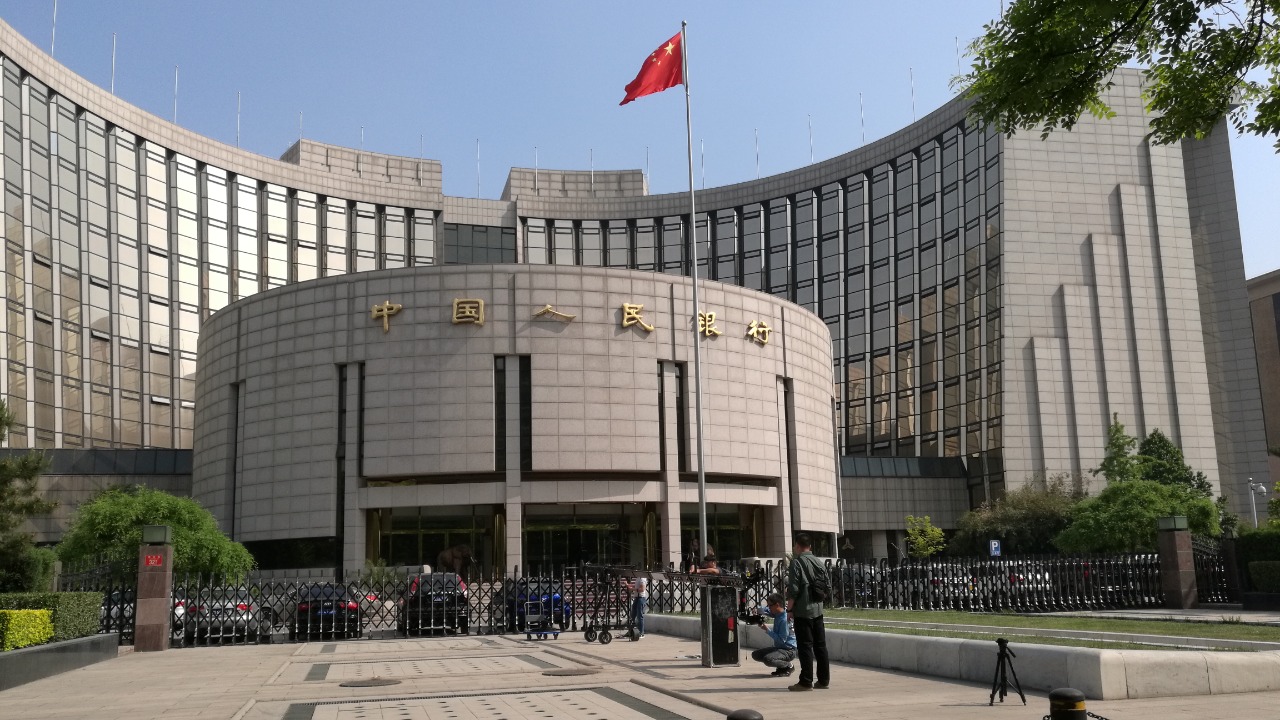
Nowhere are these constraints clearer than inside the People’s Bank of China, which is being asked to support growth, stabilize prices, and manage financial risks, all while households and firms resist its nudges. Analysts like Dennis Shen, Chair of the Scope Macroeconomic Council, argue that this combination of objectives and structural headwinds makes navigating China’s economic challenges a particularly difficult task for the PBOC. In his assessment, the central bank’s traditional levers, from reserve requirement cuts to open market operations, no longer deliver the same degree of effectiveness in an environment where private demand is structurally weaker, a point underscored in research on Dennis Shen and the Scope Macroeconomic Council.
The central bank’s recent behavior reflects that bind. The People’s Bank of China has released a slate of support measures amid a deepening economic slump, with People’s Bank of China Gov moves that include liquidity injections and guidance to banks on lending priorities, as described in coverage of China’s central bank support measures. Yet at the same time, China Maintains Key Interest Rates As Expected, with The People’s Bank of China keeping its benchmark lending rates unchanged even as inflation undershoots targets and growth slows, a stance detailed in reports on China Maintains Key Interest Rates As Expected and The People’s Bank of China. By holding the line on its main policy rates while tweaking other tools, the PBOC is signaling that it fears the side effects of aggressive easing, from capital outflows to renewed property speculation, even as it faces pressure to do more for growth.
Rates, lending, and the muted transmission to the real economy
One way to see how limited the central bank’s influence has become is to look at the China Prime Lending Rate and related benchmarks that are supposed to guide borrowing costs across the economy. Lending Rate in China remained anchored at levels that, on paper, should support credit expansion, with the Prime Lending Rate serving as a reference for banks as they price loans and manage the volume of credit they extend. Data on the China Prime Lending Rate and Banks Balance show that even as official rates stay low by historical standards, the transmission into stronger private borrowing is weak, a sign that risk aversion is overpowering the textbook mechanics of monetary easing.
That disconnect is feeding back into the broader slowdown. China’s economy is losing momentum amid a spending and investment slump, with China facing weaker retail demand, softer property investment, and slower trade-ins that are dragging on purchases of items like cars and appliances. Reports on how China’s economy loses momentum describe a pattern in which even generous dealer incentives and financing deals are not enough to overcome consumer caution. When households prefer to keep money in bank accounts rather than take advantage of low rates, the central bank’s benchmark settings become a less potent tool, and the burden shifts back to structural reforms and fiscal choices that lie beyond the PBOC’s direct control.
Beijing’s power meets bottom-up restraint
For decades, the story of China’s economy was one of top-down direction, with central planners and regulators steering credit, investment, and industrial policy. Today, that narrative is being rewritten by millions of small decisions to save, delay purchases, or pay down debt, choices that collectively put the squeeze on the all-powerful Chinese central government. Analysts note that Dec has become a symbolic moment in this shift, with Dec data on consumption and investment revealing how deeply the new caution has penetrated, and how even strong export performance cannot fully offset weak domestic demand, a tension highlighted in reporting that penny pinchers are putting the squeeze on the all-powerful Chinese central government.
In my view, this is less a temporary bout of stinginess than a referendum on the social contract that underpinned China’s rise. When families trust that jobs are secure, healthcare is affordable, and retirement is manageable, they are more willing to spend and borrow; when that trust erodes, they become the penny pinchers that no central bank can easily overrule. The People’s Bank of China can adjust benchmarks, the Ministry can refine its policy mix, and The International Monetary Fund can urge rebalancing, but unless households feel that the risks they face are being shared more fairly, the pressure from below will continue to limit what Beijing’s technocrats can achieve from above. For a system built on the assumption that policy can always bend behavior, that may be the most unsettling constraint of all.
More From TheDailyOverview

Grant Mercer covers market dynamics, business trends, and the economic forces driving growth across industries. His analysis connects macro movements with real-world implications for investors, entrepreneurs, and professionals. Through his work at The Daily Overview, Grant helps readers understand how markets function and where opportunities may emerge.