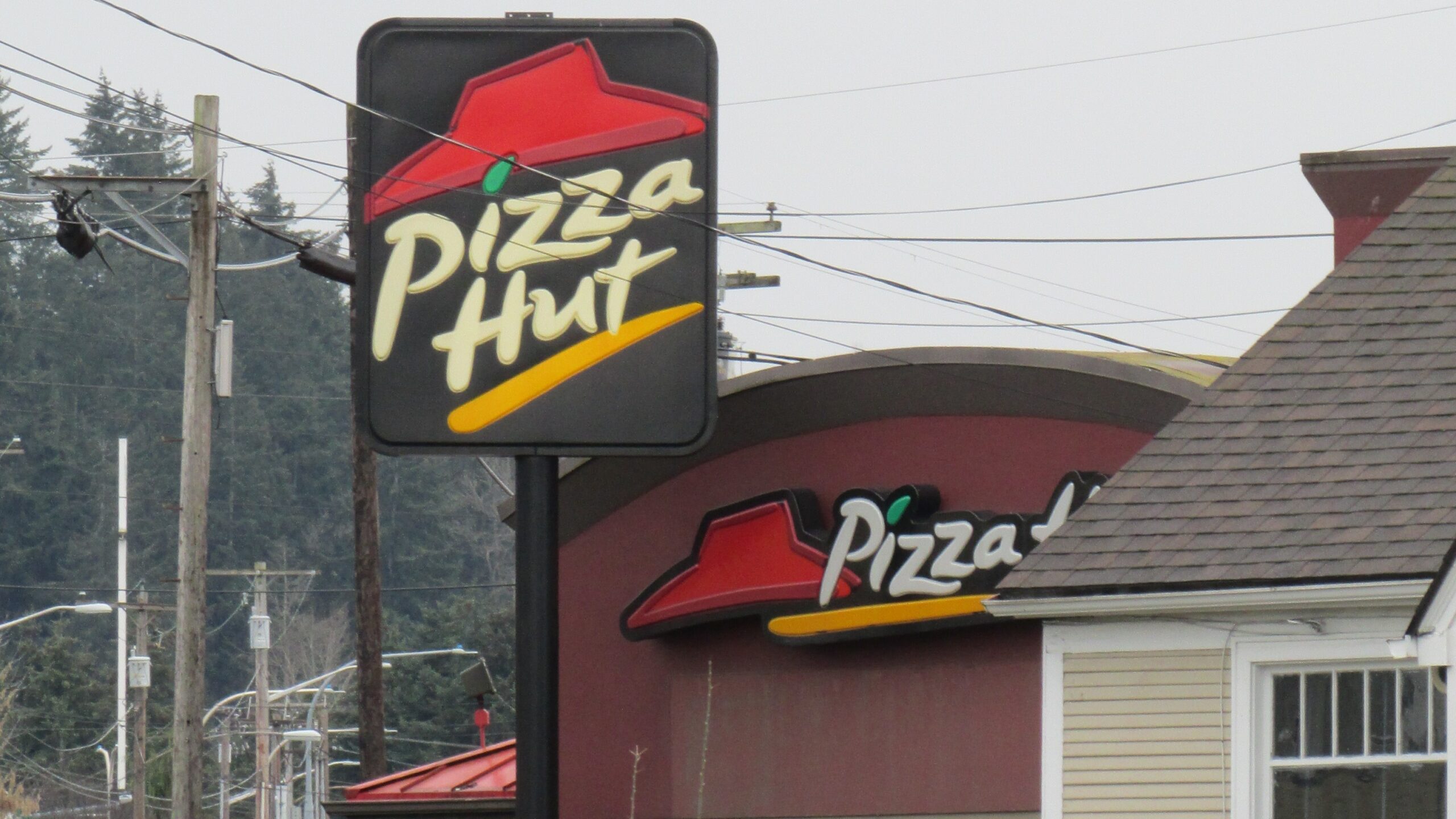
Pizza Hut is preparing to close a significant slice of its American footprint, with hundreds of restaurants set to go dark as its parent company reassesses the brand’s future. The move will hit underperforming locations first, particularly older dine-in stores that have struggled to keep pace with a delivery-driven market. For customers and workers alike, it marks a turning point for a chain that once defined the sit-down pizza experience in the United States.
At the center of the shake-up is a plan to shutter roughly 250 restaurants across the country, a sizable retrenchment for a company that still operates thousands of outlets nationwide. The closures are part of a broader strategic review by Yum Brands, which is trying to decide how much to invest in reviving Pizza Hut versus focusing on faster-growing concepts in its portfolio.
The scale of the closures and what Yum Brands is signaling
The parent company, Yum Brands, has confirmed that it intends to close about 250 underperforming Pizza Hut locations in the United States in the first part of this year, a move that underscores how much pressure the chain is under. Executives outlined the plan during an earnings call, indicating that the affected restaurants are dragging on profitability and that the company is no longer willing to carry weak stores indefinitely while it experiments with new formats. The closures will roll out across multiple states, but Yum Brands has not yet released a detailed list, leaving many franchisees and local communities waiting to see whether their neighborhood Hut is on the chopping block.
For a brand that still operates nearly 20,000 locations worldwide, trimming 250 U.S. stores may sound modest, yet it represents a clear signal that Yum is prepared to shrink Pizza Hut in order to stabilize it. Company leaders have described the chain as “struggling” and have launched a strategic review to determine how aggressively to remodel, refranchise, or even repurpose parts of the business. In that context, the closures look less like a one-off cost-cutting exercise and more like the first phase of a broader reset of what Pizza Hut is supposed to be in an era dominated by app-based ordering and rapid delivery.
Why Pizza Hut is hurting in a changing pizza market
Pizza Hut’s problems are not happening in a vacuum, they are unfolding in a fiercely competitive market where rivals have been quicker to adapt to digital habits and value-focused promotions. Analysts have noted that the chain has “consistently struggled” with same-store sales in the United States, even as some competitors have managed modest growth and, in some cases, stock gains of around 6% so far this year, according to recent reporting. The brand’s legacy dine-in model, once a family-night staple, has become a liability as more customers favor quick delivery or carryout from streamlined outlets with lower overhead.
At the same time, Pizza Hut has been outflanked on technology and menu innovation by chains that built their modern identity around digital ordering. One franchise operator has bluntly argued that its sales were “badly hit” because the company failed to modernize its menus or its app to keep up with rivals like Domino and Little Caesar’s. While Pizza Hut still leans on its long-running slogan that “no one out pizzas the Hut,” recent coverage has pointed out that, in some regions, the competition is clearly outselling it, especially where newer formats and aggressive deals have trained customers to expect fast, cheap, and frictionless pizza.
How many stores are closing and which locations are at risk
The headline figure is stark: Pizza Hut is set to shutter 250 underperforming locations across the country, with the process expected to be completed this year. Company representatives have emphasized that these are primarily low-volume restaurants that no longer justify their operating costs, often older dine-in units that require significant investment to modernize. While the closures will be spread across multiple regions, the lack of a public list has created uncertainty for employees and customers who are trying to gauge whether their local store will survive the cut.
Coverage of the decision has stressed that the chain is “closing hundreds of locations across the US” due to declining sales, a phrase that captures both the scale and the urgency of the retrenchment in broadcast segments and business briefings alike. Officials have confirmed during a recent earnings call that the closures were discussed on a Wednesday update to investors, but they stopped short of naming specific markets, saying only that the focus would be on restaurants that no longer fit the company’s long-term strategy. For now, the only certainty is that hundreds of communities will see a familiar red-roof brand disappear from their local strip malls and roadside corners.
Inside Yum Brands’ strategic review of Pizza Hut
Behind the closures sits a broader question for Yum Brands: what should Pizza Hut look like in five years, and is it worth the investment to get there. The company has launched a strategic review of the chain, describing it as a “struggling brand” and weighing how to balance store shutdowns with potential remodels and new delivery-focused formats, according to recent analysis. Executives have framed the 250 closures as a way to clear out dead weight so that capital and attention can be redirected to markets where the brand still has strong recognition and room to grow.
Some observers see the move as part of a longer arc in which Yum has gradually nudged Pizza Hut away from its dine-in heritage and toward a leaner, delivery-first model that resembles its fastest-growing rivals. Reports describe the chain as “one of the biggest names” in American casual dining that has had a rough few years, with the last several particularly difficult as consumer habits shifted and inflation squeezed discretionary spending, a trend highlighted in recent coverage. Whether the current review leads to a more radical repositioning, such as accelerated franchising or a sharper focus on international markets, will depend on how the brand performs once the weakest U.S. stores are off the books.
What this means for workers, customers, and the broader pizza wars
For workers, the closures translate into a wave of uncertainty and likely job losses, even if some employees are able to transfer to nearby locations that remain open. While Pizza Hut and Yum Brands have not provided a precise headcount of affected staff, each full-service restaurant typically employs dozens of people across kitchen, delivery, and front-of-house roles, which means the impact of shutting 250 outlets will ripple through local labor markets. Customers, meanwhile, will see their options narrow in some towns, particularly in suburbs and smaller cities where Pizza Hut has long been one of only a handful of national chains with a physical presence.
The closures also sharpen the competitive contrast with chains that have leaned hard into technology and delivery logistics. Rivals like Domino’s have spent years refining their ordering apps, driver tracking, and carryout incentives, while Pizza Hut has often seemed caught between preserving its dine-in identity and chasing the digital-first crowd. Coverage of the current retrenchment has noted that “While Pizza Hut” still trades on nostalgia and its Hut-shaped branding, the reality is that in some areas the competition is outselling it, especially after a wave of new store openings in Europe in October 2025, as detailed in recent reports. As Yum Brands and Pizza Hut navigate this reset, the question is not just how many restaurants close, but whether the chain can reinvent itself quickly enough to stay relevant in a pizza market that increasingly rewards speed, simplicity, and digital convenience.
More From The Daily Overview
*This article was researched with the help of AI, with human editors creating the final content.

Grant Mercer covers market dynamics, business trends, and the economic forces driving growth across industries. His analysis connects macro movements with real-world implications for investors, entrepreneurs, and professionals. Through his work at The Daily Overview, Grant helps readers understand how markets function and where opportunities may emerge.

