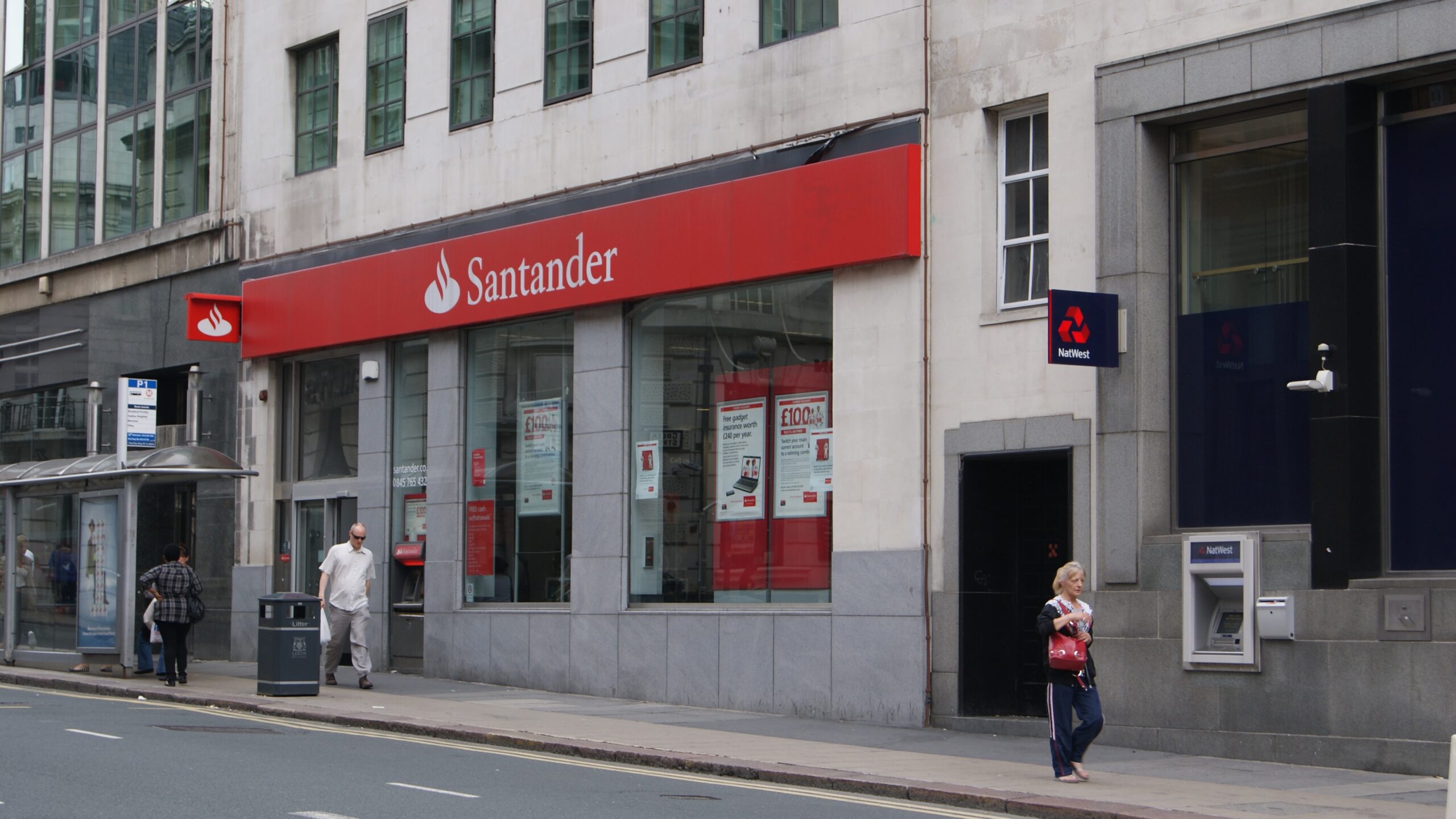
Santander is betting that a $12 billion push deeper into U.S. retail banking can be both cheap and transformative, telling investors it will pay less than seven times earnings for Webster Financial and still lift returns. The valuation claim has jarred a market used to richer multiples for healthy regional lenders, especially when cross‑border deals often come with hefty integration costs. I see the surprise as a sign of how aggressively the Spanish group is repositioning itself toward the United States, even as skeptics question whether the numbers will hold once the dust settles.
The transaction, framed as a $12.2 billion acquisition of Webster Bank, gives Santander a rare chance to bulk up in a stable New England franchise at a price it insists is disciplined. If the bank can deliver the promised earnings accretion and capital discipline, the deal could reset expectations for what a global player is willing to pay for U.S. scale. If not, it risks becoming another cautionary tale about ambitious foreign buyers overpromising on American soil.
Inside the $12.2 billion Webster bet
At the core of the story is a straightforward but sizable purchase: Banco Santander has agreed to acquire Webster Bank in a transaction valued at $12.2 billion, folding the Connecticut‑based lender into its U.S. operations. The buyer describes the move as a way to create a stronger and more competitive bank for customers in a market it already knows, with the official announcement from Madrid and Boston presenting the combination as a logical next step in its North American strategy. In that statement, Banco Santander casts the deal as a disciplined deployment of capital rather than a trophy purchase.
On the other side of the table, Webster Financial Corporation, the holding company for Webster Bank, N.A., has told investors it is entering into a merger agreement with Banco Santander S.A. for $12.3 billion, a figure that reflects the equity value Webster’s board believes the franchise can command. In its own release from STAMFORD, Conn, the company, listed on the NYSE as WBS, emphasized that the transaction was announced through BUSINESS WIRE and endorsed by its leadership, including the Chairman & CEO of Webster Financial Corporation. The slight difference between the $12.2 billion and $12.3 billion figures reflects standard deal‑math nuances, but both sides are aligned on the scale of the bet.
Why under 7x earnings is raising eyebrows
The headline that has grabbed investors is Santander’s assertion that the U.S. bank purchase will cost less than seven times earnings, a multiple that would sit at the low end of recent deals for profitable regionals. In communications around the transaction, Santander has been explicit that it sees the price as attractive relative to Webster’s earnings power, effectively telling the market it has found a bargain in a sector where clean franchises rarely come cheap. That framing is central to the bank’s pitch that the deal will be accretive to earnings and returns without stretching its balance sheet.
Yet the market reaction has been more cautious, with some investors signaling skepticism that the sub‑7x claim fully captures integration costs, potential credit normalization, and the capital needed to harmonize risk systems. Commentary around the transaction notes that while Santander is confident enough to repeat the valuation message without any apology or pullback, traders are not rushing to re‑rate the stock on the promise alone. I read that gap as a reminder that in banking, cheap on paper is not always cheap once regulators, technology integration, and funding costs are fully priced in.
Ana Botin’s U.S. push and the Webster franchise
The acquisition also needs to be seen in the context of Ana Botin’s broader dealmaking blitz, which has reshaped Santander’s footprint across Europe and the Americas. Reporting on the strategy notes that the Webster Financial Corp purchase is the largest yet in a recent run of transactions, giving the group a more substantial presence in the UK and now the US as part of a deliberate pivot toward scale markets. In that narrative, the Webster move is not an isolated gamble but the capstone of a campaign that Ana Botin has been driving from the top.
For Webster itself, the deal marks the end of a long run as the Largest CT‑based lender, a bank that saw remarkable growth in the 1990s and built a strong regional identity. Local coverage has framed the sale as the moment when the largest CT franchise is absorbed by a Spanish banking giant, raising questions about how much of its community‑banking culture will survive under new ownership. Those concerns sit alongside more practical questions about products and branches for customers of the Largest CT lender, as well as estate‑planning themes captured in features such as Should You Leave Assets to the next generation through local banks or larger global groups.
Strategic logic: U.S. returns, step change in scale
Santander is not shy about the financial targets it is attaching to the Webster deal, telling investors that acquiring Webster Bank should allow the group to achieve an 18% RoTE in the U.S. by 2028 while creating a stronger, more competitive bank for customers. In its Madrid/Boston communication, Santander positions the transaction as the missing piece that lets its U.S. arm operate at a scale where returns can match or exceed those in its home market. That ambition is central to the bank’s argument that paying a double‑digit billion sum at a modest earnings multiple is not only defensible but necessary.
Executives in the United States are echoing that message. Christiana Riley, the Santander U.S. CEO, has described the pending acquisition as the final step change needed for U.S. growth, signaling that management sees Webster as the bridge from a mid‑tier presence to a truly national platform. In her view, the combination should unlock efficiencies and revenue opportunities that justify both the price tag and the integration risk, with the closing targeted for the second half of 2026 according to Christiana Riley. I see that framing as a reminder that for Santander, this is as much about strategic positioning as it is about near‑term earnings per share.
Funding the deal: buybacks, capital and investor nerves
One reason the valuation claim has drawn scrutiny is the way Santander is choosing to fund the transaction while also returning capital to shareholders. The bank has announced a €5 billion share buyback alongside the U.S. acquisition, signaling confidence in its capital position even as it commits to a large cross‑border purchase. Reporting from London notes that the Spanish banking giant, described simply as Spanish Santander, is pressing ahead with both moves, a combination that can reassure some investors while unnerving others who worry about capital buffers.
Structurally, the transaction is being documented as a classic cross‑border bank acquisition, with law firm materials describing the Banco Santander $12.2 billion acquisition of Webster Bank as a deal that will bring a range of services to individuals, families and partners once completed. Those legal summaries underscore that Banco Santander is committing not just capital but also operational resources to integrate Webster’s franchise into its broader network. For equity holders, the key question is whether the promised sub‑7x earnings multiple and 18% U.S. RoTE can survive the inevitable friction of merging systems, cultures and regulatory expectations on both sides of the Atlantic.
More From The Daily Overview
*This article was researched with the help of AI, with human editors creating the final content.

Grant Mercer covers market dynamics, business trends, and the economic forces driving growth across industries. His analysis connects macro movements with real-world implications for investors, entrepreneurs, and professionals. Through his work at The Daily Overview, Grant helps readers understand how markets function and where opportunities may emerge.

