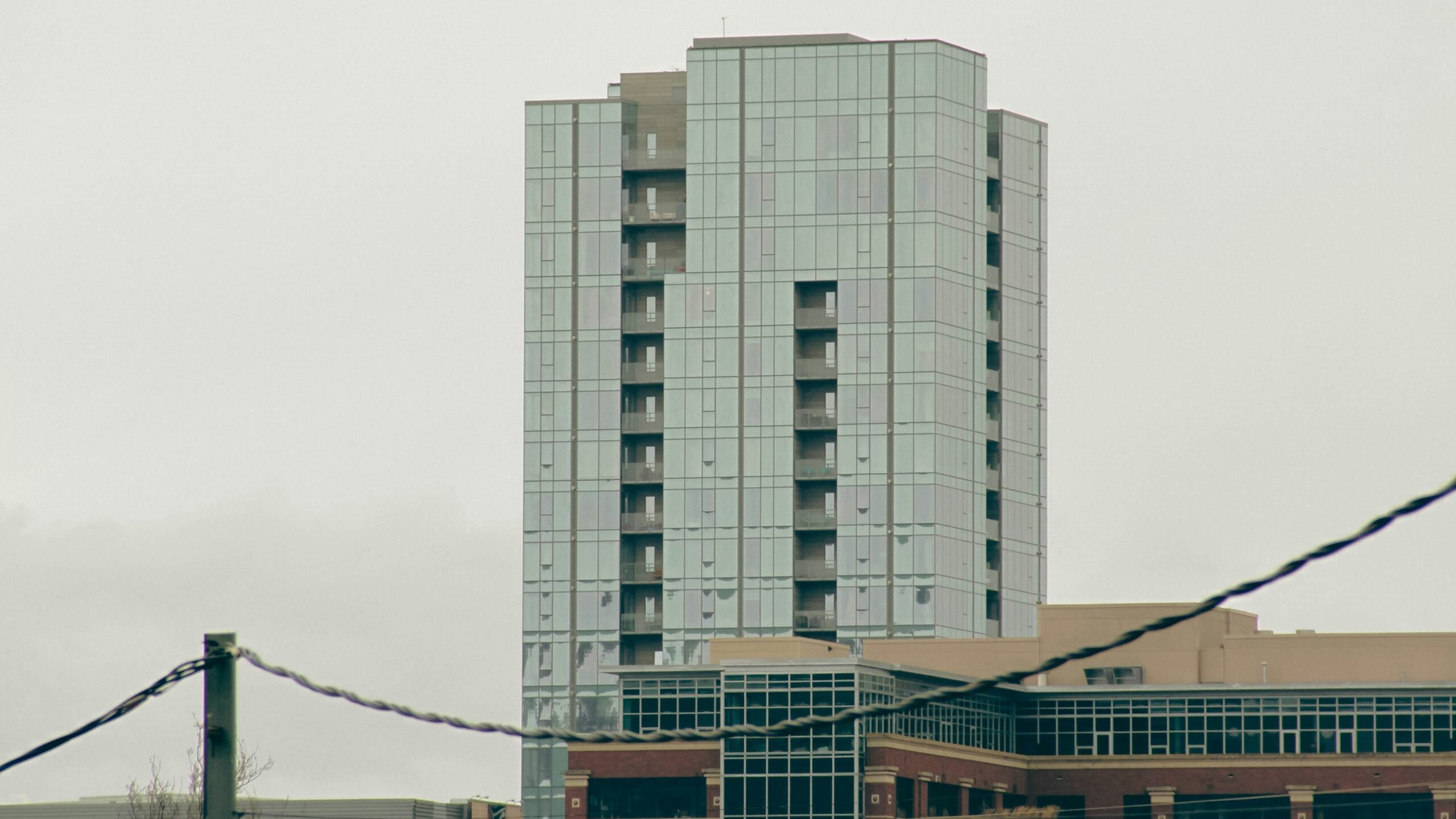
Portland’s skyline was built on the assumption that office workers would keep streaming into Downtown five days a week. That bet has gone bad. Values on some of the city’s most recognizable towers have collapsed, vacancy has surged to record levels, and the financial shock is rippling through everything from city services to neighborhood small businesses.
The wipeout is not just about a soft market or a cyclical downturn. It is a structural reset driven by remote work, safety concerns, and investor skepticism that is forcing owners, lenders, and local leaders to rethink what these buildings are even for.
The numbers behind Portland’s office freefall
By early 2026, the scale of the damage in Portland’s office market is visible in almost every data point that matters. The Portland office vacancy rate has climbed to a historic high of 27.3%, a level that would have been unthinkable when these towers were financed and built. In the same period, Downtown buildings have changed hands at discounts as deep as 86% from prior valuations, a sign that the market is repricing not just individual assets but the entire idea of central business district office space. Landlords, desperate to fill floors, are dangling tenant improvement packages of up to $60 per sq foot, with some deals simply described as $60 a square foot in concessions.
Behind those numbers is a broader economic story. Before the pandemic, Downtown was the beating heart of the region’s economy, but as office workers shifted to online employment the core became depopulated and the positive trends that had defined the previous decade were abruptly reversed, as detailed in a business trends analysis. Compounding the distress were public safety concerns and policy shifts, including the decriminalization of hard drugs in September 2024, that undermined years of work to make the central city feel inviting. Investors have noticed: a recent survey of real estate professionals found they still prefer nearly any other city to Portland for office investment.
Iconic towers, fire-sale prices
The most dramatic sign of the reset is that Portland’s best known buildings are no longer priced like blue-chip assets. The U.S. Bancorp Tower, long marketed as a premier address in Portland, Ore., is now more than half empty and has been put up for sale, a stunning reversal captured in a report on Portland, Ore. The same tower, now widely referred to as Bancorp Tower or “Big Pink,” has been cited as emblematic of a market where even the largest and most visible properties cannot escape the downturn, with analysts noting that Bancorp Tower and PacWest were listed for sale in the same week at sharply reduced expectations in a market report.
Other landmarks have already traded at prices that would have been dismissed as fantasy only a few years ago. Deeply discounted office tower sales, including some of the most recognizable buildings in Portland’s core, have been chronicled in detail in coverage of steep value losses. One of the most striking examples is the sale of Big Pink itself: the former U.S. Bancorp Tower was acquired in July 2025 by Jeff Swickard of $45 m, with the same transaction described as a $45 million all cash deal in a separate $45 million account, a fraction of what such a tower would have commanded at the peak.
From fire sales to fiscal fallout
These deals are not isolated bargains for opportunistic buyers, they are part of a wave of fire sales that is eroding the tax base that funds basic services. Analysts have warned that Downtown’s plunging real estate values will hasten millions in property tax losses, with one detailed look at Downtown warning that the gap between pre pandemic assessments and current sale prices will translate directly into fewer dollars for schools, parks, and public safety. Another examination of the same trend noted that the invisible hand of the free market is still boxing Portland’s office sector, with plunging sale prices expected to mean millions less for city services in the years ahead.
Those fiscal pressures are magnified by how far values have fallen from their pre pandemic peaks. One analysis of recent trades highlighted that the plunging real estate prices are not just paper losses but are being locked in by actual transactions, including a tower that once sold for $425 million and is now being valued far lower, a shift documented in a closer look at $425 million. Separate reporting on Portland Downtown Office Building Sells at a steep markdown described how one prominent property changed hands at a huge discount from its prior purchase price, a pattern that Brian Owendoff framed as part of a broader reset rather than a one off anomaly.
Why investors are fleeing Portland’s core
Behind the spreadsheets and sale notices is a crisis of confidence in Portland itself. A detailed account of how the pandemic reversed earlier gains in the central city describes how the heart of downtown became depopulated as office workers stayed home, and how that vacuum was filled by visible homelessness and open drug use after the legalization of hard drugs in September 2024, a shift chronicled in the Bringing Portland Back report. Compounding the area’s distress were protests, vandalism, and a perception that the city had lost control of its streets, all of which made it harder to lure workers and tenants back.
Investors have responded with their feet and their capital. The latest survey of real estate investors and industry professionals found that they still prefer nearly any other city to Portland for office deals, a damning verdict for a market that once pitched itself as a West Coast value play. Another assessment of the same trend noted that the invisible hand of the free market is not done punishing Portland, with the city’s office market singled out as having had a particularly bruising year that will translate into millions less for city services.
Big Pink and the search for a bottom
Even in this bleak environment, some buyers see opportunity in the rubble. The acquisition of Big Pink by Jeff Swickard of Swickard Group for $45 m, and the framing of that $45 million price as one of the most dramatic markdowns in Portland’s office market history, has been held up as a potential turning point in a detailed leasing brief. A separate video segment on the sale argued that this could be the beginning of a recovery, with local voices describing Portland’s iconic Big Pink as a test case for whether creative repositioning can bring workers and visitors back, a hope captured in coverage of Jun.
Other deals suggest that local players are willing to bet on a long term rebound, even if the near term looks grim. The complex at 2701 N.W. Vaughn St sold to Menashe Properties, the local company operated by the Menashe real estate family, in a transaction that underscored how hometown investors still see value in well located assets, as detailed in a report on Vaughn St. That same account of four major tower trades framed the purchases by Menashe Properties and other buyers as part of a broader reset in which new owners with lower cost bases can afford to experiment with conversions, amenities, and mixed use concepts that were hard to pencil out when values were higher, a point reinforced in a follow up on Menashe.
More From The Daily Overview
*This article was researched with the help of AI, with human editors creating the final content.

Elias Broderick specializes in residential and commercial real estate, with a focus on market cycles, property fundamentals, and investment strategy. His writing translates complex housing and development trends into clear insights for both new and experienced investors. At The Daily Overview, Elias explores how real estate fits into long-term wealth planning.

