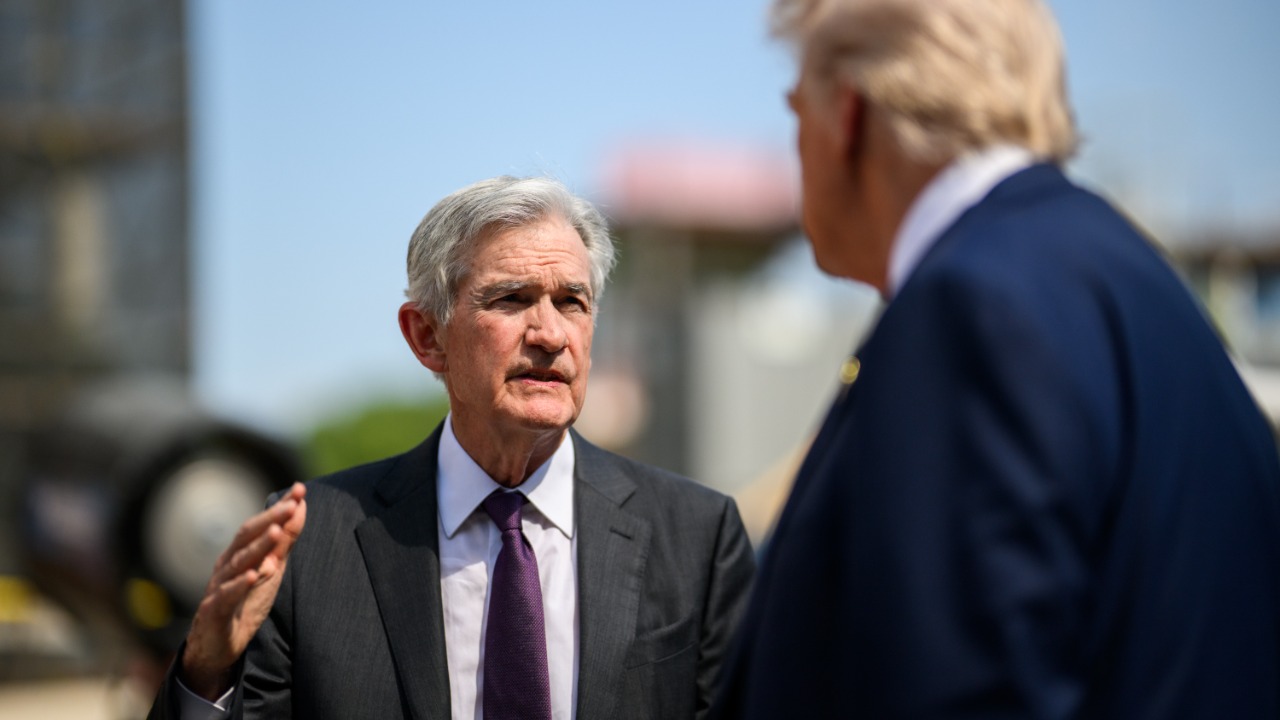
Federal Reserve Chair Jerome Powell has now said out loud what many economists have argued for years: the recent burst of inflation was largely made in Washington, driven by President Donald Trump’s tariffs rather than by an overheated labor market or runaway consumer demand. His assessment reframes one of the most contentious economic debates of the Trump era, turning trade policy itself into a prime suspect in the inflation overshoot that rattled households and markets. It also raises pointed questions about how the White House will balance its protectionist instincts with the Fed’s effort to keep prices under control.
Powell’s blunt verdict on tariffs and the inflation overshoot
When Jerome Powell attributes the inflation spike to Trump’s trade war, he is not speaking in code. He has said directly that the overshoot in prices was driven “really” by tariffs, a clear break from the idea that the problem stemmed mainly from wage pressures or excess stimulus. In recent remarks, he tied the run-up in consumer costs to the Trump administration’s broad duties on imported goods, arguing that these levies filtered quickly into what families pay at the store and what companies charge their customers, a view echoed in coverage that highlighted how the Fed chair linked the inflation overshoot to Trump tariffs. By singling out trade policy, Powell effectively shifted blame away from the Fed’s own rate decisions and toward the structural price shock created when the United States taxed a wide range of imports.
Powell’s language has been especially sharp in describing how these levies fed into the data the Fed watches. He has argued that the central bank’s preferred inflation gauges were pushed above target by a one-time jump in prices tied to tariffs, not by a sustained overheating of the economy. In live commentary on the latest policy move, he underscored that “it is really tariffs that are causing most of the inflation overshoot,” a line that came as officials announced another rate cut and analysts pored over images of stacked Cargo containers at ports as a visual shorthand for the trade shock. That framing matters, because it suggests the Fed sees the worst of the tariff-driven surge as temporary, even if the political appetite for those tariffs remains strong inside the Trump administration.
How Trump’s trade war filtered into everyday prices
To understand why Powell is so focused on tariffs, it helps to trace how Trump’s trade war rippled through the economy. Tariffs function as a tax on imports, and when the White House imposed broad duties on goods from major trading partners, companies that rely on foreign inputs faced higher costs almost overnight. Many of those firms responded by raising sticker prices on everything from washing machines to construction materials, a pattern that Powell has described as a one-time price level shift rather than a classic wage-price spiral. In his discussion of the inflation data, he has pointed to an “overcount” in the way official statistics captured these tariff effects, arguing that the spike looked more persistent on paper than it truly was, even as Job seekers navigated a labor market that remained relatively resilient.
Powell’s diagnosis lines up with the experience of businesses that saw their input costs jump as soon as the tariffs hit. Retailers and manufacturers that import components or finished goods had to decide whether to absorb the hit or pass it along, and many chose the latter, especially in sectors with limited competition or tight supply chains. Analysts tracking the Fed’s December decision have noted that inflation “ticked up” in ways that were hard to square with underlying demand, reinforcing Powell’s view that the tariffs, not domestic overheating, were doing most of the work. In one live blog, the central bank’s commentary was interspersed with time-stamped updates, including a reference to coverage ending “14 hr 33 m ago,” a reminder of how closely markets were watching each signal from Powell as he explained why tariffs were responsible for most of the overshoot.
The Fed’s policy pivot and what it signals about future inflation
Powell’s tariff critique is not just an academic exercise, it is shaping how the Fed sets interest rates. By treating the inflation burst as a largely tariff-driven, one-off shock, the central bank has felt more comfortable cutting rates even while headline price measures remain above its formal target. Officials have now lowered borrowing costs for the third meeting in a row, a sequence that would be harder to justify if they believed domestic demand alone was to blame. In detailed coverage of the decision, Powell’s comments about tariffs were paired with images of port traffic and discussions of how inflation had “ticked up” earlier in the year, reinforcing the idea that the Fed sees the trade war as the main culprit behind the Inflation Heat Has Been Caused by Tariffs, Powell Says.
At the same time, Powell has been careful to stress that the Fed cannot simply ignore higher prices, even if they stem from policy choices outside its control. He has described a delicate balancing act in which the central bank must support growth without validating a new, higher inflation norm. That is why he has framed the tariff impact as a “one-time price increase” rather than a permanent shift in inflation expectations, signaling that the Fed expects the effect to fade if trade tensions ease or if businesses finish repricing their goods. Yet as long as the Trump administration keeps tariffs in place, companies may continue to adjust, and some are “now implementing price increases” that could prove sticky, a dynamic highlighted in analysis of how inflation is running hot because of Trump’s tariffs even as markets look ahead to the next move from NETFLIX, INC and JPMORGAN.
Political crosscurrents: Trump, Powell and the next Fed chair
Powell’s willingness to link high inflation to Trump’s tariffs lands in the middle of a sensitive political moment, as the president weighs whether to keep him in the job. Trump has never been shy about criticizing the Fed, and he has publicly toyed with the idea of replacing Powell even while his current term as chair runs into next year. Reporting on the succession race has highlighted that Kevin Hassett, who held two roles in the first Trump administration before joining a private-equity firm started by Trump’s son, is now a leading contender, with some allies pressing the president to install him once Powell’s term expires rather than allowing the incumbent to stay on past May. That backdrop makes Powell’s tariff critique even more striking, because it implicitly challenges one of Trump’s signature economic policies at the very moment his future at the Fed is under review.
Powell, for his part, has tried to stay above the political fray, insisting that he is focused on the job rather than on who might succeed him. When asked directly about Trump’s search for a new Fed leader, he declined to weigh in, saying he was concentrating on his responsibilities as Fed Reserve Chair Jerome Powell and leaving personnel decisions to the White House. Coverage of that exchange noted that Trump has at times called him a “stiff,” and that the president has floated names like Fed board Governor Kevin Warsh as possible replacements, even as Powell emphasized that he would not comment on potential successors Trump eyes. Against that backdrop, his decision to pin much of the inflation problem on Trump’s tariffs reads as a technocrat’s judgment, but it also underscores the growing distance between the Fed’s diagnosis and the president’s preferred narrative of economic success.
Economic and political stakes of blaming tariffs for inflation
By placing tariffs at the center of the inflation story, Powell is forcing a broader reckoning with the costs of Trump’s trade agenda. For years, the White House has argued that duties on foreign goods would revive domestic manufacturing and strengthen America’s bargaining position abroad, while downplaying the impact on consumer prices. Powell’s comments cut against that storyline, suggesting that the tariffs functioned less as a growth strategy and more as a tax on households, particularly lower and middle income families that spend a larger share of their budgets on imported goods. Local coverage of his remarks has filtered into communities far from Wall Street, including in places like Everything Kalamazoo, where listeners tuning in on 590 AM and 106.9 FM heard how the Fed chair linked the inflation overshoot to Trump’s trade policy and what that means for their cost of living.
The political implications are just as significant. If voters come to see tariffs as a driver of higher prices rather than a shield against foreign competition, Trump may face pressure to recalibrate his approach, especially from swing state consumers who have felt the pinch at the grocery store and the car dealership. At the same time, Powell’s framing gives the Fed a clearer rationale for its recent rate cuts, portraying them as a response to a policy-induced shock rather than a sign of panic about the underlying economy. As I weigh his comments, I see a central bank trying to reassert its independence by telling a hard truth about the trade war, even as it navigates a fraught relationship with a president who prizes loyalty and has shown he is willing to reshape the Fed’s leadership to suit his own December Fed narrative.
More From TheDailyOverview

Grant Mercer covers market dynamics, business trends, and the economic forces driving growth across industries. His analysis connects macro movements with real-world implications for investors, entrepreneurs, and professionals. Through his work at The Daily Overview, Grant helps readers understand how markets function and where opportunities may emerge.

