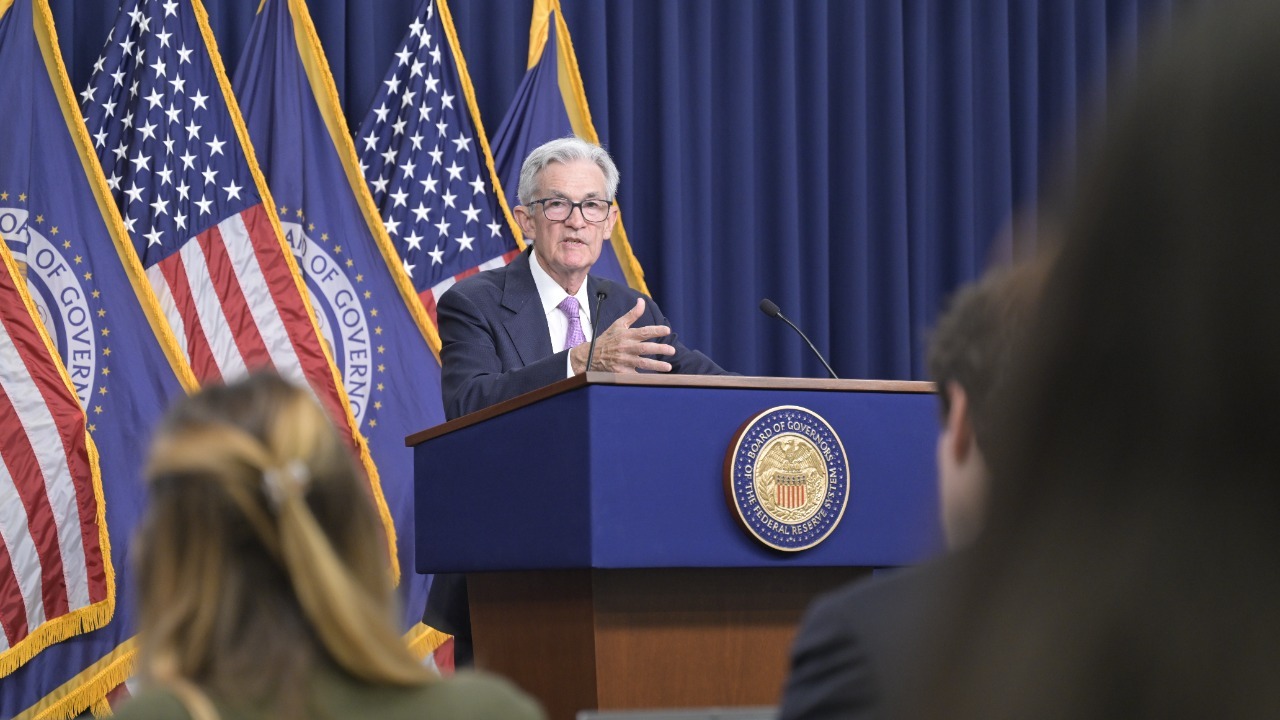
When the chair of the Federal Reserve chooses his words carefully, Wall Street listens for what is said and what is implied between the lines. In recent months, Jerome Powell has used six deceptively simple words to signal that the era of easy gains and forgiving valuations may be ending, and that message cuts straight to the market’s deepest fear: that the Fed is no longer inclined to shield investors from the consequences of expensive stocks.
Those six words land in a market already priced for perfection, where equity benchmarks sit at rich multiples and investors have grown accustomed to central bank support. By unpacking what Powell said, when he said it, and how it fits into the Fed’s broader view of financial conditions, I see a clear warning that the balance of risk has shifted from inflation to asset prices themselves.
Powell’s six words, and why they matter
The phrase that has rattled traders is simple: “Stocks have become expensive.” Fed Chief Jerome Powell used those six words in a broader warning that, even against a backdrop of solid growth and resilient corporate earnings, the market’s pricing had run ahead of fundamentals. In a climate where investors have long assumed the central bank would tolerate lofty valuations as long as inflation stayed contained, hearing the Fed’s top official say outright that stocks have become expensive is a psychological shock.
That remark came as Powell, in late September, was described as speaking against an “Amid this positive backdrop, though, trouble could be brewing” setting, underscoring that the concern was not about an imminent recession but about what happens when optimism collides with stretched prices. In that context, his six-word assessment that Stocks have become expensive functions as a direct challenge to the belief that the Fed will always look past asset prices as long as the real economy appears healthy.
“Equity prices are fairly highly valued”
Powell’s six-word warning did not come out of nowhere. Earlier in the autumn, he cautioned that “equity prices are fairly highly valued” by many measures, a pointed observation for a Fed chair who usually avoids commenting directly on the stock market. That remark, delivered on Oct 13, 2025, signaled that the central bank was not blind to the run-up in share prices and was willing to say so publicly even as indexes hovered near record levels.
In the same discussion on Oct 13, 2025, Powell did not spell out which valuation metrics he had in mind, but he did note that the S&P 500 was trading at a multiple that stood out relative to history. The same reporting highlighted that the index was priced at 22.8 times forward earnings, a level that leaves little room for disappointment if growth slows or margins compress. When the Fed chair links “fairly highly valued” equity prices with such a rich multiple, it reinforces the idea that the central bank sees valuation risk as part of the macro picture, not a sideshow.
How the Fed now talks about financial conditions
Behind the headline-grabbing six words is a more technical shift in how Powell describes the Fed’s job. He has emphasized that policymakers “do look at overall financial conditions” and ask whether their decisions are affecting those conditions in the way they intend. That language matters because financial conditions are a broad concept that includes stock prices, credit spreads, bond yields, and the dollar, not just the policy rate.
In remarks reported on Oct 10, 2025, Powell’s comment that “We do look at overall financial conditions, and we ask ourselves whether our policies are affecting financial conditions in the way that we intend” made clear that equity markets are part of the transmission mechanism the Fed monitors. That same Oct 10, 2025 framing, captured in coverage that dissected his “word analysis of equity markets,” shows that when the Fed chair talks about financial conditions, he is implicitly talking about how far and how fast asset prices have moved, a point underscored in detailed accounts of his comments on overall financial conditions.
Inflation, jobs, and the new tension at the Fed
Powell’s warnings about expensive stocks are intertwined with a more fundamental dilemma facing the central bank. In his press conference ahead of the late October policy decision, he acknowledged that “In the near term, risks to inflation are tilted to the upside and risks to employment to the downside,” a concise description of the trade-off the Fed is now managing. That tension between the inflation mandate and the employment mandate leaves less room for the kind of aggressive easing that once buoyed markets at the first sign of trouble.
By highlighting that “In the near term, risks to inflation are tilted to the upside and risks to employment to the downside, a challenging situation that underscores the tension between our employment and inflation goals,” Powell signaled that the Fed cannot simply cut rates to rescue asset prices without thinking about the impact on prices at the grocery store and the job market. The official transcript dated Oct 28, 2025, shows how explicitly he framed this dilemma, and the wording in the press conference makes clear that the Fed sees itself pulled in two directions at once, with little appetite to add a third priority of propping up stretched equity valuations.
Why these words terrify Wall Street and Americans
For investors, the scariest part of Powell’s six-word verdict is not the adjective “expensive” but the implication that the Fed is willing to let markets correct if that is what it takes to keep broader financial conditions aligned with its goals. Earlier in the month, commentary on his stance noted that Powell is not alone in cautioning Wall Street, investors, and everyday Americans about the risks that build when asset prices detach from underlying earnings and cash flows. That broader chorus suggests a growing consensus that the safety net under stocks is thinner than it used to be.
Reporting from Oct 3, 2025, captured how “For what it’s worth, Powell isn’t alone in cautioning Wall Street, investors, and everyday Americans about potentially” painful outcomes if valuations stay elevated and then mean-revert. The same analysis linked Powell’s warning to historical episodes where high starting valuations led to years of subpar returns, and it framed his comments as part of a wider debate about how technology, globalization, and the proliferation of the internet have changed market dynamics. By placing Powell’s caution in that context, the coverage of Wall Street, investors, and everyday Americans underscored why his six words resonate far beyond trading desks.
From quiet hints to explicit valuation warnings
What makes this moment different is how explicit Powell has become. For much of his tenure, he avoided direct commentary on equity levels, preferring to speak in generalities about financial stability. That pattern shifted when, as one account put it, “While Powell typically avoids making direct remarks on equities, he was rather candid in his response.” The six words that followed, “equity prices are fairly highly valued,” left little doubt that the Fed chair sees valuations as stretched.
The report dated Nov 21, 2025, described how “While Powell typically avoids making direct remarks on equities, he was rather candid in his response. The six words of ‘equity prices are fairly highly valued’” crystallized what many portfolio managers had been whispering privately. By putting that assessment on the record, Powell effectively validated the concern that the market had priced in a best-case scenario for growth, inflation, and policy. The same coverage of While Powell underscored that his bluntness was unusual, which is precisely why markets took notice.
What Powell’s language means for the next market cycle
When a Fed chair starts talking openly about expensive stocks and highly valued equity prices, it is a signal that the central bank is less likely to respond to every market wobble with easier policy. In practical terms, that could mean a longer period of higher rates, more volatility as investors adjust to a world where multiples matter again, and a greater focus on company-level fundamentals instead of broad index momentum. For traders who built strategies around the assumption of a quick Fed pivot at the first sign of stress, Powell’s words suggest that assumption is now out of date.
That shift is reinforced by the way his comments on Oct 10, 2025, were interpreted as driving “a dagger through the stock market’s heart,” precisely because they linked policy decisions to the behavior of asset prices. The detailed breakdown of his remark that “We do look at overall financial conditions” in the context of equity valuations, captured in analysis of whether he would “dare utter” such a phrase, shows how sensitive markets are to any hint that the Fed might welcome tighter conditions if they help cool inflation or speculative excess. The coverage of his Oct 10, 2025 comments on overall financial conditions makes clear that investors now have to factor the Fed’s view of valuations into their playbook, not just its forecast for the policy rate.
How investors can read between Powell’s lines
For individual investors and institutions alike, the lesson in Powell’s six words is not to panic, but to recalibrate expectations. A market priced at 22.8 times forward earnings, with the Fed openly describing equity prices as fairly highly valued, is unlikely to deliver the kind of double-digit annual returns that characterized earlier phases of the cycle. Instead, I expect a more uneven path where sectors with durable cash flows and reasonable valuations, such as certain industrials or cash-generative software names, may fare better than speculative corners that thrived on cheap money.
History suggests that when central banks start talking about asset prices in the same breath as inflation and employment, they are preparing markets for a period in which policy will not automatically cushion every drawdown. Powell’s choice to say that stocks have become expensive, to stress that equity prices are fairly highly valued, and to frame risks to inflation and employment as pulling in opposite directions, all point to a Fed that is more focused on long-term stability than on short-term market comfort. For Wall Street, the fear is that this time the warning is real, and that the six words investors hoped never to hear from a Fed chair are now part of the official script.
More From TheDailyOverview
- Dave Ramsey warns to stop 401(k) contributions
- 11 night jobs you can do from home (not exciting but steady)
- Small U.S. cities ready to boom next
- 19 things boomers should never sell no matter what

Grant Mercer covers market dynamics, business trends, and the economic forces driving growth across industries. His analysis connects macro movements with real-world implications for investors, entrepreneurs, and professionals. Through his work at The Daily Overview, Grant helps readers understand how markets function and where opportunities may emerge.

