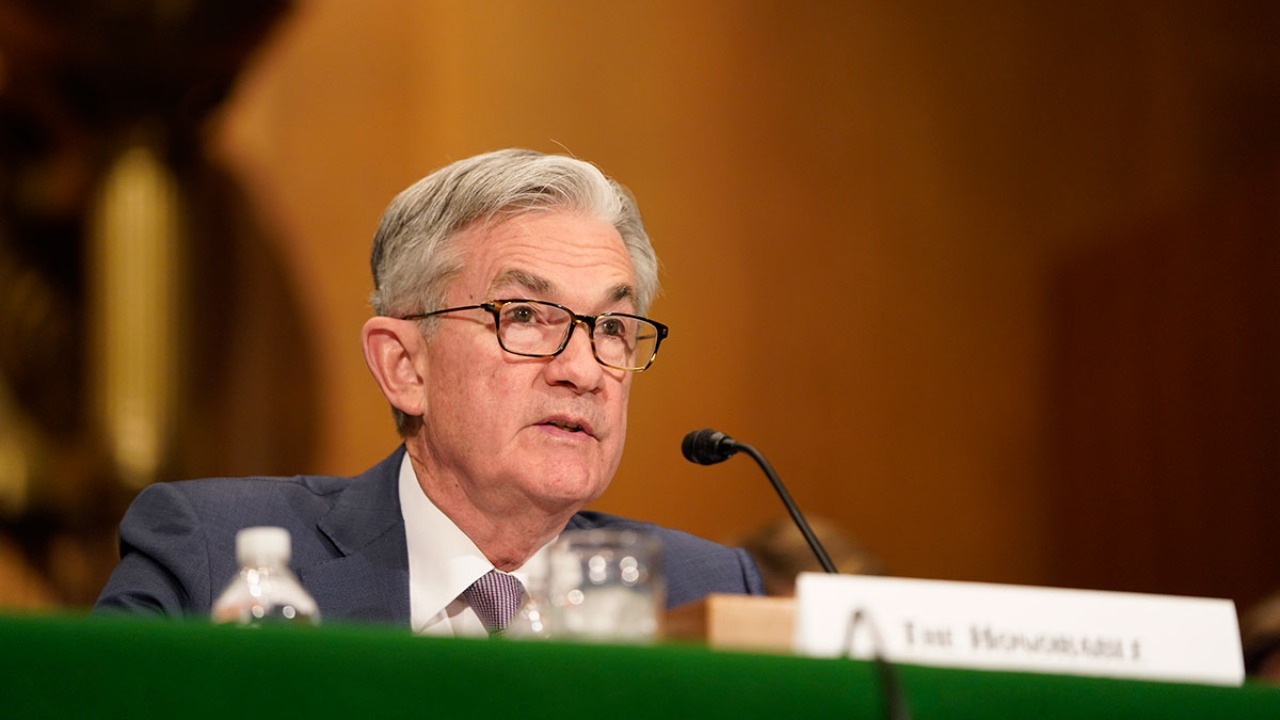
Federal Reserve Chair Jerome Powell has been clear that U.S. stocks are no longer cheap, and that was before the latest tariff salvos raised the stakes for corporate profits and consumer demand. When monetary policy is already tight and trade policy is turning more restrictive, rich equity valuations start to look less like a sign of confidence and more like a source of vulnerability. I see his warning on stretched prices colliding with President Trump’s tariff strategy in ways that make today’s market multiples harder to justify and more fragile than they appear on the surface.
Powell’s valuation warning, in his own terms
When Federal Reserve Chair Jerome Powell described U.S. equity prices as “fairly highly valued” by many measures, he was not talking about a niche corner of the market but the broad benchmarks that dominate retirement accounts and index funds. He signaled that, across standard valuation gauges, stocks had moved to the upper end of their historical ranges, even as the central bank kept its focus on inflation and employment rather than on propping up asset prices. That choice of words, paired with his insistence that the Federal Reserve does not target the stock market, underscored that investors, not policymakers, would bear the risk if those elevated prices corrected.
In September, Powell went further and said stock valuations were “on the high side,” a phrase that echoed through trading desks because it came from the person who sets short term interest rates. His comments framed a market where price to earnings ratios and other metrics had climbed while the policy rate stayed restrictive, leaving less room for the usual safety valve of cheaper money if growth slowed. By the time he reiterated that U.S. equity prices were “fairly highly valued” and that the central bank did not see “elevated stability risks,” he had effectively drawn a line between the Federal Reserve’s mandate and the fate of investors who chose to pay up for risk assets, a stance captured in detail in Federal Reserve Chair Jerome Powell.
Why “rich” valuations matter more in a tariff fight
High valuations are not automatically a problem when growth is strong and policy is supportive, but they become far more precarious when new shocks threaten earnings. Tariffs are exactly that kind of shock, because they raise input costs for companies and prices for consumers, while also inviting retaliation that can hit export demand. If investors are already paying a premium for each dollar of profit, any squeeze on margins or slowdown in revenue growth can force a rapid reset in what those future cash flows are worth.
In September, Federal Reserve Chairman Jerome Powell warned investors that stocks were “richly valued” at the same time the policy rate was at its highest level in four years, a combination that left little cushion if something went wrong. His caution came before the full impact of President Trump’s latest tariffs filtered through supply chains, which means the market was already priced for optimism when a new drag on growth appeared. As In September, Federal Reserve Chairman Jerome Powell makes clear, he was effectively telling investors that they were paying up for earnings that might prove harder to deliver in a more hostile trade environment.
Trump’s tariffs as a direct hit to earnings and growth
President Trump’s tariff policy is not an abstract political debate for markets, it is a direct line item in corporate income statements and household budgets. When new levies are imposed on imported goods, companies must decide whether to absorb the higher costs, pass them on to consumers, or cut investment and jobs to protect margins. Each of those choices can weaken the earnings outlook that underpins current stock prices, especially in sectors like manufacturing, autos, and retail that rely heavily on global supply chains.
Jerome Powell has already warned that Trump’s tariffs are “highly likely” to raise prices and create “continued volatility” in financial markets, a combination that points toward the classic risk of stagflation, where inflation rises while growth slows. He has also cautioned that if inflation picks up because of tariffs, the Federal Reserve might have to keep policy tight so that higher prices do not linger, even if output is under pressure. That is a toxic backdrop for richly priced equities, because it removes the hope that the central bank will quickly cut rates to offset the drag from trade policy, a tension spelled out in his comments on Jerome Powell and the looming threat of stagflation.
How tariffs amplify Powell’s earlier stock market warning
When Federal Reserve Chair Jerome Powell first flagged that stock valuations were stretched, the main concern was that investors had become too comfortable with a soft landing narrative. The economy was slowing but still expanding, inflation was easing, and markets were betting that rate cuts would arrive before profits took a serious hit. In that environment, paying a higher multiple for earnings could be rational, as long as growth stayed intact and policy turned more supportive.
Tariffs have scrambled that calculus by introducing a new, policy driven drag that Powell himself has said could lift prices and unsettle markets. Analysts now argue that his earlier warning about “richly valued” stocks looks more urgent because the earnings those valuations assume are now at greater risk from higher costs and weaker demand. One detailed analysis of how Fed Chair Jerome Powell’s caution interacts with President Trump’s trade moves concludes that President Trump’s tariffs “make the warning more dire,” particularly if fallout from those tariffs pushes the economy closer to recession, a point captured in Fed Chair Jerome Powell Warned Investors About the Stock Market.
Consumer fear, sentiment, and the feedback loop into valuations
Equity valuations are not just a function of earnings and interest rates, they also depend on how confident households feel about their jobs, their savings, and the future. When Federal Reserve Chair Jerome Powell said in September 2025 that stock valuations were “on the high side,” there was already evidence that consumers were growing more anxious about the economy and about the impact of tariffs on everyday prices. That anxiety matters because nervous consumers tend to pull back on discretionary spending, which can slow revenue growth for the very companies whose shares are priced for strong demand.
As tariffs bite, the risk is that consumer fear and market volatility feed on each other, with falling stock prices denting household wealth and confidence, which then further weakens spending. Analysts who revisited Powell’s September comments now argue that his warning on rich stock valuations is more dire in light of rising concern about tariffs and the possibility of slower growth. They point out that when Federal Reserve Chair Jerome Powell first spoke of valuations being “on the high side,” the tariff shock had not yet fully filtered into consumer behavior, a gap that has since narrowed according to When Federal Reserve Chair Jerome Powell and its focus on consumer fear and tariffs.
What the major indexes are signaling about risk appetite
To understand how investors are digesting Powell’s message and Trump’s tariffs, I look first at the major indexes that track broad swaths of the market. The NYSE COMPOSITE index, which aggregates a wide range of stocks listed on the New York Stock Exchange, offers a snapshot of how risk appetite is evolving across sectors rather than in a single benchmark. Its level, recorded alongside fields labeled Description, Last, and Change, shows how far prices have run relative to recent history and how sensitive they are to each new headline on trade or policy.
Recent data for the NYSE COMPOSITE show a reading of 16,066.848 with a Change of negative 9.7125, or negative 0.06 percent, a tiny move in percentage terms that still reflects the market’s day to day struggle to price in tariff news and central bank commentary. When an index at that level barely budges on a given session, it can mask sharper swings beneath the surface in tariff exposed sectors like industrials and consumer discretionary. The fact that such a broad gauge sits at a historically elevated level while Powell calls equities “fairly highly valued” suggests that investors are still willing to pay up for risk, even as the policy backdrop grows more complicated, a tension visible in the NYSE composite figures.
How investors are using data tools to track stretched prices
In a market where valuations are high and policy risks are rising, investors are leaning more heavily on real time data to monitor their exposure. Platforms that aggregate quotes, charts, and fundamentals across stocks, mutual funds, indexes, currencies, and cryptocurrencies allow traders and long term savers alike to see how quickly sentiment can shift when a new tariff is announced or when Powell speaks. The ability to compare sectors and asset classes side by side has become essential for judging whether the premium on equities still makes sense relative to safer alternatives.
Google Finance is one of the tools that has become a default dashboard for many market participants, offering a simple way to search for financial security data and track performance across portfolios. Its interface makes it easy to see how individual names and indexes respond to developments in trade policy or central bank communication, which in turn helps investors decide whether to trim positions, rotate into less exposed sectors, or hold their nerve. The service’s own Google Finance disclaimer underscores that the data are for informational purposes, a reminder that even the best charts cannot eliminate the fundamental uncertainty that Powell’s warnings and Trump’s tariffs have injected into the valuation debate.
Powell’s independence from tariff politics, and why that matters
One of the most striking aspects of Powell’s recent comments is how carefully he has separated monetary policy from the political fight over tariffs. He has acknowledged the economic impact of President Trump’s trade measures, including the risk that they will lift prices and unsettle markets, but he has also stressed that the Federal Reserve will not adjust its stance simply to offset volatility in equities. That independence is central to the institution’s credibility, yet it also means investors cannot count on rate cuts to bail out expensive stocks if tariffs slow growth.
Analysts who have parsed his speeches note that Powell has been consistent in saying that the central bank’s decisions will be guided by inflation and employment data, not by the level of the S&P 500 or the NYSE COMPOSITE. In practice, that means his warning about “fairly highly valued” equities should be read as a risk flag rather than a prelude to policy support. A detailed breakdown of his stance on valuations and the weak economy, and how that interacts with President Trump’s tariffs, emphasizes that the Federal Reserve is unlikely to rescue investors from the consequences of paying too much for earnings in a slowing environment, a point laid out in Key Points on valuations and tariffs.
What I watch next as valuations and tariffs collide
As Powell’s valuation warning collides with President Trump’s tariff strategy, I focus on three signals to gauge how fragile the market has become. The first is earnings guidance from companies that sit at the heart of global trade, such as automakers like Ford and General Motors and consumer brands that rely on imported components. Any wave of downward revisions would confirm that tariffs are eroding the profit base that justifies current multiples. The second is consumer sentiment, which will show whether households are absorbing higher prices quietly or cutting back in ways that threaten revenue growth.
The third signal is how quickly markets react to incremental news on tariffs or Federal Reserve communication, because sharp swings on modest headlines often reveal stretched positioning. If indexes like the NYSE COMPOSITE start to move more violently on routine data or speeches, it will be a sign that investors are finally internalizing Powell’s message that equities are “fairly highly valued” and that policy will not automatically cushion every blow. At that point, the combination of rich valuations and trade uncertainty could shift from a background concern to the main driver of price action, validating the more dire interpretations of Powell’s earlier caution about the stock market and President Trump’s tariffs that have been building since Tariffs Make the Warning More Dir first crystallized that link.
More From TheDailyOverview

Grant Mercer covers market dynamics, business trends, and the economic forces driving growth across industries. His analysis connects macro movements with real-world implications for investors, entrepreneurs, and professionals. Through his work at The Daily Overview, Grant helps readers understand how markets function and where opportunities may emerge.

