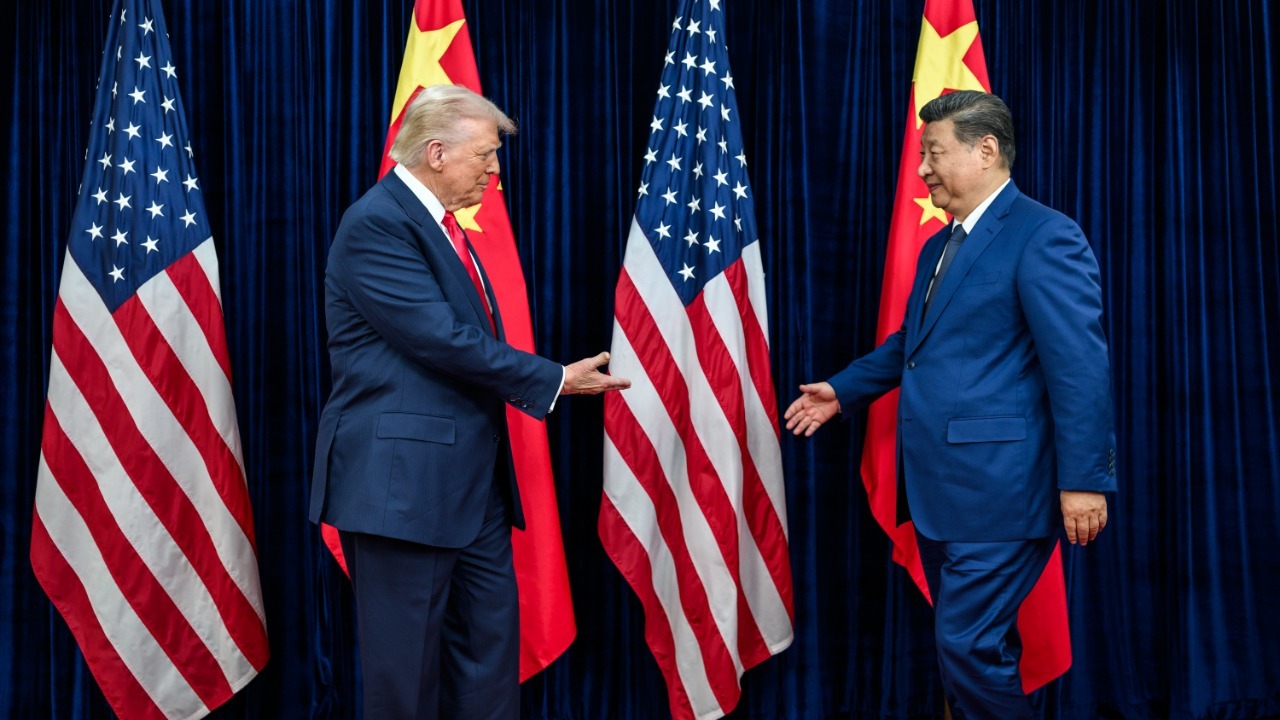
China’s decision to punish Boeing and a slate of other American defense giants after President Donald Trump approved an $11 billion weapons package for Taiwan marks a sharp escalation in the contest over the island’s future. The move fuses trade, technology, and security into a single pressure campaign, turning corporate balance sheets into collateral in a geopolitical struggle. I see it as a stress test for how far both Washington and Beijing are willing to go to defend their red lines without tipping into open confrontation.
Trump’s $11 Billion Bet on Taiwan’s Defenses
President Donald Trump’s administration has framed the latest arms package for Taiwan as a necessary response to growing military pressure from Beijing, and the scale alone signals a deliberate show of resolve. The deal, announced earlier this month, is valued at more than $11 billion and, according to detailed breakdowns, includes multiple tranches of equipment and support that together are meant to harden the island against a potential blockade or invasion. By greenlighting such a large package in one go, President Donald Trump is not just topping up Taiwan’s arsenal, he is broadcasting that the United States is prepared to invest heavily in the island’s long term deterrence posture.
Reporting on the package notes that President Donald Trump’s team described the sale as an arms deal with Taiwan amounting to more than $11 billion, with individual components, such as certain missile systems, priced at more than $1 billion each, underscoring the sophistication of what is on offer. One account of the announcement explains that President Donald Trump’s administration unveiled the package on a Wedne, highlighting both the headline figure and the strategic rationale behind it, which is to bolster Taiwan’s ability to absorb and respond to a first strike rather than rely solely on early warning and diplomacy more than $11 billion. In my view, that framing matters, because it casts the sale as a stabilizing move, even as Beijing reads it as a direct challenge to its sovereignty claims.
What Exactly Taiwan Is Buying
To understand why Beijing reacted so fiercely, it helps to look at what Taiwan is actually getting for this money. The United States has bundled several Arms Sales Packages into the 2025 slate, combining air defense, anti ship, and command and control capabilities that together are designed to complicate any Chinese military operation across the Taiwan Strait. According to a detailed overview of the United States Arms Sales Packages to Taiwan, the administration set out a series of systems and support contracts that go beyond simple hardware transfers and include training, maintenance, and integration into Taiwan’s existing force structure.
The same analysis notes that on December 17, 2025, the United States administration formally notified the package, describing it as part of a broader effort to preserve the military balance and political stability in the region. Official justifications by the U.S. side emphasize that the sales are intended to support Taiwan’s self defense, maintain a credible deterrent, and prevent unilateral changes to the status quo, rather than to enable offensive operations against the mainland United States Arms Sales Packages. I read that as Washington trying to thread a needle, arming Taiwan robustly while still claiming it is not encouraging formal independence or a break with the “one China” framework.
Beijing’s Sanctions: Boeing in the Crosshairs
Beijing’s answer has been to reach for one of the few levers it can apply directly to American corporate interests, targeting Boeing and other major contractors that underpin the U.S. defense industrial base. Chinese authorities announced sanctions on a group of U.S. defense related companies and a set of executives, explicitly linking the move to the record Taiwan arms sales and accusing Washington of undermining China’s security. By singling out Boeing, which straddles both commercial aviation and defense, Beijing is signaling that even firms with deep civilian exposure in the Chinese market are not insulated from the fallout of security decisions made in Washington.
One detailed account of the measures explains that China’s government sanctioned 20 U.S. companies, including Defense Companies Northrop Grumman, Boeing, Anduril, and others, in response to the latest package and to what Beijing describes as interference in its internal affairs Defense Companies Northrop Grumman, Boeing, Anduril. Another report on how China Sanctions Boeing and a bunch of U.S. Defense Companies Following Trump Admin Taiwan Arms Sales underlines that the sanctions are framed as a direct answer to the Trump administration’s decisions, with Chinese officials presenting them as a necessary defense of national sovereignty China Sanctions Boeing and. From my perspective, that linkage is crucial, because it turns what might otherwise be a routine arms notification into a trigger for economic retaliation.
Twenty Firms, Ten Executives: The Sanctions List
Beyond the headline names, the breadth of China’s response is striking. Beijing has not limited itself to one or two marquee contractors but has instead cast a wide net over the U.S. defense ecosystem, sanctioning 20 U.S. defense related companies and 10 executives. The message is that any firm that plays a role in arming Taiwan, whether through missiles, sensors, or logistics, could find itself locked out of the Chinese market or facing asset freezes and travel bans tied to Chinese jurisdiction.
According to a detailed breakdown from BEIJING, authorities announced on a Friday that they were imposing sanctions on 20 U.S. defense related companies and 10 executives over the Taiwan arms sale, explicitly tying the move to the latest package to the self ruled territory and presenting it as a countermeasure to U.S. actions World Dec. Another account notes that these sanctions come almost a week after the United States announced a large scale arms sale package valued at $11.1 billion, and that the measures extend to the following 10 senior executives, whose names are listed as part of the announcement $11.1 billion. I see that as Beijing trying to personalize the pressure, warning individual decision makers that their own travel and financial freedom could be at stake when they sign off on Taiwan related deals.
How China Frames the Dispute Over Taiwan
For Beijing, the sanctions are not just about punishing specific companies, they are about reinforcing its narrative that Taiwan is an inseparable part of China and that any foreign arms sales are illegitimate. Chinese officials consistently describe Taiwan as a province under its national jurisdiction and argue that external military support violates the “one China” principle. By responding to the latest package with a sweeping sanctions list, they are trying to show domestic and international audiences that China will not passively accept what it sees as creeping support for Taiwanese autonomy.
One report on the sanctions underscores that China’s government explicitly linked the measures to its position that Taiwan is a province under its national jurisdiction, casting the arms sales as interference in internal affairs and a threat to national security province under its national jurisdiction. Another account of how China sanctions US defence firms and executives over record Taiwan arms sales notes that the decision drew a sharp rebuke from China’s foreign ministry, which accused Washington of undermining stability and warned that further steps could follow if the United States continues to arm Taiwan at this scale China sanctions US defence firms. In my reading, that rhetoric is as much about deterring other countries from following Washington’s lead as it is about the specific systems Taiwan is buying.
Washington’s Justification and Strategic Logic
On the U.S. side, officials have leaned heavily on the language of deterrence and stability to justify the record package. The logic is that a better armed Taiwan raises the cost of any military adventure by Beijing, which in turn reduces the likelihood of miscalculation or a forced unification attempt. By tying the sale to broader goals like preserving the military balance and political stability, Washington is trying to present the move as consistent with its long standing commitments under the Taiwan Relations Act rather than as a radical departure.
The detailed overview of the United States Arms Sales Packages to Taiwan explains that official justifications by the U.S. emphasize support for Taiwan’s self defense, the need to maintain a favorable military balance, and the importance of political stability in the wider region political stability. In my view, that framing is designed not only for Beijing’s ears but also for skeptical partners in Europe and Asia who worry that U.S. China competition could spiral; Washington wants to show that it is acting within an established policy framework, even as the dollar figures and capabilities involved reach new highs.
Economic Stakes for Boeing and the Defense Industry
For Boeing and its peers, the sanctions land at a delicate moment. Boeing has spent years trying to rebuild its commercial reputation and stabilize its order book, and access to the Chinese market has long been a critical part of that strategy. Sanctions that restrict business with Chinese entities or complicate regulatory approvals could hit not only defense contracts but also civilian aircraft sales, which are central to Boeing’s long term recovery plan. The company now finds itself caught between its role as a key supplier to the Pentagon and its ambitions in one of the world’s largest aviation markets.
The broader defense sector is in a similar bind. The list of sanctioned entities includes Northrop Grumman, Boeing, Anduril, and other firms that are central to U.S. military modernization, from missile defense to autonomous systems China Sanctions. Another detailed account of how China Sanctions Boeing and a bunch of U.S. Defense Companies Following Trump Admin Taiwan Arms Sales notes that the measures are meant to bite into these companies’ global operations, even if their direct exposure to Chinese defense contracts is limited Defense Companies Following Trump Admin. I see that as part of a broader pattern in which Beijing uses market access as leverage, betting that corporate lobbying in Washington might eventually push for a softer line on Taiwan.
Regional Security Fallout in the Taiwan Strait
The immediate question for governments around the Taiwan Strait is whether this cycle of arms sales and sanctions makes conflict more or less likely. On one hand, a better armed Taiwan could deter Beijing from attempting a rapid fait accompli, especially if new systems improve the island’s ability to target ships, aircraft, and command nodes in the early hours of a crisis. On the other hand, Chinese leaders may interpret the record package and the involvement of so many U.S. defense firms as evidence that Washington is moving toward a more explicit security partnership with Taipei, which could prompt them to accelerate their own military timelines.
Analyses of the latest package stress that it is part of a series of United States Arms Sales Packages to Taiwan in 2025, which together are meant to reinforce the island’s resilience and signal ongoing U.S. commitment Arms Sales Packages. At the same time, reports on how China sanctions US defence firms and executives over record Taiwan arms sales highlight that the move has drawn a sharp rebuke from China and raised concerns about further escalation in the region drawing sharp rebuke. From where I sit, that combination suggests a more volatile environment, with both sides doubling down on their preferred tools, military aid on one side and economic punishment on the other.
What Comes Next for U.S.–China–Taiwan Relations
Looking ahead, I expect the interplay between arms sales and sanctions to become a recurring feature of U.S.–China–Taiwan relations rather than a one off episode. If Washington continues to approve large packages for Taiwan, Beijing has now set a precedent of responding with targeted measures against U.S. companies and executives. That tit for tat dynamic risks normalizing economic coercion as a standard response to security moves, which could in turn push more firms to reassess their exposure to both markets and their willingness to be associated with sensitive deals.
Reports from BEIJING and other sources make clear that China views the latest sanctions as part of a broader toolkit to oppose what it sees as foreign interference in a province under its national jurisdiction, while U.S. justifications for the $11.1 billion package emphasize deterrence, self defense, and political stability for Taiwan US–Taiwan arms deal fallout. That gap in narratives is unlikely to close soon. For now, Boeing and the other 19 sanctioned firms are the ones feeling the immediate squeeze, but the deeper story is about how a contested island in the western Pacific is reshaping the rules of engagement between the world’s two largest powers.
More From TheDailyOverview

Grant Mercer covers market dynamics, business trends, and the economic forces driving growth across industries. His analysis connects macro movements with real-world implications for investors, entrepreneurs, and professionals. Through his work at The Daily Overview, Grant helps readers understand how markets function and where opportunities may emerge.